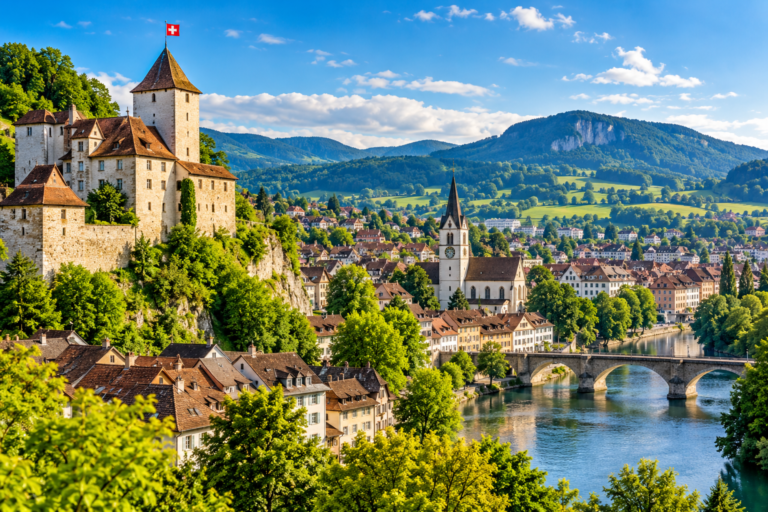

Fribourg Canton
Introduction
Fribourg Canton is one of Switzerland’s most rewarding destinations for travelers who want to experience more than the country’s famous mountain resorts. Located in western Switzerland, this distinctive canton brings together medieval towns, green countryside, Alpine foothills, lakeside villages and a rich culinary heritage. Visitors can explore historic fortifications in the morning, discover traditional cheese production in the afternoon and finish the day beside a peaceful mountain lake.
The canton is particularly interesting because it sits at the meeting point of French-speaking and German-speaking Switzerland. This linguistic and cultural diversity influences its architecture, everyday life, food traditions and regional identity. The city of Fribourg, with its steep streets, Gothic cathedral and bridges across the Sarine River, provides a striking introduction to the region’s history. Beyond the capital, the countryside opens into the pastoral landscapes of La Gruyère, the historic streets of Murten and the lakeside scenery of Estavayer-le-Lac.
For anyone planning a trip, this Fribourg travel guide covers the canton’s history, major towns, best attractions, outdoor activities, local food and practical travel information. The official tourism organization divides the destination into seven tourism regions, each offering a different combination of landscapes and experiences.
Quick Facts About Fribourg Canton
| Fact | Information |
|---|---|
| Official name | Canton of Fribourg (Kanton Freiburg / Canton de Fribourg) |
| Capital | Fribourg (Freiburg) |
| Largest city | Fribourg |
| Country | Switzerland |
| Area | Approximately 1,671 km² |
| Population | More than 340,000 residents; check the latest annual official statistics for the precise figure |
| Official languages | French and German |
| Highest point | Vanil Noir, approximately 2,389 metres |
| Lowest point | Around 430 metres above sea level in the western lowlands; exact official reference varies by geographic definition |
| Joined the Swiss Confederation | 1481 |
| Vehicle registration code | FR |
| Municipalities | The number changes through municipal mergers; consult the latest cantonal register |
Editorial note: Population, municipality counts and geographic extremes should be checked against the latest cantonal and federal statistical releases before publication. Figures are rounded where appropriate rather than presented as falsely precise.
Where Is Fribourg Canton Located?
Fribourg Canton lies in western Switzerland, between the Swiss Plateau and the northern foothills of the Alps. Its position makes it a convenient destination for travelers exploring the French-speaking region around Lausanne and the Swiss capital, Bern.
The canton shares borders with Vaud, Bern and Neuchâtel. Its landscape and communities connect the agricultural lowlands around the lakes with the more mountainous districts in the south. This geographical variety means that visitors can experience urban heritage, vineyards, farmland and mountain scenery without traveling across the entire country.
Fribourg’s location is also culturally significant. French is predominant in much of the canton, while German is widely spoken in the eastern and northeastern areas. The bilingual environment gives the region a character distinct from many other Swiss cantons.
For travelers, Fribourg works well as either a destination in its own right or a stop on a wider western Switzerland itinerary. Rail connections make it possible to combine the capital with smaller towns and countryside excursions.
Geography and Landscape

One of the strongest reasons to visit Fribourg Canton is its landscape diversity. The northern and western areas contain fertile agricultural land, settlements and lake districts, while the southern areas rise into the Pre-Alps. Between them are wooded hills, river valleys and meadows that have long supported farming and dairy production.
Mountains and Alpine Foothills
The southern part of the canton includes the mountains of La Gruyère and the Fribourg Pre-Alps. Peaks such as Vanil Noir and the Moléson dominate the surrounding countryside and provide opportunities for hiking, panoramic photography and seasonal mountain activities.
Moléson is especially appealing to visitors who want mountain scenery without committing to a demanding high-Alpine expedition. Depending on seasonal operating schedules, mountain transport and marked trails can help visitors reach viewpoints and walking routes.
Lakes and Rivers
Water is another important feature of the canton. Lake Murten, also known as Lake Morat, is bordered by historic settlements and vineyard-covered slopes. Lake Neuchâtel lies along the western edge of the canton, with Estavayer-le-Lac providing access to its shoreline.
Lake Gruyère, an artificial lake created by the Rossens dam in 1947, adds a different character to the landscape. Its wooded surroundings, walking paths and Isle of Ogoz make it an attractive area for outdoor exploration.
The Sarine River is particularly important to the identity of Fribourg city. Its winding course helped shape the historic settlement and created the dramatic setting of the Old Town above the river valley.
Nature and Protected Landscapes
The canton includes areas of significant ecological interest, including the Breccaschlund valley near Schwarzsee. Its glacially shaped scenery, mountain meadows and rocky slopes appeal to hikers and nature enthusiasts.
Along the Lake Neuchâtel shoreline, wetlands and reed beds form part of the broader Grande Cariçaie natural environment. These habitats are important for wildlife and make the region particularly interesting for birdwatching and nature-focused cycling trips.
History of Fribourg Canton
Early Settlement
The territory of present-day Fribourg has a long history of human settlement, shaped by its location between major routes across western Switzerland. Farming communities, trade and regional connections influenced the development of the countryside long before the canton took its modern political form.
Roman-period remains in the wider region, including the historic area around Avenches, illustrate the importance of western Switzerland during antiquity. However, Avenches should not be confused with Fribourg city: it lies outside the modern canton.
Medieval Fribourg
The city of Fribourg was founded in 1157 by Berthold IV of Zähringen. Its position above a bend in the Sarine River offered both a defensible setting and access to regional trade routes.
During the Middle Ages, Fribourg developed as an important town with religious institutions, markets, fortifications and distinctive Gothic architecture. Many features of its historic centre remain visible today, including narrow streets, old town houses, bridges and the Cathedral of St. Nicholas.
Other settlements also developed their own medieval identities. Murten, known in German as Morat, retained much of its historic defensive character, while Gruyères grew into a hilltop settlement associated with the counts of Gruyères and the surrounding pastoral economy.
Joining the Swiss Confederation
Fribourg joined the Swiss Confederation in 1481, alongside Solothurn. This was an important stage in the growth of the Confederation beyond its earlier membership.
The region’s political development was influenced by its relationships with neighbouring powers, particularly Bern. Over time, Fribourg established its place within the developing Swiss political system while maintaining a distinctive religious and cultural identity.
Modern Development
The canton evolved from a predominantly agricultural society into a more diverse economy combining services, manufacturing, education, food production and tourism. Its linguistic duality remains a defining feature, while its historic towns and rural landscapes continue to attract visitors interested in traditional Switzerland.
Today, Fribourg’s heritage is not limited to museums. It is visible in the built environment, local festivals, dairy farming, regional food production and the everyday relationship between French- and German-speaking communities.
Culture and Traditions
Fribourg’s cultural identity is closely connected to its bilingual population, agricultural heritage and long-established regional customs. French-speaking and German-speaking communities coexist across the canton, contributing to a rich mixture of expressions, traditions and local identities.
Bénichon
Bénichon is one of the best-known traditional celebrations in the canton. Historically associated with religious feast days and the agricultural calendar, it has developed into a festive occasion centred on family gatherings, local food and regional customs.
The traditional Bénichon meal is especially important. Depending on the menu and locality, it may include dishes such as cabbage soup, lamb or other meats, meringues with double cream and traditional sweet breads. Exact menus vary, so visitors should check local event information before planning a visit.
Alpine Traditions
In the dairy-farming areas, the seasonal movement of cattle between mountain pastures and lower farms remains an important part of local heritage. Alpine descent celebrations, often called désalpe in French, can include decorated cattle, traditional clothing, music and local food.
These events offer travelers an opportunity to see how agriculture continues to influence regional culture rather than simply viewing it as a historical tradition.
Architecture and Art
Fribourg city is known for its medieval architecture, while Gruyères and Murten offer different examples of historic settlement. The canton also has modern cultural attractions, including art and museum experiences that complement its older buildings.
Traditional architecture is especially visible in villages across La Gruyère, where farmhouses, chalets and agricultural buildings reflect the region’s pastoral history.
Festivals and Regional Events
Events take place throughout the canton, from food-focused celebrations and town festivals to cultural exhibitions and seasonal markets. The official Fribourg tourism website maintains information about the canton’s tourism regions and events. Travelers should consult local calendars because dates and programmes can change from year to year.
Major Cities and Towns in Fribourg Canton
1. Fribourg (Freiburg)
Fribourg is the canton’s capital and its most important urban centre. The city is famous for its dramatic setting above the Sarine River, its historic bridges and its exceptionally atmospheric Old Town.
Visitors can explore the Cathedral of St. Nicholas, wander through medieval streets and admire historic façades and fortifications. The city also offers museums, restaurants, cultural venues and views across the river valley.
Fribourg is an excellent base for visitors who want to combine heritage sightseeing with day trips to nearby towns and natural attractions. Its position between French- and German-speaking Switzerland also makes it an interesting destination for travelers curious about the country’s linguistic diversity.
2. Bulle
Bulle is an important regional centre in La Gruyère and a practical gateway to the southern part of the canton. It combines everyday Swiss town life with easy access to rural landscapes, dairy farms and nearby mountain destinations.
The town is well placed for excursions to Gruyères, the Maison du Gruyère and the surrounding Pre-Alps. Visitors can also explore local restaurants and discover the food traditions that have made the wider region famous.
3. Gruyères
Gruyères is among the most recognisable destinations in Fribourg Canton. Its compact medieval streets, historic buildings and hilltop setting create a classic Swiss village experience.
The town’s major attraction is Gruyères Castle, which introduces visitors to centuries of regional history, art and legends. The nearby Maison du Gruyère explains how Gruyère AOP cheese is produced, making the area especially appealing to food lovers.
Gruyères can be visited on a day trip from Fribourg or as part of a longer exploration of La Gruyère.
4. Murten (Morat)

Murten, called Morat in French, is a picturesque historic town overlooking Lake Murten. Its preserved town walls, towers, arcades and narrow streets make it one of the most rewarding places in the canton for a relaxed walking visit.
The lakeside setting adds opportunities for boat excursions, cycling and summer recreation. Nearby Vully is known for vineyards, while the wider Lake Murten region offers nature attractions and family activities.
Murten is particularly suitable for visitors who enjoy history without the crowds and scale of Switzerland’s largest cities.
5. Estavayer-le-Lac
Estavayer-le-Lac sits on the southern shore of Lake Neuchâtel. Its historic centre provides a contrast between medieval architecture and the open shoreline, where visitors can enjoy lakeside walks and seasonal water activities.
The town is a good choice for summer travelers, cyclists and families. Depending on weather and opening schedules, the lake area offers opportunities for swimming and water sports.
6. Romont
Romont is a historic hilltop town in the Glâne district. Its medieval walls, towers and elevated position give it a distinctive appearance, while its cultural heritage makes it worth exploring beyond the main tourist routes.
Romont is particularly associated with stained glass and glass art. Travelers interested in religious art, historic architecture and quieter Swiss towns can make it a worthwhile stop between Fribourg and the countryside to the south.
7. Charmey and Schwarzsee
Charmey and Schwarzsee offer access to the more mountainous side of Fribourg Canton. Charmey is a useful base for outdoor activities and relaxation in the La Gruyère region, while Schwarzsee is known for its dark, mountain-ringed lake and surrounding hiking landscapes.
The Breccaschlund valley near Schwarzsee is particularly appealing to visitors seeking glacial scenery, meadows and a quieter Alpine environment.
Top Attractions in Fribourg Canton
The best places in Fribourg Canton offer a combination of medieval heritage, mountain scenery, lakeside recreation and Swiss culinary experiences. These attractions are a strong starting point for planning a visit.
1. Cathedral of St. Nicholas
This Gothic cathedral is one of the most important landmarks in the capital. Visitors can appreciate its architectural details, historic interior and prominent tower. Check current visiting arrangements and tower access before travelling.
2. Gruyères Castle
Set above the medieval town, the castle provides an introduction to regional history, art and legends spanning several centuries. Allow time to explore both the castle and the surrounding village.
3. La Maison du Gruyère
Discover the production of Gruyère AOP cheese and learn about the relationship between dairy farming, milk quality and traditional cheesemaking. This is one of the region’s essential culinary stops.
4. Maison Cailler
This chocolate attraction introduces visitors to Swiss chocolate history and production, with opportunities to discover chocolate-making processes and taste selected specialties. Reserve or check admission information for your travel date.
5. Murten Old Town
Explore historic lanes, defensive walls and lakeside viewpoints. Murten is especially enjoyable for a leisurely walk followed by a boat trip or a meal near the lake.
6. Schwarzsee
This mountain lake is surrounded by meadows, forests and dramatic ridges. It is a popular starting point for walks and hikes, with seasonal opportunities for winter activities.
7. Lake Gruyère and Isle of Ogoz
The lake offers scenic walks and viewpoints, while the Isle of Ogoz contains historic remains including castle ruins and a chapel. Access to the island depends on water levels and local arrangements, so check conditions before visiting.
8. Moléson
Moléson is a standout destination for panoramic mountain scenery, hiking and seasonal outdoor activities. Mountain transport and facilities operate according to season and weather.
9. Estavayer-le-Lac
Combine a historic town visit with lakeside relaxation. In suitable weather, the area is a good option for swimming, cycling and water sports.
10. Breccaschlund
This mountain valley is known for its glacially shaped scenery, limestone terrain and alpine pastures. It is a rewarding choice for hikers who want to explore the canton’s natural landscapes.
The official regional tourism service provides additional attraction details, seasonal activity information and suggested itineraries.
Nature and Outdoor Activities

Fribourg is a versatile destination for travelers who enjoy the outdoors but do not necessarily want a demanding Alpine expedition. Its landscapes range from gentle lake paths to steep mountain trails, allowing visitors to choose activities according to their experience and fitness.
Hiking
Popular areas include Schwarzsee, Moléson, La Gruyère and the countryside around Lake Gruyère. Trails range from relaxed walks to more challenging mountain routes. Before setting out, check trail conditions, weather forecasts, elevation gain and mountain transport schedules.
Cycling
The Lake Murten region is well suited to recreational cycling, with opportunities to explore historic villages, vineyards and lakeside scenery. The wider canton also offers routes through rural landscapes and hill country. Some routes include significant climbs, so choose one that matches your ability.
Skiing and Winter Activities
During winter, mountain destinations such as Schwarzsee and La Berra offer seasonal snow activities when conditions permit. Depending on the resort and weather, options may include skiing, sledging and snowshoeing. Snow cover and lift operations vary, so check official resort updates rather than assuming every facility will be open.
Lakeside Recreation
Lake Murten and Lake Neuchâtel are attractive during warmer months for swimming, boat excursions and water sports. Lake Gruyère provides another setting for scenic walks and outdoor exploration. Always follow local swimming notices and water-safety guidance.
Wildlife and Nature Observation
Wetlands, forests, alpine meadows and mountain valleys provide different habitats for wildlife. The Grande Cariçaie environment is particularly relevant for nature lovers interested in birds and wetland ecosystems. Stay on marked trails in sensitive areas and respect local conservation rules.
Food and Local Specialties

Food is central to the identity of Fribourg Canton. Dairy farming, regional cheese production and seasonal traditions shape its culinary reputation, while the canton’s position between French- and German-speaking Switzerland creates a varied food culture.
Gruyère AOP Cheese
Gruyère AOP is the region’s best-known culinary product. Made from cow’s milk under a protected designation of origin, it is associated with a long-established tradition of Swiss cheesemaking. Visitors can learn about production at La Maison du Gruyère and look for the cheese in local shops and restaurants.
Fondue
Cheese fondue is a classic Swiss dining experience, and Fribourg has its own well-known traditions. One regional preparation combines Gruyère with Vacherin Fribourgeois cheese. This mixture is often called moitié-moitié, meaning half and half.
Fondue is especially enjoyable in colder weather, although many restaurants serve it throughout the year. Ask about the cheese blend if you want to try a specifically Fribourg-style version.
Vacherin Fribourgeois
This regional cheese is valued for its creamy texture and role in local fondue. It is also enjoyed on cheese boards and in other dishes. Together with Gruyère, it reflects the importance of the canton’s dairy industry.
Meringues with Double Cream
Meringues served with thick double cream are a popular sweet specialty in the Gruyère area. Their sweetness and rich cream make them a favourite dessert for visitors exploring the region.
Bénichon Specialties
Traditional Bénichon meals may include spiced mustard known as moutarde de Bénichon, sweet breads and other regional dishes. These foods are particularly associated with the seasonal celebration and are worth seeking out during local festivities.
Swiss Chocolate
Chocolate is another major draw. Maison Cailler in Broc offers a visitor experience centred on Swiss chocolate heritage. Combining the chocolate attraction with a visit to Gruyères and the cheese dairy makes an easy food-focused day trip.
Economy and Industry
Fribourg Canton has an economy that combines traditional agriculture with modern manufacturing, services, education and tourism.
Agriculture and food production remain important to the region’s identity. Dairy farming supports cheese production, while farmland in the lower areas contributes to a broader agricultural economy.
Manufacturing and industry provide employment across several sectors. The canton benefits from its location between major Swiss economic centres and from transport connections that support businesses and commuting.
Services and education play an important role in the capital and larger towns. Fribourg’s bilingual environment also gives the canton a distinctive position in education and public life.
Tourism and hospitality contribute to the local economy through historic attractions, regional food experiences, outdoor recreation and accommodation. Destinations such as Gruyères, Murten and Schwarzsee attract visitors with different interests and help distribute tourism beyond the capital.
Transportation and Getting Around
Switzerland’s public transport network makes Fribourg Canton accessible without a car. The capital has rail connections to major Swiss cities, and regional trains and buses serve many towns and tourist destinations.
Travelling by Train
Fribourg railway station is a useful starting point for exploring the canton. Rail services connect the city with destinations such as Bern and Lausanne, while regional connections can help visitors reach Bulle, Gruyères and Murten. Some attractions require an additional bus journey or a walk from the nearest station.
Buses and Regional Transport
Regional buses connect many smaller settlements with railway stations and tourist destinations. For places in the countryside, check the entire journey rather than assuming a train will take you directly to the attraction.
Travelling by Car
Driving can be useful for reaching rural viewpoints, trailheads and smaller villages, especially when visiting several places in one day. However, parking in historic centres can be limited, and mountain roads may be affected by winter conditions.
Airports
Fribourg does not have a major commercial international airport of its own. Visitors typically arrive through larger Swiss airports, particularly Geneva Airport or Zurich Airport, and continue by train. Bern Airport may also be relevant for certain itineraries, depending on available services.
Suggested Travel Approach
For a first visit, consider using Fribourg city as a base for urban sightseeing and taking separate day trips to La Gruyère and the Lake Murten region. Travelers planning extensive mountain activities may prefer accommodation closer to their chosen hiking or winter-sports area.
Check timetables, connections and seasonal transport arrangements shortly before departure.
Best Time to Visit Fribourg Canton
Fribourg can be visited throughout the year, but the best season depends on whether you prefer hiking, lakeside activities, historic towns or winter scenery.

Spring — March to May
Spring brings greener countryside, blossoming trees and milder conditions at lower elevations. It is a pleasant time for visiting historic towns and enjoying quieter sightseeing. Higher mountain trails may remain snowy or muddy.

Summer — June to August
Summer is ideal for hiking, cycling, lake activities and mountain excursions. Longer daylight hours make it easier to combine several attractions in a day. Popular destinations can be busy, and mountain weather can change quickly.

Autumn — September to November
Autumn brings changing foliage, agricultural traditions and an appealing atmosphere for food-focused trips. It is a good time to explore Gruyères, visit local producers and discover regional festivals. Mountain facilities may reduce their operating hours.

Winter — December to February
Winter is suited to snowy landscapes, seasonal mountain activities and cosy meals featuring regional cheese. Schwarzsee and other mountain destinations may offer winter sports when conditions allow. Historic towns remain attractive for museums, architecture and dining.
My recommendation: For a first trip combining towns, cheese, chocolate and outdoor scenery, late spring through early autumn is usually the most versatile period. Choose winter if snow activities are a priority, but confirm conditions before travelling.
Travel Tips for Visitors
- Currency: Switzerland uses the Swiss franc (CHF). Cards are widely accepted, although keeping a little cash can be useful in smaller establishments.
- Languages: French and German are the canton’s official languages. The language you encounter depends on the area you visit.
- Transport: Use the SBB timetable to plan rail and bus journeys. Check connections to smaller attractions carefully.
- Accommodation: Staying in Fribourg is convenient for urban sightseeing, while Bulle or the wider La Gruyère region may suit travelers focused on mountains and food experiences.
- Reservations: Book accommodation and popular experiences in advance during busy summer periods and major local events.
- Mountain safety: Check weather, trail conditions, snow cover and lift schedules before hiking or visiting higher elevations.
- Local etiquette: Greet people politely, respect quiet residential streets and follow posted instructions in historic buildings and natural areas.
- Food: Try Gruyère AOP, Vacherin Fribourgeois and a traditional regional fondue. Look for seasonal Bénichon specialties when local celebrations take place.
- Photography: Historic centres, bridges, lake shores and mountain viewpoints offer excellent opportunities. Respect private property and local restrictions.
- Travel costs: Switzerland can be expensive. Compare transport passes, accommodation options and attraction tickets before your trip.
Interesting Facts About Fribourg Canton
- Fribourg joined the Swiss Confederation in 1481, alongside Solothurn.
- The canton is officially bilingual, with French and German used in public life and administration.
- Fribourg city was founded in 1157 by Berthold IV of Zähringen.
- Gruyères is internationally associated with Gruyère AOP cheese, one of Switzerland’s best-known regional food products.
- Maison Cailler is located in Broc, making the canton a destination for visitors interested in Swiss chocolate.
- Lake Gruyère was created following the construction of the Rossens dam in 1947.
- Murten is known for its historic town walls, which are among the highlights of the Lake Murten region.
- The canton has seven officially promoted tourism regions, ranging from La Gruyère to the Lake Murten region and Schwarzsee–Senseland.
- Bénichon is an important local tradition, connecting food, community celebrations and the agricultural calendar.
- Fribourg’s landscape stretches from lake districts and farmland to the Pre-Alps, making it possible to combine several kinds of Swiss scenery in one trip.
Why Visit Fribourg Canton?
Fribourg Canton is an excellent choice for travelers who want to discover a more varied side of Switzerland. It combines the historical atmosphere of Fribourg city and Murten with the medieval charm of Gruyères, the lakeside appeal of Estavayer-le-Lac and the mountain landscapes around Schwarzsee and Moléson.
Its food culture is equally compelling. Traditional cheesemaking, regional fondue, local celebrations and Swiss chocolate experiences give visitors a meaningful way to connect with the region beyond sightseeing. These experiences are particularly rewarding when combined with walks through historic towns or excursions into the countryside.
Fribourg is suitable for couples, families, history enthusiasts, food lovers, cyclists and hikers. It also works well for visitors seeking day trips from Bern or Lausanne. The key is to allow enough time to explore the different regions rather than treating the canton as a single city destination.
Frequently Asked Questions About Fribourg Canton
1. What is Fribourg Canton famous for?
Fribourg is known for its medieval capital, Gruyères Castle, Gruyère AOP cheese, Swiss chocolate experiences, bilingual culture, historic towns and varied landscapes extending from lakes to the Pre-Alps.
2. What is the capital of Fribourg Canton?
The capital is Fribourg, also called Freiburg in German. Its highlights include the Old Town, Cathedral of St. Nicholas, historic bridges and buildings overlooking the Sarine River.
3. What are the best places to visit in Fribourg Canton?
Popular places include Fribourg city, Gruyères, Murten, Bulle, Estavayer-le-Lac, Romont, Schwarzsee and Moléson. The best choices depend on whether you prefer historic towns, food experiences, lakes or mountain activities.
4. How many days should I spend in Fribourg Canton?
Two to three days is a useful starting point for exploring the capital, Gruyères and one additional region. Allow four or more days if you want to include mountain hikes, lakeside activities and several historic towns without rushing.
5. What is the best time to visit Fribourg Canton?
Late spring through early autumn is generally suitable for combining sightseeing, hiking and lake activities. Winter can be rewarding for snowy scenery and seasonal mountain sports, subject to local weather and operating conditions.