
Basel-Landschaft Canton
Introduction
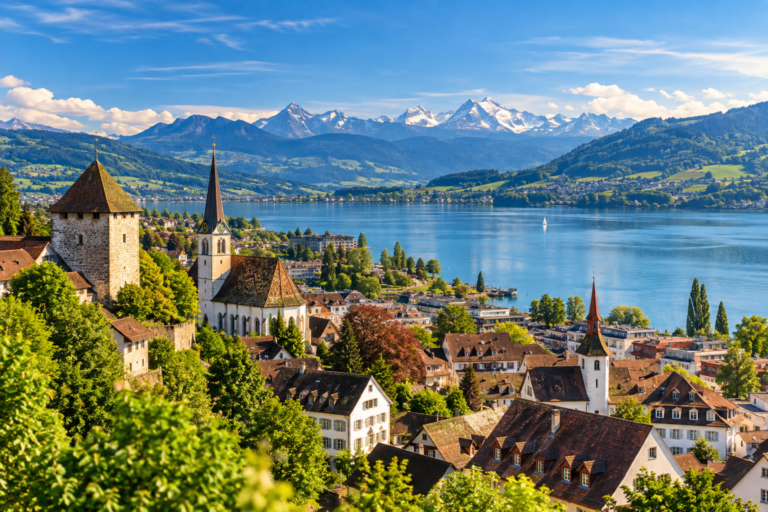
Beyond the internationally recognised city of Basel lies a different side of northwestern Switzerland: a landscape of wooded hills, picturesque villages, historic castles, vineyard-covered slopes and archaeological treasures that reveal more than two thousand years of European history. Basel-Landschaft Canton, often called Baselland or Baselbiet, offers a quieter and more rural atmosphere than neighbouring Basel-Stadt while remaining closely connected to one of Switzerland’s most important urban and cultural centres.
Located along Switzerland’s northwestern frontier, Basel-Landschaft combines a fascinating past with a modern, well-connected economy. The region’s history stretches from Roman settlements and medieval lordships to the political struggle that established the modern canton in 1833. Today, visitors can explore the remains of Augusta Raurica, wander through Liestal’s historic streets, discover the landscaped gardens of Arlesheim and enjoy panoramic walks through the Jura foothills.
For travellers planning a visit to Switzerland, Basel-Landschaft is an appealing destination for a day trip or a longer countryside escape. Its attractions are spread across a relatively compact area, making it possible to combine archaeology, architecture, nature and regional food without travelling long distances. This Basel-Landschaft travel guide explores the canton’s geography, history, towns, attractions and practical travel information to help you plan a rewarding visit.
Quick Facts About Basel-Landschaft
| Fact | Information |
|---|---|
| Official Name | Canton of Basel-Landschaft |
| Capital | Liestal |
| Largest Municipality | Allschwil, by population |
| Area | Approximately 518 km² |
| Population | 305,663 residents at the end of 2025 |
| Official Language | German |
| Highest Point | Hinteri Egg, Waldenburg, 1,169 m above sea level |
| Lowest Point | Birsmündung in the Rhine, Birsfelden, 246 m above sea level |
| Established as a Separate Canton | 1833 |
| Historical Confederation Context | Basel joined the Swiss Confederacy in 1501; Basel-Landschaft became a separate canton in 1833 |
| Vehicle Registration Code | BL |
| Number of Municipalities | 86 |
Population and elevation figures are based on cantonal statistical information. Municipal counts and administrative arrangements can change; consult the official Basel-Landschaft statistics portal for the latest administrative data.
Where Is Basel-Landschaft Located?
Basel-Landschaft is situated in northwestern Switzerland, surrounding and extending south and east of the urban area of Basel. Its location places it at an important crossroads between Switzerland, Germany and France. The canton forms part of the wider Basel economic region, where international trade, transport, manufacturing and cross-border connections play an important role.
The canton borders Basel-Stadt, Aargau, Solothurn and Jura. Its wider regional setting also brings it close to the French Alsace region and southwestern Germany, although the canton’s own international border situation differs from that of Basel-Stadt.
This strategic position makes Basel-Landschaft easy to incorporate into a broader Swiss itinerary. Visitors staying in Basel can reach many of its attractions by train, tram or bus, while travellers arriving through EuroAirport Basel-Mulhouse-Freiburg can continue into the canton using regional public transport.
Unlike a destination dominated by a single city, Basel-Landschaft is a collection of small urban centres and rural communities. That combination allows visitors to experience modern Swiss life, traditional village settings and open countryside within the same trip.
Geography and Landscape

Basel-Landschaft has a varied landscape shaped by the southern foothills of the Jura Mountains, river valleys, forests, agricultural land and settlements that developed along historic transport routes. The terrain ranges from the low-lying Rhine corridor in the north to elevated ridges and wooded hills farther south.
The Rhine forms a major geographical feature along the canton’s northern edge. The Ergolz and Birs river systems also shape important valleys and settlement areas. These waterways historically supported transport, industry and agriculture, while their surrounding landscapes now provide pleasant routes for walking and cycling.
The Jura foothills are among the region’s defining natural features. Their rounded ridges, limestone formations, meadows and forested slopes create a landscape well suited to outdoor exploration. Around Waldenburg and Wasserfallen, visitors can find elevated viewpoints and walking routes with broad views across the surrounding countryside.
Forests cover substantial areas of the canton, and agricultural land remains visible between villages. Orchards, fields and vineyards contribute to the traditional character of the Baselbiet landscape. Rather than offering dramatic high-Alpine scenery, Basel-Landschaft appeals through its accessible hills, changing seasons and close relationship between nature and historic settlements.
The highest point is Hinteri Egg in the municipality of Waldenburg, at 1,169 metres above sea level. The lowest point is where the Birs meets the Rhine in Birsfelden, at 246 metres.
History of Basel-Landschaft
Early settlement and the Roman period
The region’s history reaches far beyond the establishment of the modern canton. Its position near the Rhine made it important for settlement, movement and trade long before Switzerland became a modern federal state.
One of its most remarkable historical sites is Augusta Raurica, a Roman settlement near present-day Augst and Kaiseraugst. Founded during the Roman era, the city developed into an important regional centre. Its surviving archaeological remains include a monumental theatre, public buildings, a museum and reconstructed Roman domestic architecture.
Augusta Raurica is one of the most significant reminders of Roman life in Switzerland. It offers visitors a tangible connection to ancient urban planning, public entertainment, commerce and everyday life.
Medieval settlements and castles
During the Middle Ages, the region was divided among different political and ecclesiastical authorities. Castles, fortified positions, religious institutions and market settlements reflected the importance of controlling land, routes and agricultural resources.
Many of the surviving ruins and historic buildings in Basel-Landschaft date from this long period of regional development. Although some structures have disappeared, castles and old town centres still help visitors understand how the landscape was organised before the modern canton emerged.
The separation from Basel city in 1833
The creation of Basel-Landschaft was the result of a significant political conflict between Basel’s urban population and communities in the surrounding countryside. Disagreements over political representation, rights and the relationship between city and rural districts intensified during the early 1830s.
On 3 August 1833, fighting at Hülftenschanze, between Pratteln and Frenkendorf, became a decisive episode in the separation struggle. On 26 August 1833, the Swiss Tagsatzung confirmed the complete separation of Basel city and countryside, establishing the historical foundation of the two distinct cantons: Basel-Stadt and Basel-Landschaft.
Industrialisation and modern development
Following its establishment, Basel-Landschaft gradually developed its administration, infrastructure and economy. Industrialisation transformed parts of the canton, while proximity to Basel encouraged residential growth, commerce and improved transport links.
Today, Basel-Landschaft combines industrial and service-sector activity with agricultural communities, historic sites and recreational landscapes. Its identity remains closely linked to the wider Basel region, while its own political history and rural traditions distinguish it from the neighbouring city canton.
Culture and Traditions
Basel-Landschaft’s cultural identity reflects its rural roots, Protestant and Catholic heritage in different communities, regional dialects and long-standing connections with Basel. German is the official language, while local residents often speak forms of Swiss German in everyday conversation.
Traditional village centres, farmhouses, churches and historic town buildings preserve elements of the region’s architectural character. In smaller communities, local associations, seasonal gatherings and village festivals continue to play an important role in community life.
Chienbäse: Liestal’s spectacular fire procession
One of the canton’s most distinctive traditions is the Chienbäse procession in Liestal. Held on the Sunday after Ash Wednesday, the event features participants carrying burning wooden bundles through the old town, accompanied by flaming carts and carnival music. The firelight illuminates the narrow streets, creating an extraordinary spectacle that attracts large crowds.
The procession is a memorable example of how traditional seasonal celebrations remain part of modern Swiss life. Visitors should check the official event information before travelling because the date changes each year. Due to the intense heat and open flames, spectators should follow the organisers’ safety instructions.
Music, architecture and regional identity
The canton also offers a rich cultural landscape of churches, museums, historic gardens and archaeological sites. Arlesheim Cathedral, with its celebrated Silbermann organ, is an important architectural and musical landmark. Augusta Raurica provides another cultural dimension, connecting present-day visitors with the region’s Roman past.
Rather than being defined by a single major festival, Basel-Landschaft’s identity emerges through its combination of local traditions, historic communities, regional food and outdoor recreation.
Major Cities and Towns in Basel-Landschaft

1. Liestal
Liestal is the cantonal capital and the administrative centre of Basel-Landschaft. Its compact old town, known locally as the Stedtli, features historic buildings, pedestrian-friendly streets, shops and cafés. It is an excellent starting point for exploring the canton, particularly for travellers arriving by train.
Liestal is also the centre of the famous Chienbäse procession and provides convenient access to nearby hiking routes and regional attractions. Allow time to explore the town on foot rather than treating it solely as a transport hub.
2. Allschwil
Allschwil is one of the canton’s largest municipalities by population and lies close to Basel. Its location makes it especially convenient for visitors who want to stay near the city while exploring communities beyond the urban centre.
The historic village centre offers a contrast with the surrounding suburban development. Allschwil is best understood as part of the wider Basel metropolitan area rather than as a remote countryside destination.
3. Arlesheim
Arlesheim is a particularly rewarding stop for travellers interested in architecture and landscaped gardens. Its cathedral, historic village atmosphere and access to the Ermitage make it one of the canton’s most distinctive cultural destinations.
The nearby countryside also offers walking routes that connect gardens, castle ruins and elevated viewpoints. Arlesheim can be visited as a half-day excursion from Basel, although nature lovers may prefer to spend longer exploring the surrounding trails.
4. Pratteln
Pratteln combines residential neighbourhoods, industrial and commercial activity, and convenient transport connections. It lies near the Rhine corridor and provides access to attractions in the northern part of the canton.
Although it is less associated with traditional sightseeing than Arlesheim or Liestal, its location is useful for visitors interested in the canton’s modern economic development and regional infrastructure.
5. Laufen
Laufen is a historic town in the Laufental region, surrounded by the Jura landscape. Its old town and setting make it an appealing stop for visitors seeking a smaller Swiss town away from the main urban area.
The wider region offers geological walking routes, wooded hills and cycling opportunities. Laufen is especially suitable for travellers who want to combine local history with active exploration of the countryside.
6. Reinach and Münchenstein
Reinach and Münchenstein are important municipalities in the more densely populated southern and eastern parts of the Basel urban region. Both combine residential communities with convenient access to public transport and green spaces.
Münchenstein is also a useful base for visiting the Merian Gardens and Park im Grünen area. These destinations demonstrate how accessible green spaces and cultural attractions are integrated into the wider Basel region.
Top Attractions in Basel-Landschaft

1. Augusta Raurica — A Journey into Roman Switzerland
Augusta Raurica, near Augst, is one of the canton’s essential attractions and a highlight for anyone interested in ancient history. This extensive archaeological site preserves the remains of a Roman city, including a monumental theatre and numerous other archaeological features.
The site offers more than a collection of ruins. Visitors can explore its museum, see the reconstructed Roman House and learn about Roman urban life, architecture and daily activities. Families can also enjoy its animal park and educational experiences.
Set aside several hours if you want to explore beyond the theatre. The official tourism information describes Augusta Raurica as Switzerland’s largest archaeological park, with more than 20 attractions.
2. Ermitage Arlesheim
The Ermitage is a romantic English-style landscape garden at the foot of the Birseck Castle ruins. Created in 1785, it features ponds, streams, wooded paths, rocky formations and secluded corners designed for quiet walks.
It is an excellent choice for visitors who enjoy combining cultural history with nature. Families can explore the paths and rock features, while photographers will appreciate the changing light across the water and woodland.
The garden is accessible throughout the year, although access to particular historic structures may be seasonal. Check current opening information before planning a visit to the castle ruins.
3. Wasserfallen Region
The Wasserfallen region is one of the best places in Basel-Landschaft for outdoor recreation. From Reigoldswil, visitors can take a cable car into the Jura hills and explore trails with expansive views across the surrounding landscape.
Depending on the weather, viewpoints may reveal the Black Forest, the Vosges and distant Alpine peaks. Hiking routes range from shorter outings to more demanding ridge walks. Families can also enjoy interactive nature trails, while winter conditions may offer opportunities for sledging.
The region is particularly appealing to travellers who want a countryside experience without committing to a full Alpine holiday.
4. Birseck Castle Ruins
Above Arlesheim, the ruins of Birseck Castle overlook the surrounding landscape and form a memorable stop on a walk through the Ermitage. The castle ruins offer a glimpse into the region’s medieval past and can be combined with nearby trails and other historic sites.
Because visitor access is seasonal, check the official information before setting out. Even when the ruins are closed, the surrounding landscape and garden remain worthwhile destinations.
5. Arlesheim Cathedral
Arlesheim Cathedral is one of the region’s most recognisable architectural landmarks. Its imposing presence in the village centre and its musical heritage make it a rewarding visit for travellers interested in Swiss religious architecture.
The cathedral can be combined with a walk through Arlesheim and a visit to the Ermitage. Check local information for organ presentations, guided visits and any restrictions on access.
6. Liestal Old Town and Lookout Tower
Liestal’s old town offers an easy introduction to the canton’s historic urban character. Walk through the compact centre, explore its shops and cafés, and look for architectural details that reflect its long development as a regional town.
For broader views, hiking routes around Schleifenberg lead to the Liestal lookout tower. On clear days, the surrounding Jura, the Vosges and the Black Forest create a striking panorama. The tower is a worthwhile addition for visitors who enjoy combining a town visit with a short outdoor excursion.
7. Basel-Landschaft’s Castle Landscape
Basel-Landschaft is known for its collection of castles, palaces and ruins scattered across hills and valleys. These sites reflect the region’s medieval political geography and are often accessible through walking routes.
Rather than trying to visit every castle, choose one or two that fit your itinerary. Birseck Castle is particularly convenient when visiting Arlesheim, while other ruins can be incorporated into longer walks through the Jura foothills.
The result is a style of sightseeing that feels less like travelling between major monuments and more like discovering history within the landscape.
Nature and Outdoor Activities

Outdoor recreation is one of the strongest reasons to visit Basel-Landschaft. The official regional tourism organisation describes more than 1,000 kilometres of marked hiking trails across the canton, passing through forests, vineyards, castle landscapes and scenic viewpoints.
Hiking and walking
The canton offers routes for different abilities, from gentle riverside walks to challenging Jura ridge hikes. Wasserfallen is a good choice for panoramic views, while the Ermitage and Arlesheim area provides shorter cultural walks.
Before setting out, check trail conditions, weather forecasts, elevation gain and public transport connections. Not every route is suitable for all fitness levels.
Cycling and mountain biking
Road cyclists can explore rural roads connecting villages, while mountain bikers can find more demanding terrain in the Jura hills. The changing elevations make route planning important, especially for visitors unfamiliar with the region.
Family-friendly nature experiences
Wasserfallen combines accessible mountain scenery with family-oriented activities, including interactive trails. Augusta Raurica is another strong option for families, offering educational history experiences alongside outdoor exploration.
Wildlife and protected landscapes
The canton includes nature reserves, woodland habitats and ecologically valuable landscapes. Visitors should stay on marked paths where required, respect wildlife and follow local conservation guidance.
Food and Local Specialties
Basel-Landschaft’s food culture reflects the agricultural traditions of northwestern Switzerland and its close relationship with Basel. Rather than one defining dish, the region offers a mix of Swiss classics, seasonal products, bakery specialities and locally produced food.
Regional fruit-growing traditions make apples, pears and other orchard products important features of the countryside. Seasonal produce, farm shops and local markets provide opportunities to discover the agricultural side of the canton.
Visitors can also look for regional baked goods, cheeses, seasonal dishes and wine from local vineyards. Restaurants in Liestal, Arlesheim and smaller communities offer different ways to experience the region’s culinary character.
For a more memorable food experience, combine a countryside walk with a meal at a local restaurant or a stop at a farm shop. Check seasonal availability rather than assuming every product is available throughout the year.
Economy and Industry
Basel-Landschaft has a diversified economy supported by its proximity to Basel, its transport infrastructure and its skilled workforce. The canton combines manufacturing, services, logistics, research-related activities and agriculture.
Industry remains important, alongside commercial services and businesses connected to the wider Basel region’s life sciences, pharmaceuticals and international trade networks. The Rhine corridor and major road and rail connections support freight movement and distribution.
Agriculture contributes to the landscape and regional identity, particularly through orchards, vineyards and other cultivated land. Tourism is a smaller part of the overall economy but supports restaurants, accommodation providers, museums, heritage attractions and outdoor recreation.
Official cantonal employment statistics show that both industrial and service-sector activities contribute substantially to the regional economy.
Transportation and Getting Around
One of the practical advantages of Basel-Landschaft is its public transport network. Rail services connect major towns with Basel and other Swiss destinations, while regional buses and trams serve communities and provide access to attractions beyond the railway lines.
By train
Liestal is a convenient starting point for exploring the canton. According to regional tourism information, approximate journey times to Liestal include:
- Basel SBB: 10 minutes
- EuroAirport Basel-Mulhouse-Freiburg: 35 minutes
- Olten: 16 minutes
- Zurich: 53 minutes
- Bern: 45 minutes
By tram and bus
Trams are useful for reaching places such as Arlesheim from the Basel area, while regional buses connect Liestal with Reigoldswil, Wasserfallen and smaller communities. Some attractions require a walk from the nearest stop, so check the complete route before departure.
By car
Driving offers flexibility for exploring rural villages, vineyards and trailheads. However, public transport is often more convenient for visiting major attractions, particularly during busy events.
A useful benefit for overnight visitors
Travellers staying in eligible commercial accommodation in Basel-Landschaft may receive the Guest Pass+, which provides free second-class public transport within the applicable northwestern Switzerland transport network during the stay, together with discounts at participating attractions. Eligibility, fees and benefits should be checked with the accommodation provider before arrival.
Best Time to Visit Basel-Landschaft

Spring
March–May
Orchard blossoms, fresh greenery and pleasant walking conditions make spring an excellent time to explore Arlesheim and the Jura foothills.

Summer
June–August
Longer daylight hours are ideal for hiking, cycling, garden visits and outdoor family activities.

Autumn
September–November
Autumn colours, vineyard scenery and seasonal food make this a rewarding period for countryside walks and photography.

Winter
December–February
Winter brings quieter towns, seasonal celebrations and opportunities for sledging or winter walks when conditions permit.
There is no single best season for every visitor. Spring and autumn are especially attractive for scenery and moderate outdoor activities, while summer generally offers longer days for exploring the region. Winter visits depend more heavily on snow conditions, trail accessibility and the operating schedules of individual attractions.
For a trip centred on the Chienbäse procession, plan around the annual carnival calendar rather than choosing dates based on weather alone.
Travel Tips for Visitors
- Currency: Switzerland uses the Swiss franc (CHF). Cards are widely accepted, but keeping some cash can be useful for smaller purchases.
- Language: German is the official language of Basel-Landschaft. Swiss German is common in everyday conversation, while English is often useful in tourist-facing settings.
- Transport: Check train, tram and bus connections before visiting rural attractions. Timetables and operating hours can affect the order of your itinerary.
- Accommodation: Consider staying in Liestal or the Basel urban area if you plan to explore several parts of the canton.
- Hiking: Wear suitable footwear, carry water and check weather and trail conditions before attempting longer Jura routes.
- Attraction opening hours: Gardens, museums, castle ruins and seasonal transport services may follow different schedules. Confirm details on official websites.
- Respect local customs: Follow posted instructions, respect private property and keep noise to a reasonable level in residential villages.
- Photography: Check restrictions inside museums, churches and heritage sites, especially during events or guided visits.
- Regional travel pass: Ask your accommodation about the Guest Pass+ and confirm the transport zones and benefits applicable to your stay.
Interesting Facts About Basel-Landschaft
1. It became a separate canton in 1833. The political separation from Basel city followed a period of conflict between urban and rural communities.
2. Its Roman heritage is exceptional. Augusta Raurica is a major archaeological destination with more than 20 attractions.
3. Liestal has a distinctive fire procession. The annual Chienbäse event features flaming wooden bundles and fire carts moving through the old town.
4. The canton includes part of the Jura landscape. Its hills, wooded ridges and valleys support extensive hiking and cycling opportunities.
5. Hinteri Egg is its highest point. The summit area in Waldenburg reaches 1,169 metres above sea level.
6. The Ermitage is Switzerland’s largest English landscape garden. It combines water features, woodland paths, rock formations and historic structures near Arlesheim.
7. The canton is well connected to Basel. Liestal is approximately 10 minutes from Basel SBB by the indicative journey time published by regional tourism authorities.
8. Visitors can explore castles within the countryside. The region’s historic ruins can often be incorporated into walking routes rather than visited as isolated destinations.
9. The canton supports a substantial industrial workforce. Official employment statistics record tens of thousands of jobs in the industrial sector.
Why Visit Basel-Landschaft?
Basel-Landschaft is a particularly good choice for travellers who want to experience a less obvious side of Switzerland. Its appeal lies in the variety of experiences available within a relatively compact region: Roman archaeology, medieval ruins, historic villages, landscaped gardens, wooded hills and well-connected modern towns.
History enthusiasts can spend hours at Augusta Raurica, while visitors who prefer a slower pace can stroll through the Ermitage or explore Liestal’s old town. Hikers and cyclists can head into the Jura foothills, and families can combine outdoor adventures with educational attractions.
The canton also suits travellers who prefer independent exploration over crowded headline destinations. Its proximity to Basel makes it easy to include in a city break, while an overnight stay allows more time for the countryside and smaller towns.
Frequently Asked Questions About Basel-Landschaft
1. What is Basel-Landschaft famous for?
Basel-Landschaft is known for Augusta Raurica’s Roman ruins, the Ermitage landscape garden in Arlesheim, medieval castle ruins, scenic Jura hiking routes and the Chienbäse fire procession in Liestal.
2. What is the capital of Basel-Landschaft?
Liestal is the capital of Basel-Landschaft. It is known for its historic old town, regional transport connections and annual Chienbäse procession.
3. Is Basel-Landschaft worth visiting?
Yes. It is especially worthwhile for travellers interested in history, archaeology, countryside walks, castles and traditional Swiss towns. Its proximity to Basel also makes it suitable for a day trip.
4. How many days do you need to explore Basel-Landschaft?
One day is enough to visit a major attraction such as Augusta Raurica or explore Arlesheim and the Ermitage. Two or three days allow more time for Liestal, Wasserfallen, smaller towns and longer hikes.
5. What is the best time to visit Basel-Landschaft?
Spring and autumn are excellent for walking, gardens and countryside scenery. Summer offers longer days for outdoor activities, while winter is suitable for seasonal traditions and walks when weather and trail conditions permit.