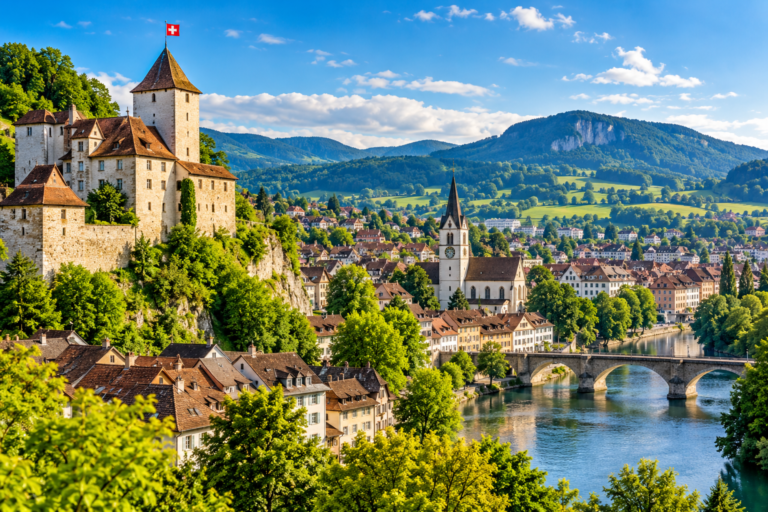

Basel-Stadt Canton
Introduction
At the northwestern edge of Switzerland, where the Rhine River flows past historic streets and modern architectural landmarks, Basel-Stadt Canton offers a distinctive introduction to Swiss life. Unlike cantons known primarily for alpine landscapes, this compact canton stands out for its cultural heritage, international connections, thriving economy and remarkable concentration of museums. Its position at the meeting point of Switzerland, France and Germany gives it an atmosphere that feels both unmistakably Swiss and distinctly European.
Basel, the canton’s capital and principal urban centre, is the heart of this experience. Visitors can explore a beautifully preserved Old Town, admire the red sandstone towers of Basel Minster, browse internationally respected art collections and relax beside the Rhine. The city also hosts Basler Fasnacht, a spectacular carnival tradition recognised by UNESCO as intangible cultural heritage. Beyond the main city, the quieter municipalities of Riehen and Bettingen offer green spaces, village character and opportunities to experience a different side of the canton.
For travellers planning a Basel-Stadt travel guide, this small canton offers plenty to discover in a short visit. Historic architecture, contemporary design, local food, riverside walks and convenient cross-border connections make it an attractive destination for weekend breaks, museum holidays and wider Swiss itineraries. Its appeal lies not in vast wilderness but in the way history, creativity and everyday life come together within a remarkably accessible area.
Quick Facts About Basel-Stadt Canton
| Fact | Information |
|---|---|
| Official Name | Canton of Basel-Stadt |
| Capital | Basel |
| Largest City | Basel |
| Area | Approximately 37 km² |
| Population | 210,529 at the end of 2025 |
| Official Language | German |
| Highest Point | St. Chrischona area, approximately 522 m above sea level |
| Lowest Point | Rhine valley, approximately 244 m above sea level |
| Joined Swiss Confederation | 1501 |
| Vehicle Registration Code | BS |
| Number of Municipalities | 3 |
Population: official cantonal statistics for the end of 2025. Area and elevation figures are rounded; the precise lowest-point elevation depends on the reference point used.
Where Is Basel-Stadt Located?
Basel-Stadt lies in northwestern Switzerland, close to the country’s borders with France and Germany. The Rhine forms a defining feature of its geography and urban identity, while the surrounding region connects Basel with the French region of Alsace and Germany’s Baden-Württemberg.
The canton borders Basel-Landschaft, the neighbouring Swiss canton that separated politically from Basel in 1833. It also meets German territory around the municipalities of Riehen and Bettingen and has close connections with France through the wider Basel metropolitan region.
This location has made Basel an important centre for international trade, transport, business and cultural exchange. The city’s railway connections, road network and proximity to EuroAirport Basel-Mulhouse-Freiburg allow travellers to reach destinations across several countries with relative ease.
For visitors, the international setting creates practical opportunities to combine a Swiss city break with excursions into the Black Forest or Alsace. However, Switzerland remains outside the European Union, so visitors should check the applicable border, transport and mobile-data arrangements for their own circumstances.
Geography and Landscape
Basel-Stadt is one of Switzerland’s smallest cantons by area. Rather than dramatic Alpine peaks, its landscape consists of a densely developed urban centre, the broad Rhine valley, parks, cultivated land and gently rising wooded hills towards the eastern municipalities.
The Rhine is the defining natural feature. It divides central Basel into Grossbasel on the southern and western side and Kleinbasel on the northern and eastern side. Bridges, riverside promenades and historic ferry crossings connect these districts, creating some of the city’s most recognisable views.
Riehen and Bettingen provide a greener contrast to the urban centre. Bettingen’s St. Chrischona area reaches approximately 522 metres above sea level and offers elevated views over the surrounding countryside. On clear days, distant Alpine views may be visible from suitable viewpoints.
There are no major Alpine lakes or ski mountains within the canton. Instead, the natural attractions are accessible walking routes, urban green spaces, gardens and the Rhine itself. The combination of compact geography and extensive public transport makes it easy to move between cultural attractions and quieter outdoor areas.
History of Basel-Stadt Canton
Early settlement and the Roman era
Basel’s history stretches back more than two thousand years. Its position beside the Rhine helped make the area strategically valuable for settlement, movement and trade. Roman-era settlement contributed to the region’s early development, while the river continued to shape its importance as a European crossing point.
Over the centuries, Basel grew into a religious, commercial and administrative centre. Its location between different European regions encouraged the exchange of goods, ideas and cultural influences.
The medieval city
During the Middle Ages, Basel developed as an important ecclesiastical centre. Basel Minster, constructed and rebuilt over several centuries, became one of its defining landmarks. Its Romanesque and Gothic architectural features reflect the city’s long religious and civic history.
Merchants and craftspeople helped establish Basel’s economic importance. The Old Town’s narrow lanes, historic courtyards and surviving medieval gateways still offer glimpses of this earlier urban landscape.
The Council of Basel, held between 1431 and 1449, further reinforced the city’s place in European religious and political history.
Joining the Swiss Confederation
Basel joined the Swiss Confederation in 1501. The event strengthened its political position and remains an important milestone in the canton’s identity. The historic Town Hall was expanded and decorated during the early sixteenth century, reflecting the growing importance of civic government.
Basel subsequently became an influential centre for printing, scholarship and humanist thought. The city’s intellectual environment helped establish a lasting relationship between education, publishing and the arts.
The separation of Basel in 1833
A major political turning point came in 1833, when conflict between the city and its rural territories resulted in the division of the former Canton of Basel into Basel-Stadt and Basel-Landschaft. The two cantons developed separate political institutions and identities.
This division explains an unusual feature of Basel-Stadt today: despite its name, it is not simply the municipality of Basel. It is a canton containing three municipalities—Basel, Riehen and Bettingen.
Modern development
In modern times, Basel became a major centre for the pharmaceutical industry, international business, logistics, research and the arts. Its position on the Rhine and its cross-border connections continue to support its economy.
Today, the canton combines historic streets and buildings with contemporary architecture, research institutions and a lively cultural scene. Its development illustrates how a small geographical area can have an influence far beyond its borders.
Culture and Traditions

Culture is central to the identity of Basel-Stadt. The canton brings together traditional Swiss customs, international influences, visual arts, music, theatre and modern design. Its German-speaking population has strong regional traditions, including a distinctive Basel dialect.
Basler Fasnacht: The famous Basel Carnival
The most recognisable cultural event is Basler Fasnacht, the city’s celebrated carnival. Recognised by UNESCO in 2017 as intangible cultural heritage, it transforms Basel into a lively spectacle of illuminated lanterns, elaborate costumes, masked performers, drums and fifes.
The festival’s famous opening, Morgestraich, begins at 4 a.m. on the Monday following Ash Wednesday. In darkness, the city centre fills with illuminated, hand-painted lanterns carried by marching groups. The event continues for three days, combining music, satire, local humour and community participation.
Travellers hoping to attend should plan ahead, as accommodation can become busy around carnival dates. The atmosphere is distinctive, and the festival offers a cultural experience quite different from the colourful street parades associated with many other European carnivals.
Art, architecture and music
Basel’s cultural life extends throughout the year. Museums, galleries, theatres, concert venues and architectural landmarks attract visitors interested in both historical collections and contemporary creativity.
The city is also internationally associated with Art Basel, a major contemporary art fair. Together with its established museums and design-focused architecture, this event reinforces Basel’s reputation as a significant international arts destination.
Traditional neighbourhood celebrations, riverside gatherings and local markets add a more everyday dimension to the cultural experience.
Major Cities and Towns in Basel-Stadt
Basel-Stadt has three municipalities. Basel is the main urban centre, while Riehen and Bettingen provide quieter residential and countryside settings.
1. Basel
Basel is the canton’s capital, largest municipality and principal destination for visitors. Its historic centre contains medieval streets, traditional squares, striking religious architecture and a variety of shops, cafés and restaurants.
Major highlights include Basel Minster, the Town Hall, Spalentor, the Mittlere Brücke and the riverside districts. Art lovers can spend hours exploring the Kunstmuseum Basel and other museums, while architecture enthusiasts can compare centuries-old buildings with striking contemporary designs.
Basel is also a practical base for international travel, thanks to its main railway station, urban transport network and access to destinations in France and Germany.
2. Riehen
Riehen lies northeast of Basel and combines residential neighbourhoods, green surroundings and internationally recognised cultural attractions. Although it is closely connected to the city, it has a more spacious atmosphere in many areas.
Its principal visitor attraction is Fondation Beyeler, an internationally renowned art museum housed in a building designed by architect Renzo Piano. The collection focuses on classical modern and contemporary art, while the surrounding park adds to the experience.
Riehen is an excellent choice for visitors who want to combine museum visits with a quieter afternoon among gardens, open spaces and village streets.
3. Bettingen
Bettingen is the smallest municipality in Basel-Stadt and offers a rural contrast to the main city. Situated among wooded hills east of Basel, it includes the village of Bettingen and the settlement around St. Chrischona.
The St. Chrischona area, at approximately 522 metres above sea level, is the canton’s highest point. The surrounding landscape provides opportunities for countryside walks and views across the Basel region.
Bettingen suits visitors seeking quieter scenery, fresh air and a better understanding of the canton’s less urban side.
Top Attractions in Basel-Stadt Canton
There are plenty of Basel-Stadt attractions to explore, from historic landmarks and world-class museums to public art and riverside experiences. The following places are excellent starting points for a first visit.
1. Basel Minster
One of the city’s defining landmarks, Basel Minster is known for its red sandstone exterior, patterned roof tiles and twin towers. Built and developed between 1019 and 1500, the church combines Romanesque and Gothic elements. The nearby Pfalz terrace offers beautiful views across the Rhine and Kleinbasel.
2. Basel Town Hall
The striking red Town Hall stands on Marktplatz and remains the seat of the canton’s government and parliament. Its decorated courtyard, historic murals and distinctive architecture make it a rewarding stop for visitors interested in Swiss civic history.
3. Kunstmuseum Basel
One of Switzerland’s most prominent art museums, Kunstmuseum Basel presents works spanning several centuries, from European old masters to modern and contemporary art. Its historic collection and multiple exhibition spaces make it a major attraction for art enthusiasts.
4. Fondation Beyeler
Located in Riehen, this museum brings together modern and contemporary art, temporary exhibitions and carefully designed architecture. Its landscaped setting makes the visit appealing even to travellers who want to enjoy the building and grounds as well as the collection.
5. Mittlere Brücke
This historic bridge connects Grossbasel and Kleinbasel and provides one of the best perspectives on the Rhine and the surrounding cityscape. It is particularly attractive for photography, evening walks and observing daily life along the river.
6. Spalentor
One of Basel’s most impressive surviving medieval city gates, Spalentor recalls the period when fortified entrances controlled access to the city. Its towers and decorative stonework are highlights of a walk through the historic centre.
7. Museum Tinguely
Dedicated to Swiss artist Jean Tinguely, this museum explores kinetic art and inventive mechanical sculptures. The building, designed by Mario Botta, stands beside the Rhine and offers a very different experience from Basel’s historic monuments.
8. Rhine waterfront
Basel’s riverside is a destination in its own right. Walk along the banks, pause at riverside cafés, cross by one of the traditional ferries or enjoy the views from the promenade. In summer, the river becomes central to local recreation, including the famous Rhine swim.
Nature and Outdoor Activities
Basel-Stadt may be small, but outdoor experiences are an important part of its appeal. The Rhine waterfront, city parks, botanical gardens and wooded surroundings provide opportunities to enjoy the outdoors without travelling far from the main attractions.
Walking and cycling
Walking is one of the best ways to explore Basel. Routes through the Old Town link historic landmarks, market squares, museums and river crossings. For a more relaxed outing, follow the Rhine promenade or travel towards Riehen and Bettingen for greener scenery.
Cycling is another practical option. The city’s cycle routes and connections with the surrounding region make it possible to combine sightseeing with longer rides. Visitors should use designated cycling facilities and check local rules before taking bikes on public transport.
Swimming in the Rhine
Swimming in the Rhine is one of Basel’s most distinctive summer activities. Confident swimmers enter the river upstream and float downstream with the current, often carrying their clothes in the locally invented, fish-shaped Wickelfisch dry bag.
This activity requires care. The river has a strong current and can be dangerous, even for experienced swimmers. Check current water conditions and official safety guidance, swim with another person, stay in permitted areas and never rely on an inflatable device or dry bag as a flotation aid.
Parks and countryside
Visitors can also enjoy botanical gardens, landscaped green spaces and walking routes around Riehen and Bettingen. The St. Chrischona area is especially worthwhile for travellers who want a break from the busy city centre.
Skiing and mountain hiking are not major activities within the canton itself. Travellers seeking alpine adventures can use Basel’s railway connections to plan day trips to mountain destinations elsewhere in Switzerland.
Food and Local Specialties
Basel’s food culture reflects its location at the crossroads of Switzerland, France and Germany. Traditional Swiss dishes share the table with French-inspired cooking, German regional influences and international cuisine.
One of the best-known local specialties is Basler Läckerli, a firm, spiced biscuit traditionally prepared with ingredients such as honey, nuts, candied citrus peel and spices. It makes a popular souvenir and is widely associated with the city.
Other culinary experiences include:
- Basler Mehlsuppe: A traditional flour-based soup strongly associated with the Basel carnival season.
- Basler Brunsli: A chocolate-and-almond biscuit commonly associated with Swiss festive baking.
- Swiss cheeses and seasonal dishes: Available in restaurants, markets and traditional eateries.
- Regional wines and local drinks: Worth exploring in restaurants and specialist shops.
Basel also has a diverse modern dining scene, ranging from casual cafés and bakeries to fine dining and international restaurants. Seasonal markets and food events offer opportunities to discover regional produce and local flavours.
For a simple introduction to the city’s culinary identity, try Basler Läckerli from a local bakery, enjoy a meal in the Old Town and look for traditional dishes during carnival season.
Economy and Industry
Basel-Stadt has an economic influence far greater than its small geographical size. The canton is internationally recognised for life sciences, pharmaceuticals, chemicals, research, finance, logistics and trade.
Major life-sciences businesses and research organisations contribute to Basel’s international profile. The city’s universities, hospitals and scientific institutions also support innovation and specialised employment.
Its position on the Rhine, combined with international railway and road connections, has helped establish Basel as an important transport and logistics centre. Cross-border commuting and business links reinforce its role within the wider regional economy.
Tourism, culture, exhibitions and hospitality provide another important dimension. Museums, art events, historic attractions and international conferences bring visitors throughout the year. Agriculture plays a much smaller role than in many rural Swiss cantons, although green spaces and cultivated land remain visible around the outer municipalities.
Transportation and Getting Around
Basel-Stadt is easy to explore without a car. Trams and buses connect the central railway station, Old Town, museums, residential neighbourhoods and surrounding municipalities.
Arriving by train
Basel SBB is the principal railway station for Swiss domestic services and many international connections. Travellers can reach Basel from major Swiss cities and continue onwards by rail to destinations throughout the country.
Basel also has an important international rail connection through Basel Badischer Bahnhof, which serves routes associated with Germany and the wider regional network.
Arriving by air
EuroAirport Basel-Mulhouse-Freiburg is located in neighbouring France and serves the wider Basel region. Despite its location outside Switzerland, it is a convenient airport for visitors to Basel-Stadt. Check your flight’s terminal, ground transport arrangements and any relevant border requirements before travelling.
Public transport within the canton
Trams and buses make getting around straightforward. Basel’s historic centre is also compact enough to explore on foot, especially if you are staying near the main station or Old Town.
Visitors staying at participating Basel hotels should check whether their accommodation provides the BaselCard, which offers public-transport benefits and discounts on selected attractions. Conditions and eligible services should be confirmed through the official tourism website.
For current timetables, fares and connections, consult the official SBB and local public-transport information before setting out.
Best Time to Visit Basel-Stadt Canton
Basel is a year-round destination, but the best time to visit depends on whether you prefer outdoor activities, cultural festivals, art exhibitions or seasonal markets.
Spring: March–May
Spring is a good time to explore the Old Town, visit museums and enjoy riverside walks as temperatures become milder. The famous Fasnacht carnival usually falls between mid-February and early March, depending on the calendar, so check the dates if the festival is a priority.
Summer: June–August
Summer is ideal for enjoying the Rhine, outdoor cafés, walking tours and cycling. The city has an active riverside atmosphere, while longer daylight hours make sightseeing more comfortable. Art Basel and other cultural events may also influence your travel dates.
Autumn: September–November
Autumn suits visitors interested in architecture, museums, food and quieter sightseeing. Parks and the surrounding countryside take on seasonal colours, while cooler weather can make long urban walks pleasant. Rain is possible, so keep indoor alternatives in your itinerary.
Winter: December–February
Winter brings festive markets, seasonal food and atmospheric evenings in the historic centre. Museum visits are particularly appealing when the weather is cold. Visitors hoping to experience Fasnacht should check its official dates, as the event may begin in February or March.
Basel has a temperate climate, with generally warmer summers and cooler winters. Conditions can change, so check the forecast before travelling. For most first-time visitors, late spring through early autumn offers a particularly good balance of sightseeing and outdoor activities.
Travel Tips for Visitors
A little preparation will help you get more out of your Basel-Stadt visit.
- Currency: Switzerland uses the Swiss franc (CHF). Credit and debit cards are widely accepted, although carrying a small amount of cash can be useful.
- Language: German is the official language. Swiss German is widely spoken in everyday life, while English is commonly encountered in tourist services and international businesses.
- Transport: Consider travelling by tram, bus and train rather than renting a car. Check current tickets and fares before travelling.
- Accommodation: Staying near Basel SBB or the Old Town makes many attractions easy to reach. Book early for major fairs, conferences and carnival.
- Museums: Check opening days, exhibition schedules and admission prices in advance. Some museums have special free or reduced-admission periods.
- Cross-border trips: France and Germany are close by, but check your passport or visa requirements, transport tickets and mobile roaming arrangements before crossing borders.
- Local etiquette: Be considerate in residential neighbourhoods, follow posted rules and dispose of rubbish appropriately.
- Rhine swimming: Never assume the river is safe based on appearance alone. Check official conditions, follow local warnings and swim only if you are competent in moving water.
- Seasonal planning: Reserve extra time during Fasnacht and major art events, when accommodation and central streets may be particularly busy.
For current visitor information, the official Basel Tourism website provides attraction details, events, city walks and practical travel guidance.
Interesting Facts About Basel-Stadt Canton
1. One canton, three municipalities
Basel-Stadt consists of Basel, Riehen and Bettingen. This makes the canton more than just its principal city.
2. The Rhine defines the city
The river divides Basel’s central districts and has shaped the city’s history, transport, trade and recreation.
3. Its carnival is UNESCO-recognised
Basler Fasnacht was added to UNESCO’s Representative List of the Intangible Cultural Heritage of Humanity in 2017.
4. Basel has a remarkable concentration of museums
The city and surrounding region offer a wide variety of art, history, design and specialist collections.
5. Basel joined the Confederation in 1501
Its entry into the Swiss Confederation was an important turning point in the city’s political history.
6. The canton’s highest point is outside the city centre
The St. Chrischona area in Bettingen reaches approximately 522 metres above sea level.
7. Basel has its own famous biscuit
Basler Läckerli is a traditional spiced biscuit that is popular as a local treat and souvenir.
8. Historic and modern architecture coexist
Basel’s medieval landmarks stand alongside contemporary buildings and international business headquarters, creating a varied cityscape.
Why Visit Basel-Stadt Canton?
Basel-Stadt is an excellent destination for travellers who want to experience a different side of Switzerland. Instead of concentrating on mountain scenery, the canton offers a compelling mixture of urban history, art, architecture, food and international culture. Its compact size makes it possible to discover many of its principal attractions without spending hours travelling between destinations.
The canton is especially rewarding for museum enthusiasts, architecture lovers, history fans, food travellers and visitors interested in European cultural traditions. Families can enjoy the Old Town, parks and museums, while couples can combine riverside walks with restaurants and art exhibitions. Its transport links also make Basel a useful base for exploring the wider region.
For travellers with more time, Riehen and Bettingen provide a change of pace from the city centre. The former offers access to Fondation Beyeler, while the latter reveals a greener landscape and elevated views. Together, these municipalities show that Basel-Stadt has more variety than its small size might suggest.
Conclusion
Basel-Stadt Canton brings together many of the qualities that make Switzerland distinctive, but expresses them through a uniquely urban and international character. The Rhine, medieval streets, historic civic buildings and outstanding museums tell the story of a place shaped by centuries of trade, scholarship and cultural exchange. At the same time, modern architecture, scientific industries and contemporary art keep the canton firmly connected to the present.
For anyone planning a trip to northwestern Switzerland, Basel deserves more than a brief stop on the way to another destination. Spend time exploring its Old Town, discover its museums, taste Basler Läckerli, experience the atmosphere along the river and, if your dates allow, witness the extraordinary tradition of Basler Fasnacht.
Whether you are planning a weekend city break or using Basel as a starting point for a wider Swiss adventure, Basel-Stadt offers a rewarding combination of heritage, creativity and everyday Swiss life. It is a small canton with a remarkably large cultural presence—and a destination worth discovering at your own pace.
Frequently Asked Questions About Basel-Stadt
1. What is Basel-Stadt Canton famous for?
Basel-Stadt is known for its historic Old Town, Basel Minster, world-class art museums, the Rhine River, pharmaceutical industry and UNESCO-recognised Basler Fasnacht carnival.
2. What is the capital of Basel-Stadt Canton?
Basel is the capital and largest city of the canton. It is also the main centre for business, transport, culture and tourism in the region.
3. How many municipalities are in Basel-Stadt?
Basel-Stadt has three municipalities: Basel, Riehen and Bettingen. Basel is the principal urban centre, while Riehen and Bettingen offer greener residential and countryside settings.
4. What are the best things to do in Basel-Stadt?
Top activities include exploring Basel’s Old Town, visiting Basel Minster and Kunstmuseum Basel, discovering Fondation Beyeler in Riehen, walking across Mittlere Brücke and enjoying the Rhine waterfront. If you visit during the carnival season, Basler Fasnacht is a major cultural highlight.
5. When is the best time to visit Basel-Stadt?
Late spring through early autumn is ideal for walking, cycling and enjoying the Rhine. Winter is attractive for museums and seasonal markets, while February or March may be best for visitors specifically interested in Basler Fasnacht. The exact carnival dates change each year.