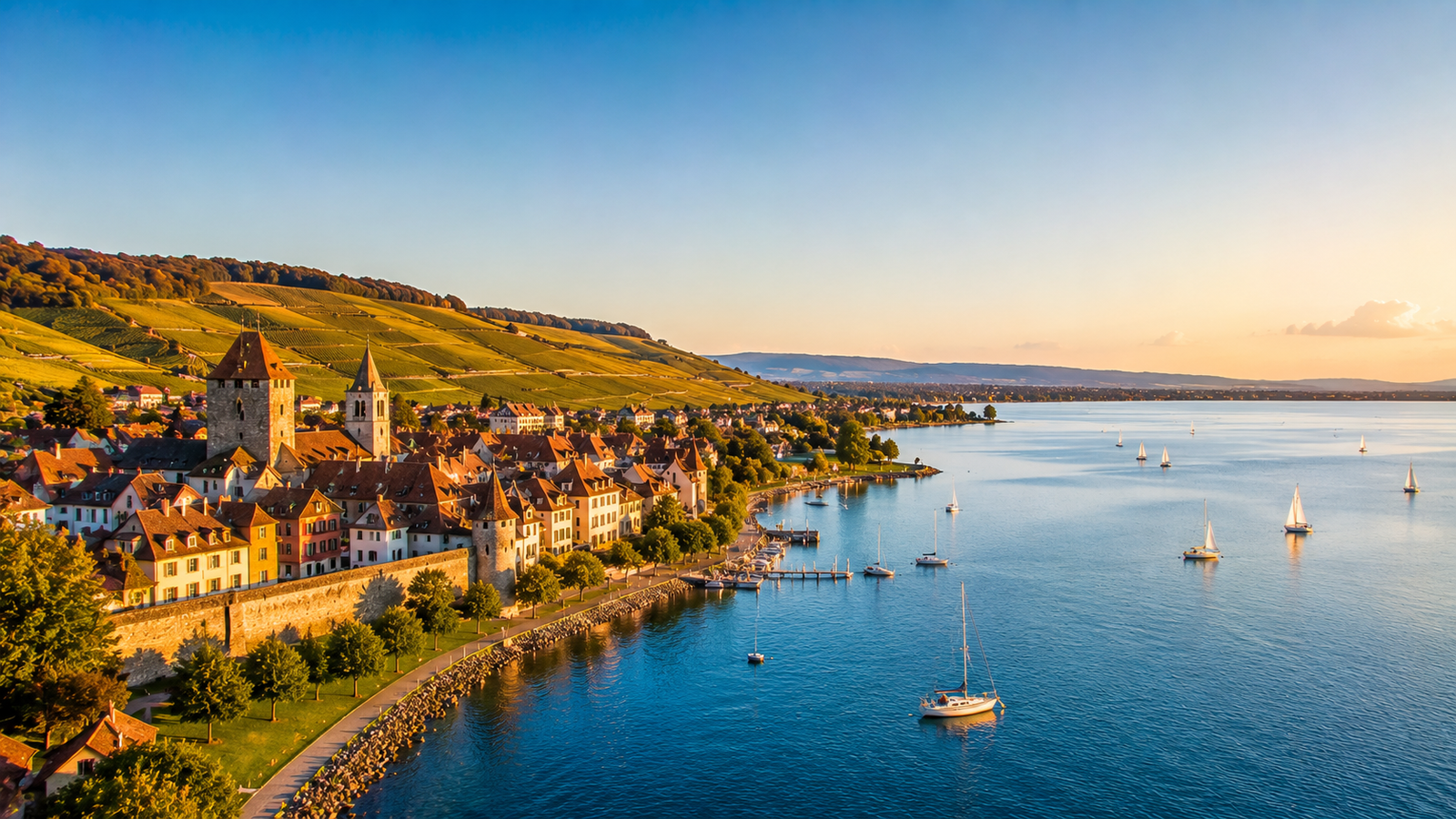
Lake Murten, Murten, Switzerland
Lake Murten: Switzerland’s Historic Lakeside Retreat Between Two Cultures
At first glance, Lake Murten appears calm and understated compared to some of Switzerland’s more famous Alpine lakes. Yet beneath its peaceful surface lies one of the country’s most fascinating cultural landscapes—a region where medieval history, lakeside recreation, wine-growing traditions, and linguistic diversity meet along the shores of western Switzerland.
Known as Murtensee in German and Lac de Morat in French, Lake Murten occupies a unique position between the cantons of Fribourg and Vaud. It is the smallest of the three lakes connected by the waterways of the Jura Three Lakes region, alongside Lake Neuchâtel and Lake Biel. While often overshadowed by larger Swiss lakes, Lake Murten rewards visitors with authentic charm, scenic beauty, and a slower pace that feels increasingly rare in modern travel.
For travelers seeking a destination that combines history, nature, and local culture, Lake Murten offers one of Switzerland’s most rewarding experiences.
A Lake at the Crossroads of Switzerland
Lake Murten sits in a remarkable geographical setting. Stretching across a fertile landscape of vineyards, farmland, forests, and historic settlements, the lake forms part of a broader region shaped by both German-speaking and French-speaking Switzerland.
This cultural meeting point has influenced the area’s identity for centuries. Visitors quickly notice bilingual place names, architectural influences from different traditions, and a welcoming atmosphere that reflects the region’s diverse heritage.
Unlike the dramatic mountain lakes of the Alps, Lake Murten’s appeal comes from its balance and accessibility. Gentle hills surround the shoreline, creating open views across the water and allowing visitors to appreciate the landscape from numerous perspectives.
The lake’s calm waters, combined with its relatively mild climate, have made it a favored destination for recreation and leisure for generations.
Murten: The Medieval Town That Defines the Lake
No visit to Lake Murten is complete without exploring the town of Murten itself.
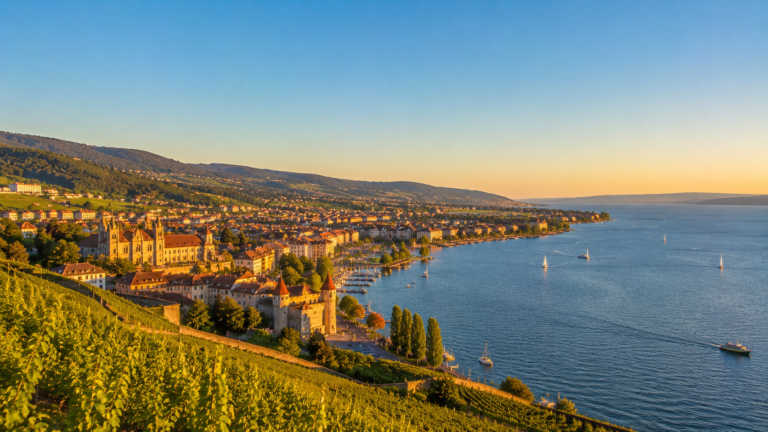
Perched above the southeastern shore, Murten is widely regarded as one of Switzerland’s best-preserved medieval towns. Its historic center remains enclosed by defensive walls that date back to the Middle Ages, creating a remarkably intact urban landscape.
Walking through the old town feels like stepping into another era. Arcaded streets, historic stone buildings, colorful facades, and narrow passageways reveal centuries of history while remaining lively and welcoming.
One of Murten’s most distinctive features is its medieval ramparts. Visitors can walk along portions of the preserved walls and enjoy elevated views of rooftops, the lake, and the surrounding countryside.
The town’s picturesque lakeside promenade adds another dimension to the experience. Cafés, restaurants, and public spaces create a pleasant transition between the historic center and the waterfront, making Murten a destination that can be explored comfortably on foot.
Echoes of One of Switzerland’s Defining Battles
Lake Murten’s historical significance extends far beyond its scenic beauty.
The region is closely associated with the Battle of Murten, fought in 1476 during the Burgundian Wars. The conflict became one of the most important military victories in Swiss history and helped strengthen the reputation of the Old Swiss Confederacy across Europe.
Today, visitors can explore historical sites connected to this period, including memorial locations and museums that help explain the events that shaped the region.
While the battlefield itself has long returned to peaceful countryside, the legacy of the battle remains deeply woven into local identity and Swiss historical memory.
For travelers interested in understanding Switzerland beyond its mountains and postcard scenery, Murten provides valuable insight into the country’s political and cultural development.
Life on the Water
Lake Murten has long served as both a transportation route and a recreational destination.
Today, boating remains one of the best ways to experience the lake. Passenger cruises connect various lakeside communities during the warmer months, allowing travelers to enjoy changing perspectives of vineyards, villages, and shoreline landscapes.
The water is particularly inviting during summer. Swimming areas, small beaches, and lakeside recreation zones attract families and local residents seeking relief from warm temperatures.
Kayaking, paddleboarding, sailing, and other non-motorized water activities are also popular, thanks to the lake’s generally calm conditions.
Unlike some of Switzerland’s busier resort destinations, Lake Murten often retains a peaceful atmosphere even during peak travel periods, allowing visitors to enjoy the scenery without feeling overwhelmed by crowds.
Vineyards Above the Shore
One of the most distinctive features of the Lake Murten region is its connection to viticulture.
The sunny slopes surrounding portions of the lake support vineyards that have been cultivated for centuries. These wine-growing areas contribute significantly to the character of the landscape, particularly on the Mont Vully peninsula.
Mont Vully rises modestly above the lake yet provides some of the most impressive panoramic views in the region. Walking trails weave through vineyards and forested sections, leading to viewpoints overlooking Lake Murten and the neighboring lakes of the Three Lakes region.
The area’s wine culture adds another layer to the visitor experience. Seasonal events, local wineries, and traditional village celebrations highlight the agricultural heritage that continues to shape daily life around the lake.
Even travelers with little interest in wine often appreciate the beauty of the vineyard-covered hillsides and the sweeping views they provide.
Cycling and Walking Through the Three Lakes Region
Lake Murten is particularly well suited for active travelers.
The relatively gentle terrain makes the region accessible for cycling, walking, and leisurely outdoor exploration. Scenic routes follow sections of the shoreline while connecting visitors to villages, nature reserves, and cultural attractions.
Cyclists frequently include Lake Murten as part of longer journeys through western Switzerland. The network of well-marked routes allows travelers to explore at their own pace while enjoying uninterrupted views across the water.
For walkers, lakeside paths and countryside trails reveal a landscape that changes subtly throughout the seasons. Spring brings blossoming orchards and fresh greenery, while autumn introduces warm colors across vineyards and woodlands.
The combination of natural beauty and historical landmarks ensures that every route offers something beyond simple scenery.
Seasonal Character and Local Atmosphere
Lake Murten transforms noticeably throughout the year.
Spring introduces vibrant vegetation and comfortable temperatures, making it an ideal time for walking and cycling. Summer brings lake activities, outdoor dining, and passenger cruises.
Autumn is often considered one of the most beautiful seasons, particularly when vineyards take on golden and crimson hues. Harvest activities add energy to the region while maintaining its relaxed atmosphere.
Winter reveals a quieter side of the lake. Misty mornings, peaceful waterfronts, and fewer visitors create opportunities for reflective exploration. The medieval streets of Murten become especially atmospheric during the colder months, when historic architecture and seasonal lighting enhance the town’s charm.
Why Lake Murten Rewards Slow Travel
Many of Switzerland’s most famous destinations impress visitors immediately with dramatic peaks or world-famous landmarks. Lake Murten offers something different. Its appeal emerges gradually through details: the sound of water against an old harbor wall, the view from a medieval rampart, a vineyard path overlooking the lake, or a quiet cruise beneath open skies.
The destination succeeds not because it competes with Switzerland’s most spectacular landscapes, but because it provides a deeper connection to the country’s cultural and historical character. Here, nature and heritage coexist without distraction, creating an experience that feels authentic, welcoming, and distinctly Swiss.
For travelers willing to slow down and explore beyond the obvious, Lake Murten reveals one of the most rewarding lakeside regions in Switzerland.