Gorner Gorge, Zermatt, Switzerland
Gorner Gorge: Exploring Zermatt’s Spectacular Glacier-Carved Canyon
Long before travelers arrived in Zermatt to admire the Matterhorn, powerful natural forces were quietly shaping another remarkable attraction hidden just beyond the village. Deep within a narrow canyon carved by glacier-fed waters, Gorner Gorge reveals a side of the Swiss Alps that feels raw, ancient, and surprisingly intimate.
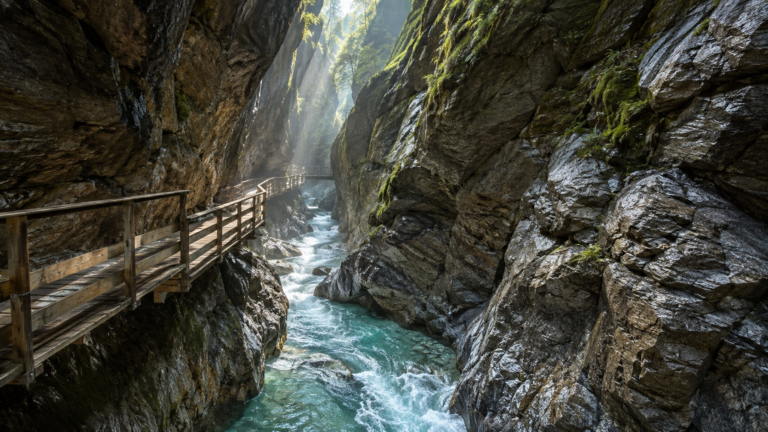
While the region is famous for towering peaks and panoramic mountain railways, Gorner Gorge offers a completely different experience. Here, visitors leave behind wide-open alpine vistas and descend into a world of polished stone walls, rushing turquoise water, and wooden walkways suspended above a river that has been sculpting the landscape since the end of the last Ice Age.
Just a short walk from the center of Zermatt, this geological wonder remains one of the most fascinating natural attractions in the Matterhorn region.
A Natural Masterpiece Created by Ice and Water
Gorner Gorge, known locally as Gornerschlucht, was formed by the Gornervispa, a river fed by meltwater from glaciers high above Zermatt. For thousands of years, this fast-moving water has cut steadily through the bedrock, creating a deep and narrow canyon that showcases the immense power of erosion.
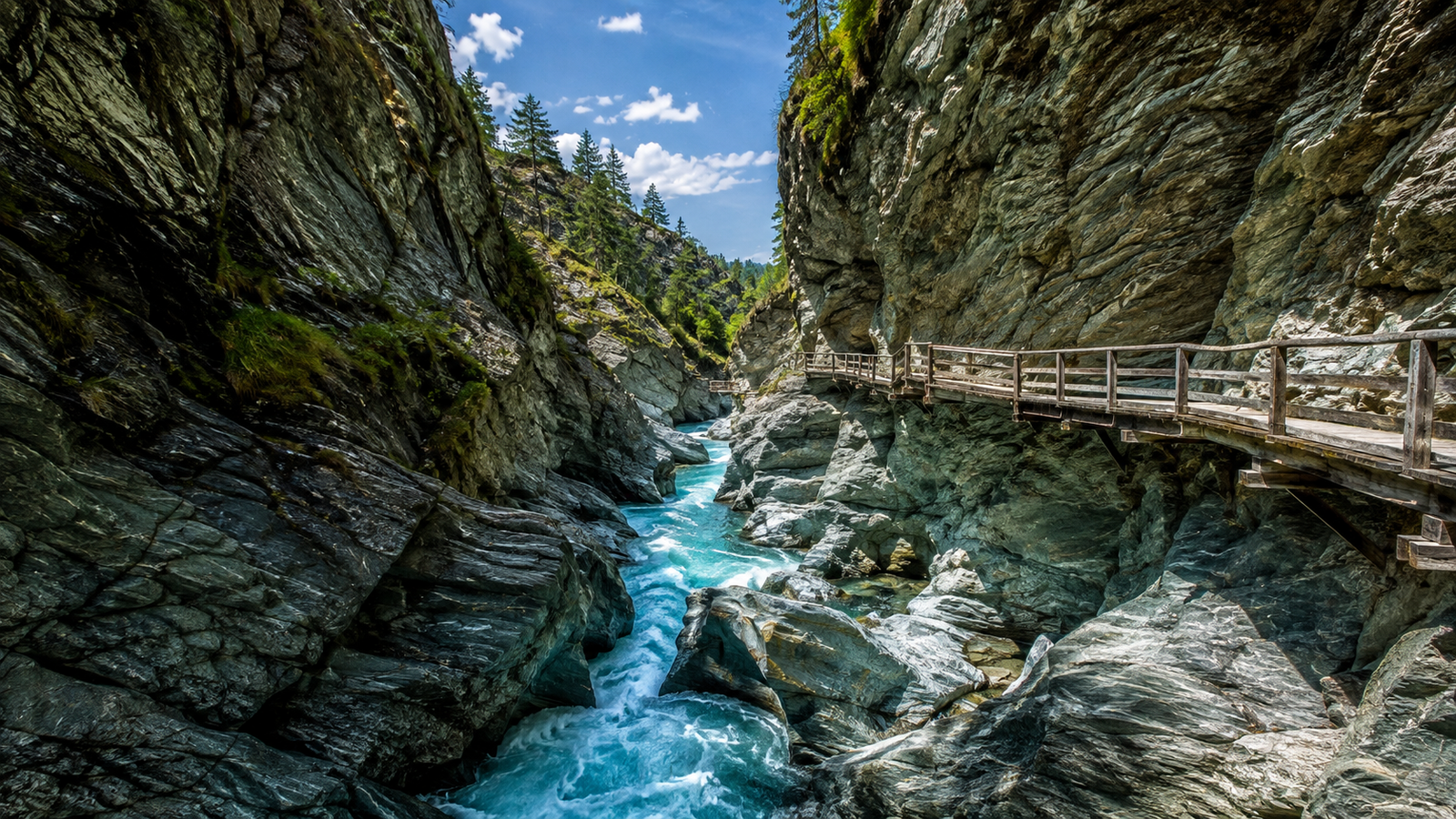
What makes the gorge particularly striking is the rock itself. The canyon walls consist largely of serpentinite, a distinctive greenish stone estimated to be around 220 million years old. The interaction between glacier water and this ancient rock has produced smooth, sculpted surfaces, swirling patterns, and dramatic formations that appear almost artistic in places.
Standing on the wooden walkways inside the gorge, visitors can see how water continues to shape the landscape today, carrying fine glacial sediments downstream while gradually deepening the canyon.
One of Zermatt’s Earliest Tourist Attractions
Although many visitors assume Gorner Gorge is a modern attraction, its history as a tourist destination reaches back to the nineteenth century.
The gorge was first made accessible to visitors in 1886 and 1887, during the early years of Zermatt’s development as an international mountain resort. Wooden footbridges and pathways were constructed to allow travelers to experience the dramatic canyon from within.
At a time when Alpine tourism was still evolving, providing safe access to such a powerful natural feature was considered an impressive achievement. More than a century later, visitors continue to follow a similar route through the gorge, experiencing a landscape that has captivated travelers for generations.
Walking Through the Gorge
The main attraction is the carefully constructed network of wooden walkways and viewing platforms attached directly to the canyon walls.
The route is relatively short but highly immersive. Visitors follow a series of galleries, bridges, and platforms that wind through the narrowest sections of the gorge. In some places, towering rock walls rise dramatically on both sides, while below, glacier water rushes through the confined channel with remarkable force.
The experience differs significantly from traditional mountain hikes. Rather than focusing on distant scenery, the gorge draws attention to details—the texture of the rock, the sound of the water, the cool air rising from below, and the constantly changing patterns created by light and shadow.
Because of the enclosed environment, the gorge often feels cooler than the surrounding valley, making it particularly enjoyable during warmer summer months.
The Remarkable Turquoise Waters
One of the most memorable features of Gorner Gorge is the color of the water.
The river originates from glaciers in the high Alps, including the extensive glacial systems surrounding the Gorner Glacier. Fine mineral particles suspended in the meltwater create the distinctive turquoise appearance often associated with Alpine rivers.
Under certain lighting conditions, particularly during autumn afternoons, the water can appear especially vibrant as sunlight reflects off the polished canyon walls and moving currents. The contrast between the bright turquoise water and the dark serpentinite rock creates one of the gorge’s most photogenic scenes.
Beyond the Boardwalks: Adventure in the Upper Gorge
For many visitors, the accessible lower section provides plenty of excitement. However, the upper portions of the gorge offer opportunities for those seeking a more adventurous experience.
Guided excursions through the upper gorge allow participants to explore sections that are inaccessible through the standard visitor route. These experiences may include traversing suspension bridges, navigating via ferrata sections, and crossing areas where the canyon becomes even more dramatic.
Unlike the family-friendly lower walkway, these guided adventures are designed for visitors seeking a closer encounter with the gorge’s rugged environment. Mountain guides help participants safely navigate terrain shaped by water, rock, and glacier activity.
Linking the Gorge to the Matterhorn Landscape
Although Gorner Gorge is often visited as a standalone attraction, it forms part of a larger network of natural and hiking destinations surrounding Zermatt.
Nearby trails connect the gorge with the hamlet of Blatten and the mountain area of Furi. Visitors exploring these routes encounter forests, Alpine meadows, and geological features that help explain how glaciers shaped the entire region.
A popular nearby highlight is the Furi suspension bridge, which spans high above the gorge. Stretching approximately 100 meters and hanging around 90 meters above the rushing river, the bridge provides a dramatic aerial perspective of the canyon below. From this vantage point, visitors gain a new appreciation for the scale of the landscape and the force of the water that created it.
A Different Side of Zermatt
Many travelers associate Zermatt with iconic mountain panoramas, luxury hotels, and views of the Matterhorn. Gorner Gorge presents a completely different perspective on the region.
Instead of looking upward toward snow-covered peaks, visitors look downward into the geological foundations of the Alps. The gorge tells a story of erosion, glaciation, and natural transformation that spans thousands of years.
It also offers a reminder that some of Switzerland’s most impressive attractions are not necessarily the highest or largest. Sometimes the most memorable experiences come from stepping into a hidden corner of the landscape and observing nature at work on a smaller scale.
Planning a Visit
Gorner Gorge is located on the southern edge of Zermatt and can be reached on foot in approximately fifteen minutes from the village. Its convenient location makes it an excellent addition to a day of sightseeing in the Matterhorn region.
The attraction is typically accessible during the warmer months when weather and safety conditions allow. Visitors should wear sturdy footwear, as surfaces inside the gorge can occasionally be damp from spray and changing mountain conditions.
Whether combined with a hike to Furi, a visit to the Gorner Glacier region, or a traditional sightseeing itinerary in Zermatt, the gorge provides an unforgettable encounter with the natural forces that shaped the Swiss Alps.
For travelers interested in geology, photography, hiking, or simply experiencing something beyond the usual mountain viewpoints, Gorner Gorge delivers one of the most distinctive and visually dramatic landscapes in Switzerland. Here, ancient stone, glacier water, and centuries of natural erosion combine to create an attraction that feels both timeless and constantly changing—a rare place where visitors can witness the ongoing story of the Alps unfolding beneath their feet.