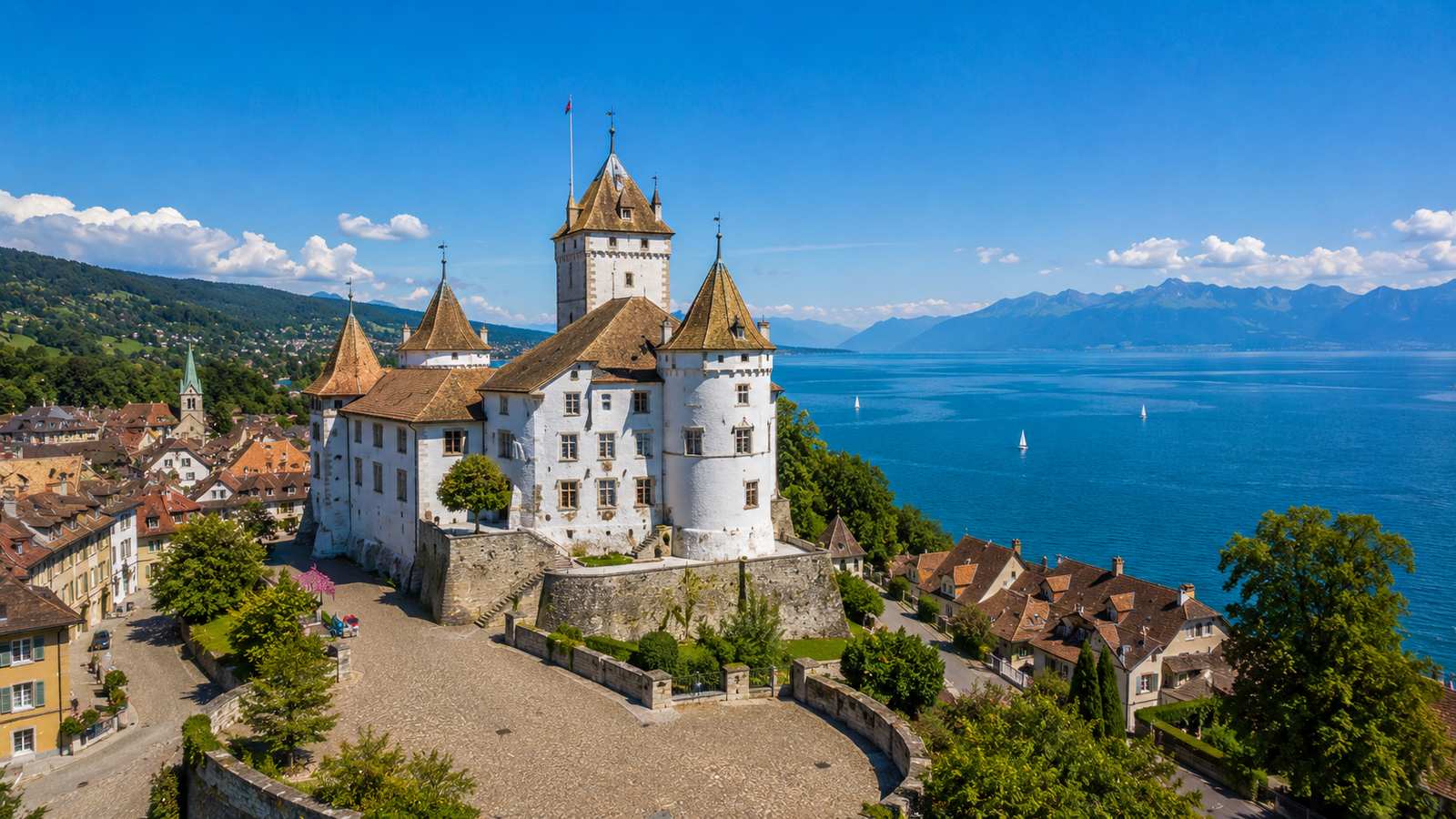
Château de Nyon, Nyon, Switzerland
Château de Nyon: Exploring the Historic Castle Above Lake Geneva
Perched on a hill above the sparkling waters of Lake Geneva, Château de Nyon dominates the skyline of one of Switzerland’s most charming lakeside towns. Visible from the waterfront, the railway line, and even boats crossing the lake, the castle has served as a symbol of Nyon for centuries. Today it stands not only as one of the region’s most recognizable landmarks but also as a gateway to the city’s long and fascinating history.
For travelers exploring western Switzerland, the castle offers a rare combination of medieval architecture, panoramic scenery, historical exhibitions, and cultural heritage. Its location between Geneva and Lausanne makes it an easy and rewarding stop for visitors interested in Swiss history beyond the country’s famous Alpine destinations.
A Strategic Stronghold Overlooking the Lake
The origins of Château de Nyon trace back to the Middle Ages when a fortified residence was established on the site by the rulers of the region. The structure occupied an important position overlooking Lake Geneva and the routes connecting northern and southern Europe.
The castle’s strategic significance increased after the House of Savoy took control of Nyon in the late thirteenth century. During the following centuries, the fortress evolved into an important administrative center. Additional defensive features were introduced, including towers facing the lake, helping strengthen the site’s role within the Savoyard territories.
Following the Bernese conquest of the Pays de Vaud in 1536, the castle underwent extensive transformations. Major construction work carried out during the sixteenth century reshaped the fortress and largely created the distinctive appearance visitors see today. The result is a unique architectural blend that reflects both medieval military design and Renaissance influences.
The Political Heart of Nyon
For hundreds of years, Château de Nyon served as the political and administrative center of the city.
Successive rulers used the building as a seat of government, and generations of officials managed regional affairs from within its walls. Even after the decline of its military role, the castle remained central to civic life.
When the City of Nyon acquired the property in the early nineteenth century, the building continued to serve public functions. Courts, prisons, council chambers, and administrative offices occupied various sections of the castle. These evolving roles helped preserve the structure and ensured that it remained closely connected to the daily life of the community.
Unlike many castles that became abandoned ruins or private residences, Château de Nyon continued to function as a living public institution throughout much of its history.
A Museum Inside a Castle
One of the most appealing aspects of Château de Nyon is that visitors are not limited to viewing the exterior.
The castle houses a museum that explores the history of Nyon and the surrounding region. Established in the nineteenth century, it ranks among Switzerland’s early historical museums and has gradually expanded its collections over the decades.
Exhibitions guide visitors through more than two thousand years of local history, from the Roman era to the modern period. Archaeological discoveries, historical artifacts, documents, artworks, and everyday objects reveal how Nyon developed over the centuries.
The museum’s setting enhances the experience. Rather than displaying history in a modern building detached from its subject, the exhibitions unfold inside the very structure that witnessed much of that history.
Walking through stone corridors, staircases, chambers, and former administrative rooms creates a strong sense of connection with the past.
Discovering Nyon’s Famous Porcelain
Among the museum’s most celebrated collections is its display of Nyon porcelain.
During the late eighteenth century, Nyon became home to one of Switzerland’s notable porcelain manufactories. The factory produced elegant pieces inspired by European artistic trends of the era and supplied wealthy clients throughout the region.
Although production lasted only a few decades, Nyon porcelain achieved lasting recognition for its craftsmanship and refined decorative style.
The castle museum preserves an important collection of these historic pieces, offering visitors an opportunity to understand a lesser-known chapter of Swiss cultural and industrial history.
Delicate tableware, decorative objects, and artistic designs provide insight into both the technical skills and aesthetic tastes of the period.
The Remarkable Prison Cells
One of the most unexpected features of Château de Nyon lies below the grand halls and exhibition galleries.
The castle once housed district prisons, which remained in operation until the late twentieth century. Today, preserved prison areas allow visitors to explore a different side of the building’s history.
The contrast between elegant reception rooms and stark detention spaces creates a compelling narrative about justice, authority, and daily life in earlier centuries.
For many visitors, the preserved prison cells offer one of the most memorable experiences within the castle. They provide a tangible reminder that this was not merely a noble residence but a working center of government and law.
Views Across Lake Geneva
Even travelers with only a casual interest in history often find themselves drawn to Château de Nyon because of its location.
The castle occupies a commanding position above the old town, providing sweeping views across Lake Geneva toward the French Alps. On clear days, the scenery is exceptional.
The combination of historic architecture and natural beauty makes the castle one of the most photogenic sites in the canton of Vaud. The surrounding square and terraces offer excellent vantage points for appreciating both the building itself and the broader landscape.
Visitors frequently combine a castle visit with a walk through Nyon’s historic center, the lakeside promenade, and nearby cultural attractions.
Architecture Worth Examining
The castle’s appearance reflects centuries of adaptation.
Its towers, courtyards, galleries, and distinctive white facades reveal traces of different historical periods. Medieval defensive elements coexist with later Renaissance additions, creating a structure that evolved rather than being built according to a single plan.
Inside, visitors encounter vaulted spaces, historic ceilings, stone staircases, and restored architectural details that highlight the craftsmanship of earlier centuries.
A major restoration completed in the early twenty-first century ensured the preservation of the building while making more areas accessible to the public. The project allowed the museum to occupy the entire structure and transformed the castle into one of the region’s most important cultural sites.
Visiting Château de Nyon Today
For modern travelers, Château de Nyon offers far more than a brief sightseeing stop.
Its exhibitions provide historical depth, its architecture rewards careful exploration, and its elevated position delivers some of the finest views in the city. Whether arriving as part of a day trip from Geneva, exploring the Vaud region, or following Switzerland’s network of historic castles, visitors encounter a destination where history remains vividly present.
The castle’s story spans medieval power struggles, Bernese administration, local government, porcelain craftsmanship, archaeology, and museum culture. Few places in western Switzerland bring together so many layers of history within a single landmark.
Standing above the rooftops of Nyon and overlooking the vast expanse of Lake Geneva, Château de Nyon continues to fulfill the role it has held for centuries: serving as the defining symbol of the city and one of the most rewarding historic sites on the shores of Switzerland’s largest lake.