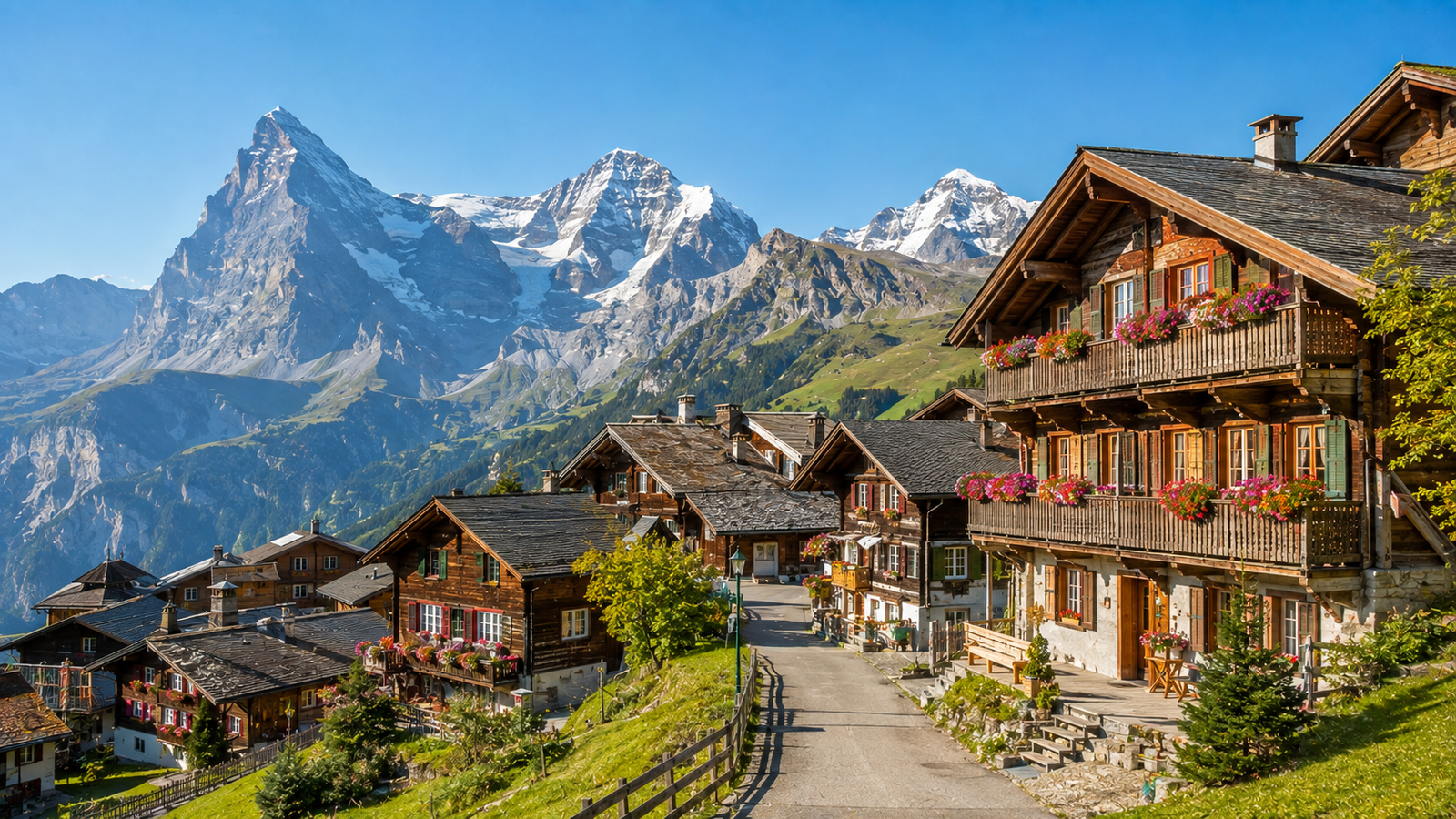
Mürren Historic Core, Mürren, Switzerland
Mürren Historic Core: Switzerland’s Timeless Mountain Village Above the Lauterbrunnen Valley
Long before visitors arrived with cameras and hiking boots, Mürren existed as a small mountain settlement perched on a natural terrace high above the Lauterbrunnen Valley. Today, despite its international reputation as one of Switzerland’s most beautiful mountain destinations, the historic heart of Mürren retains much of the atmosphere that shaped village life for generations.
Surrounded by some of the most celebrated peaks in the Alps, the village offers something increasingly rare in modern Europe: a historic community where traditional architecture, pedestrian streets, and mountain culture remain at the center of daily life. The Mürren Historic Core is not a museum recreated for tourism. It is a living Alpine village where heritage and modern hospitality coexist beneath the towering silhouettes of the Eiger, Mönch, and Jungfrau.
A Village Suspended Between Valley and Sky
The first impression of Mürren is often its extraordinary location.
Situated on a sunny terrace above the Lauterbrunnen Valley in the Bernese Oberland, the village occupies a dramatic position overlooking sheer cliffs, waterfalls, forests, and some of Switzerland’s most famous mountain scenery. Unlike many Alpine settlements accessible by road, Mürren remains largely free of private automobile traffic.
Visitors arrive by mountain railway and cableway, a journey that immediately creates a sense of separation from the modern world below. The absence of cars transforms the atmosphere. Instead of traffic noise, visitors hear church bells, distant cowbells, conversations along village paths, and the occasional sound of trains linking Mürren with neighboring mountain communities.
This peaceful environment has helped preserve the historic character that makes the village unique.
The Evolution of an Alpine Community
For centuries, Mürren was primarily an agricultural settlement. Local families relied on livestock, mountain pastures, and seasonal farming to sustain life in a challenging Alpine environment.
The village’s remote position shaped both its architecture and culture. Homes were constructed to withstand long winters, heavy snowfall, and changing mountain weather. Traditional wooden chalets became a defining feature of the community, many displaying craftsmanship passed down through generations.
The arrival of Alpine tourism during the nineteenth century gradually changed Mürren’s fortunes. As European travelers began seeking dramatic mountain scenery and fresh air, the Bernese Oberland emerged as a major destination. Visitors were drawn to the region’s glaciers, peaks, and picturesque villages.
Rather than replacing its traditional identity, Mürren evolved by integrating tourism into village life. Historic buildings, hotels, and public spaces developed alongside existing structures, creating the distinctive historic core visitors experience today.
Walking Through the Historic Center
Exploring the Mürren Historic Core is best done slowly.
The village is designed around pedestrian movement rather than vehicles. Narrow lanes, small squares, and interconnected pathways encourage visitors to wander without a fixed itinerary.
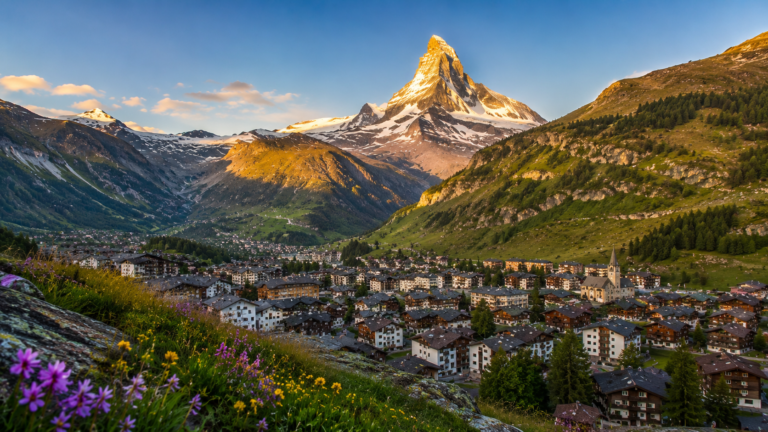
Historic chalets line many of the village streets. Their wooden facades, flower-filled balconies, and steep roofs reflect centuries of Alpine building traditions. While some structures have been modernized internally, their exterior character remains closely connected to the village’s architectural heritage.
Unlike larger resort towns, Mürren’s historic center feels intimate. Shops, hotels, restaurants, and residences blend naturally into the landscape rather than dominating it. The result is a village that maintains a strong sense of authenticity despite its popularity among international travelers.
Every turn reveals another perspective of the surrounding mountains, creating a seamless relationship between architecture and landscape.
The Influence of the Jungfrau Region
Mürren’s historic core cannot be understood without considering its connection to the wider Jungfrau Region.
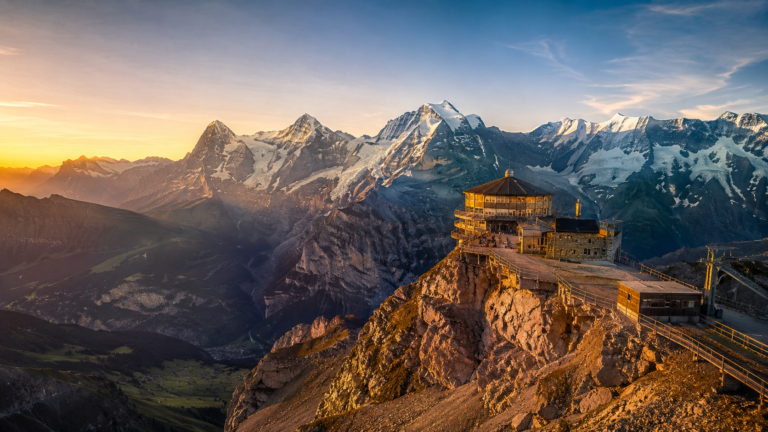
The village stands directly opposite the iconic trio of peaks that have become symbols of the Swiss Alps. These mountains have influenced local culture, tourism, and identity for generations.
Many public viewpoints within the historic center provide uninterrupted panoramas of the Eiger, Mönch, and Jungfrau. The visual presence of these mountains shapes daily life and contributes significantly to the village’s character.
The surrounding landscape also offers access to hiking routes, mountain railways, and scenic excursions that have attracted travelers for more than a century. Yet unlike destinations where tourism infrastructure overwhelms local identity, Mürren’s historic core remains firmly rooted in its traditional Alpine setting.
Traditional Architecture That Defines the Village
One of the greatest treasures of Mürren is its architectural continuity.
Many historic buildings reflect classic Bernese Oberland construction techniques. Timber plays a central role, with facades often featuring carved details, decorative elements, and weathered surfaces that reveal decades of exposure to mountain conditions.
The architecture serves practical as well as aesthetic purposes. Wide roofs help manage snowfall, while construction methods evolved to provide insulation during cold winters.
Walking through the village reveals how architecture adapted to local geography and climate rather than following urban design trends. This practical beauty gives Mürren a visual identity distinct from Switzerland’s cities and lakeside towns.
The preservation of these structures contributes significantly to the cultural value of the historic core.
A Car-Free Heritage Experience
Many historic European villages struggle to balance preservation with modern transportation needs. Mürren presents a different model.
Because private vehicles are largely absent from the village center, historic streets remain remarkably intact. Buildings face pedestrian paths rather than roads, and public spaces retain a scale that reflects their original purpose.
This car-free environment enhances the visitor experience in several ways. It improves walkability, reduces noise, preserves historic sightlines, and allows architecture to remain the primary visual focus.
For travelers accustomed to busy urban destinations, the absence of traffic often becomes one of the most memorable aspects of visiting Mürren.
Seasonal Character Throughout the Year
The historic core changes dramatically with the seasons while maintaining its distinctive identity.
Summer brings colorful flower displays, outdoor terraces, and hikers exploring nearby mountain trails. The village appears vibrant and open, with clear views stretching across the Alps.
Autumn introduces softer colors and quieter paths as mountain forests begin their seasonal transformation.
Winter creates perhaps the most iconic image of Mürren. Snow-covered rooftops, frosted chalets, and dramatic mountain scenery combine to produce the classic Alpine atmosphere that has attracted winter visitors for generations.
Spring brings melting snow, emerging greenery, and renewed activity as the village transitions between seasons.
Each period offers a different perspective on the historic core without diminishing its cultural character.
Living Heritage Rather Than Preserved Heritage
One reason the Mürren Historic Core remains compelling is that it functions as a living community.
Residents continue to occupy historic homes, local businesses operate within traditional buildings, and community life unfolds against a backdrop of preserved architecture.
Visitors encounter a village that feels genuine rather than staged. Daily routines, local traditions, and mountain culture remain visible parts of the environment.
This authenticity distinguishes Mürren from destinations where historic districts exist primarily for tourism. The village’s appeal comes not only from what has been preserved but from how that heritage continues to serve contemporary life.
Experiencing Mürren Beyond the Viewpoints
Many travelers arrive expecting spectacular scenery and leave with an appreciation for something deeper.
The historic core offers insight into how Alpine communities adapted to isolation, climate, and changing economic realities over centuries. Its streets reveal a story of resilience, craftsmanship, and cultural continuity.
Whether enjoying a quiet morning walk, photographing traditional chalets beneath snow-capped peaks, or simply observing village life from a terrace overlooking the Lauterbrunnen Valley, visitors discover that Mürren’s greatest attraction is not a single landmark.
It is the rare opportunity to experience an Alpine village where history remains woven into everyday life, creating one of the most authentic mountain environments in Switzerland.