Morges Castle, Morges, Switzerland
Morges Castle: The Medieval Fortress Guarding Lake Geneva for More Than Seven Centuries
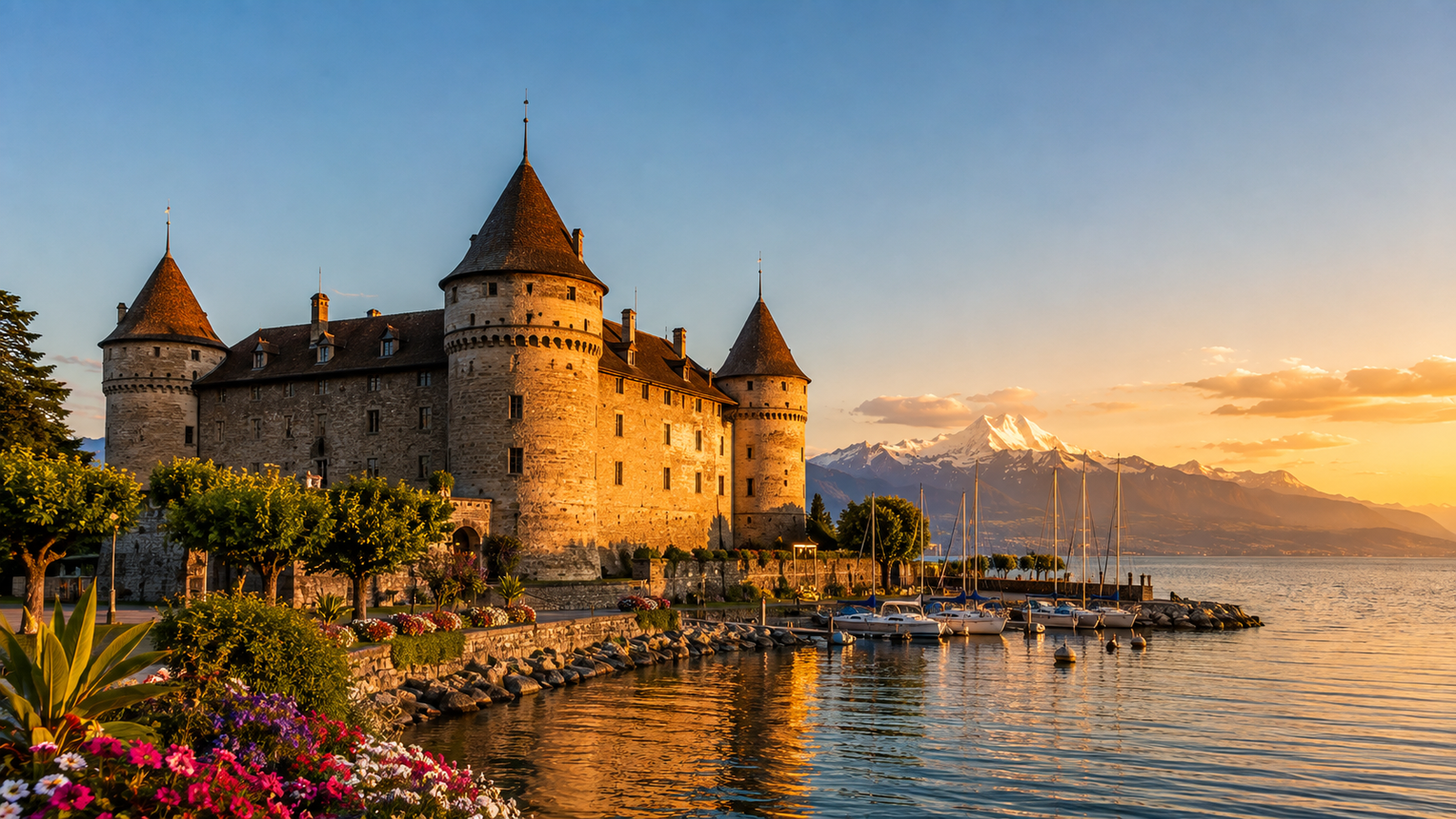
Along the northern shore of Lake Geneva, where sailboats drift across blue waters and the distant peaks of the Alps dominate the horizon, a fortress of pale stone has stood watch for more than seven centuries. Rising beside the harbor of Morges, Morges Castle is one of Switzerland’s finest surviving medieval strongholds and one of the most historically significant landmarks in the canton of Vaud.
Unlike many castles perched dramatically on hilltops, Morges Castle was designed as a fortress of power and administration. Built directly on the lakeshore, it controlled trade routes, protected a growing town, and symbolized the authority of the House of Savoy during a crucial period in regional history.
Today, the castle remains a defining feature of Morges, blending medieval architecture, military heritage, and cultural preservation in a setting that overlooks one of Europe’s most beautiful lakes.
A Strategic Project of the House of Savoy
The origins of Morges Castle are closely linked to the ambitions of Louis of Savoy, who founded the town of Morges in 1286. At the time, the rulers of Savoy sought to strengthen their influence along the northern shores of Lake Geneva and establish control over important transportation and commercial routes.
Construction of the castle began immediately after the foundation of the town. Positioned beside the lake and near an important crossing point of the Morges River, the fortress allowed Savoy authorities to monitor movement through the region and secure economic activity between Lausanne and Geneva.
The castle was more than a military installation. It became an administrative center, a residence for members of the Savoy dynasty, and a symbol of political authority in the Pays de Vaud.
Over time, the growing town developed around the fortress, creating the historic urban landscape that visitors still experience today.
A Remarkable Example of the “Savoyard Square”
Architecturally, Morges Castle is one of the best-preserved examples of a medieval design known as the “Savoyard square.”
The fortress follows a nearly square layout with four large round towers positioned at its corners. Massive defensive walls connect the towers, creating a compact yet formidable structure designed for both defense and control.
The design reflected military innovations of the late thirteenth century. Rather than relying on a single dominant keep, the castle distributed its defensive strength across multiple towers and fortified walls.
From above, the geometric precision of the structure remains striking. Visitors approaching from the lakeside immediately recognize its balanced layout, which has changed surprisingly little since the Middle Ages.
Its location adds another layer of distinction. Few Swiss castles occupy such a prominent position directly beside Lake Geneva, with open views stretching toward Mont Blanc and the French Alps.
Surviving Conflict and Political Change
The castle’s long history mirrors many of the major political transformations that shaped western Switzerland.
During the medieval period, Morges served as a strategic Savoyard center. The fortress played a role in regional rivalries and occasionally suffered damage during periods of conflict.
Following the Bernese conquest of Vaud in 1536, the castle entered a new chapter. The Bernese authorities transformed it into the residence of their local governors and adapted parts of the fortress to meet changing military requirements.
The arrival of artillery gradually altered the nature of warfare, and modifications were made to strengthen the castle’s defenses. Although its role evolved, the fortress remained an important administrative center for centuries.
After the establishment of the Canton of Vaud in the early nineteenth century, the castle became state property and was used as a cantonal arsenal. This military function preserved the structure at a time when many historic fortifications across Europe were being abandoned or demolished.
From Arsenal to Museum
By the twentieth century, the defensive purpose of the fortress had disappeared, but its historical value had become increasingly apparent.
The castle was transformed into a museum, beginning a new chapter focused on education and heritage preservation. Rather than storing weapons for future conflicts, it now helps visitors understand the military, political, and social history of Switzerland.
This transition ensured the survival of one of the country’s most important medieval monuments while giving it a meaningful modern purpose.
Today, the castle serves as both a cultural institution and a historical landmark, welcoming visitors from Switzerland and around the world.
Five Museums Under One Roof
One of the most distinctive aspects of Morges Castle is the remarkable collection of museums housed within its ancient walls.
The site contains several specialized institutions that collectively explore military history, policing, artillery, historical figurines, and cultural heritage. Together, they provide a comprehensive perspective on Swiss history from the Middle Ages through the twentieth century.
Visitors can examine collections of armor, swords, firearms, uniforms, and military equipment that illustrate centuries of technological and social change.
The artillery collections showcase the evolution of defensive and offensive weaponry, while displays dedicated to historical figurines recreate famous military campaigns with extraordinary attention to detail.
Another notable section explores the history of law enforcement in the canton of Vaud, offering insight into how public security evolved over time.
The diversity of exhibitions means the castle appeals not only to military history enthusiasts but also to families, students, and travelers interested in understanding Switzerland’s broader historical development.
The Castle and the Town
Although the fortress is the main attraction, it is inseparable from the character of Morges itself.
The old town spreads outward from the castle in a pattern shaped by medieval urban planning. Narrow streets, historic buildings, and lively public squares create an atmosphere that encourages exploration beyond the castle gates.
The waterfront promenade nearby is among the most attractive on Lake Geneva. Visitors can combine a castle visit with walks along the harbor, lake cruises, cafés, and views across the water toward the Alpine skyline.
During spring, flower displays and lakeside gardens add color to the surroundings, while summer brings outdoor events and increased activity around the waterfront.
The relationship between the castle, the lake, and the town remains one of the most appealing aspects of the visitor experience.
Why Morges Castle Stands Apart
Switzerland is home to many impressive castles, yet Morges Castle occupies a distinctive place within the country’s historical landscape.
Unlike mountain fortresses built primarily for defense, Morges Castle was designed as a center of administration, commerce, and political influence. Its lakeside position demonstrates the importance of transportation and trade during the medieval era.
Its architecture represents one of the clearest surviving examples of Savoyard military design. Its role evolved through Savoyard rule, Bernese administration, cantonal government, and modern cultural preservation. Few structures in western Switzerland illustrate such a continuous historical narrative.
Equally important is the way the castle remains integrated into everyday life. Rather than existing as an isolated monument, it continues to shape the identity of Morges, linking residents and visitors with more than seven centuries of history.
Standing beside the harbor, with Lake Geneva stretching toward the horizon and the Alps rising beyond, Morges Castle offers a powerful reminder that some of Switzerland’s greatest landmarks are not found only among the mountains. They are also found where history, architecture, and landscape meet on the shores of its most celebrated lake.