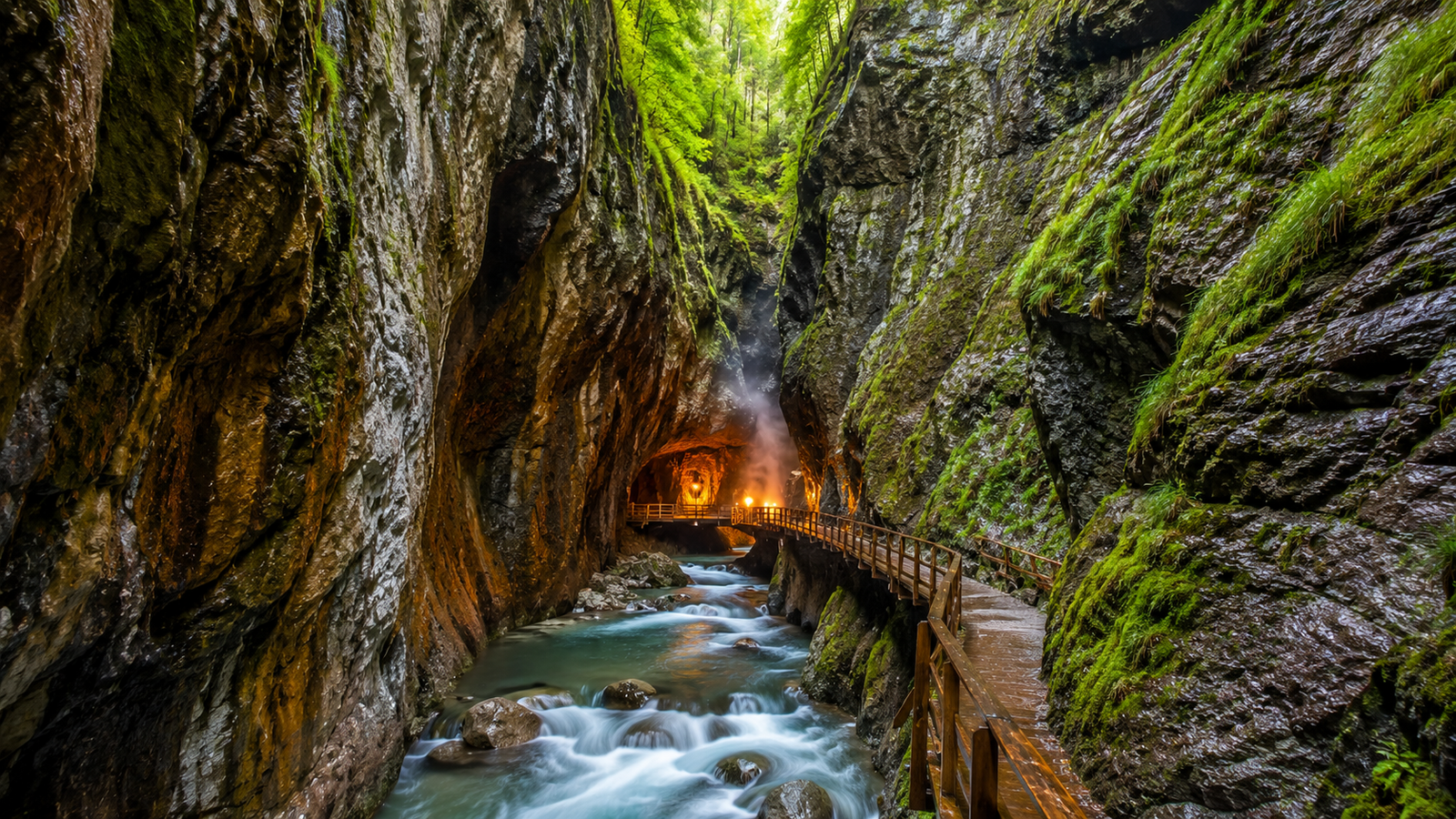
Tamina Gorge, Bad Ragaz, Switzerland
Tamina Gorge: Exploring the Dramatic Birthplace of Switzerland’s Legendary Thermal Waters
The sound arrives before the view. Deep within a narrow rock canyon near Bad Ragaz, rushing water echoes against towering stone walls while warm thermal water emerges from the mountain itself. Few places in Switzerland combine natural geology, centuries of history, and wellness traditions as seamlessly as Tamina Gorge.
Located in the canton of St. Gallen in Eastern Switzerland, Tamina Gorge is far more than a scenic canyon. It is the birthplace of the thermal waters that transformed nearby Bad Ragaz into one of Europe’s most renowned spa destinations. Hidden within the gorge lies a spring that has attracted visitors, pilgrims, physicians, and patients for centuries.
For travelers exploring Switzerland beyond its famous peaks and lakes, Tamina Gorge offers an experience that feels both dramatic and deeply connected to the country’s cultural heritage.
A Canyon Carved by Water and Time
The gorge was shaped over thousands of years by the Tamina River, which gradually cut its way through the surrounding rock. The result is a spectacular natural formation characterized by steep walls, narrow passages, and a powerful river flowing below.
The gorge stretches for roughly three-quarters of a kilometer and reaches impressive depths along its course. Visitors entering the canyon quickly notice how the surrounding landscape changes. Bright alpine scenery gives way to a cooler, shadowed environment where towering cliffs rise almost vertically overhead.
The atmosphere inside the gorge feels remarkably different from the surrounding valley. Moist air, rushing water, and towering stone walls create a setting that highlights the raw power of natural erosion and geological transformation.
The Discovery That Changed the Region
The history of Tamina Gorge is inseparable from the discovery of its thermal spring during the Middle Ages.
Historical accounts record that hunters associated with the nearby Benedictine Abbey of Pfäfers discovered the warm spring in the 13th century. The spring’s water emerged from deep within the rock at a constant temperature of approximately 36.5°C (97.7°F), an unusual phenomenon in the alpine environment.
Monks from the abbey soon recognized the potential significance of the thermal waters. Over time, the spring became associated with healing and wellness, attracting people seeking relief from various ailments.
Access to the source was once extraordinarily difficult. Before modern pathways were constructed, visitors descended into the gorge using ladders, ropes, and baskets. Early patients sometimes spent extended periods bathing near the spring itself, convinced of its restorative qualities.
These challenging journeys demonstrate the importance people attached to the thermal waters long before modern tourism developed in the region.
The Spring at the Heart of the Gorge
The highlight of any visit is the spring grotto located deep within the canyon.
Today, a secured pathway allows visitors to venture safely into the gorge. Walking farther into the rock corridor reveals the remarkable source of the thermal water that has made Bad Ragaz famous.
Warm water continuously emerges from fractures within the mountain, maintaining a naturally stable temperature throughout the year. The sight of thermal water flowing directly from ancient rock formations creates a memorable contrast against the cool alpine surroundings.
Scientists believe the water’s journey begins high in the surrounding mountain regions, where precipitation gradually infiltrates deep underground. Over many years, geothermal heat warms the water before it re-emerges through faults and fractures within the Tamina Gorge.
The result is one of Switzerland’s most celebrated natural thermal sources and among the most significant thermal springs in Europe.
Old Bad Pfäfers: Switzerland’s Historic Bathing Heritage
Just outside the gorge stands one of the most important historical landmarks connected to the thermal spring: Old Bad Pfäfers.
This remarkable complex preserves an important chapter in Swiss spa history. Over centuries, bathing facilities developed around the spring as the therapeutic reputation of the water grew.
The surviving baroque structures reflect the evolution of wellness culture in the region and offer valuable insight into how visitors experienced the thermal waters long before modern spa resorts emerged.
Today, the site houses museum exhibits that explore the history of the spring, the development of medical bathing traditions, and the role the gorge played in regional life. Visitors can learn how generations of travelers journeyed into this remote valley in search of healing and relaxation.
The historic buildings also provide a fascinating contrast to the natural landscape surrounding them, illustrating how humans adapted to and benefited from this extraordinary environment.
Why Tamina Gorge Became Famous Beyond Switzerland
The reputation of the thermal waters extended far beyond the local region.
One of the most notable figures associated with the spring was the physician and scholar Paracelsus, who recognized the importance of the waters during the sixteenth century. His interest contributed to the growing fame of the site and reinforced its reputation as a destination connected to health and recovery.
As transportation improved during the nineteenth century, the thermal water was eventually directed toward Bad Ragaz through engineering projects that made the resource more accessible. This development helped transform the village into a major spa destination and established the foundations of the wellness tourism industry that continues today.
Many visitors to Bad Ragaz enjoy the thermal baths without realizing that the water’s journey begins deep inside the dramatic canyon where the spring still flows naturally.
Hiking Through One of Eastern Switzerland’s Natural Wonders
Tamina Gorge appeals not only to history enthusiasts but also to hikers and nature lovers.
The walk from Bad Ragaz toward the gorge passes through attractive landscapes featuring forests, river scenery, waterfalls, and alpine terrain. The route provides opportunities to appreciate both the natural and cultural dimensions of the area.
As visitors approach the gorge, the landscape gradually becomes more rugged. Massive rock formations frame the route, while the sound of water grows increasingly prominent.
The experience is accessible to a wide range of travelers, making it an appealing excursion for families, photographers, and casual walkers as well as dedicated hikers.
Inside the gorge itself, carefully maintained pathways allow visitors to explore safely while preserving the dramatic character of the natural environment.
A Destination for Every Season
Although access to the inner gorge is generally seasonal, the surrounding region offers year-round appeal.
Spring and summer bring lush vegetation and ideal hiking conditions. During autumn, forests surrounding the valley display vibrant colors that contrast beautifully with the gray rock walls.
Winter transforms the nearby mountains into a snowy landscape, while the warm thermal waters of Bad Ragaz continue to attract visitors seeking relaxation.
The changing seasons ensure that every visit reveals a slightly different perspective on the relationship between water, rock, climate, and human history.
Connecting Nature, Wellness, and Heritage
Many Swiss attractions are known for spectacular scenery. Others are celebrated for history, architecture, or cultural significance. Tamina Gorge stands out because it combines all of these elements in a single destination.
The gorge tells the story of geological forces shaping the landscape over millennia. It reveals how medieval communities discovered and utilized natural resources. It explains the origins of one of Switzerland’s most famous wellness traditions. And it provides visitors with an unforgettable opportunity to experience the source of that legacy firsthand.
Standing beside the warm spring hidden within the canyon, surrounded by towering rock walls and the sound of rushing water, it becomes clear why generations of travelers have considered Tamina Gorge one of Eastern Switzerland’s most remarkable natural treasures.