Old Town of Bern, Bern, Switzerland
Old Town of Bern: A Walk Through Eight Centuries of Swiss History
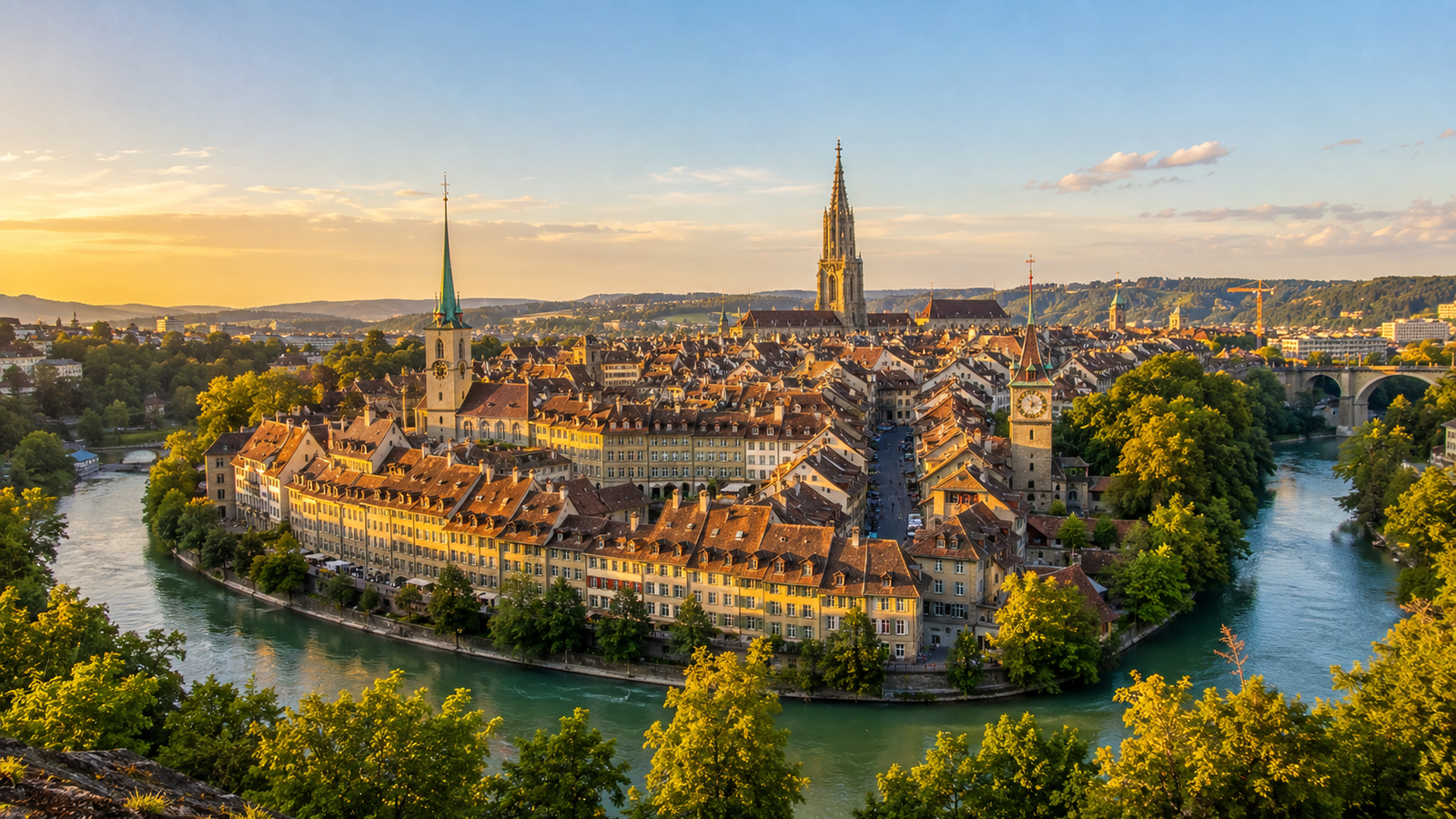
Many historic European cities have medieval quarters tucked between modern developments. Bern is different. In Switzerland’s capital, the medieval city is the city. The Old Town of Bern stretches along a narrow sandstone peninsula embraced by a dramatic bend in the Aare River, creating one of the continent’s most distinctive urban landscapes.
Founded in the late 12th century, Bern has grown into the political center of Switzerland while retaining an extraordinary amount of its original character. The city’s arcaded streets, historic towers, fountains, churches, and public squares continue to serve the daily needs of residents, government officials, students, and visitors alike.
This rare continuity between past and present earned the Old Town of Bern recognition as a UNESCO World Heritage Site in 1983. Today, it remains one of Europe’s finest examples of a medieval city that has evolved without losing its historical identity.
The Vision of a Medieval Founder
Bern was founded in 1191 by Duke Berchtold V of Zähringen. According to local legend, the city was named after the first animal encountered during a hunting expedition—a bear, which remains Bern’s symbol today.
The city’s founders chose an exceptionally strategic location. The Aare River formed a natural defensive barrier around much of the settlement, making it easier to protect while providing access to important trade routes.
Although devastating fires damaged parts of the city during the Middle Ages, reconstruction efforts shaped the Bern visitors see today. Wooden buildings were gradually replaced with sandstone structures, creating the distinctive appearance that characterizes the Old Town.
Remarkably, the original urban layout established centuries ago remains clearly visible. Long, straight streets intersect broad public squares, while medieval towers continue to mark former city gates and defensive boundaries.
The Arcades That Define Bern
One of Bern’s most recognizable features is its extensive network of covered arcades, known locally as “Lauben.”
Stretching for several kilometers through the historic center, these arcades form one of the longest covered shopping promenades in Europe. Originally designed to provide protection from weather and create additional commercial space, they continue to serve their original purpose centuries later.
Walking beneath the sandstone arches reveals a blend of historic and contemporary life. Boutique shops, bookstores, cafés, bakeries, galleries, and restaurants occupy spaces that have functioned as commercial premises for generations.
The arcades contribute significantly to Bern’s atmosphere. Rain or shine, visitors can comfortably explore the city while admiring centuries-old architecture and discovering hidden courtyards tucked behind the main streets.
Following the Trail of Historic Fountains
The Old Town is famous for its colorful Renaissance fountains, many dating from the 16th century.
These fountains were originally designed as practical sources of water but evolved into works of public art. Their painted figures, detailed sculptures, and symbolic themes provide insight into Bern’s history and civic identity.
Among the most famous are the Justice Fountain, the Zähringer Fountain, and the Ogre Fountain, known locally as the Kindlifresserbrunnen. The latter has attracted curiosity for centuries because of its unusual and somewhat mysterious sculpture.
Together, the fountains form an outdoor gallery scattered throughout the city’s streets and squares, making them an integral part of the Bern experience.
Zytglogge: The Tower That Watches Over Bern
No landmark is more closely associated with Bern than the Zytglogge.
Originally constructed as a city gate tower during the 13th century, it later became a prison, guard tower, and clock tower. Today, it serves as one of Switzerland’s most famous historical monuments.
The tower’s astronomical clock, installed in the 16th century, remains a marvel of engineering and craftsmanship. Before each hour, visitors gather to watch the mechanical figures perform their traditional sequence of movements.
Beyond its famous clock, the Zytglogge symbolizes the city’s enduring connection to its medieval past. Rising above the surrounding rooftops, it remains one of the most photographed landmarks in Switzerland.
Bern Cathedral and the City’s Skyline
Dominating the eastern section of the Old Town is Bern Cathedral, known as the Münster.
Construction began during the 15th century and continued over several centuries. Today, its tower stands as the tallest church tower in Switzerland, making it a defining feature of Bern’s skyline.
Visitors entering the cathedral encounter impressive Gothic architecture, stained-glass windows, vaulted interiors, and remarkable stone carvings. The elaborate Last Judgment portal at the entrance is among the most significant examples of late Gothic sculpture in Switzerland.
Those willing to climb the tower are rewarded with sweeping views across the Old Town, the Aare River, and, on clear days, distant Alpine peaks.
The Heart of Swiss Democracy
While Bern’s medieval architecture attracts global attention, the city also functions as the political center of modern Switzerland.
At the western end of the Old Town stands the Federal Palace, home to the Swiss Federal Assembly and Federal Council. The impressive domed building serves as the seat of the national government and represents Switzerland’s democratic traditions.
The Federal Square in front of the palace acts as a gathering place for residents and visitors. Throughout the year, the square hosts markets, public events, and seasonal celebrations.
This coexistence of medieval heritage and modern governance is one of Bern’s most distinctive characteristics. Few capitals blend historical preservation and contemporary political importance so seamlessly.
The Aare River and Bern’s Natural Setting
The Old Town’s setting is as remarkable as its architecture.
The Aare River loops around the historic center in a dramatic curve, creating a natural moat that helped protect the medieval city. Today, the river enhances Bern’s scenic appeal and provides recreational opportunities for locals.
Numerous viewpoints reveal spectacular perspectives of the Old Town rising above the riverbanks. Among the most famous is the Rosengarten, a hillside park overlooking the historic center.
From this elevated vantage point, visitors can appreciate the full beauty of Bern’s urban design: sandstone buildings, church spires, historic bridges, and winding river waters framed by distant mountains.
Einstein’s Bern
The Old Town is also connected to one of history’s most influential scientists.
Albert Einstein lived in Bern during the early 20th century while working at the Swiss Patent Office. During this period, he developed ideas that would transform modern physics, including concepts that contributed to his theory of relativity.
His former residence on Kramgasse has been preserved as the Einstein House, offering visitors a glimpse into the environment where some of his groundbreaking work took shape.
This association adds another layer of significance to a city already rich in historical and cultural importance.
Experiencing Bern Through the Seasons
Each season reveals a different side of the Old Town.
Spring brings blooming parks and outdoor cafés. Summer fills riverside areas and public squares with activity. Autumn highlights the warm tones of Bern’s sandstone buildings, while winter transforms the city with festive lights and seasonal markets.
Because the Old Town remains a living city rather than a preserved monument, every visit offers a unique perspective shaped by local life, cultural events, and changing seasons.
The greatest reward of exploring Bern is not simply checking landmarks off an itinerary. It is experiencing a place where eight centuries of history remain woven into daily life. Beneath medieval arcades, beside Renaissance fountains, and along streets first laid out centuries ago, visitors discover a capital city that has managed to preserve its soul while continuing to evolve. Few destinations in Switzerland offer such a complete and authentic connection between past and present.