Weissfluhjoch, Davos, Graubünden, Switzerland
Weissfluhjoch: The High-Alpine Gateway to Davos’ Legendary Mountain World
High above the resort town of Davos, Weissfluhjoch occupies a unique position in the Swiss Alps. It is simultaneously a scenic mountain destination, an important transportation hub, a center of internationally recognized snow research, and one of the most significant locations in the history of Alpine skiing. Situated within the Parsenn mountain area, Weissfluhjoch serves as the gateway to some of the most celebrated landscapes and outdoor experiences in Graubünden.
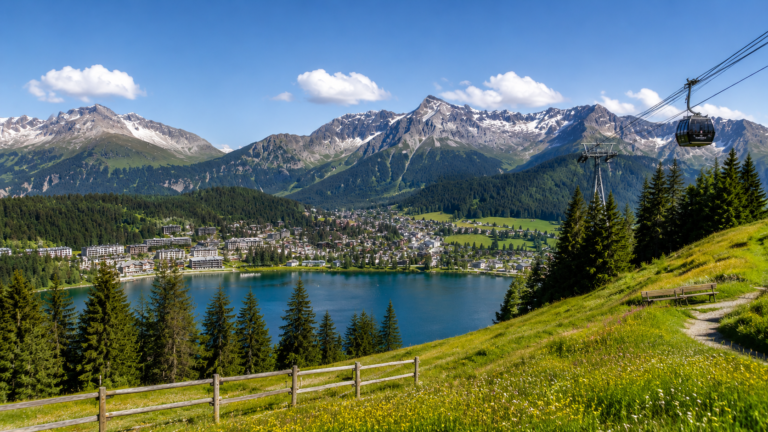
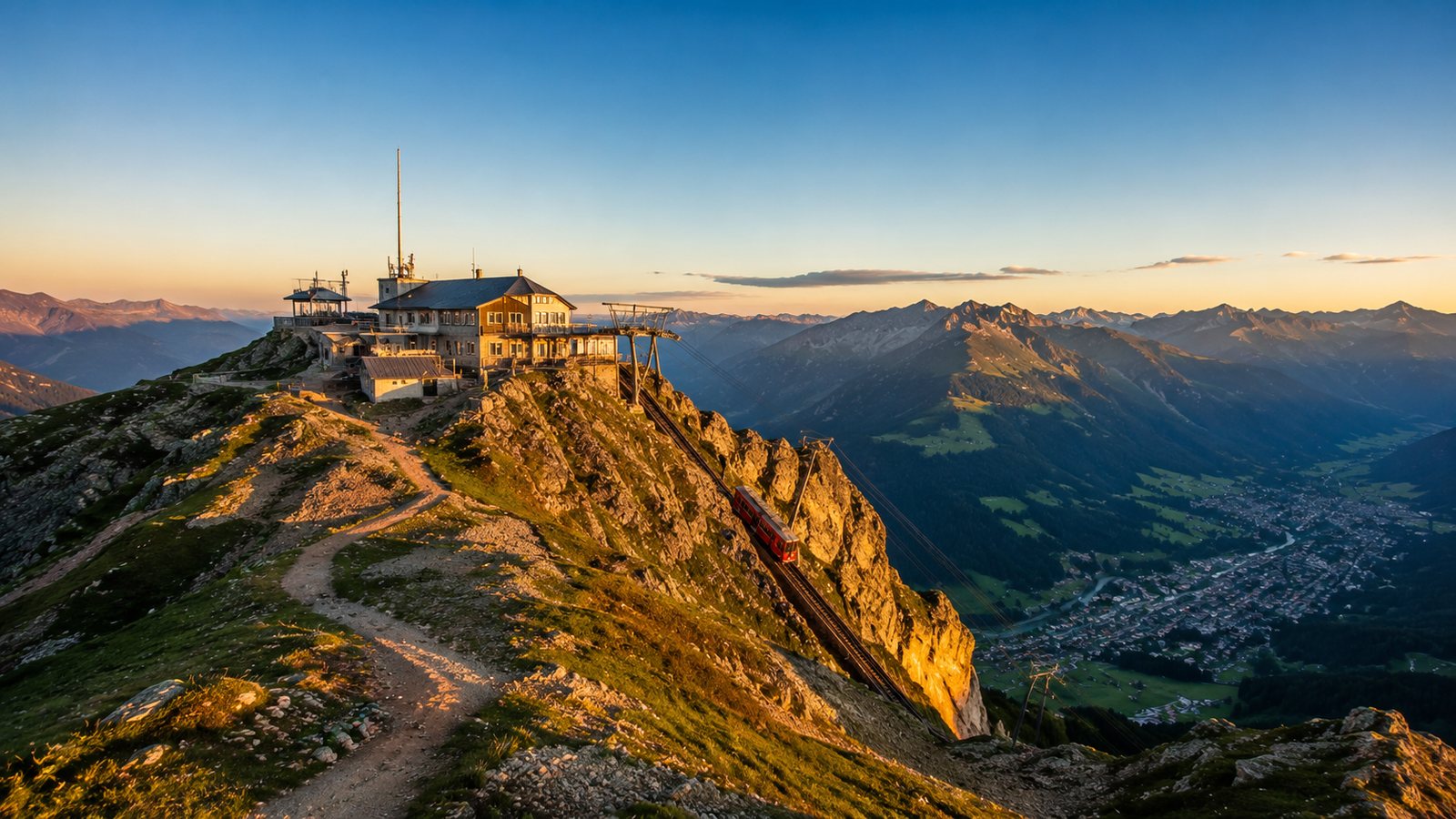
For visitors arriving from Davos, the journey to Weissfluhjoch is part of the attraction itself. The historic Parsenn funicular railway climbs steadily from the valley floor toward the high mountains, revealing increasingly expansive views of forests, alpine meadows, and surrounding peaks. Within a relatively short time, travelers are transported from a bustling Alpine town to a dramatically different environment shaped by snow, rock, and panoramic mountain scenery.
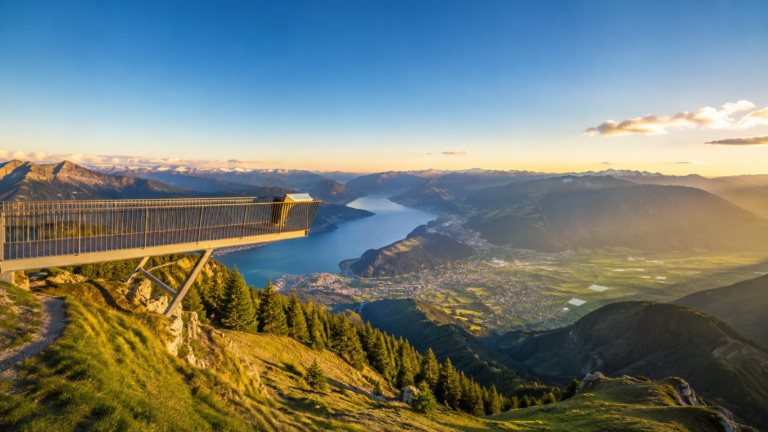
Located at approximately 2,660 meters above sea level, Weissfluhjoch lies below the higher summit of Weissfluh and forms one of the central access points to the Parsenn mountain region. The location offers commanding views across the Davos valley and neighboring mountain chains, making it one of the most popular viewpoints in the area. Its elevation places visitors above the tree line, where open landscapes create uninterrupted vistas in nearly every direction.
Unlike many Alpine destinations known solely for tourism, Weissfluhjoch has played an important role in scientific research for nearly a century. In the mid-1930s, researchers established one of Switzerland’s earliest snow research facilities on the Weissfluhjoch. The location was selected because of its accessibility and its proximity to avalanche-prone terrain, providing ideal conditions for studying snow formation, snowpack behavior, and avalanche processes. A wooden laboratory installed near the mountain station became the foundation of what would later evolve into Switzerland’s internationally respected snow and avalanche research program.
The scientific significance of Weissfluhjoch expanded further in 1942 with the establishment of the Swiss Federal Institute for Snow and Avalanche Research, known today as the SLF. The institute operated from Weissfluhjoch for decades and became one of the world’s leading centers for avalanche science, snow physics, and mountain hazard research. Although the institute’s main headquarters later moved to Davos, the Weissfluhjoch test site remains active and continues to provide valuable long-term data used in avalanche forecasting, climate studies, and snow science.
The research legacy of Weissfluhjoch is visible throughout the area. Scientific facilities, measurement stations, and observation sites reflect the mountain’s ongoing contribution to understanding Alpine environments. Daily snow observations have been conducted here since the 1930s, creating one of the longest continuous high-altitude snow records in the world. These measurements help researchers monitor long-term environmental changes while supporting public safety in mountain regions.
For most visitors, however, Weissfluhjoch is best known as a spectacular destination for outdoor recreation. During summer, it becomes a starting point for numerous hiking routes across the Parsenn region. Trails lead through rocky terrain, across panoramic ridges, and toward neighboring peaks. One of the most popular walks follows the route toward the Strelapass, where hikers encounter dramatic Alpine landscapes and broad views extending far beyond the Davos valley. Other routes continue toward Schiahorn and surrounding mountain viewpoints.
The terrain surrounding Weissfluhjoch offers an impressive combination of accessibility and wilderness. Visitors can enjoy short scenic walks close to the mountain station or undertake longer excursions into the surrounding high-Alpine environment. The open nature of the landscape provides excellent opportunities for photography, particularly during early morning and late afternoon when changing light transforms the mountain scenery.
Trail runners are also attracted to Weissfluhjoch because of its elevation and varied terrain. The region’s high-altitude routes provide challenging conditions and exceptional scenery, making the area popular among athletes training in the Alps. Mountain bikers similarly use the broader Parsenn network to explore ridges and descents connected to Weissfluhjoch.
Winter reveals another side of Weissfluhjoch. The location becomes one of the most important access points within the Parsenn ski area, the largest ski region in Davos Klosters. Skiers and snowboarders use Weissfluhjoch as a gateway to extensive slopes that extend across both the Davos and Klosters sides of the mountain. Wide pistes, long descents, and reliable snow conditions have helped establish Parsenn as one of Switzerland’s classic ski destinations.
Weissfluhjoch also occupies a notable place in skiing history. The mountain is closely linked to the development of the legendary Parsenn descent, a route that helped shape the reputation of Davos as a pioneering center for Alpine skiing. Since the opening of the Parsenn railway in the early twentieth century, generations of skiers have used Weissfluhjoch as a starting point for some of the region’s most famous runs.
One of the highlights for visitors is the possibility of continuing from Weissfluhjoch toward the nearby Weissfluh summit. Standing higher above the mountain pass, the summit offers even broader views across Graubünden. On clear days, visitors can observe distant mountain chains stretching across southeastern Switzerland, creating a sense of scale that few destinations can match.
The best time to visit Weissfluhjoch depends largely on individual interests. Summer brings hiking, sightseeing, photography, and mountain exploration. Alpine flowers appear along trails, and long daylight hours provide excellent conditions for outdoor activities. Autumn often offers exceptionally clear visibility and colorful landscapes. Winter attracts snow sports enthusiasts who come to experience the historic slopes and extensive ski terrain of Parsenn.
Transportation access is one of the destination’s greatest strengths. Visitors can reach Davos by rail or road from major Swiss cities. From Davos Dorf, the Parsennbahn provides direct access to Weissfluhjoch, making it possible to experience a high-Alpine environment without undertaking a strenuous ascent. This accessibility has been a defining characteristic of the mountain for generations and remains one of the reasons for its enduring popularity.
Travelers should prepare for changing mountain conditions regardless of season. Weather at Weissfluhjoch can differ significantly from conditions in Davos below. Warm clothing, sun protection, sturdy footwear, and awareness of forecasts are recommended throughout the year.
What distinguishes Weissfluhjoch from many other Alpine destinations is its remarkable combination of science, history, and recreation. Few places offer the opportunity to stand at the crossroads of pioneering avalanche research, early skiing history, and some of Switzerland’s most impressive mountain scenery. Whether arriving to hike, ski, photograph the landscape, or simply enjoy the view, visitors encounter a destination that represents both the natural beauty and intellectual heritage of the Swiss Alps.