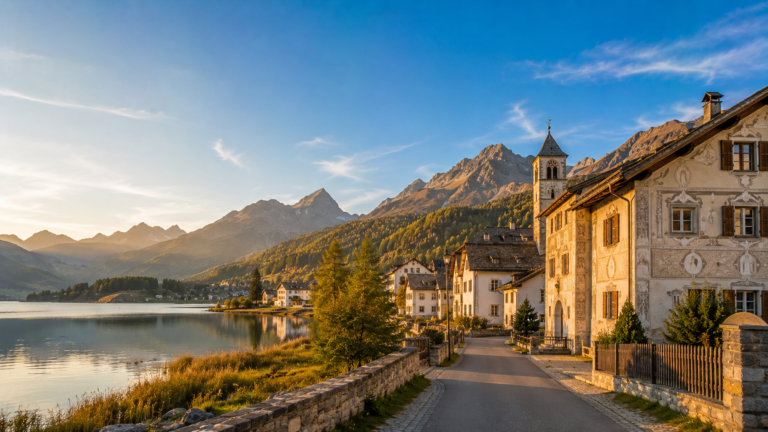
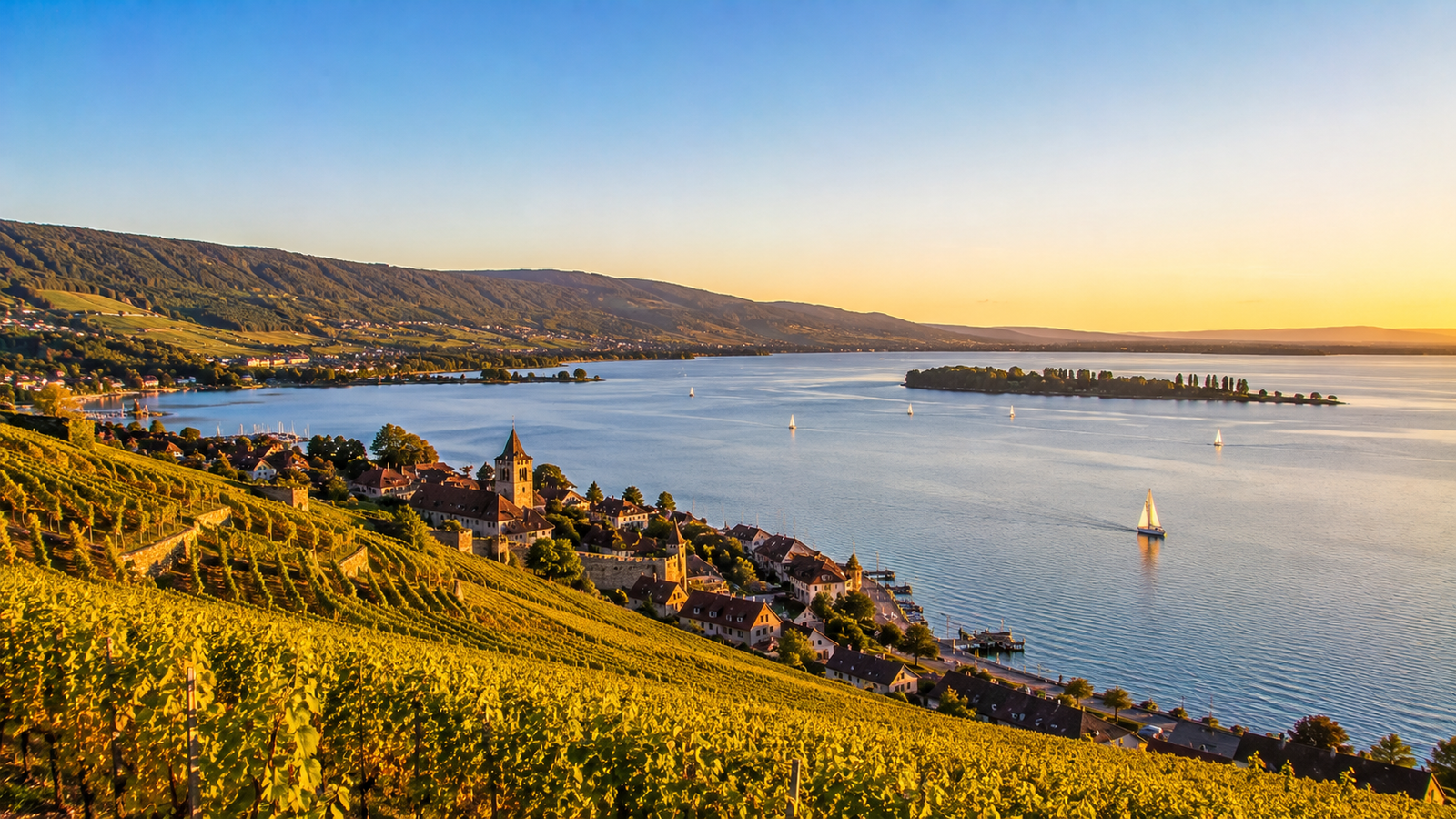
Lake Biel, Biel/Bienne, Switzerland
Lake Biel: Switzerland’s Sunniest Lake Region Blends Vineyards, History, and Scenic Waterways
Some Swiss lakes impress visitors with towering Alpine peaks and dramatic mountain scenery. Lake Biel offers a different kind of beauty—one shaped by vineyards, historic lakeside settlements, cultural diversity, and a landscape that has attracted travelers for centuries. Located at the eastern edge of Switzerland’s Three Lakes Region, Lake Biel combines natural elegance with a rich cultural heritage that reflects the country’s unique character.
Known as Bielersee in German and Lac de Bienne in French, the lake lies in one of Switzerland’s most bilingual regions. The surrounding landscape is defined by gentle hills, wine-growing terraces, medieval towns, and waterways that connect Lake Biel with neighboring Lake Neuchâtel and Lake Murten. For visitors seeking a destination that balances relaxation, outdoor recreation, history, and local culture, Lake Biel delivers one of western Switzerland’s most rewarding travel experiences.
A Lake Between Languages and Landscapes
Lake Biel occupies a special position within Switzerland, both geographically and culturally. The lake sits along the language boundary between German-speaking and French-speaking Switzerland, creating a distinctive atmosphere where two cultures coexist naturally.
The city of Biel/Bienne, located at the northeastern end of the lake, is Switzerland’s largest officially bilingual city. Street signs, public announcements, and daily conversations reflect this dual identity, giving visitors an opportunity to experience a different side of Swiss culture.
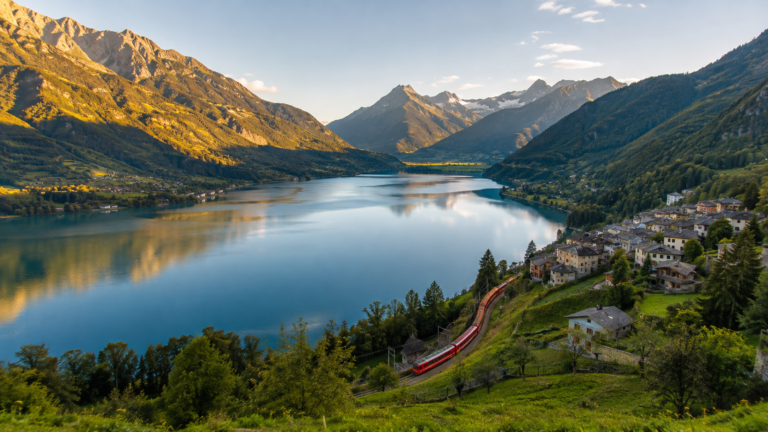
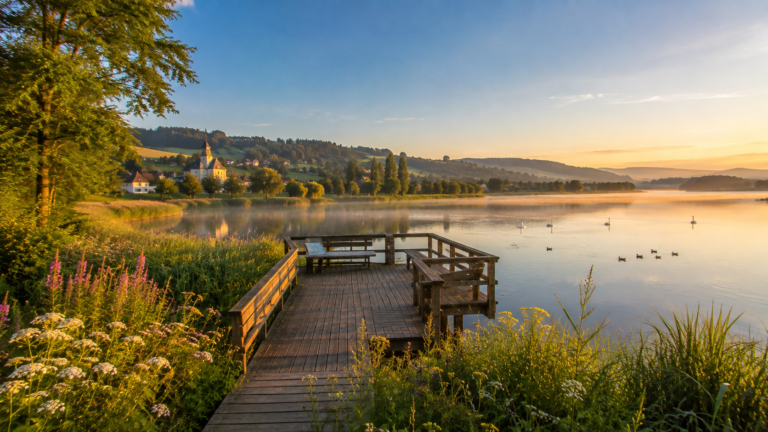
Beyond the urban center, the lake opens into a peaceful landscape of vineyards, farmland, forests, and charming villages. Unlike the rugged Alpine lakes found farther south, Lake Biel is characterized by rolling hills and broad open views, making it particularly inviting for leisurely exploration.
St. Peter’s Island: A Peninsula with a Remarkable Story
One of Lake Biel’s most famous attractions is St. Peter’s Island, known locally as St. Petersinsel.
Despite its name, it is no longer a true island. Historic water engineering projects transformed the landscape, connecting the former island to the mainland by a narrow strip of land. Yet it retains the feeling of a secluded retreat surrounded by water and nature.
The site is closely associated with the philosopher Jean-Jacques Rousseau, who spent time here in 1765. His writings about the location contributed to its reputation as a place of tranquility and reflection. Visitors today can explore walking paths shaded by trees, admire views across the lake, and visit the former monastery that remains a landmark of the peninsula.
The peaceful atmosphere that inspired Rousseau continues to attract travelers seeking a quiet escape from modern life.
Vineyards Along the Northern Shore
The northern shore of Lake Biel is one of Switzerland’s most celebrated wine-growing regions.
Terraced vineyards stretch across sunny slopes between lakeside villages and the foothills of the Jura Mountains. These vineyards have shaped the landscape for centuries and remain an essential part of the area’s identity.
Villages such as Twann, Ligerz, and La Neuveville are surrounded by vine-covered hills that create some of the lake’s most picturesque scenery. Narrow streets, historic stone buildings, and traditional wine cellars contribute to their charm.
Walking or cycling through this region offers constant views of vineyards descending toward the lake, while local wineries provide opportunities to experience the area’s long-established wine culture. Even travelers who are not wine enthusiasts often find the scenery itself reason enough to explore the northern shoreline.
Discovering the Medieval Character of La Neuveville
Among the lakeside communities, La Neuveville stands out for its remarkably preserved historic center.
Founded during the Middle Ages, the town retains much of its original character. Stone gateways, defensive towers, arcaded streets, and historic buildings provide a glimpse into centuries of regional history.
The town’s location between vineyard-covered hills and the lakeshore creates an especially attractive setting. Visitors can spend hours wandering through the old town before enjoying lakeside views or exploring nearby walking trails.
La Neuveville demonstrates how Lake Biel combines cultural heritage with natural beauty in a way that feels authentic rather than staged for tourism.
Experiencing the Lake by Boat
One of the best ways to appreciate Lake Biel is from the water itself.
Passenger boats operate seasonal routes connecting towns and attractions throughout the Three Lakes Region. Cruises allow visitors to observe the changing landscape from a unique perspective, revealing vineyard terraces, historic villages, and distant Jura ridges.
The network extends beyond Lake Biel through canals and waterways linking neighboring lakes, making it possible to explore a broader region without relying on road transport.
As boats move across the calm waters, travelers gain a deeper appreciation for the interconnected geography that has influenced settlement, trade, and culture throughout western Switzerland.
For photographers, the lake cruises provide countless opportunities to capture reflections, shoreline scenery, and panoramic landscapes.
Nature and Recreation Around the Shoreline
Lake Biel is more than a cultural destination. It is also a popular center for outdoor recreation.
The lake’s relatively mild climate and accessible shoreline make it attractive for swimming, sailing, kayaking, paddleboarding, and other water-based activities. During summer, lakeside beaches and public bathing areas become gathering places for residents and visitors alike.
Cyclists are particularly drawn to the region because of its extensive network of scenic routes. Paths follow sections of the shoreline, pass through vineyards, and connect villages throughout the Three Lakes area.
Hikers also benefit from diverse options. Trails lead through forests, vineyards, and elevated viewpoints overlooking the lake and surrounding countryside.
Because the terrain is generally less demanding than many Alpine destinations, outdoor activities here are accessible to a broad range of travelers.
The Jura Mountains as a Scenic Backdrop
Although Lake Biel is not located within the high Alps, the nearby Jura Mountains play an important role in shaping the landscape.
Rising above the northern shoreline, the Jura provides panoramic viewpoints that reveal the full extent of the lake and surrounding region. On clear days, some viewpoints even offer distant views toward the Alps.
The contrast between vineyards, lakeside settlements, and forested mountain ridges creates a varied landscape that changes dramatically with the seasons.
Spring brings fresh greenery and blossoming orchards. Summer offers vibrant lake life and outdoor activities. Autumn transforms the vineyards into shades of gold and red, while winter often blankets the higher elevations of the Jura with snow.
A Region Connected by Water
Lake Biel forms part of the broader Jura Three Lakes region, one of Switzerland’s most distinctive geographic areas.
The lake is connected to Lake Neuchâtel and Lake Murten through canals and waterways that were significantly shaped by major nineteenth-century water correction projects. These engineering efforts transformed the region’s hydrology and contributed to the landscape visitors see today.
The result is a network of lakes, wetlands, rivers, and agricultural land that supports biodiversity while providing recreational opportunities for residents and visitors.
This interconnected system makes Lake Biel more than a standalone destination—it serves as a gateway to a larger region filled with cultural and natural attractions.
Why Lake Biel Deserves More Attention
Many international travelers focus on Switzerland’s Alpine icons, yet Lake Biel reveals a different side of the country. Here, the appeal lies in subtle details rather than dramatic spectacle: vineyard terraces descending toward calm waters, bilingual communities preserving centuries of tradition, medieval towns that remain part of daily life, and peaceful boat journeys connecting historic settlements.
The lake rewards curiosity and slow exploration. Whether strolling through La Neuveville, cycling between vineyard villages, cruising toward St. Peter’s Island, or simply watching sunlight reflect across the water, visitors discover a region where nature and culture exist in remarkable balance.
Lake Biel may not be Switzerland’s most famous lake, but for travelers seeking authenticity, history, and scenic beauty, it is undoubtedly one of the country’s most memorable.