Trümmelbach Falls, Lauterbrunnen, Switzerland
Inside Trümmelbach Falls: Switzerland’s Hidden Glacier Waterfalls Carved Through a Mountain
Most waterfalls reveal themselves from a distance. Visitors hear the water, spot the cascade, and gradually approach the spectacle. Trümmelbach Falls offers a completely different experience. Here, the waterfall remains largely concealed within the mountain itself. The sound arrives first—a deep, continuous roar echoing through rock—and only after entering the cliff do visitors discover one of Switzerland’s most extraordinary natural attractions.
Located in the Lauterbrunnen Valley of the Bernese Oberland, Trümmelbach Falls is a series of glacier-fed waterfalls that have spent thousands of years carving channels, tunnels, and chambers through solid limestone. Unlike the valley’s famous cliffside waterfalls, Trümmelbach is largely hidden underground, creating an encounter that feels less like viewing a waterfall and more like stepping inside the forces that shaped the Alps.
For travelers exploring the Jungfrau Region, it is one of the most unusual natural sites in Switzerland and among the most remarkable waterfall systems in Europe.
A Waterfall Network Powered by Glaciers
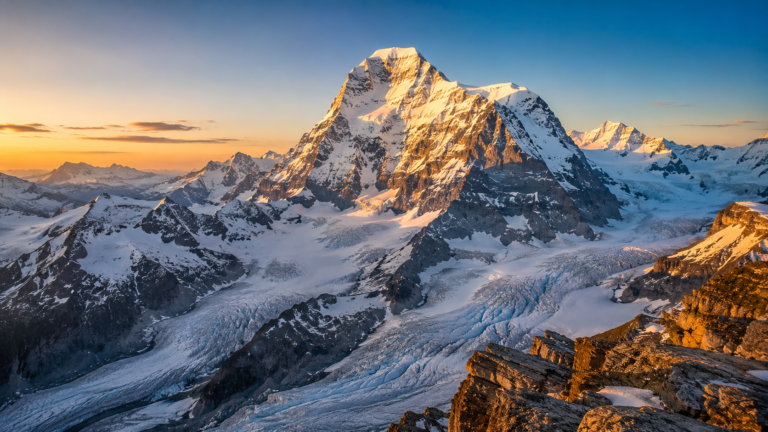
The water flowing through Trümmelbach Falls originates high above the valley in the glaciated landscapes surrounding the Eiger, Mönch, and Jungfrau mountains. Meltwater from these alpine giants gathers in streams before descending toward Lauterbrunnen.
Over countless years, this powerful flow has carved a twisting route through the mountain, creating a complex system of waterfalls and rock formations hidden from view on the valley floor.
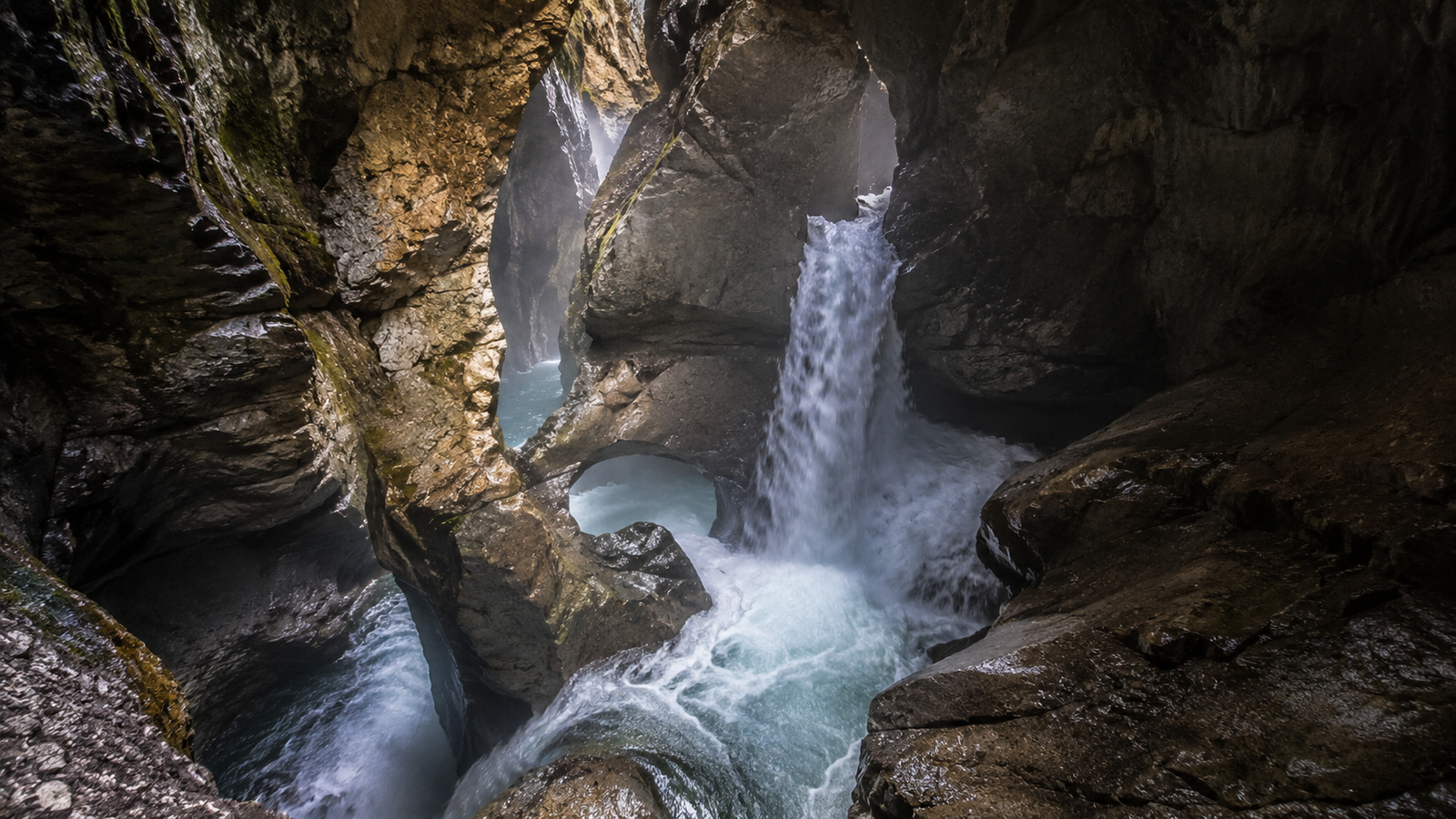
What visitors experience today is not a single waterfall but a sequence of cascades moving through narrow gorges, sculpted chambers, and smooth rock corridors. The constant movement of water continues to shape the interior landscape, demonstrating the ongoing geological processes that define the Alps.
Because the falls carry glacial meltwater, water volume can vary depending on seasonal conditions, particularly during warmer periods when snow and ice melt more rapidly in the high mountains.
Entering the Mountain
One of the defining features of Trümmelbach Falls is accessibility.
Rather than viewing the waterfalls from a distant lookout, visitors enter the mountain through a system of tunnels, walkways, and observation platforms designed to reveal the hidden watercourse.
An underground elevator transports visitors into the mountain, where a network of paths leads through the interior. Along the route, viewing platforms provide close perspectives of the rushing water as it crashes through narrow channels and plunges into rock-carved chambers.
The experience is immersive. Water sprays through the air, the sound reverberates against stone walls, and the scale of the geological formations becomes immediately apparent. Visitors are not simply observing nature; they are surrounded by it.
At several points, the falls appear only a short distance away, separated from visitors by protective barriers and viewing areas. The combination of noise, movement, and confined rock spaces creates a dramatic contrast to the open alpine landscapes outside.
Understanding the Valley’s Hidden Hydrology
Lauterbrunnen is often associated with waterfalls visible from afar, particularly Staubbach Falls and the numerous cascades descending from the valley’s cliffs. Trümmelbach reveals another side of the valley’s hydrology.
The Lauterbrunnen Valley itself was shaped by glaciers that carved deep troughs through the surrounding mountains. As glaciers retreated, meltwater continued to influence the landscape, exploiting fractures in the limestone and enlarging them over time.
Trümmelbach Falls represents this process in action. The waterfall system demonstrates how water can shape rock not only on the surface but also deep within a mountain. Smooth walls, curved channels, potholes, and sculpted cavities throughout the falls provide visible evidence of erosion over long geological timescales.
For visitors interested in natural history, the attraction serves as both a scenic destination and a living lesson in alpine geology.
A Natural Attraction Recognized for Its Significance
Trümmelbach Falls has long attracted scientific interest as well as tourism attention.
The waterfall system became accessible to visitors through engineering projects that allowed safe exploration of the mountain interior while preserving the natural environment. Over time, it developed into one of the Jungfrau Region’s most distinctive attractions.
Unlike many waterfalls that can be appreciated in only a few moments, Trümmelbach invites exploration. The route through the mountain reveals multiple viewpoints, each presenting a different aspect of the water’s power and the rock formations it has created.
Its significance extends beyond aesthetics. The falls provide a rare opportunity to observe a major glacier-fed water system operating inside a mountain, something few natural attractions can offer on such an accessible scale.
The Most Dramatic Viewing Points
Throughout the route, visitors encounter a series of viewing locations that highlight different characteristics of the falls.
Some platforms overlook narrow chutes where water accelerates through confined passages. Others reveal large chambers where the flow expands before plunging deeper into the mountain. In several locations, swirling currents demonstrate the immense energy contained within the water.
Lighting inside the attraction helps reveal the textures and contours of the rock while preserving the natural atmosphere of the environment. Moisture on the stone surfaces reflects the light, emphasizing the sculpted appearance of the canyon walls.
Every section feels distinct, creating a sense of progression as visitors move deeper into the geological story of the mountain.
Seasonal Changes and Visitor Experience
The character of Trümmelbach Falls changes throughout the year.
During late spring and summer, increased glacial meltwater often produces stronger flows and more dramatic water movement. This is typically when the waterfalls appear at their most powerful.
The surrounding Lauterbrunnen Valley also experiences seasonal transformations that influence the overall visit. Summer brings lush meadows and hiking opportunities, while autumn introduces colorful forests and quieter conditions. Snow-covered peaks provide a spectacular backdrop during cooler months.
Because the falls are closely tied to alpine meltwater, visitors can often observe noticeable differences in water volume depending on weather and seasonal conditions.
Combining Trümmelbach Falls with the Jungfrau Region
The falls are located between Lauterbrunnen and Stechelberg, making them easy to include in a broader exploration of the valley.
Many travelers visit Trümmelbach Falls alongside Staubbach Falls, creating an interesting comparison between two very different waterfall experiences. One plunges openly from a cliff high above the valley, while the other disappears into the mountain itself.
The attraction also complements visits to nearby destinations such as Mürren, Wengen, Schilthorn, and the mountain railways that connect travelers to the higher elevations of the Jungfrau Region.
Walking and cycling routes through the valley provide additional opportunities to experience the landscape between attractions, allowing visitors to appreciate the dramatic geological setting that gave rise to so many waterfalls.
The journey through Trümmelbach Falls often leaves a lasting impression not because of a single view, but because of the sensation of standing inside a mountain shaped by water. In a country famous for alpine panoramas and scenic peaks, this hidden waterfall system offers something different: a close encounter with the forces that continue to transform the Swiss Alps, one drop at a time.