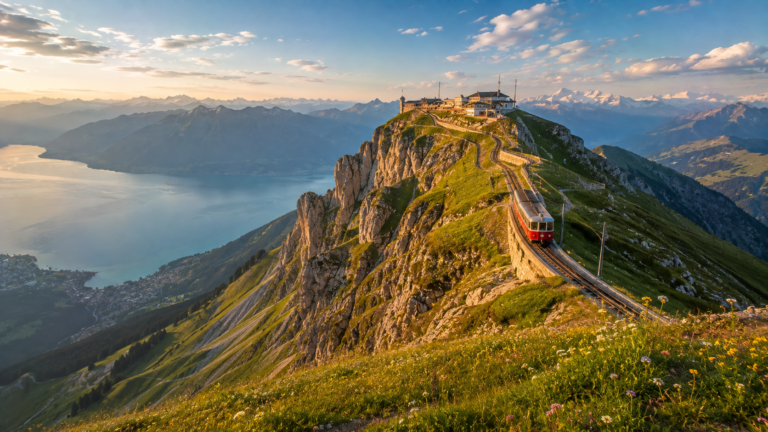
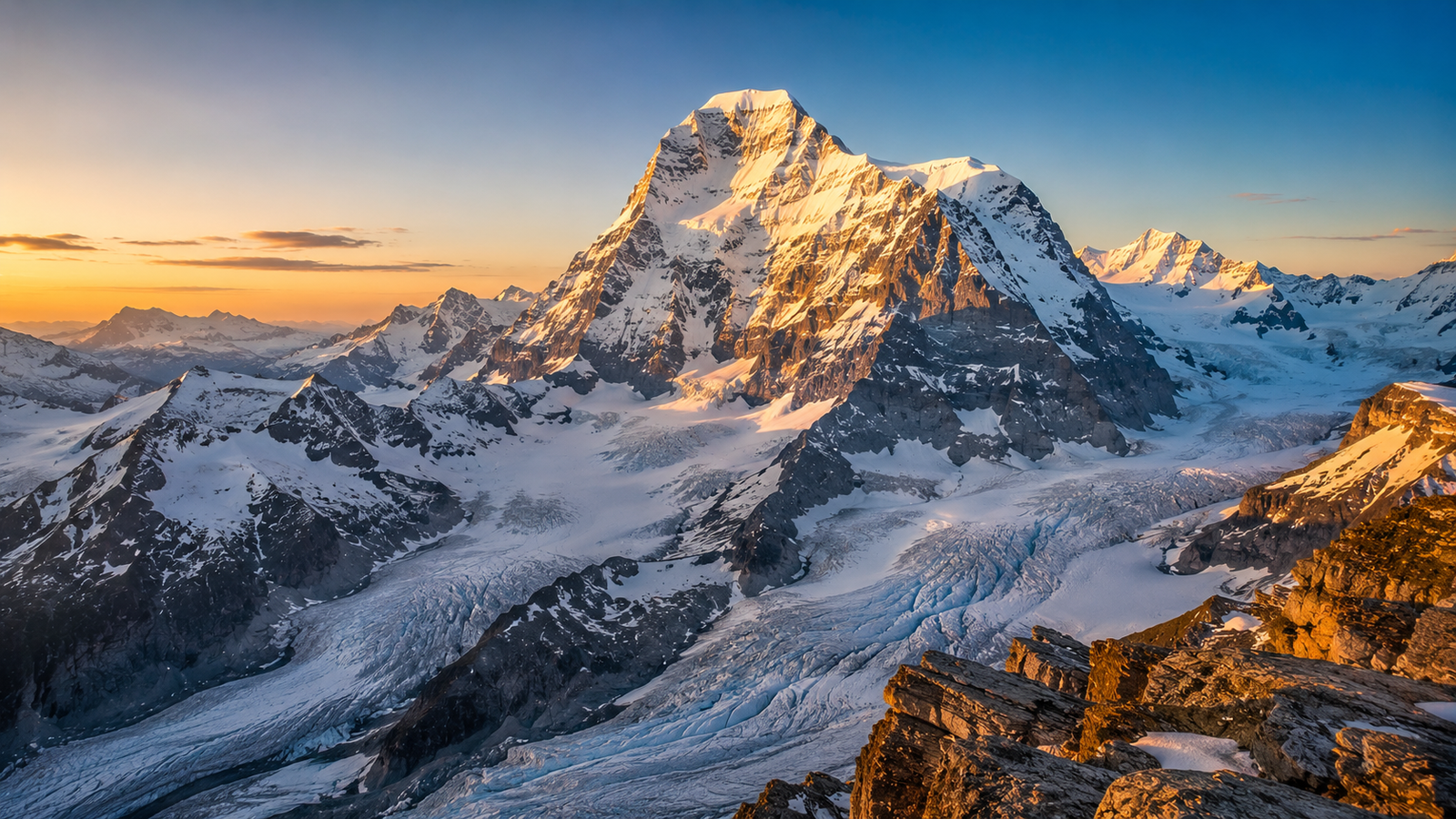
Jungfrau, Lauterbrunnen, Switzerland
Jungfrau: Discovering the Majestic Peak Known as the “Top of Europe”
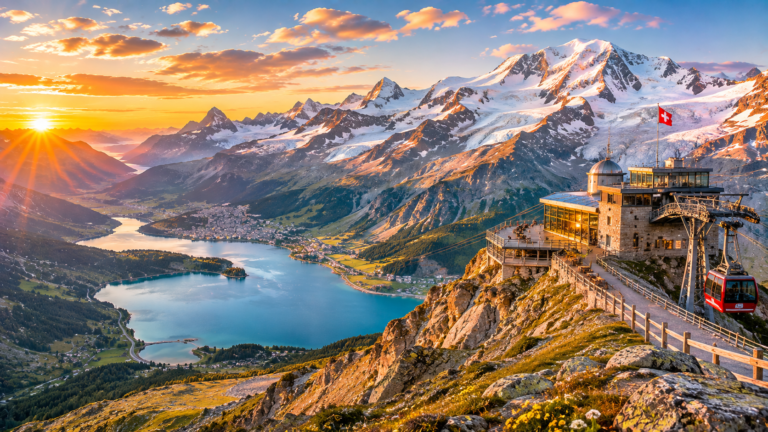
Rising high above the Bernese Oberland, Jungfrau is one of Switzerland’s most celebrated mountains and a defining feature of the Alpine landscape. Together with its neighboring peaks, Eiger and Mönch, it forms a dramatic mountain trio that has captivated travelers, artists, climbers, and explorers for generations. While many visitors know the name through the famous Jungfraujoch railway destination, the mountain itself remains one of the most remarkable natural landmarks in the Swiss Alps.
Snow-covered throughout much of the year and visible from valleys, villages, and mountain ridges across the region, Jungfrau combines breathtaking scenery with a rich history of exploration and engineering achievement. Its presence dominates the skyline of central Switzerland and continues to symbolize the grandeur of the Alpine world.
A Peak at the Heart of the Bernese Alps
Jungfrau stands at 4,158 meters above sea level in the Bernese Alps, making it one of Switzerland’s most prominent high peaks. The mountain lies on the border between the cantons of Bern and Valais and forms part of a larger mountain system that includes extensive glaciers, rocky ridges, and protected Alpine landscapes.
The peak overlooks two of Switzerland’s most famous valleys: Lauterbrunnen and Grindelwald. From below, Jungfrau appears as a towering wall of snow and ice, while from higher viewpoints it reveals an intricate landscape of glaciers, ridges, and summit formations.
The mountain’s name, which translates to “Maiden” in English, has been associated with the peak for centuries and has become one of the most recognizable mountain names in Europe.
A Landscape Recognized by UNESCO
Jungfrau forms part of the Swiss Alps Jungfrau-Aletsch UNESCO World Heritage Site, one of the most significant protected mountain regions in the world.
The designation recognizes the area’s exceptional geological value and its importance in understanding the formation of Alpine landscapes. Massive glaciers, deeply carved valleys, and towering peaks create an environment that demonstrates the powerful natural forces that have shaped the Alps over countless generations.
Visitors exploring the region encounter a landscape where ice, rock, water, and vegetation combine to create extraordinary natural diversity. The UNESCO recognition highlights not only the beauty of the mountain but also its global environmental significance.
From Alpine Exploration to International Fame
The history of Jungfrau is closely linked to the development of Alpine exploration.
During the eighteenth and nineteenth centuries, growing interest in mountain travel brought scientists, artists, and adventurers to the Bernese Alps. As transportation improved, increasing numbers of visitors arrived to witness the region’s spectacular scenery firsthand.
The first successful ascent of Jungfrau was achieved in the early nineteenth century, marking an important milestone in Alpine mountaineering. Over time, the mountain became an important symbol of exploration and adventure.
Its international reputation expanded even further with the development of mountain railways, which transformed the surrounding region into one of Switzerland’s most visited destinations.
The Gateway to the “Top of Europe”
Although Jungfrau itself remains a challenging alpine peak, many visitors experience the mountain through Jungfraujoch, the high mountain saddle located between Jungfrau and Mönch.
The Jungfrau Railway, one of Switzerland’s most celebrated engineering achievements, transports visitors through tunnels carved into the mountains. The railway journey offers dramatic views of glaciers, rock formations, and high-altitude landscapes before reaching Jungfraujoch.
Often referred to as the “Top of Europe,” Jungfraujoch serves as one of the most accessible ways for travelers to experience the high Alps. Observation platforms, glacier views, and panoramic scenery allow visitors to appreciate the scale of the surrounding mountains without requiring mountaineering skills.
For many travelers, the journey to Jungfraujoch becomes the highlight of their visit to the Jungfrau region.
A World of Ice and Snow
One of Jungfrau’s defining characteristics is its connection to the vast glacial landscapes that surround it.
The mountain overlooks some of the largest glacier systems in the Alps, including those that feed the Aletsch Glacier, the largest glacier in the Alpine region. From elevated viewpoints, visitors can observe sweeping expanses of ice extending across the mountains.
The contrast between bright snowfields, dark rocky ridges, and deep blue skies creates some of Switzerland’s most iconic scenery. Seasonal changes alter the appearance of the landscape, but the mountain’s glaciated character remains a constant presence throughout the year.
These ice-covered environments have long fascinated researchers, photographers, and nature enthusiasts seeking to understand the forces that shape high mountain ecosystems.
Exploring the Jungfrau Region
While the summit itself is primarily the domain of experienced mountaineers, the surrounding region offers countless opportunities for exploration.
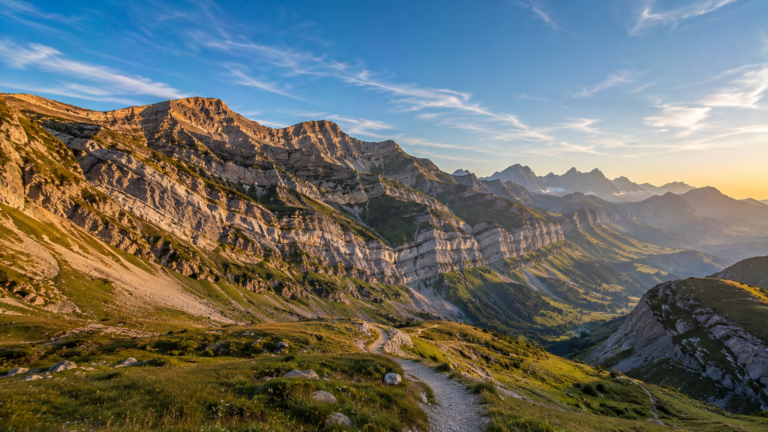
Hiking trails connect mountain villages, panoramic viewpoints, alpine meadows, and scenic ridges. Visitors can experience dramatic perspectives of Jungfrau from locations throughout the Bernese Oberland.
Popular destinations include Kleine Scheidegg, Wengen, Mürren, Grindelwald, and Lauterbrunnen. Each offers unique views of the mountain and serves as a gateway to outdoor activities.
The extensive network of mountain railways, cable cars, and walking routes allows travelers to tailor their experience according to interests and fitness levels.
Whether seeking a leisurely scenic excursion or an ambitious day of hiking, visitors can engage with the mountain landscape in a variety of ways.
The Changing Character of the Seasons
Jungfrau remains a year-round attraction because each season reveals a different aspect of the mountain.
Summer brings green valleys, blooming alpine meadows, and extensive hiking opportunities. Long daylight hours allow visitors to spend more time exploring the surrounding landscapes.
Autumn often offers crisp weather and excellent visibility. The contrast between colorful lower slopes and snow-covered peaks creates striking scenery.
Winter transforms the region into one of Europe’s most famous Alpine destinations. Ski resorts, snow-covered villages, and glacier landscapes create a classic Swiss mountain atmosphere.
Spring introduces gradual seasonal change as snow retreats from lower elevations while higher sections of the mountain remain frozen and dramatic.
Every season contributes to the mountain’s enduring appeal.
Cultural and Symbolic Significance
Jungfrau occupies an important place in Swiss cultural identity.
Its image appears in travel literature, photography, tourism campaigns, and countless artistic works. For generations, the mountain has represented the beauty, scale, and power of the Swiss Alps.
Local communities throughout the Bernese Oberland maintain strong connections to the mountain through tourism, agriculture, transportation, and regional traditions. Visitors often experience this heritage through historic villages, traditional architecture, local cuisine, and mountain culture.
The mountain’s prominence ensures that it remains both a natural landmark and a cultural symbol.
Planning a Visit
Access to the Jungfrau region is straightforward thanks to Switzerland’s highly efficient transportation system. Rail connections link major cities with gateway destinations such as Interlaken, Grindelwald, Lauterbrunnen, and Wengen.
Weather conditions can change rapidly at higher elevations, making flexible planning advisable. Clear days generally provide the best opportunities for panoramic views and photography.
Visitors should dress in layers, even during summer, as temperatures at high altitude can be significantly cooler than in nearby valleys.
What distinguishes Jungfrau from many famous mountains is its combination of accessibility and grandeur. Travelers can witness extraordinary Alpine scenery through railways, viewpoints, and hiking trails while remaining connected to the region’s rich history and culture. Whether admired from a distant valley or experienced through a journey to Jungfraujoch, Jungfrau remains one of Switzerland’s most inspiring natural treasures and one of the defining landmarks of the European Alps.