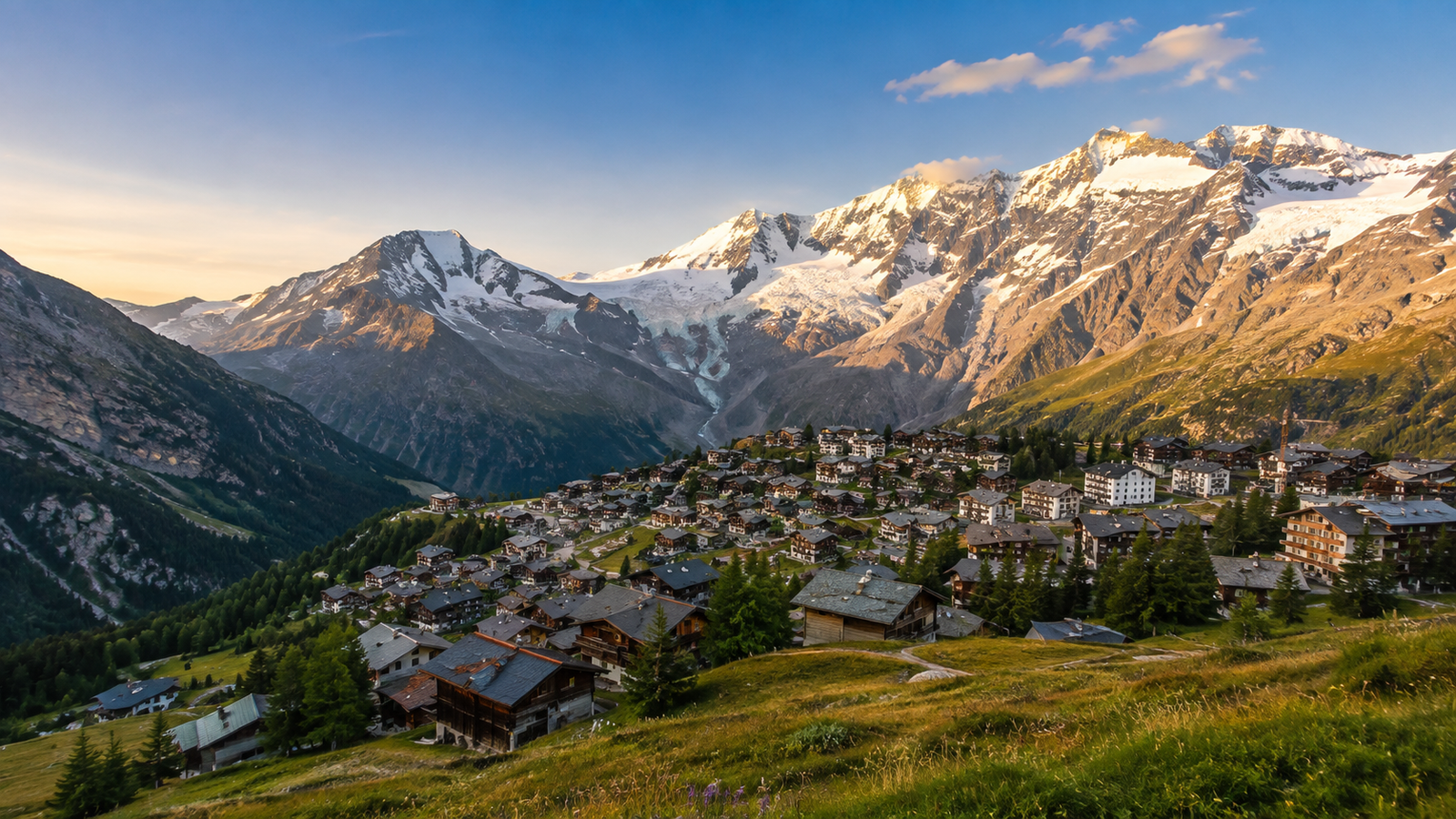
Saas-Fee, Valais
Saas-Fee: Discover Switzerland’s Glacier Village Beneath the Four-Thousand-Meter Peaks
Hidden among some of the highest mountains in the Swiss Alps, Saas-Fee offers a dramatic mountain experience unlike anywhere else in Switzerland. Surrounded by glaciers and towering summits, this car-free village combines breathtaking scenery with a rich Alpine heritage and year-round outdoor adventure. While many travelers first discover Saas-Fee for its world-famous skiing, the destination reveals a much broader story—one shaped by glaciers, mountain culture, and an enduring connection to the natural world.
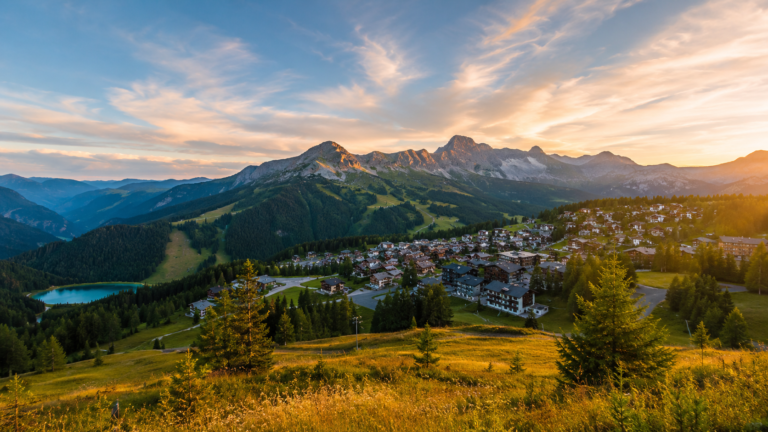
The village sits high in the Saas Valley, where traditional wooden chalets, quiet streets, and panoramic mountain views create an atmosphere that feels both timeless and remarkably well preserved. Whether visitors arrive in winter or summer, Saas-Fee delivers an authentic Alpine experience framed by some of Switzerland’s most spectacular landscapes.
A Village Shaped by Mountains and Ice
Saas-Fee stands at approximately 1,800 meters above sea level in the canton of Valais in southwestern Switzerland. The village occupies a high plateau beneath the imposing Mischabel mountain range, one of the most significant mountain groups in the Alps. The surrounding landscape is dominated by glaciers, rugged peaks, and alpine terrain that have influenced local life for centuries.
The region’s history is closely linked to the mountain environment. Long before tourism arrived, local communities depended on agriculture, livestock, and trade routes crossing nearby Alpine passes. Over time, explorers, mountaineers, and travelers were drawn to the dramatic scenery, helping transform Saas-Fee into one of Switzerland’s best-known mountain resorts. Tourism began to develop during the late nineteenth century when the village welcomed its first hotels and mountain visitors.
Despite modern tourism growth, Saas-Fee has preserved much of its traditional character. Historic chalets, local customs, and mountain traditions remain visible throughout the village, creating a sense of place that distinguishes it from larger resort destinations.
The Beauty of a Car-Free Alpine Community
One of Saas-Fee’s defining characteristics is its commitment to remaining largely free of private vehicle traffic. Visitors leave their cars at the entrance to the village, while electric vehicles provide local transportation when necessary. This approach helps preserve the peaceful atmosphere and allows pedestrians to enjoy the village without the noise commonly associated with busy tourist centers.
Walking through the village is part of the experience itself. Narrow lanes wind between traditional buildings, cafés, restaurants, and shops, all framed by glacier-covered mountains that appear remarkably close. The absence of regular traffic enhances the sense of immersion in the Alpine environment.
A Landscape Dominated by Four-Thousand-Meter Peaks
Few destinations in Europe can match the mountain scenery surrounding Saas-Fee.
The region is famous for its concentration of high peaks, including the Dom, the highest mountain located entirely within Switzerland. Numerous summits exceeding 4,000 meters rise above the valley, creating a dramatic skyline visible from nearly every corner of the village.
Among the area’s most recognized landmarks is the Allalinhorn, a glacier-covered peak that has become one of the defining symbols of the region. The mountain is closely associated with the extensive glacier systems that surround Saas-Fee and contribute to its reputation as a high-alpine destination.
The presence of glaciers has shaped both the landscape and local history. For centuries, these powerful ice formations influenced settlement patterns, transportation routes, and the lives of valley residents. Today they remain among the destination’s most impressive natural attractions.
Exploring the Glacier World
Saas-Fee is often called a glacier village, and the description is well deserved.
Visitors can access remarkable high-altitude viewpoints that reveal sweeping panoramas of snowfields, glaciers, and mountain peaks stretching across the Alps. The glacier environment is one of the region’s most memorable features, offering opportunities to experience landscapes that remain largely untouched by modern development.
The area surrounding Mittelallalin is particularly popular for its spectacular views. This high mountain location provides access to glacier scenery and serves as a gateway to several mountain experiences. It is also home to the world’s highest revolving restaurant, where visitors can enjoy continuously changing views of the surrounding Alpine giants.
Throughout the year, glacier-focused excursions and mountain adventures allow visitors to gain a deeper appreciation for the region’s extraordinary natural environment.
Winter in One of Switzerland’s Premier Snow Destinations
Snow sports have played a central role in Saas-Fee’s international reputation.
The ski area extends into high elevations where glacier conditions help support a long winter season. Skiers and snowboarders are drawn to the extensive terrain, reliable snow conditions, and spectacular scenery. The mountain network accommodates a variety of skill levels, from beginners seeking gentle slopes to experienced enthusiasts looking for more challenging routes.
Beyond skiing, winter visitors can enjoy snowshoeing, winter hiking, sledding, ice climbing, and other mountain activities. The combination of snow-covered peaks and the peaceful village atmosphere creates an unforgettable cold-season experience.
Summer Reveals Another Side of Saas-Fee
When the snow retreats from lower elevations, Saas-Fee transforms into a vibrant destination for hiking, climbing, and outdoor exploration.
An extensive network of mountain trails allows visitors to experience forests, alpine meadows, glacial landscapes, and panoramic viewpoints. Hiking routes vary from leisurely walks suitable for families to demanding mountain excursions for experienced adventurers.
One of the most beloved summer attractions involves the region’s famous marmots. These friendly alpine animals have become a symbol of Saas-Fee and are often observed in designated areas where visitors can watch them in their natural habitat.
Mountain biking, climbing, photography, and scenic cable-car rides further expand the range of outdoor experiences available during the warmer months.
Culture in the Heart of the Alps
While the landscape often captures the spotlight, Saas-Fee also offers a meaningful cultural experience.
The village reflects the traditions of Valais, a canton known for its strong Alpine identity and mountain heritage. Local architecture, seasonal celebrations, and regional cuisine all contribute to the area’s distinctive character.
Traditional wooden buildings remain an important visual feature of the village, providing a connection to earlier generations who built their lives in this demanding mountain environment. Visitors who take time to explore beyond the major attractions often discover a community that balances tourism with a genuine respect for its history and traditions.
Planning a Visit
Saas-Fee can be reached by rail and road connections through Visp, followed by regional transport into the Saas Valley. Because private vehicles do not enter the village center, travelers should plan accordingly when arriving by car. Public transportation provides convenient access from major Swiss cities and international gateways.
Winter is ideal for skiing, snowboarding, and snow-based activities, while summer attracts hikers, climbers, and nature enthusiasts. Spring and autumn offer quieter conditions and opportunities to appreciate the mountain scenery with fewer visitors.
Visitors should prepare for rapidly changing Alpine weather by packing layered clothing and suitable footwear. Even during summer, temperatures can be considerably cooler at higher elevations.
What ultimately makes Saas-Fee remarkable is the combination of powerful natural scenery and a village atmosphere that remains deeply rooted in Alpine tradition. Surrounded by glaciers, towering peaks, and centuries of mountain history, it continues to offer one of Switzerland’s most memorable high-altitude experiences.