Mönch, Lauterbrunnen, Switzerland
Mönch: The Alpine Giant Between Eiger and Jungfrau
Standing between two of Switzerland’s most famous mountains, the Eiger and Jungfrau, Mönch often receives less attention than its celebrated neighbors. Yet this magnificent peak is an essential part of one of the most iconic mountain landscapes in Europe. Rising above glaciers, valleys, and high-altitude railways, Mönch contributes to the dramatic skyline that has made the Bernese Oberland one of Switzerland’s premier travel destinations.
For visitors exploring the Jungfrau Region, Mönch is impossible to ignore. Its sharply defined ridges, snow-covered slopes, and commanding position above the surrounding glaciers create a mountain that is both visually impressive and historically significant. While experienced climbers recognize it as an important Alpine summit, travelers can appreciate its beauty from numerous accessible viewpoints throughout the region.
The Mountain at the Center of a Famous Trio
Mönch rises to 4,107 meters above sea level in the Bernese Alps and forms part of the legendary trio of peaks that includes Eiger and Jungfrau. Together, these mountains dominate the landscape of central Switzerland and create one of the country’s most recognizable natural landmarks.
The mountain occupies a strategic position between its larger neighbors. From many viewpoints, Mönch appears as the central guardian of the range, connecting the rugged rock faces of the Eiger with the glaciated slopes of Jungfrau.
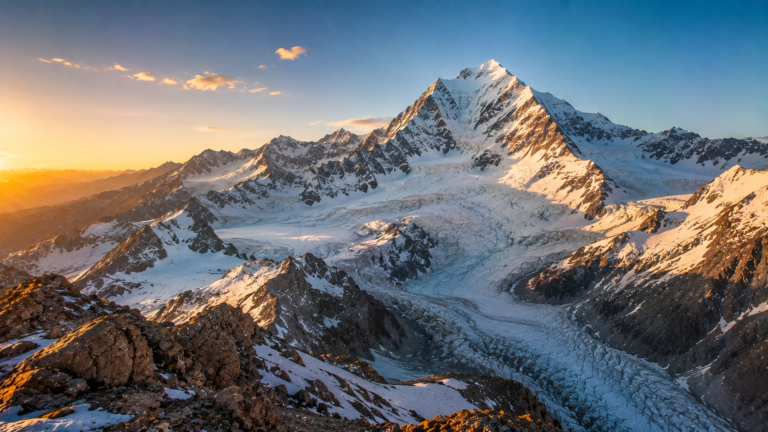
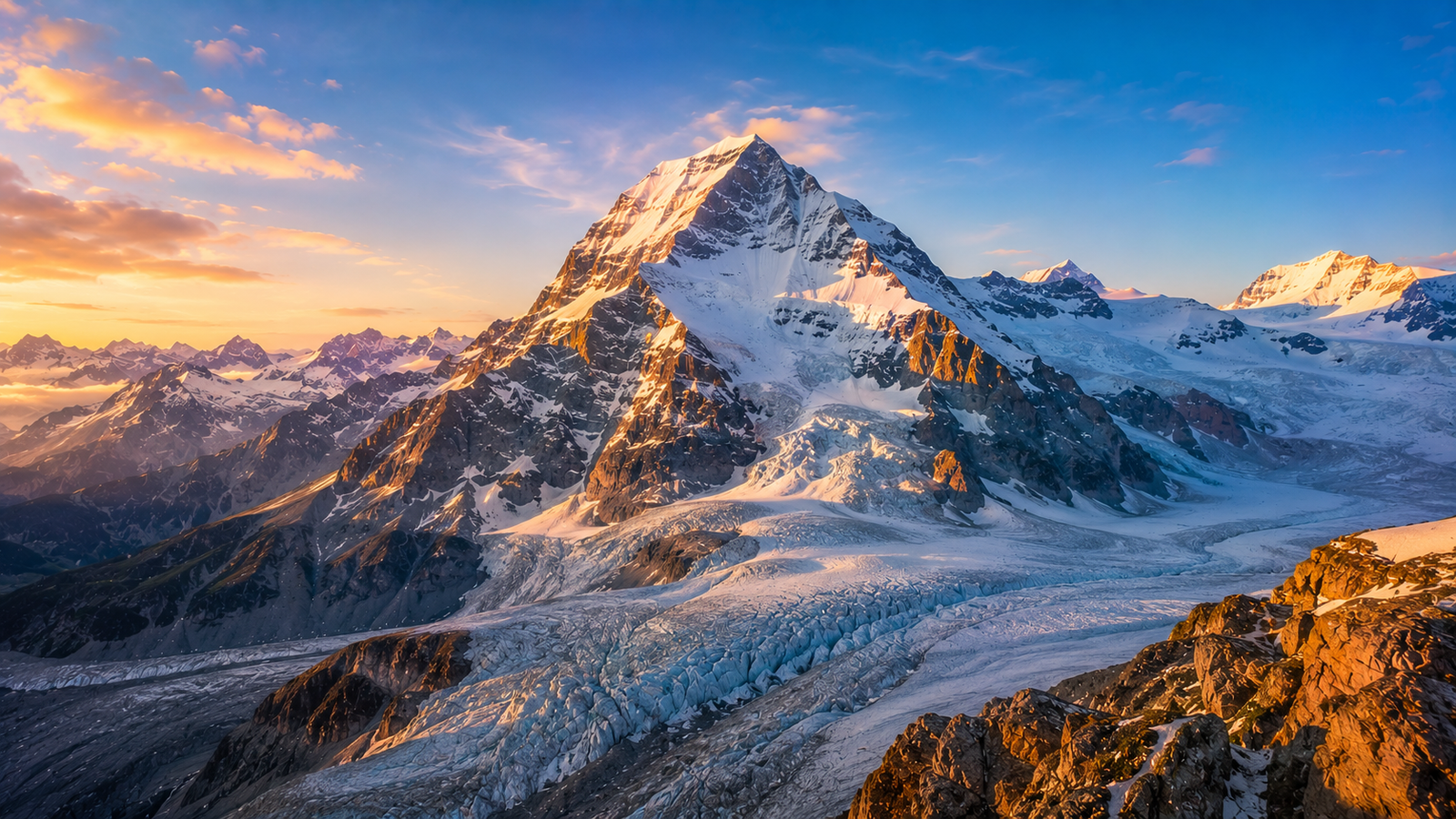
Its elevated location offers dramatic views across a landscape shaped by ice, snow, and geological forces over countless generations. Massive glaciers surround the mountain, contributing to the spectacular scenery visible from nearby observation platforms and mountain railways.
A Peak Shaped by Alpine History
The Bernese Alps have attracted explorers, scientists, and adventurers for centuries, and Mönch has long been part of that story.
During the great era of Alpine exploration in the nineteenth century, climbers increasingly turned their attention toward Switzerland’s highest peaks. Mönch became an important objective for early mountaineers seeking to expand knowledge of the Alpine environment and test their skills in high-altitude terrain.
The mountain’s relatively accessible climbing routes, compared with some neighboring summits, helped establish its reputation among experienced alpinists. Over time, successful ascents contributed to the development of mountaineering in the Bernese Oberland and strengthened the region’s status as a center of Alpine adventure.
Today, Mönch remains a respected climbing destination while also serving as a prominent visual landmark for visitors exploring the Jungfrau Region.
Geography in the Heart of the Alps
Mönch stands within one of the most remarkable mountain environments in Europe.
The mountain lies near extensive glacier systems that form part of the larger Jungfrau-Aletsch region. Ice fields stretch across high-altitude terrain, connecting mountain ridges and creating landscapes that appear almost untouched by time.
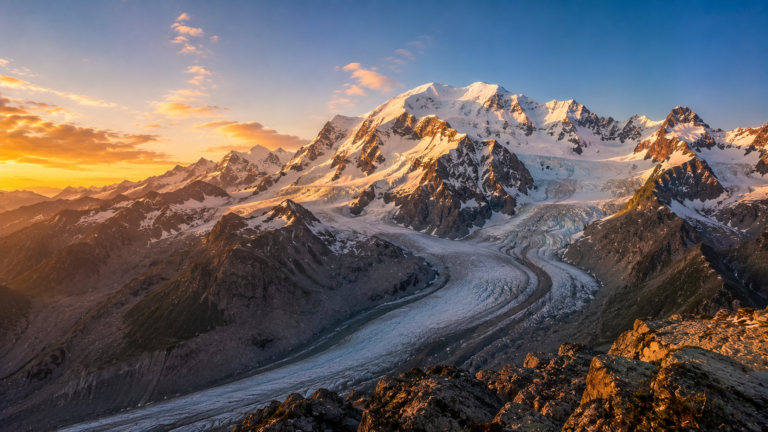
The nearby Aletsch Glacier, the largest glacier in the Alps, is part of the broader glacial environment surrounding Mönch. These icy landscapes contribute to the mountain’s striking appearance and play an important role in the region’s ecological and geological significance.
The mountain also forms part of the UNESCO-listed Swiss Alps Jungfrau-Aletsch World Heritage Site, recognized for its outstanding natural value and exceptional representation of Alpine geological processes.
A Constant Presence from Jungfraujoch
Many travelers experience Mönch during a visit to Jungfraujoch, one of Switzerland’s most famous mountain destinations.
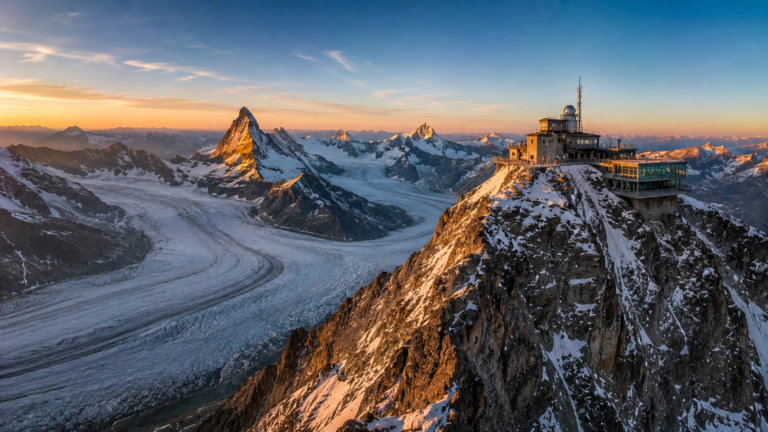
Located between Mönch and Jungfrau, Jungfraujoch offers visitors an extraordinary opportunity to stand amid the high Alps while enjoying views of glaciers, peaks, and snowfields. From observation platforms, Mönch appears remarkably close, revealing details of its rocky ridges and snow-covered slopes.
The mountain dominates much of the local skyline and helps define the dramatic atmosphere of the area. Whether viewed from the Sphinx Observatory, glacier viewpoints, or nearby trails, Mönch consistently captures attention.
Its proximity to Jungfraujoch makes it one of the most frequently photographed mountains in Switzerland, even though many visitors may not initially recognize its name.
The View from Below
While Jungfraujoch offers close-up perspectives, Mönch can also be admired from lower elevations throughout the Bernese Oberland.
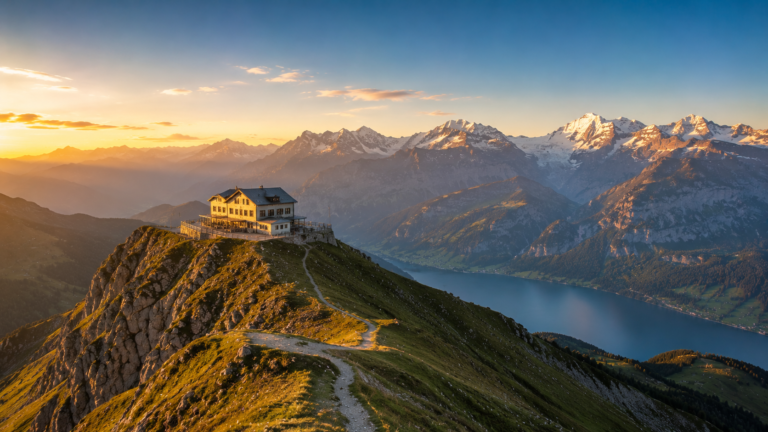
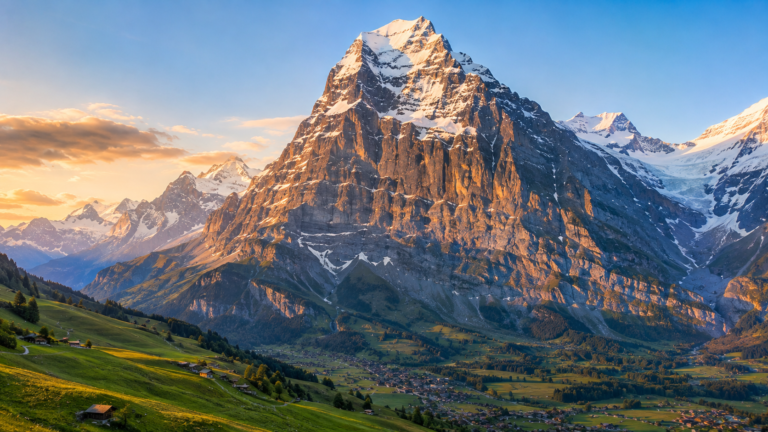
The villages of Grindelwald, Wengen, and Lauterbrunnen provide excellent opportunities to view the mountain as part of the larger Alpine panorama. Depending on the location, Mönch may appear as a snow-covered pyramid, a rugged ridge, or a dramatic wall of ice and rock.
Changing weather and lighting conditions constantly alter the mountain’s appearance. Sunrise and sunset often create particularly beautiful scenes as warm light illuminates the upper slopes while valleys remain in shadow.
For photographers, these shifting conditions provide endless opportunities to capture different moods and perspectives.
Hiking and Mountain Experiences
Although climbing Mönch itself requires mountaineering expertise, the surrounding region offers a wide range of experiences for ordinary travelers.
Hiking trails throughout the Jungfrau Region provide exceptional views of the mountain. Routes around Kleine Scheidegg, Eigergletscher, and neighboring mountain areas allow visitors to experience the landscape from multiple angles.
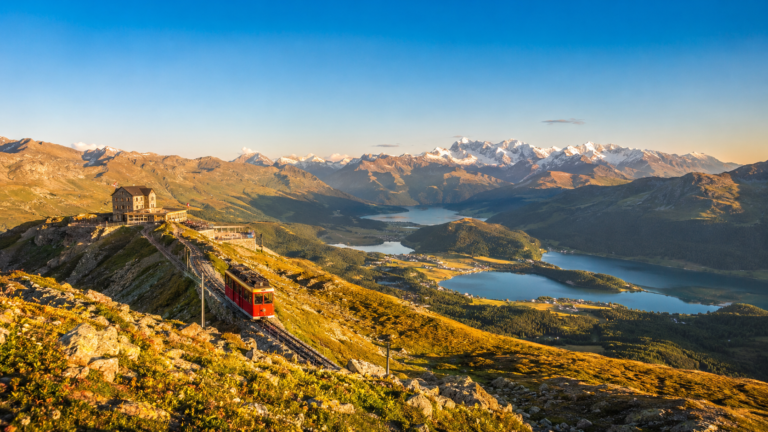
Mountain railways and cable cars further expand access to high-altitude viewpoints. Travelers can enjoy spectacular scenery without undertaking demanding climbs, making the region accessible to people of varying ages and fitness levels.
The combination of transportation infrastructure and natural beauty is one reason the area remains among Switzerland’s most visited mountain destinations.
Seasonal Beauty Throughout the Year
Mönch maintains a striking presence in every season.
Summer brings green valleys, wildflower-covered meadows, and clear hiking conditions. The contrast between vibrant landscapes below and permanent snowfields above creates particularly attractive scenery.
Autumn often provides excellent visibility and a quieter atmosphere. Crisp mountain air and colorful lower slopes enhance the visual appeal of the region.
Winter transforms the Bernese Oberland into a world of snow and ice. The mountain blends seamlessly into a landscape of white ridges, glaciers, and frozen valleys.
Spring introduces gradual seasonal change, with lower elevations awakening while Mönch remains firmly surrounded by snow and ice.
Each season highlights different aspects of the mountain’s character and contributes to its year-round appeal.
Cultural and Symbolic Importance
Although often overshadowed by Eiger and Jungfrau in popular travel discussions, Mönch plays an essential role in the identity of the region.
The mountain appears in countless photographs, paintings, tourism campaigns, and travel publications. Together with its neighboring peaks, it forms a landscape that has become synonymous with Switzerland itself.
Local communities benefit from tourism linked to the surrounding mountains while maintaining traditions rooted in Alpine culture. Visitors encounter this heritage through historic villages, mountain railways, traditional architecture, and regional cuisine.
The mountain’s presence contributes to a sense of place that extends beyond tourism and reflects the long relationship between people and the Alpine environment.
Planning a Visit
The easiest way to experience Mönch is through the transportation network of the Jungfrau Region. Travelers can reach gateway destinations such as Interlaken, Grindelwald, Lauterbrunnen, and Wengen by train before continuing into the mountains.
Jungfraujoch offers some of the most dramatic close-up views of the peak, while numerous hiking trails and scenic rail routes provide alternative perspectives.
Because mountain weather can change rapidly, visitors should prepare for varying conditions and dress appropriately for higher elevations. Even during summer, temperatures near glaciers and mountain ridges can be significantly cooler than in the valleys below.
What makes Mönch particularly fascinating is its balance between accessibility and wilderness. It is a mountain that can be admired by casual travelers from comfortable viewpoints while continuing to inspire climbers seeking high-altitude challenges. Positioned between two legendary neighbors, Mönch remains an indispensable part of Switzerland’s most iconic Alpine panorama and one of the great natural landmarks of the Bernese Alps.