Lake Maggiore, Locarno, Switzerland
Lake Maggiore: Switzerland’s Mediterranean-Inspired Lake Between Mountains and Palm Trees
For many travelers, Switzerland is a country of snow-covered peaks, alpine railways, and mountain villages. Yet in the country’s southernmost region, a different landscape emerges. Palm trees line waterfront promenades. Subtropical gardens flourish against mountain backdrops. Outdoor cafés spill onto sunlit piazzas. The atmosphere feels distinctly Mediterranean, despite being surrounded by the Alps.
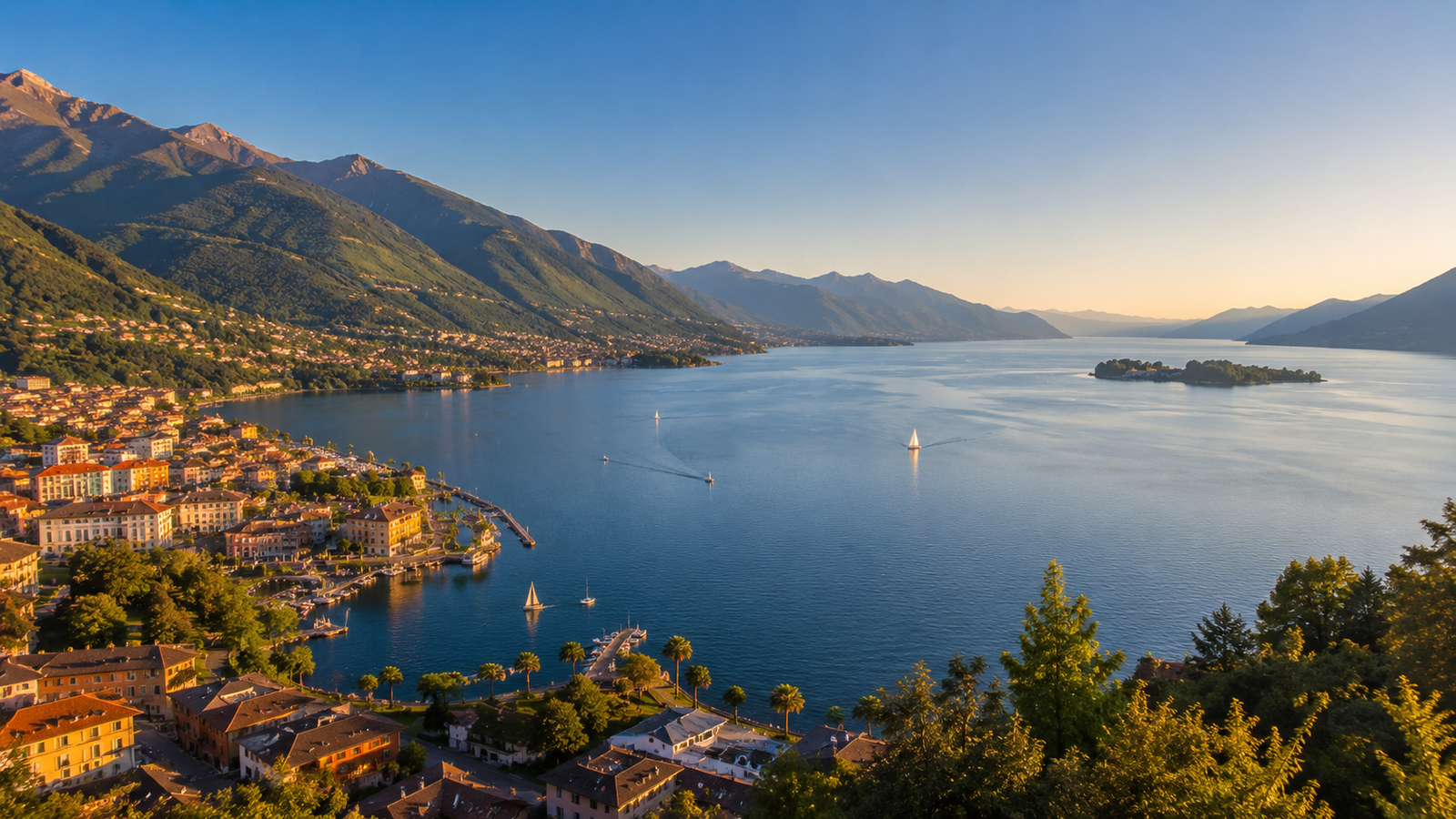
This is Lake Maggiore, one of Europe’s great transboundary lakes and one of Switzerland’s most distinctive destinations. Shared between Switzerland and Italy, the lake offers a blend of dramatic mountain scenery, mild climate, cultural heritage, and lakeside elegance that sets it apart from almost every other Swiss destination.
For visitors exploring Ticino, Switzerland’s Italian-speaking canton, Lake Maggiore is more than a scenic body of water. It is the centerpiece of a region where geography, culture, and climate combine to create a uniquely southern character.
A Lake That Connects Two Countries
Lake Maggiore, known in Italian as Lago Maggiore, stretches across the Swiss-Italian border. While the larger portion of the lake lies in northern Italy, its northern shoreline extends into Switzerland, where it shapes much of the landscape around Locarno and Ascona.
Covering a vast area between mountain ranges, the lake is among the largest lakes in Southern Europe. Its elongated form was created by ancient glaciers that carved deep valleys through the region during the Ice Age. When the glaciers retreated, they left behind the basin that would eventually become Lake Maggiore.
Today, the lake remains one of the defining natural features of Ticino, providing a dramatic contrast between alpine peaks and a surprisingly mild lakeside environment.
The Climate That Makes Ticino Different
One of the first things visitors notice about Lake Maggiore is the vegetation.
Palm trees, camellias, magnolias, citrus plants, and exotic gardens flourish throughout the region. This unusual landscape is the result of Lake Maggiore’s moderating influence on local temperatures combined with Ticino’s southern location.
The lake acts as a natural heat reservoir, helping create one of Switzerland’s mildest climates. Warm summers, relatively gentle winters, and abundant sunshine have allowed plant species rarely associated with Switzerland to thrive along the shoreline.
This Mediterranean atmosphere is particularly evident in spring, when gardens burst into color, and during summer evenings when lakeside promenades remain lively long after sunset.
Locarno: Switzerland’s Sunniest Lakeside City
At the northern tip of Lake Maggiore lies Locarno, one of Ticino’s most important cultural and tourism centers.
The city is known internationally for its lakeside setting, historic old town, and vibrant Piazza Grande, which serves as the heart of local life. Surrounded by mountains and facing the lake, Locarno combines urban energy with natural beauty.
The city is also famous for hosting the internationally recognized Locarno Film Festival, one of Europe’s longest-running film events. During the festival, Piazza Grande transforms into a giant open-air cinema, attracting filmmakers and audiences from around the world.
Beyond cultural events, Locarno serves as a convenient gateway to the wider Lake Maggiore region, connecting visitors to boat routes, mountain excursions, and lakeside villages.
Ascona and the Art of Slow Travel
Just west of Locarno, Ascona offers a different perspective on Lake Maggiore.
Frequently regarded as one of Switzerland’s most attractive lakeside towns, Ascona is characterized by colorful waterfront buildings, elegant promenades, narrow streets, and a relaxed atmosphere. The town has long attracted artists, writers, musicians, and travelers seeking inspiration from its unique setting.
Unlike many alpine destinations focused on dramatic adventure, Ascona encourages a slower pace. Visitors often spend their time strolling along the waterfront, dining outdoors, exploring galleries, or enjoying views across the lake toward the surrounding mountains.
The town’s blend of Swiss organization and Italian influence contributes to a distinctive cultural identity found nowhere else in the country.
Discovering the Brissago Islands
Among Lake Maggiore’s most celebrated attractions are the Brissago Islands, located near the Swiss shoreline.
These small islands are known for their remarkable botanical garden, where the region’s mild climate supports plant species from Mediterranean, subtropical, and exotic environments around the world.
Accessible by boat, the islands provide visitors with a unique opportunity to experience an extraordinary variety of vegetation within a compact setting. Walking paths weave through gardens featuring palms, bamboo, flowering shrubs, and rare plant collections.
The contrast between tropical greenery and alpine mountain scenery makes the Brissago Islands one of the most distinctive horticultural attractions in Switzerland.
The Lake from the Water
Although panoramic viewpoints reveal the scale of Lake Maggiore, many visitors consider a boat journey the best way to experience it.
Passenger boats connect numerous lakeside communities and provide access to attractions that would otherwise require longer journeys by road. From the water, the relationship between mountains, towns, forests, and shoreline becomes especially clear.
Cruises also reveal how dramatically the landscape changes along different sections of the lake. Some areas feature elegant promenades and historic villas, while others remain dominated by steep forested slopes descending directly into the water.
The ability to travel seamlessly between Swiss and Italian destinations adds another layer to the experience, highlighting Lake Maggiore’s role as both a geographic and cultural crossroads.
Beyond the Shoreline
The appeal of Lake Maggiore extends well beyond the water itself.
Mountain railways, cable cars, hiking trails, and panoramic viewpoints provide opportunities to explore the surrounding landscapes from above. Elevated viewpoints reveal the full scale of the lake as it stretches southward toward Italy, framed by mountains and valleys.
Nearby valleys such as the Maggia Valley and Verzasca Valley offer additional opportunities to experience Ticino’s natural beauty. Crystal-clear rivers, stone villages, historic bridges, and hiking routes complement the lakeside attractions and broaden the region’s appeal.
These neighboring landscapes help explain why many travelers choose Lake Maggiore as a base rather than a brief stop. The lake provides easy access to a diverse range of cultural and natural experiences within a relatively compact area.
A Destination Defined by Contrast
What makes Lake Maggiore memorable is not a single landmark or attraction. Instead, it is the combination of elements that seem unlikely to coexist in one destination.
Snow-capped peaks rise above palm-lined waterfronts. Italian-speaking communities thrive within Switzerland. Historic piazzas sit beside subtropical gardens. Mountain adventures begin only minutes from lakeside cafés.
This coexistence of Alpine and Mediterranean influences has shaped the identity of the region for generations. Visitors arriving with expectations of traditional Swiss scenery often leave with a broader understanding of the country’s diversity.
Whether exploring the elegant streets of Ascona, boarding a boat from Locarno, wandering through the botanical landscapes of the Brissago Islands, or simply watching the evening light reflect across the lake, travelers encounter a side of Switzerland that feels both familiar and surprisingly unexpected—a destination where mountains meet the Mediterranean in one of Europe’s most beautiful lake regions.