Lake Lugano, Lugano, Switzerland
Lake Lugano: Switzerland’s Mediterranean-Inspired Escape Between Mountains and Water
Travelers crossing the Alps into southern Switzerland often notice a gradual transformation. Mountain landscapes remain ever-present, yet the atmosphere begins to feel different. Palm trees appear along promenades. Italian becomes the dominant language. Outdoor cafés spill onto sunlit squares, and the pace of life seems a little more relaxed. At the center of this distinctive region lies Lake Lugano, a destination that blends Swiss precision with Mediterranean character in a way few places can match.
Known as Lago di Lugano in Italian, the lake stretches across the border between Switzerland and Italy, weaving through a landscape of mountains, forested slopes, elegant lakeside communities, and cultural landmarks. While Switzerland is often associated with snow-covered peaks and Alpine valleys, Lake Lugano presents another side of the country—one shaped by sunshine, subtropical vegetation, and centuries of cross-border cultural exchange.
A Lake Shaped by Geography and Borders
Lake Lugano occupies a unique position in southern Europe.
Located primarily within the Swiss canton of Ticino, the lake also extends into neighboring Italy, creating an international landscape where geography often feels more significant than political boundaries. The waterway twists through mountain valleys, forming a series of narrow branches, bays, and scenic inlets that give it a distinctive appearance compared with many of Switzerland’s larger lakes.
Like numerous lakes throughout the Alpine region, Lake Lugano was formed through glacial activity during the Ice Age. Over thousands of years, advancing and retreating glaciers carved valleys that later filled with water, creating the complex lake basin visible today.
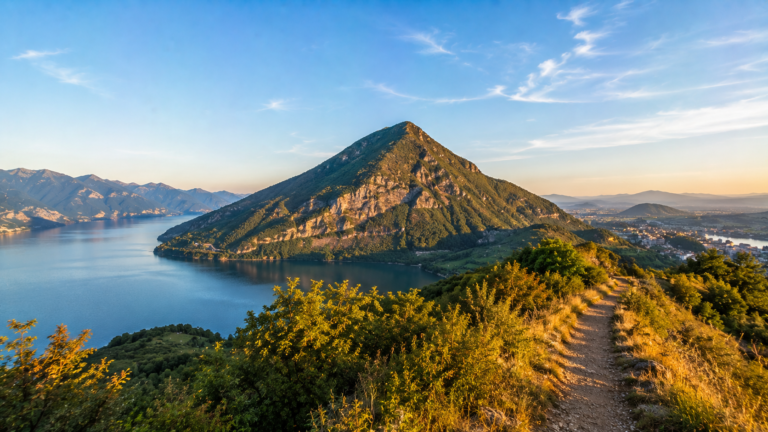
The surrounding mountains rise steeply from the shoreline, creating dramatic scenery while also helping to shape the region’s mild climate. These natural features contribute to an environment where Mediterranean and Alpine influences coexist in remarkable harmony.
The Cultural Heart of Switzerland’s Italian-Speaking Region
Lake Lugano is inseparable from the identity of Ticino.
Unlike much of Switzerland, where German or French dominates daily life, Italian serves as the primary language throughout the region. This linguistic and cultural distinction gives Lake Lugano a character unlike any other major Swiss destination.
The city of Lugano, situated along the northern shore, functions as the economic and cultural center of Ticino. Historic squares, arcaded streets, churches, museums, and lakeside parks reflect centuries of interaction between Swiss and Italian traditions.
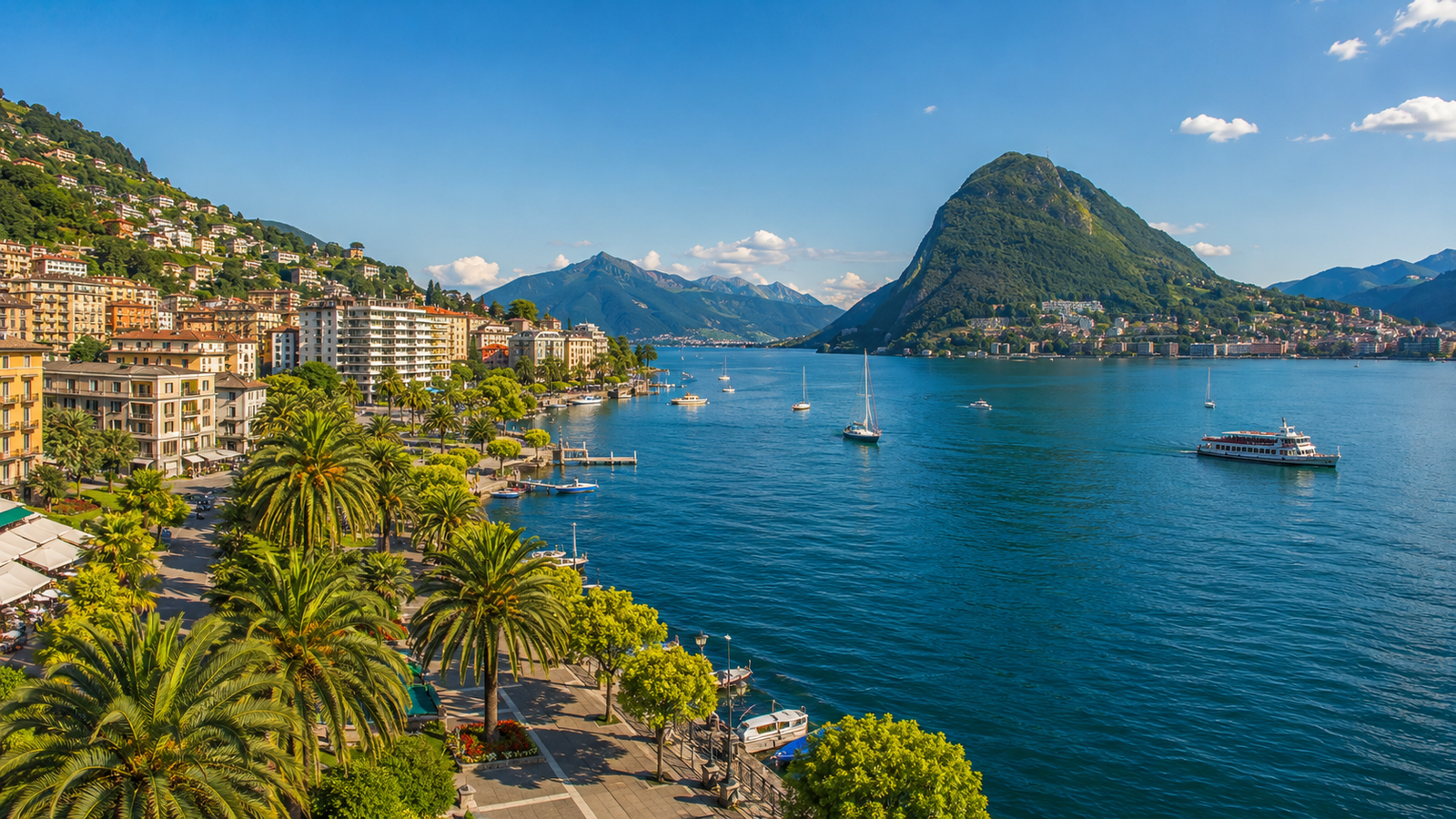
Architecture throughout the region often differs from that found in northern Switzerland. Warm-colored facades, decorative balconies, and Mediterranean-style public spaces create an atmosphere that feels distinctly southern while remaining unmistakably Swiss in organization and quality of life.
For visitors, this cultural blend is one of the destination’s greatest attractions.
The Lake as a Living Landscape
Lake Lugano is best appreciated not from a single viewpoint but through movement.
As boats travel across the water, the lake continually reveals new perspectives. One shoreline may feature elegant villas surrounded by gardens, while another presents steep wooded slopes descending directly into the water. Small villages emerge between mountain ridges, and distant peaks frame the horizon in nearly every direction.
The constantly changing scenery makes lake cruises one of the most popular experiences in the region. Passenger vessels connect communities along the shoreline while offering uninterrupted views of the surrounding landscape.
Unlike some Alpine lakes dominated by dramatic cliffs, Lake Lugano combines mountain scenery with a softer, more Mediterranean environment. This balance creates a visual character that feels both grand and inviting.
The experience is particularly rewarding during the warmer months when sunlight enhances the lake’s deep blue waters and highlights the rich vegetation covering the surrounding hillsides.
The Mountains That Watch Over the Lake
Two mountains have become iconic symbols of Lake Lugano.
Monte Brè rises above the eastern side of the city and is celebrated for its expansive views across the lake basin and surrounding mountains. Accessible by funicular railway, it provides visitors with one of the most comprehensive panoramas in the region.
On the opposite side of the city, Monte San Salvatore dominates the skyline with its distinctive profile. The mountain’s summit offers another remarkable vantage point, revealing the intricate shape of the lake and the surrounding valleys.
Together, these mountains help define the visual identity of Lugano. Their accessibility allows visitors to combine lakeside exploration with elevated viewpoints, creating a fuller appreciation of the region’s geography.
Numerous hiking routes connect the mountains, forests, villages, and lakeshore, making outdoor recreation an essential part of the destination experience.
Villages Beyond the City
Although Lugano serves as the region’s focal point, some of Lake Lugano’s most memorable destinations lie beyond the city itself.
Communities such as Morcote, Gandria, and other lakeside settlements preserve a more intimate atmosphere. Narrow lanes, historic buildings, waterfront promenades, and traditional architecture provide insight into the region’s past while offering a quieter alternative to urban sightseeing.
Morcote, in particular, is often admired for its picturesque lakeside setting and hillside architecture. The village demonstrates how communities have adapted to the region’s steep terrain while maintaining close connections to the lake.
Gandria, positioned near the Italian border, reflects centuries of trade and cultural exchange. Its location along the water highlights the historical importance of the lake as a transportation route linking communities across the region.
Exploring these villages reveals a slower and more traditional side of Ticino that contrasts with the modern cityscape of Lugano.
A Climate Unlike Much of Switzerland
One of Lake Lugano’s defining characteristics is its climate.
Sheltered by surrounding mountains and influenced by its southern location, the region experiences some of the mildest conditions in Switzerland. Palm trees, cypress trees, and other Mediterranean plant species thrive along portions of the shoreline, creating landscapes that often surprise visitors expecting a more typically Alpine environment.
This favorable climate supports outdoor activities for much of the year. Parks, waterfront promenades, gardens, and scenic viewpoints remain attractive across multiple seasons.
Spring arrives earlier than in many parts of Switzerland, while autumn often extends outdoor enjoyment long after colder conditions have reached higher elevations elsewhere in the country.
Outdoor Experiences on Land and Water
Lake Lugano offers a wide variety of recreational opportunities.
Boat excursions remain among the most popular ways to experience the lake, but the surrounding region also attracts hikers, cyclists, photographers, and nature enthusiasts. Walking paths connect parks and lakeside districts, while mountain trails provide opportunities for more challenging excursions.
Water-based activities such as kayaking, paddleboarding, and recreational boating are common during warmer months. The calm sections of the lake often provide ideal conditions for leisurely exploration.
Because the region combines accessible infrastructure with remarkable scenery, visitors can tailor their experiences to suit a wide range of interests and activity levels.
Planning a Visit to Lake Lugano
Lake Lugano is well connected to the broader Swiss transportation network. Rail services link the region with Zurich, Lucerne, and other major Swiss destinations, while nearby international connections provide access from Italy and the rest of Europe.
For first-time visitors, a combination of lakeside exploration, a boat cruise, and an excursion to Monte Brè or Monte San Salvatore offers an excellent introduction to the region. Adding time for nearby villages provides deeper insight into the cultural and historical character that distinguishes Ticino from other parts of Switzerland.
Lake Lugano occupies a unique place within the country’s tourism landscape. It offers mountain scenery without the isolation of remote Alpine valleys, Mediterranean charm without leaving Switzerland, and cultural richness shaped by centuries of interaction between northern and southern Europe. The result is a destination that feels both distinctly Swiss and wonderfully different from anywhere else in the country.