Giessbach Falls, Brienz, Switzerland
Giessbach Falls: Switzerland’s Legendary Waterfall Above Lake Brienz
Few places in Switzerland combine dramatic natural scenery, historic tourism heritage, and Alpine tranquility as seamlessly as Giessbach Falls. Cascading down a forested mountainside above the turquoise waters of Lake Brienz, this remarkable waterfall has captivated travelers for more than two centuries. Long before social media transformed scenic locations into global attractions, artists, writers, and early European travelers were making their way to Giessbach to witness one of the most celebrated waterfalls in the Swiss Alps.
Located on the southern shore of Lake Brienz in the Bernese Oberland, Giessbach Falls remains one of Switzerland’s most memorable natural landmarks. The waterfall, the historic Grandhotel Giessbach, and the nostalgic Giessbach Funicular together create an experience that feels both timeless and distinctly Swiss.
A Waterfall Built by Nature, Framed by the Alps
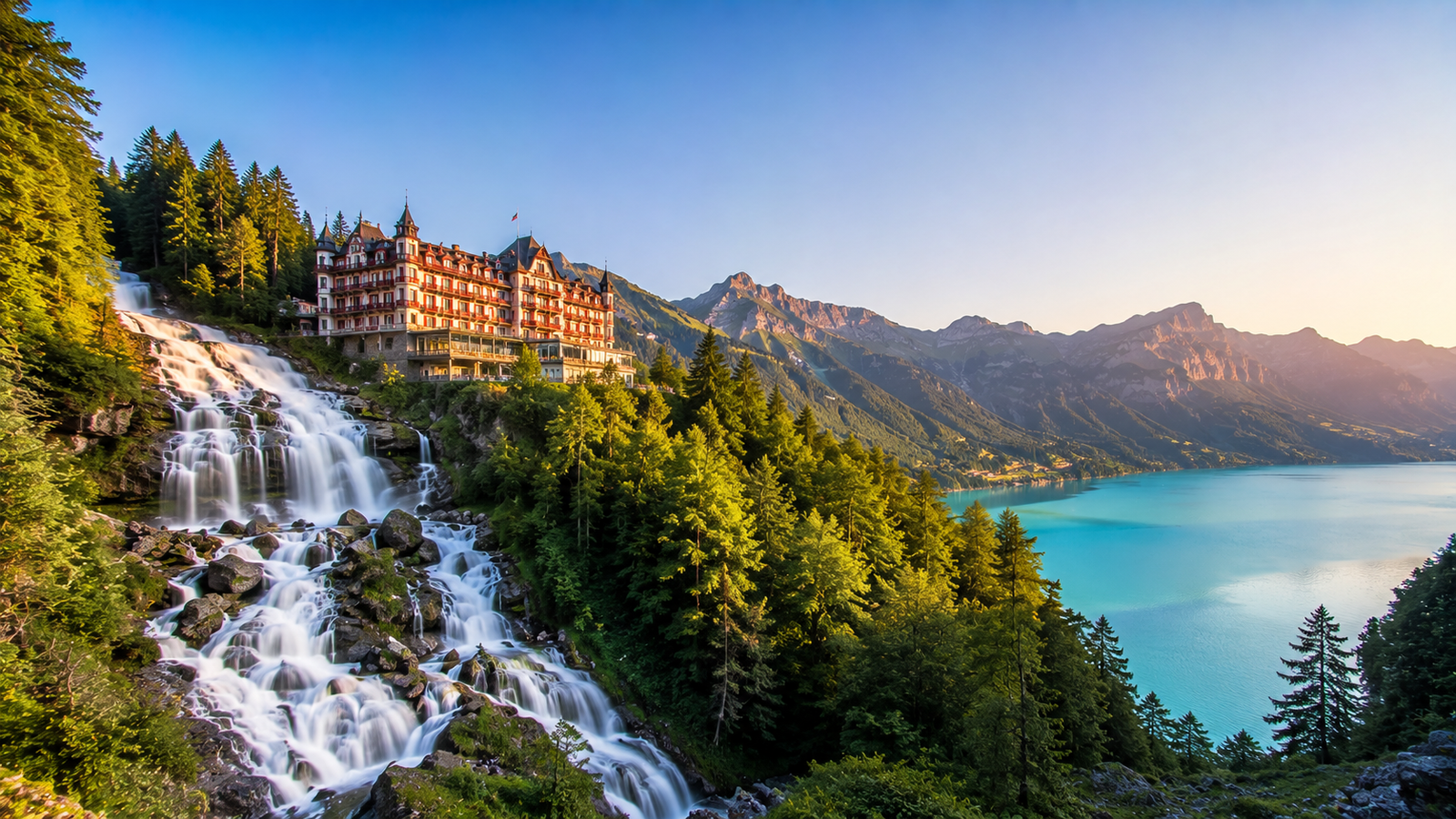
The Giessbach stream originates in the mountain valleys near the Faulhorn region before descending toward Lake Brienz. Along its final stretch, the water tumbles dramatically over a series of rocky terraces, creating the famous Giessbach Falls. The waterfall descends approximately 400 meters through 14 distinct cascades before reaching the lake below.
Unlike many waterfalls that can only be viewed from a distance, Giessbach invites visitors to experience the landscape from multiple perspectives. Forest trails weave around the falls, revealing constantly changing views of rushing water, moss-covered cliffs, and the brilliant turquoise color of Lake Brienz.
The combination of mountain scenery, dense woodland, and cascading water creates an atmosphere that feels surprisingly wild despite the site’s long history as a visitor destination.
The Famous Path Behind the Waterfall
One of the defining experiences at Giessbach Falls is the opportunity to walk behind part of the waterfall itself.
A well-maintained circular trail leads visitors through the forest and directly behind one of the main cascades. Standing in this natural corridor of rock and spray, travelers can look outward through a curtain of falling water toward Lake Brienz and the surrounding mountains.
The sensation is unforgettable. The sound of the water echoes through the rock walls, cool mist fills the air, and the view beyond appears almost dreamlike through the moving veil of water.
The trail is relatively short but delivers one of the most distinctive waterfall experiences in Switzerland. Visitors should wear sturdy footwear, especially after rain, as some sections can be slippery.
The Grandhotel That Became a Swiss Landmark
The story of Giessbach Falls is closely connected to the development of Swiss tourism during the nineteenth century.
As interest in Alpine travel grew, entrepreneurs recognized the appeal of the waterfall and the surrounding landscape. In the 1870s, the Hauser hotelier family commissioned French architect Horace Edouard Davinet to design the Grandhotel Giessbach, a magnificent Belle Époque property overlooking the falls and Lake Brienz.
Completed in 1875, the hotel quickly became a destination for wealthy European travelers, aristocrats, artists, and diplomats. Its elegant architecture was carefully positioned to complement the dramatic landscape rather than dominate it.
Today, the historic hotel remains one of the most recognizable landmarks in the Bernese Oberland. Rising above the waterfall with its distinctive towers and terraces, the building appears almost like a castle emerging from the forest.
Even visitors who are not staying overnight often spend time exploring the hotel grounds, enjoying the panoramic views, or dining while overlooking the falls and lake.
Europe’s Oldest Tourist Funicular
Part of Giessbach’s enduring charm comes from the journey itself.
In 1879, the Giessbach Funicular began operating between the lakeside landing stage and the Grandhotel. It is widely recognized as Europe’s oldest tourist funicular railway still serving visitors.
The short ride climbs through woodland from the boat station to the hotel, providing glimpses of the waterfall along the way. The historic railway remains remarkably authentic and continues to evoke the spirit of Switzerland’s golden age of tourism.
For many travelers, arriving by boat across Lake Brienz and then transferring to the funicular is one of the most memorable ways to experience the destination.
Arriving by Water
Lake Brienz plays an important role in the Giessbach experience.
From spring through autumn, passenger boats connect Giessbach with destinations including Interlaken and Brienz. Approaching the waterfall from the lake reveals a perspective that has inspired visitors for generations.
As the boat nears the shore, the white ribbons of the waterfall become visible high above the trees, while the historic hotel emerges from the hillside beyond. The scene is among the most iconic landscapes in the Bernese Oberland.
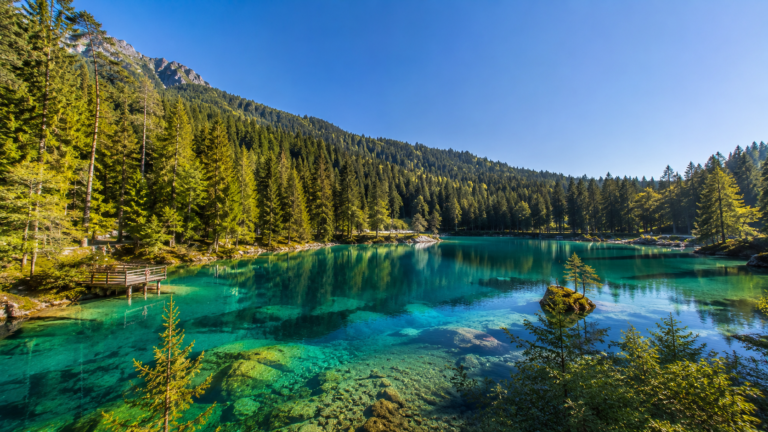
The lake itself is famous for its vivid turquoise color, created by glacial minerals carried by Alpine rivers. On clear days, the combination of blue-green water, forested slopes, and snow-capped peaks creates extraordinary photographic opportunities.
A Landscape That Changes with the Seasons
Giessbach Falls offers a different experience throughout the year.
Spring is often considered the most dramatic season. Snowmelt from the surrounding mountains increases the water volume, creating powerful cascades and thunderous sound throughout the valley.
Summer brings lush greenery, pleasant hiking conditions, and easy access by boat and funicular. The surrounding forests provide welcome shade, while the lake offers opportunities for sightseeing and relaxation.
Autumn transforms the hillsides into a mosaic of gold, orange, and red. The contrast between colorful foliage and the bright white waterfall creates especially beautiful scenery.
Winter introduces a quieter atmosphere. Snow often covers the surrounding landscape, and icy formations can appear along sections of the falls. Although transportation options may be more limited, the site takes on a peaceful character rarely experienced during the busier months.
Walking Trails and Nearby Exploration
While many visitors come specifically for the waterfall, the surrounding region offers excellent hiking opportunities.
Short walks around the falls can easily be combined with time at the hotel and lakeshore. Longer routes connect Giessbach with nearby villages and viewpoints along Lake Brienz.
One popular option is the scenic hike from Iseltwald, which follows sections of the lakeside landscape before reaching the waterfall area. Throughout the region, hikers encounter forests, Alpine meadows, mountain streams, and uninterrupted views across the lake.
Because the area sits within the broader Bernese Oberland, Giessbach also serves as an ideal addition to itineraries that include Interlaken, Brienz, the Jungfrau Region, and other famous Swiss destinations.
Why Giessbach Falls Remains Timeless
Switzerland is home to countless waterfalls, mountain lakes, and panoramic viewpoints, yet Giessbach Falls continues to occupy a special place in the country’s tourism heritage.
Part of its appeal lies in the rare combination of natural power and historical atmosphere. Visitors are not simply observing a waterfall; they are stepping into a landscape that helped shape the development of Alpine tourism itself.
The sound of cascading water, the nostalgic funicular, the grandeur of the historic hotel, and the brilliant colors of Lake Brienz come together to create an experience that feels remarkably complete. Whether arriving by boat, exploring the forest trails, or watching the falls from the hotel terrace, travelers discover a destination where nature and history remain inseparably connected.