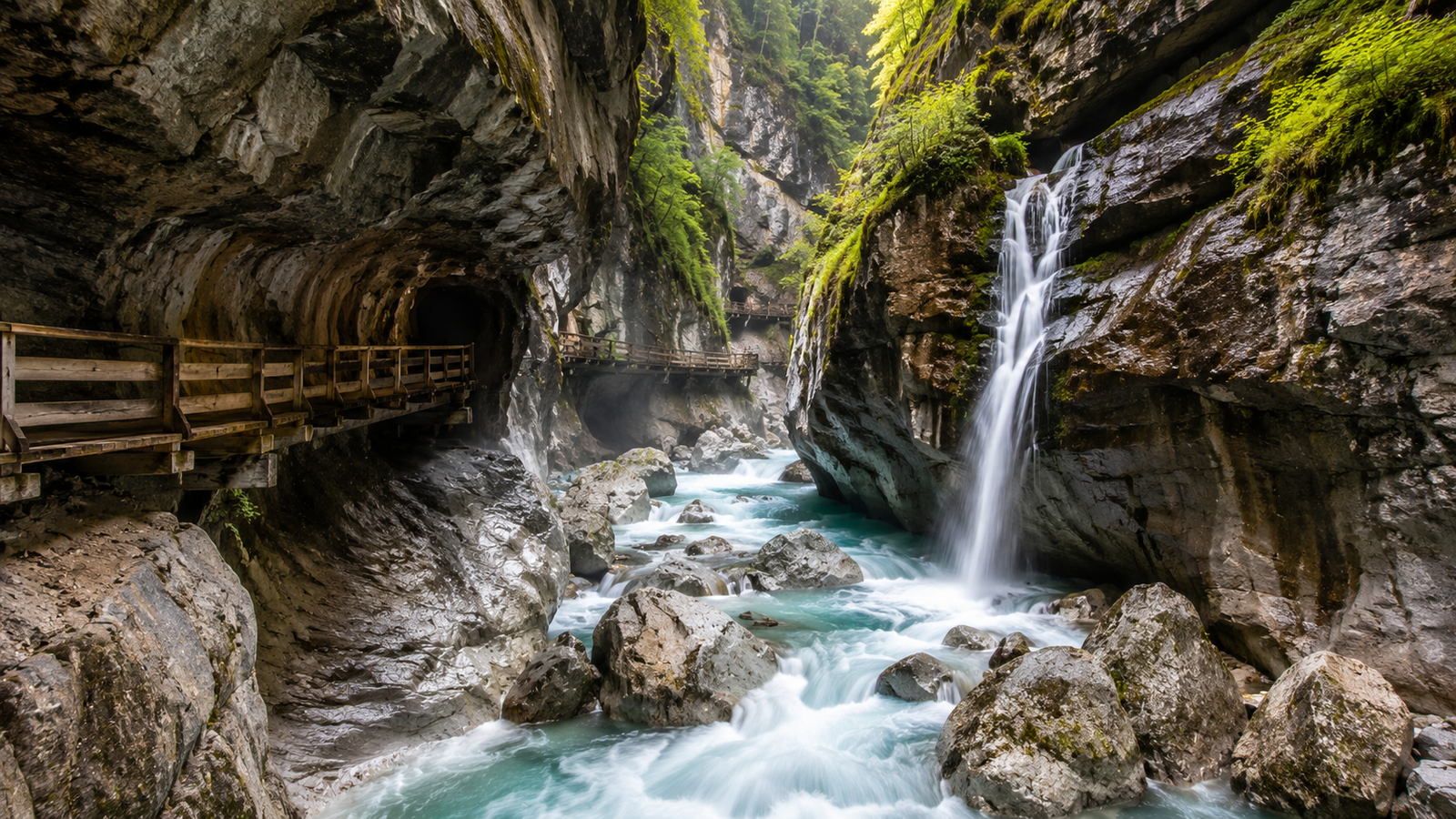
Rosenlaui Gorge, Meiringen
Rosenlaui Gorge: Walking Through One of Switzerland’s Most Dramatic Alpine Canyons
Long before roads crossed the Bernese Oberland and visitors arrived with cameras and hiking boots, meltwater from Alpine glaciers was quietly shaping one of Switzerland’s most extraordinary natural landmarks. Deep within the Rosenlaui Valley, hidden beneath towering limestone cliffs and surrounded by mountain peaks, the Rosenlaui Gorge reveals the immense geological forces that have transformed the Alps over thousands of years.
Unlike many Swiss attractions that are appreciated from a distance, Rosenlaui Gorge invites visitors directly into the landscape. A carefully constructed pathway leads through a narrow canyon where rushing water, polished rock walls, waterfalls, and natural chambers create an experience that feels both dramatic and surprisingly intimate.
For travelers exploring the Bernese Oberland, Rosenlaui Gorge offers a rare opportunity to witness the power of nature at close range while walking through one of Switzerland’s most remarkable geological formations.
A Landscape Shaped by Glaciers
The story of Rosenlaui Gorge begins high above the valley floor.
The nearby Rosenlaui Glacier, part of the extensive glacial system associated with the Bernese Alps, supplied meltwater that gradually carved its way through layers of limestone and rock. Over countless years, this relentless flow sculpted a narrow canyon filled with twisting passages, smooth walls, potholes, and dramatic rock formations.
What visitors see today is the result of continuous erosion. Water carrying sediment and debris acted like a natural cutting tool, slowly deepening and widening the gorge while creating the distinctive shapes visible throughout the canyon.
The gorge serves as a striking example of how glaciers influence Alpine landscapes long after the ice itself has retreated. Every curve in the rock and every narrow passage tells part of a geological story that continues to unfold.
Entering the Canyon
The first impression of Rosenlaui Gorge is often the sound.
Before the canyon becomes fully visible, visitors hear the powerful rush of water echoing through the rock walls. As the pathway descends into the gorge, the landscape changes dramatically. Sunlit mountain scenery gives way to a cooler environment where steep cliffs rise overhead and water surges through confined channels below.
A secure walkway and series of tunnels allow visitors to move safely through sections of the canyon that would otherwise be inaccessible. These pathways make it possible to experience the gorge from within rather than merely observing it from an overlook.
The journey is relatively short in distance but rich in visual variety. Every turn reveals a different combination of waterfalls, rock formations, pools, and narrow openings that demonstrate the force of erosion.
The Power of Water on Display
Many Alpine gorges feature impressive scenery, but Rosenlaui stands out because visitors can observe active geological processes in action.
The water flowing through the canyon continues to shape the landscape today. Depending on seasonal conditions, the stream can range from a clear mountain torrent to a powerful surge fueled by glacier melt and rainfall.
Throughout the gorge, visitors encounter sculpted rock surfaces polished by centuries of flowing water. Deep cavities and circular formations known as potholes provide evidence of how stones trapped in swirling currents gradually drill into the bedrock.
These features transform the canyon into an open-air geology lesson. Rather than reading about erosion in a textbook, visitors can see its results firsthand at every stage of the walk.
The combination of movement, sound, and texture creates an environment that feels alive and constantly changing.
The Rosenlaui Valley Setting
Part of what makes the gorge so memorable is its location within one of the Bernese Oberland’s most scenic valleys.
The Rosenlaui Valley lies between the communities of Meiringen and Grindelwald, surrounded by famous Alpine peaks and rugged mountain landscapes. Dense forests, mountain streams, and dramatic rock faces characterize the area, creating an atmosphere that feels distinctly different from Switzerland’s more developed resort destinations.
The valley has attracted travelers for centuries. During the nineteenth century, artists, scientists, and early Alpine tourists were drawn to the region’s wild scenery and glacier views. Rosenlaui became one of the notable stops along the historic routes through the Bernese Alps.
Even today, the approach to the gorge remains an important part of the experience. The surrounding landscape provides context for understanding the natural forces that created the canyon itself.
A Historic Destination in Swiss Tourism
Long before adventure tourism became popular, Rosenlaui was already attracting visitors.
The region played an important role during the rise of Alpine tourism in the eighteenth and nineteenth centuries. Travelers exploring the Bernese Alps frequently visited the Rosenlaui Valley to admire glaciers, waterfalls, and mountain scenery.
The historic Hotel Rosenlaui, located nearby, reflects this period of early tourism development. The hotel remains one of the area’s most recognizable landmarks and contributes to the valley’s cultural heritage.
This historical connection gives Rosenlaui Gorge significance beyond its geological features. It represents part of the broader story of how Switzerland emerged as one of Europe’s premier mountain travel destinations.
Photography and Natural Observation
For photographers, Rosenlaui Gorge presents unique opportunities.
The contrast between dark canyon walls and illuminated water creates dramatic compositions throughout the route. Waterfalls cascade through narrow openings, while shafts of sunlight occasionally penetrate the gorge, highlighting textures in the rock.
Changing weather conditions further enhance the visual appeal. Mist, moisture, and reflected light create constantly shifting scenes that make every visit slightly different.
Nature enthusiasts also appreciate the surrounding environment. The valley supports a variety of Alpine plant life, while nearby hiking routes offer opportunities to explore forests, meadows, and mountain landscapes beyond the gorge itself.
Although the canyon is the main attraction, the wider Rosenlaui area rewards visitors who take time to explore beyond the entrance.
Combining the Gorge with Nearby Attractions
Rosenlaui Gorge is often included as part of a broader Bernese Oberland itinerary.
The region is conveniently located near several of Switzerland’s best-known mountain destinations, including Meiringen, Grindelwald, and the famous routes leading toward the Jungfrau region.
Many visitors combine a trip to the gorge with scenic drives, mountain hikes, or visits to nearby waterfalls and Alpine viewpoints. The journey through the Rosenlaui Valley itself is considered one of the scenic highlights of the area.
Because the gorge experience is relatively compact, it fits naturally into both half-day excursions and longer regional explorations.
Experiencing Rosenlaui Through the Seasons
The character of Rosenlaui Gorge changes noticeably throughout the year.
During late spring and summer, increased glacier melt typically produces stronger water flow, intensifying the sound and movement within the canyon. Lush vegetation and favorable hiking conditions make this the most popular period for visitors.
Autumn introduces colorful foliage and softer lighting, creating a different visual atmosphere around the gorge and throughout the valley. The surrounding mountains often appear especially clear during this season.
The gorge’s accessibility depends on weather and seasonal conditions, reflecting the realities of a landscape shaped by water and mountain environments.
What remains constant, regardless of the season, is the sense of scale and natural power that defines the experience. Standing within the narrow canyon, surrounded by sculpted stone and rushing water, visitors encounter a reminder that some of Switzerland’s most impressive landmarks were not built by human hands.
Rosenlaui Gorge offers more than scenic beauty. It provides a direct encounter with the geological forces that created the Alps themselves. In a country famous for mountain panoramas, the gorge invites travelers to look beneath the peaks and discover the extraordinary processes hidden within the landscape. That perspective makes Rosenlaui one of the Bernese Oberland’s most unforgettable natural attractions.