Sils Maria Cultural Village, Sils im Engadin/Segl, Switzerland
Sils Maria: The Alpine Village That Inspired Thinkers, Artists, and Writers
Some places are celebrated for spectacular scenery. Others are remembered for historical events or architectural landmarks. Sils Maria occupies a different category altogether. Nestled within Switzerland’s Upper Engadin region, this small mountain village has long attracted people searching for something less tangible: inspiration.
Surrounded by lakes, forests, and some of the most striking Alpine landscapes in the canton of Graubünden, Sils Maria has developed a reputation as one of Europe’s great cultural retreats. Philosophers, artists, writers, musicians, and intellectuals have been drawn here for generations, finding creative energy in a landscape that appears almost unchanged by time.
Today, visitors discover not only breathtaking natural beauty but also a village where culture and nature remain closely intertwined. The result is one of Switzerland’s most distinctive destinations—an Alpine community whose influence extends far beyond its modest size.
A Unique Setting Between Two Lakes
Sils Maria forms part of the municipality of Sils im Engadin/Segl and occupies an extraordinary location within the Upper Engadin Valley.
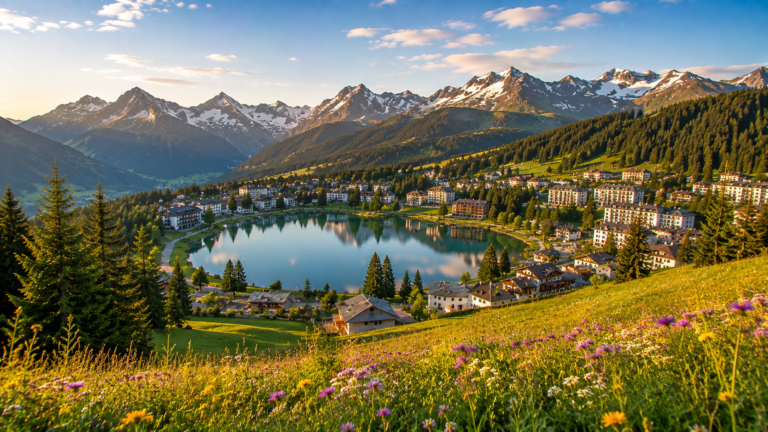
The village sits between Lake Sils and Lake Silvaplana, surrounded by forests, meadows, and mountain peaks that rise dramatically above the valley floor. This geography creates an unusual sense of openness for a high-Alpine destination.
Unlike many mountain villages enclosed by steep slopes, Sils Maria benefits from broad views in multiple directions. The nearby lakes reflect changing light conditions throughout the day, while surrounding peaks create a constantly evolving landscape.
The area has become particularly admired for its clarity of atmosphere. Light, water, and mountain scenery combine to create an environment that many visitors describe as both peaceful and intellectually stimulating.
These qualities have played a significant role in shaping the village’s cultural reputation.
The Village That Captivated Friedrich Nietzsche
No individual is more closely associated with Sils Maria than the German philosopher Friedrich Nietzsche.
Nietzsche spent several summers in the village during the 1880s and frequently wrote about the profound impact the Engadin landscape had on his thinking. Many scholars regard his time in Sils Maria as one of the most productive periods of his intellectual life.
A famous site near the village, often referred to as the Nietzsche Stone, commemorates a location where he reportedly conceived ideas that later became central to his philosophical work.
Today, the Nietzsche House preserves an important part of this legacy. The modest residence where the philosopher stayed has been transformed into a museum and cultural institution dedicated to his life and work.
Visitors interested in philosophy often view the museum as one of the most significant intellectual landmarks in Switzerland.
Yet even those unfamiliar with Nietzsche’s writings can appreciate how the surrounding landscape influenced creative thought.
A Long Tradition of Artistic Visitors
Nietzsche was not the only cultural figure drawn to Sils Maria.
Throughout the late 19th and 20th centuries, the village attracted a remarkable range of artists, writers, musicians, and thinkers seeking inspiration in the Engadin environment.
Among the notable visitors were author Hermann Hesse, painter Giovanni Segantini, poet Rainer Maria Rilke, and conductor Herbert von Karajan. Their presence helped establish the village’s reputation as an international cultural destination.
Unlike urban cultural centers built around museums and institutions, Sils Maria developed organically as a place of reflection and creativity.
The village itself became part of the artistic experience.
Even today, visitors often encounter exhibitions, literary events, concerts, and cultural programs that continue this tradition.
Traditional Engadin Architecture and Village Character
Despite its international reputation, Sils Maria has preserved much of its traditional character.
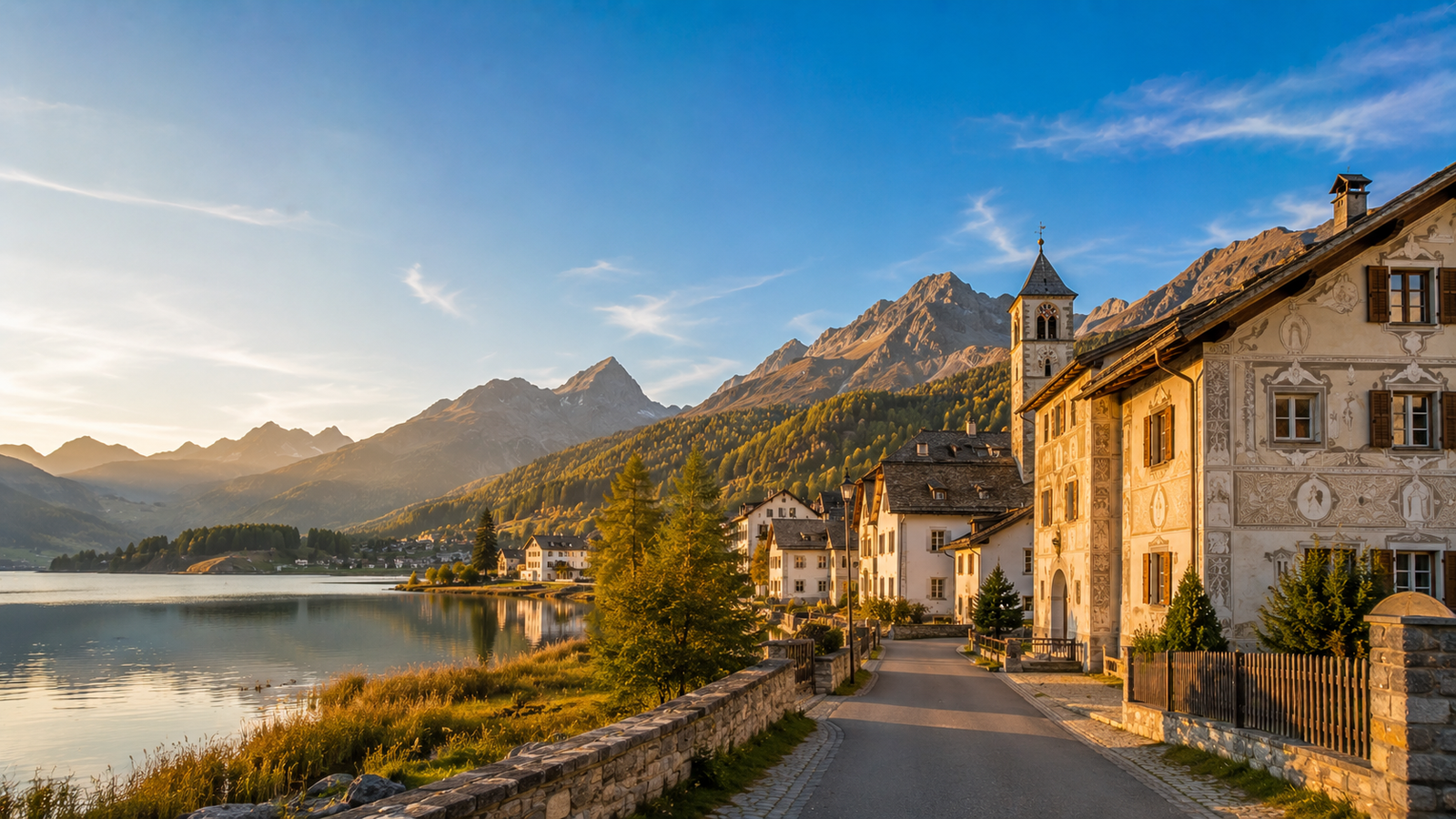
The village contains numerous examples of classic Engadin architecture, recognizable by thick stone walls, deep-set windows, decorative facades, and distinctive sgraffito ornamentation. These artistic designs, scratched into exterior plaster surfaces, remain a defining feature of many historic buildings throughout the region.
Walking through the village reveals a blend of heritage and everyday life.
Historic homes, small squares, fountains, and quiet lanes create an atmosphere that feels authentic rather than curated for tourism. The built environment reflects centuries of adaptation to Alpine conditions while maintaining strong regional identity.
This architectural continuity contributes significantly to the village’s cultural appeal.
Lake Sils and the Natural Landscape
While culture forms an essential part of Sils Maria’s identity, nature remains equally important.
Lake Sils, one of the largest natural lakes in the Engadin, lies immediately beside the village and provides one of the region’s defining landscapes. The lake’s elongated shape, framed by forests and mountains, creates scenery that changes dramatically with weather and season.
Visitors can explore lakeside walking paths, scenic viewpoints, and surrounding nature areas that have inspired generations of artists and writers.
One distinctive feature of the lake is its passenger boat service, considered the highest-altitude scheduled boat route in Europe operating on a navigable inland waterway. The service offers visitors an opportunity to experience the landscape from the water while appreciating the scale of the surrounding mountains.
Throughout the year, the lake remains a focal point for outdoor recreation and quiet contemplation alike.
Hiking Paths That Inspired Generations
The landscape around Sils Maria contains an extensive network of hiking trails that connect lakeshores, forests, mountain meadows, and higher Alpine terrain.
Many visitors choose to explore routes that follow paths once walked by Nietzsche and other cultural figures associated with the village.
One of the most rewarding aspects of hiking in the area is the combination of natural beauty and cultural context. Trails often pass locations connected to historical figures while simultaneously providing views of some of Switzerland’s most celebrated mountain scenery.
The routes vary significantly in difficulty, allowing visitors with different experience levels to explore the region.
Whether walking along the lakeshore or ascending to panoramic viewpoints, travelers quickly understand why the landscape has served as a source of inspiration for so many people.
A Village Shaped by Language and Tradition
Sils Maria also reflects the cultural diversity of Graubünden, Switzerland’s only trilingual canton.
Historically, the region has been associated with Romansh culture, although German and Italian influences are also present throughout the Engadin. This cultural mixture contributes to the area’s distinctive identity.
Traditional customs, local cuisine, and regional celebrations continue to play important roles in community life. Visitors interested in Swiss cultural heritage often find the Engadin especially fascinating because of its strong regional traditions and linguistic history.
These elements add depth to the visitor experience, revealing a cultural landscape that extends beyond architecture and scenery.
Experiencing Sils Maria Today
Modern travelers arrive in Sils Maria for many reasons. Some come to follow the intellectual legacy of Nietzsche. Others seek hiking opportunities, mountain scenery, or quiet lakeside retreats.
What unites these experiences is the atmosphere of the village itself.
Sils Maria does not rely on dramatic attractions or large-scale tourism infrastructure to create an impression. Instead, its appeal emerges gradually through the relationship between culture, landscape, and history. The lakes, forests, historic buildings, and artistic legacy work together to create a destination that encourages visitors to slow down and observe more carefully.
In an era when many travel experiences focus on speed and constant activity, Sils Maria offers something increasingly uncommon: space for reflection. The same qualities that attracted philosophers, writers, and artists more than a century ago remain present today, making this small Engadin village one of Switzerland’s most enduring cultural landscapes.