Swiss Army Accelerates Shift Toward Drones and Robotics in Military Modernization Drive
Switzerland’s armed forces are moving deeper into the age of autonomous technology as military planners accelerate efforts to integrate drones, robotic systems and advanced unmanned capabilities into future defense operations.
The shift reflects a broader reassessment of military strategy across Europe, where lessons from recent conflicts have highlighted the growing importance of unmanned systems on the modern battlefield. Swiss defense officials say the country must adapt to rapidly changing technologies if it wants to maintain effective military capabilities in the coming decades.
For years, Switzerland relied primarily on conventional military equipment and a militia-based defense structure. Today, however, military planners increasingly view drones and robotic systems as essential tools for reconnaissance, surveillance, logistics, force protection and operational support. The trend is reshaping procurement priorities and influencing how soldiers are trained for future missions.
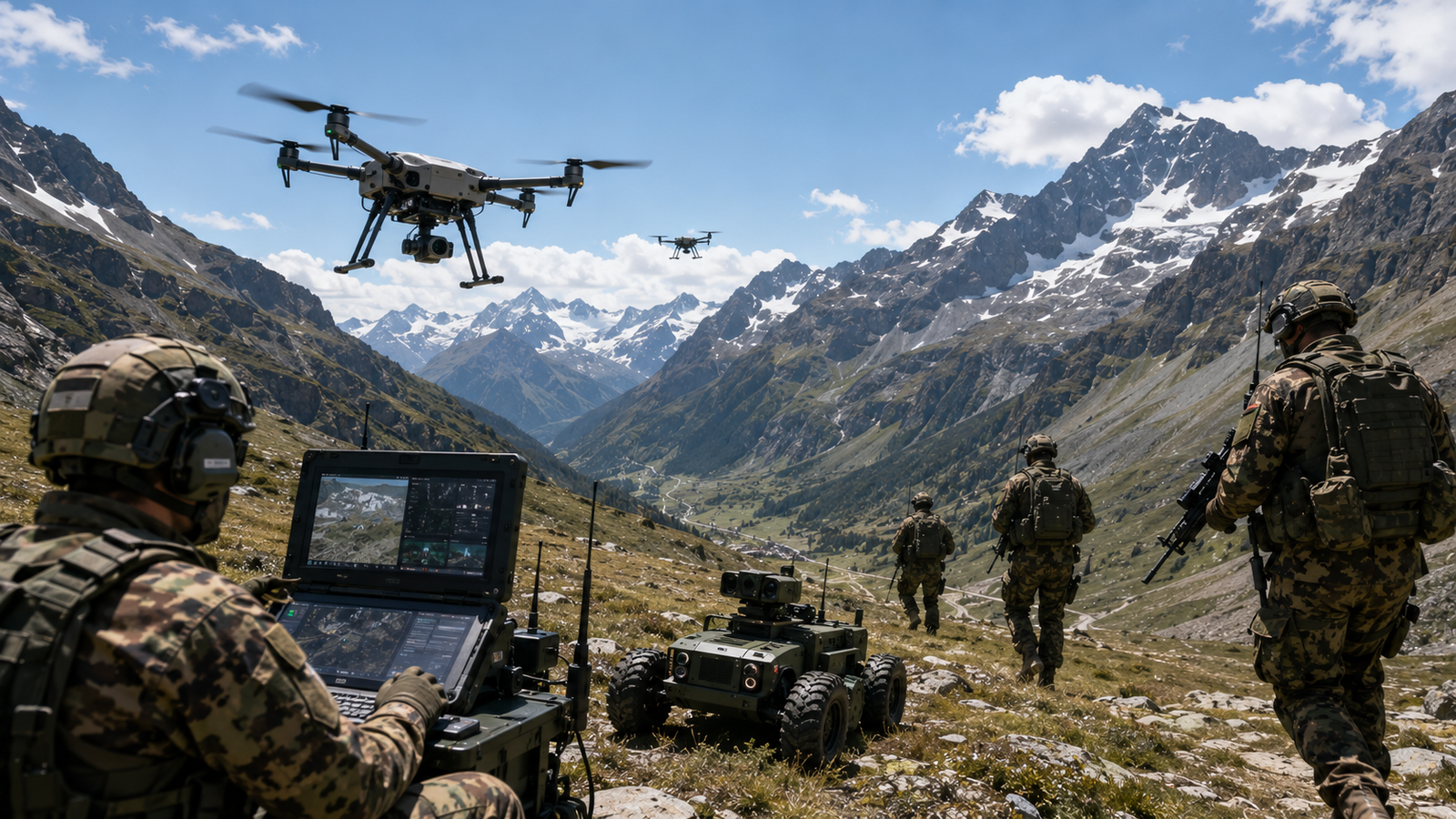
Recent exercises conducted by the Swiss Armed Forces have focused on testing small unmanned aircraft capable of gathering intelligence, supporting battlefield awareness and operating alongside conventional military units. According to the military, drones have become a standard feature of modern conflicts, prompting Switzerland to evaluate how such technologies can be integrated into national defense planning.
The growing emphasis on drones has been driven in part by observations from the war in Ukraine and other recent conflicts, where inexpensive unmanned systems have demonstrated the ability to perform missions traditionally carried out by much larger and more expensive platforms. Military analysts note that drones now play critical roles in surveillance, target identification, force protection and precision operations.
Swiss defense authorities have responded by expanding experimentation programs and creating specialized structures dedicated to unmanned technologies. The Federal Department of Defence established a dedicated drone-focused initiative aimed at accelerating the development of expertise and evaluating future operational requirements. The objective is not only to acquire equipment but also to understand how drones can be incorporated into military doctrine and training.
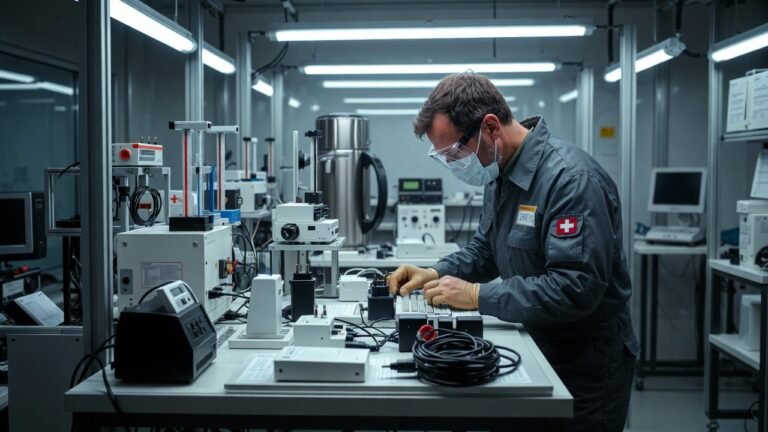
Alongside aerial systems, robotic technologies are receiving increasing attention. The Swiss Drone and Robotics Centre, operated by the federal defense procurement agency Armasuisse, has become a focal point for testing emerging technologies. The center evaluates robotic systems for military applications ranging from reconnaissance and logistics to support missions in difficult or hazardous environments.
Officials involved in the program have emphasized that robotics could help reduce risks to personnel by allowing machines to perform tasks in dangerous conditions. Ground-based robots, autonomous sensors and remotely operated systems are among the technologies being studied as part of broader modernization efforts. While many of these systems remain in testing phases, defense planners view them as increasingly important components of future military operations.
The modernization effort extends beyond experimentation. Switzerland has also expanded investments in drone procurement and related technologies. Military planners have examined a range of systems, from miniature reconnaissance drones used by infantry units to larger unmanned aircraft capable of long-endurance surveillance missions. The army has already incorporated several drone platforms into operational use while exploring future acquisitions.
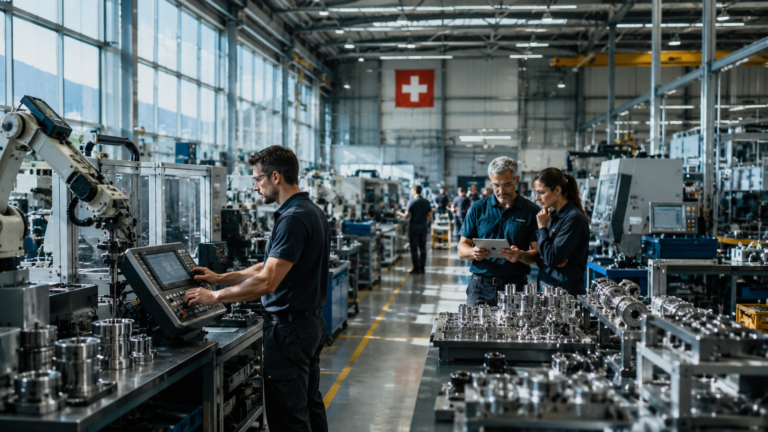
Defense officials have also highlighted the importance of maintaining a domestic technology ecosystem. Switzerland possesses a strong drone-development sector supported by universities, research institutions and private companies. Military planners argue that preserving local expertise could prove strategically valuable by ensuring access to innovation and reducing dependence on foreign suppliers.
The focus on unmanned systems is accompanied by growing concern about emerging threats. As drones become more widespread, military forces must not only operate them but also defend against them. Swiss authorities have increased efforts to develop counter-drone capabilities and strengthen protection for military infrastructure. Recent defense initiatives have included field testing of systems designed to detect, track and neutralize small unmanned aircraft.
Supporters of the modernization program argue that unmanned technologies can provide substantial operational advantages. Small drones can gather intelligence without exposing soldiers to danger, robotic systems can operate in hazardous environments, and autonomous tools may improve efficiency in surveillance and logistics missions. These capabilities are viewed as force multipliers that can enhance military effectiveness without requiring large increases in personnel.
At the same time, the growing role of drones and robotics raises broader questions about military doctrine, procurement practices and long-term defense planning. Technology in this field evolves rapidly, often outpacing traditional acquisition timelines. Swiss defense officials have acknowledged that future procurement models may need to become more flexible to keep pace with innovation.
The transformation underway in Switzerland mirrors developments seen across NATO countries and other European militaries. Governments throughout the region are investing heavily in autonomous systems as they reassess security priorities in response to a changing geopolitical environment. For Switzerland, a nation with a longstanding tradition of neutrality, the focus remains on strengthening national defense capabilities rather than projecting power abroad.
While many of the technologies currently being tested remain in early stages of deployment, defense planners believe drones and robotics will play a far greater role in military operations over the coming years. As new systems move from experimentation to operational service, Switzerland’s armed forces appear set to become increasingly reliant on autonomous technologies as part of their broader modernization strategy.