Bellinzona, Ticino
Bellinzona: Switzerland’s Medieval Fortress City Beneath the Alps
Most Swiss destinations are known for mountain scenery, lakes, or alpine villages. Bellinzona stands apart. The capital of the canton of Ticino is defined by stone walls, fortified towers, and castles that rise above the city like guardians from another age.
Located in southern Switzerland, on the routes that connect northern Europe with Italy, Bellinzona occupied one of the most strategic positions in the Alps for centuries. Travelers moving through the Ticino Valley had little choice but to pass beneath its defenses. Today, those same fortifications have become one of Switzerland’s most remarkable cultural landmarks and a UNESCO World Heritage Site.
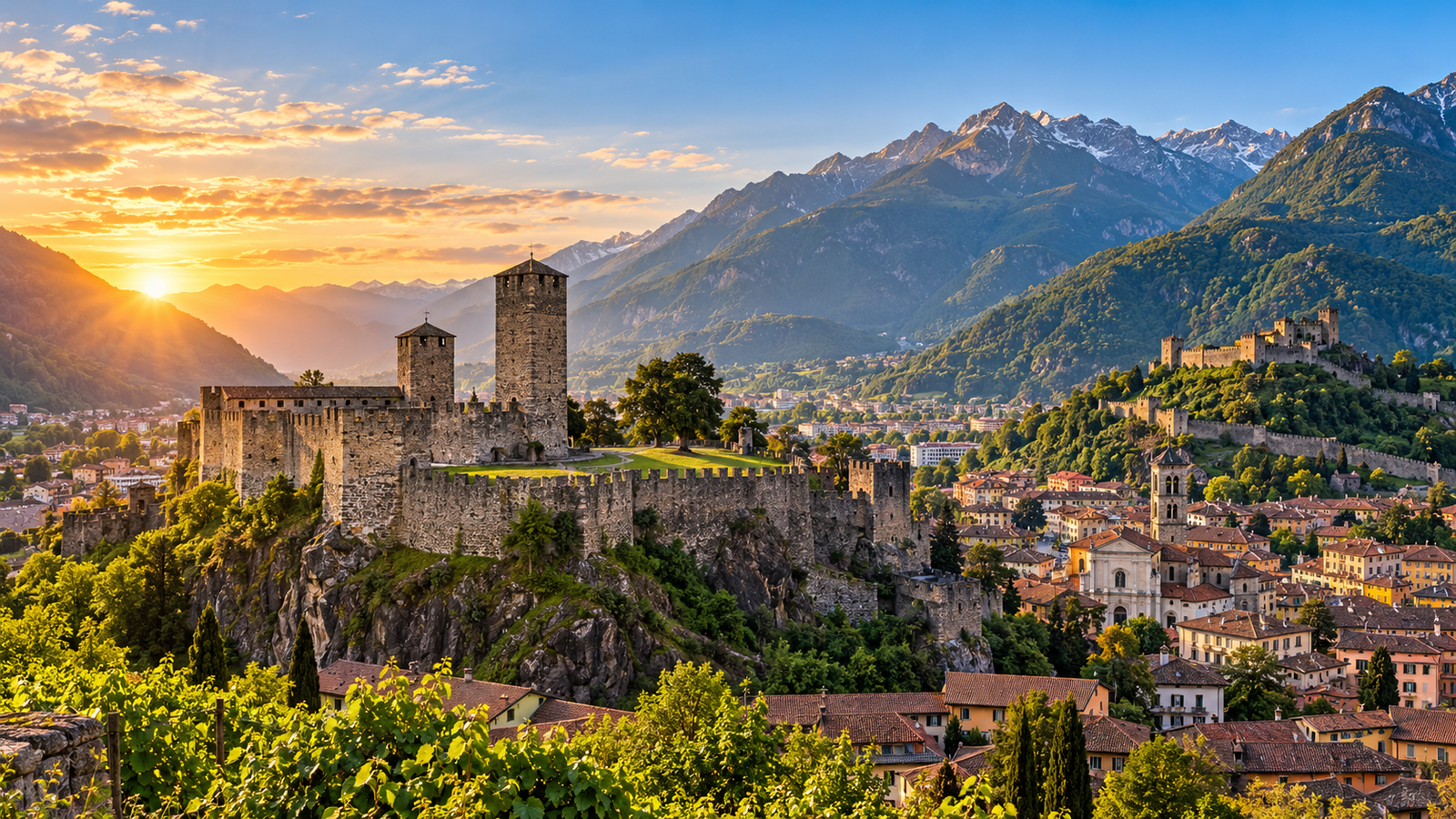
Rather than being centered around a single castle, Bellinzona is famous for an entire defensive system consisting of three castles, walls, and ramparts that once controlled movement through the valley. The ensemble remains one of the best-preserved examples of medieval military architecture in the Alpine region.
The Strategic Gateway of the Alps
Bellinzona’s importance was never accidental. The city sits at a natural crossroads where major routes through the Alps converge. For centuries, whoever controlled Bellinzona controlled access between northern and southern Europe.
Its location made it valuable to rulers, merchants, and military powers alike. The defensive structures were designed to protect this critical passage and monitor traffic moving through the Ticino Valley toward important Alpine routes. The surviving fortifications demonstrate how geography shaped medieval military planning in Switzerland and northern Italy.
Walking through Bellinzona today, visitors quickly understand why the site was so heavily fortified. Mountains rise around the valley, creating a natural corridor where strategic defenses could effectively control movement.
Exploring the Three Castles
Castel Grande
The most prominent of Bellinzona’s fortifications is Castel Grande, which stands on a rocky hill overlooking the historic center.
The site has been occupied for thousands of years and serves as the centerpiece of the fortress system. From its elevated position, visitors can enjoy panoramic views across the city, surrounding valleys, and mountain landscapes. The castle’s large courtyards, towers, and defensive structures provide insight into how the fortress operated during the Middle Ages.
Castel Grande is also home to exhibitions that help explain the history of Bellinzona and the evolution of the fortress through different historical periods.
Montebello Castle
East of Castel Grande, Montebello Castle occupies a higher hillside position overlooking the city.
Its defensive design reflects the military challenges of the late medieval period. Connected historically to the broader defensive network, Montebello played a key role in protecting the approaches to Bellinzona. Visitors can walk along pathways linking the castles and gain a better appreciation for how the entire system functioned as a coordinated defense.
The castle’s location offers impressive views toward both the city and the surrounding Alpine landscape.
Sasso Corbaro
The third fortress, Sasso Corbaro, stands on an isolated rocky promontory southeast of the other castles.
Unlike the interconnected positions of Castel Grande and Montebello, Sasso Corbaro was built as a separate stronghold overlooking the region. Its elevated setting creates some of the finest viewpoints in Bellinzona. From the castle grounds, visitors can appreciate the geography that made the city such an important defensive location.
The journey between the castles also allows visitors to experience the city’s historic landscape beyond the fortress walls themselves.
The UNESCO World Heritage Fortress
Bellinzona’s fortifications were inscribed on the UNESCO World Heritage List in 2000 because of their exceptional historical and architectural significance. UNESCO recognizes the site as an outstanding example of a late medieval defensive structure guarding a key Alpine passage.
What makes Bellinzona particularly unusual is that the surviving ensemble includes not only castles but also defensive walls and ramparts that once stretched across the valley. Few places in Europe preserve such a complete fortified landscape.
The system demonstrates how military architecture adapted to local terrain and strategic needs during the fifteenth century. Many sections remain remarkably well preserved, allowing visitors to visualize how the defenses once operated.
Discovering the Historic Town
Although the castles attract most visitors, Bellinzona itself deserves exploration.
The historic center retains a relaxed atmosphere that reflects its Italian-speaking Ticino identity. Narrow streets, historic churches, public squares, and traditional architecture create a pleasant contrast to the imposing fortifications above.
One of the most enjoyable experiences is simply wandering between the old town and the castles. As visitors move through the city, medieval walls and towers appear unexpectedly, creating constant reminders of Bellinzona’s past.
The city also hosts a well-known Saturday market that adds local character to the visitor experience and reflects Bellinzona’s longstanding role as a regional center.
Bellinzona’s Italian-Swiss Character
Unlike many destinations in German-speaking Switzerland, Bellinzona showcases the culture of Ticino, Switzerland’s Italian-speaking canton.
Italian influences are evident in the language, architecture, cuisine, and daily life. Cafés spill onto public squares, historic buildings display Mediterranean characteristics, and local traditions reflect centuries of cultural exchange between Switzerland and northern Italy.
This blend of Swiss organization and Italian atmosphere gives Bellinzona a distinctive identity that differs from destinations such as Zurich, Lucerne, or Bern.
Getting Around the Fortress
One of Bellinzona’s advantages is how accessible its major attractions are.
Castel Grande can be reached from the city center and train station area, while walking routes connect the fortress complex. Montebello and Sasso Corbaro are accessible by foot and public transportation, allowing visitors to explore the entire UNESCO site without needing a car.
Because the castles are positioned at different elevations, comfortable walking shoes are recommended, particularly for travelers planning to visit all three locations in a single day.
Why Bellinzona Deserves More Attention
Many travelers pass through southern Switzerland on their way to famous lakes, mountain resorts, or Italian destinations beyond the border. Bellinzona often becomes an unexpected highlight.
Its appeal lies not only in the castles themselves but in the way history remains visible throughout the landscape. Few places in Switzerland allow visitors to understand so clearly how geography, trade, politics, and military strategy shaped the development of an entire region.
For travelers interested in medieval history, UNESCO heritage sites, photography, architecture, or lesser-known Swiss destinations, Bellinzona offers an experience unlike anywhere else in the country. The sight of three castles rising above the city, backed by Alpine peaks and connected by centuries of history, leaves a lasting impression long after the visit ends.