Surselva, Ilanz
Surselva: Exploring Switzerland’s Romansh Heartland Between the Rhine and the Alps
Many travelers arrive in Switzerland searching for famous peaks, iconic rail journeys, or postcard-perfect lakes. Surselva offers something different. Stretching through the upper Rhine Valley in the canton of Graubünden, this mountain region combines dramatic landscapes with one of Switzerland’s most distinctive cultural identities.
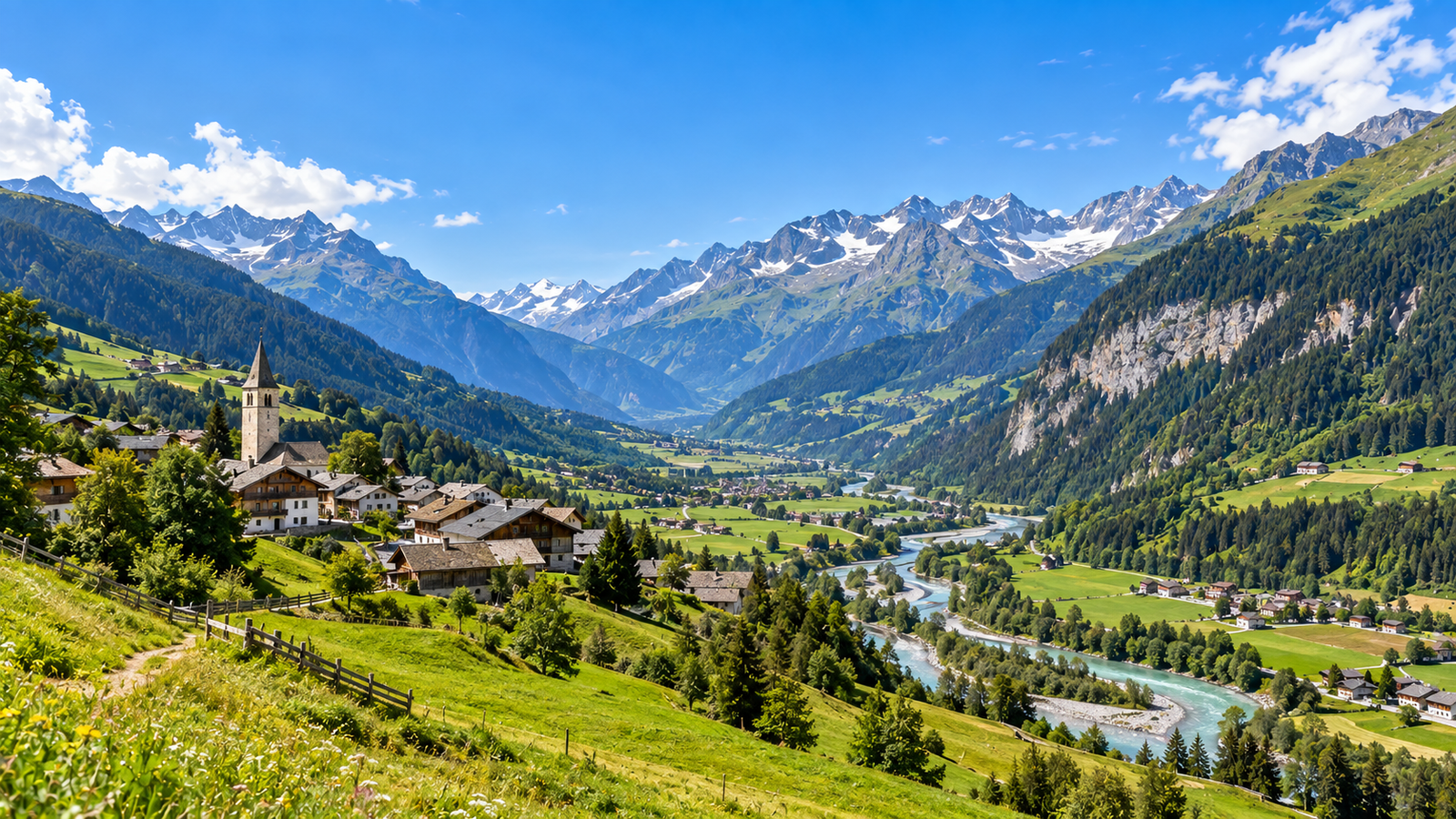
The name Surselva means “above the forest,” a fitting description for a region that unfolds across Alpine valleys, mountain villages, high plateaus, rivers, and remote hiking landscapes. It extends between the source of the Rhine near the Oberalp Pass and the spectacular Rhine Gorge, often called Switzerland’s Grand Canyon. Throughout the region, visitors encounter a living Romansh culture that has survived for centuries in the heart of the Alps.
Rather than focusing on a single attraction, Surselva rewards travelers who enjoy exploring. Its appeal lies in the combination of nature, heritage, and traditional mountain life that remains deeply rooted in the landscape.
Following the Young Rhine Through the Alps
Water defines Surselva more than any other natural element.
The region begins near Tomasee (Lai da Tuma), a mountain lake beneath Piz Badus that is widely recognized as the source of the Rhine. From this high-altitude setting near the Oberalp Pass, the river begins its long journey across Europe toward the North Sea. The lake can be reached on foot during the hiking season and remains one of the most meaningful natural landmarks in Switzerland.
As the Rhine descends through Surselva, it shapes valleys, meadows, forests, and villages before eventually flowing toward the dramatic Rhine Gorge. The river’s presence is visible throughout the region, whether viewed from mountain trails, village bridges, or scenic railway routes.
For visitors interested in geography, few places offer a clearer understanding of how one of Europe’s great rivers begins.
A Landscape Built for Exploration
Surselva occupies a large portion of western Graubünden and contains some of the canton’s most impressive natural scenery.
Among its best-known highlights is Val Frisal, a protected alpine valley renowned for its unspoiled landscapes. Wide meadows, mountain streams, and dramatic peaks create a scene that feels remarkably untouched. The valley has become a favorite destination for hikers seeking a quieter side of the Swiss Alps.
Another notable destination is the Greina Plateau, a high-altitude wilderness area that stretches between Graubünden and Ticino. Known for its open landscapes and ecological importance, the plateau offers a striking contrast to the steep Alpine valleys found elsewhere in Switzerland.
Visitors can also discover waterfalls, mountain lakes, forest trails, and panoramic viewpoints scattered across the region, creating opportunities for exploration throughout the year.
Ilanz: The Gateway to Surselva
The small town of Ilanz serves as the region’s cultural and transportation center.
Often referred to as the first town on the Rhine, Ilanz occupies a strategic location where visitors can easily access the surrounding valleys and villages. Its historic center features traditional buildings, welcoming squares, and local businesses that reflect the character of the region.
Ilanz also provides insight into everyday life in Surselva. Rather than being dominated by tourism, it functions as a living regional center where local traditions, commerce, and community life remain closely connected.
For many travelers, Ilanz becomes the ideal starting point for discovering the wider region.
The Living Culture of Romansh Switzerland
One of Surselva’s most remarkable characteristics is its linguistic and cultural heritage.
The region is considered one of the strongest centers of Romansh culture, one of Switzerland’s national languages. In villages throughout Surselva, visitors encounter Sursilvan, a Romansh dialect that continues to be spoken in daily life.
Road signs, local publications, village names, and cultural events often reflect this linguistic heritage. Unlike destinations where local traditions are primarily preserved for visitors, Romansh culture remains a genuine part of community life.
This cultural identity is visible in architecture, religious traditions, seasonal celebrations, and local cuisine. The result is a travel experience that feels distinctly different from German-speaking or French-speaking regions of Switzerland.
Villages That Preserve Alpine Traditions
Surselva is not defined by one major resort but by a collection of mountain communities, each with its own character.
Brigels is known for its sunny setting and mountain panoramas, attracting visitors interested in hiking, cycling, and winter sports. Val Lumnezia offers peaceful villages surrounded by dramatic mountain scenery and extensive trail networks. Obersaxen combines outdoor recreation with strong Walser cultural traditions.
These villages remain closely connected to agriculture, alpine farming, and local customs. Traditional churches, wooden barns, stone houses, and mountain pastures continue to shape the landscape.
Travelers seeking authenticity often find these communities among the most memorable aspects of a visit to Surselva.
Hiking Through an Entire Region
For hikers, Surselva offers far more than individual trails.
One of the most significant long-distance routes is the Senda Sursilvana, a multi-stage hiking trail that crosses the region while connecting natural attractions, cultural landmarks, and villages. The route provides a broad introduction to the landscapes and traditions that define Surselva.
Shorter trails lead to alpine lakes, mountain ridges, historic chapels, and panoramic viewpoints. During summer, visitors can combine hiking with mountain biking, river activities, and scenic railway journeys. In winter, ski areas, winter hiking routes, and cross-country trails become major attractions.
The variety of outdoor experiences makes Surselva attractive across multiple seasons rather than during a single tourism period.
Reaching Surselva
Despite its mountain setting, Surselva is accessible by Switzerland’s extensive public transportation network.
Rail connections link the region with Chur, Disentis, Andermatt, and other destinations throughout Graubünden. The Matterhorn Gotthard Railway provides access to areas near the Oberalp Pass and the Rhine source region, while regional transport services connect villages throughout Surselva.
Traveling through the region is part of the experience itself. Railway lines follow rivers, cross mountain landscapes, and pass through villages that reveal the changing character of the valley.
Why Surselva Stands Apart
Switzerland has no shortage of spectacular destinations, yet Surselva occupies a distinctive place among them.
It is a region where one of Europe’s great rivers begins, where Romansh remains a living language, and where mountain communities continue to maintain traditions shaped by centuries of Alpine life. Visitors come for hiking trails, scenic valleys, and outdoor adventure, but many leave remembering something less tangible—the feeling of having discovered a Switzerland that remains deeply connected to its landscape and cultural roots.
For travelers seeking authenticity beyond the country’s most famous destinations, Surselva offers one of the richest regional experiences in the Swiss Alps.