Aletsch Forest, Riederalp, Switzerland
Aletsch Forest: Walking Among 1,000-Year-Old Pines Above Europe’s Greatest Glacier
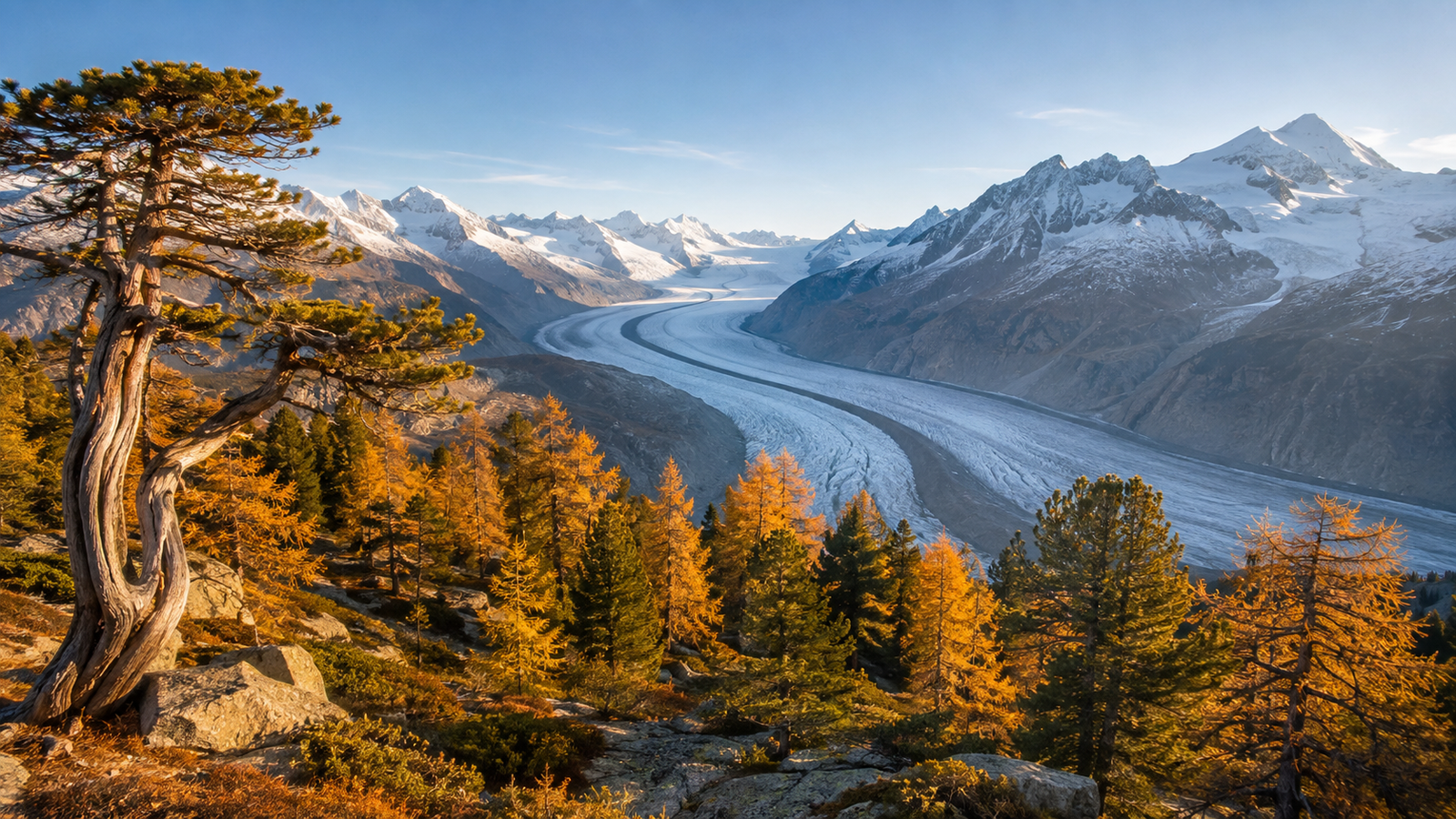
Some of Switzerland’s most celebrated landscapes are defined by towering peaks, dramatic cliffs, and glacier-carved valleys. Yet one of the country’s most remarkable natural treasures is neither a mountain summit nor a lake. High above the Great Aletsch Glacier, on sunlit slopes overlooking a river of ice, stands Aletsch Forest—an extraordinary alpine woodland where centuries-old trees have survived in one of Europe’s most spectacular mountain environments.
Part of the UNESCO World Heritage-listed Swiss Alps Jungfrau-Aletsch region, Aletsch Forest offers visitors a rare opportunity to experience an ecosystem that has evolved alongside the largest glacier in the Alps. Here, ancient Swiss stone pines, weather-shaped larches, and rich alpine habitats tell a story that extends far beyond human history.
For travelers seeking a deeper connection with Switzerland’s natural heritage, Aletsch Forest provides one of the country’s most rewarding experiences.
A Forest Shaped by Ice and Time
Aletsch Forest lies on the southern slopes above the Great Aletsch Glacier in the canton of Valais. The glacier itself is the largest and longest glacier in the Alps and forms the heart of the UNESCO World Heritage Swiss Alps Jungfrau-Aletsch region. The relationship between the forest and the glacier is central to understanding the landscape. Over thousands of years, glacial movement, retreat, and natural succession have shaped the environment visible today.
The forest occupies terrain influenced by ancient moraines and glacial deposits. As the ice gradually retreated, plant life established itself on newly exposed ground. This process of ecological succession remains one of the reasons the broader Jungfrau-Aletsch region is internationally recognized for its scientific importance.
Walking through the forest, visitors witness a living example of how nature adapts and evolves in response to changing alpine conditions.
Home to Some of Europe’s Oldest Swiss Stone Pines
The most famous residents of Aletsch Forest are its ancient Swiss stone pines, known locally as Arven trees.
Some of these remarkable trees are estimated to be more than 1,000 years old, making them among the oldest living trees in Europe. Their twisted trunks, weathered bark, and slow growth reflect centuries of survival in a challenging mountain climate.
Unlike many forests that have been heavily managed or altered over time, Aletsch Forest retains a largely natural character. Swiss stone pines grow alongside larches and spruce trees, creating a distinctive alpine woodland that changes dramatically with the seasons. In autumn, golden larch needles transform the mountainside into one of Switzerland’s most colorful landscapes.
The forest is not only visually impressive but also ecologically important. These trees stabilize mountain slopes, help reduce erosion, and contribute to the delicate balance of the alpine ecosystem.
A Protected Natural Sanctuary
Long before conservation became a global concern, Aletsch Forest was recognized for its environmental value.
The forest was declared a nature reserve in 1933 and has since been protected as one of Switzerland’s significant alpine ecosystems. Covering approximately 400 hectares, it serves as an important refuge for plants and wildlife adapted to high-elevation environments.
Protection efforts have allowed natural ecological processes to continue with minimal interference. Dead wood is left to decompose naturally, providing habitats for insects, fungi, birds, and other organisms that play essential roles in forest health.
This commitment to preservation makes Aletsch Forest an outstanding example of sustainable conservation within a heavily visited mountain region.
Wildlife in the Shadow of the Glacier
Although many visitors come for the scenery, the forest also supports a diverse range of wildlife.
The woodland provides habitat for species such as chamois, red deer, and numerous alpine birds. Nutcrackers, which play an important role in dispersing Swiss stone pine seeds, are frequently associated with these forests. Golden eagles can occasionally be seen soaring above the surrounding mountains, while smaller bird species find shelter among the dense woodland.
The wider UNESCO World Heritage region is recognized as a biodiversity hotspot, supporting a rich variety of alpine habitats and species. This diversity is one of the defining characteristics of the Jungfrau-Aletsch landscape.
For nature enthusiasts, the forest offers opportunities to observe alpine ecosystems functioning much as they have for centuries.
Hiking Through a Living UNESCO Landscape
Aletsch Forest is best explored on foot.
A network of hiking trails leads visitors through ancient woodland while providing panoramic views of the Great Aletsch Glacier. These routes combine two of Switzerland’s most impressive natural features: one of Europe’s oldest high-altitude forests and one of its largest bodies of ice.
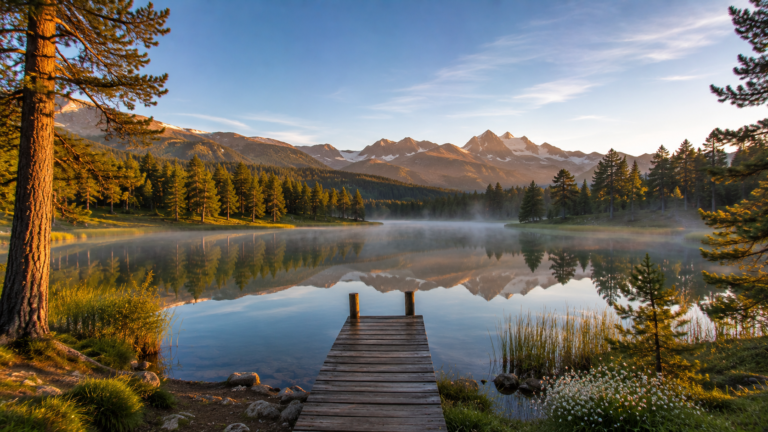
Among the most popular routes is the Moraine Trail, which follows the glacier’s lateral moraines and offers exceptional views of the ice below. Another favorite excursion leads toward Lake Grünsee, a peaceful alpine lake surrounded by mountain scenery and forest landscapes.
Unlike many alpine hikes focused solely on reaching a summit, trails through Aletsch Forest encourage a slower pace. The attraction lies not only in the destination but in the details along the way—ancient tree trunks, alpine flowers, birdsong, and changing views of the glacier.
The Forest and Climate Change
Aletsch Forest occupies a unique position in discussions about climate and environmental change.
The neighboring Aletsch Glacier has become an important location for studying long-term climatic trends and glacier retreat. As ice coverage changes, scientists can observe how vegetation colonizes newly exposed landscapes. The forest and surrounding ecosystems therefore offer valuable insight into natural adaptation processes in mountain environments.
This scientific significance complements the forest’s scenic appeal. Visitors are not simply viewing a beautiful landscape—they are witnessing one of the Alps’ most important natural laboratories.
The coexistence of ancient woodland and dynamic glacial environments makes the area particularly valuable to researchers, conservationists, and environmental educators.
Experiencing the Forest Throughout the Seasons
Every season reveals a different side of Aletsch Forest.
Spring brings renewed growth as alpine plants emerge following winter snow. Summer offers ideal hiking conditions and clear views across the glacier and surrounding peaks. Autumn is perhaps the most visually striking season, when larch trees turn brilliant shades of gold against the icy blues and whites of the glacier. Winter transforms the landscape into a quiet alpine wilderness, often explored through guided snowshoe excursions.
Because the forest changes so dramatically throughout the year, repeat visits can feel like entirely different experiences.
A Place Where Alpine Nature Remains Intact
In a country known for spectacular scenery, Aletsch Forest stands apart because of its sense of permanence. While glaciers advance and retreat, tourism evolves, and mountain communities change, the ancient stone pines continue to endure above the valley.
The forest embodies much of what makes the Swiss Alps exceptional: biodiversity, geological history, conservation, and breathtaking natural beauty. Protected within the Jungfrau-Aletsch UNESCO World Heritage Site, it offers visitors an opportunity to step into an alpine environment that remains remarkably close to its natural state.
For travelers willing to leave crowded viewpoints behind and explore on foot, Aletsch Forest reveals one of Switzerland’s most inspiring landscapes—a place where thousand-year-old trees watch silently over the largest glacier in the Alps, preserving a living chapter of European natural history.