Niederhorn, Beatenberg, Switzerland
Niederhorn: A Panoramic Mountain Escape Above Lake Thun
Rising above the northern shore of Lake Thun, Niederhorn is one of the Bernese Oberland’s most rewarding viewpoints. While Switzerland is home to numerous famous peaks, Niederhorn offers something distinctive: a combination of accessible mountain scenery, panoramic vistas, abundant wildlife, and direct views toward some of the country’s most celebrated Alpine summits.
Perched high above the villages of Beatenberg and Interlaken, the mountain attracts hikers, photographers, families, and outdoor enthusiasts throughout the year. Its broad ridges and open landscapes create an inviting environment where visitors can experience the grandeur of the Alps without venturing into extreme terrain.
For travelers seeking spectacular scenery combined with a relaxed mountain atmosphere, Niederhorn stands out as one of the most appealing destinations in central Switzerland.
A Natural Balcony Over Lake Thun
Niederhorn forms part of a mountain chain overlooking Lake Thun in the canton of Bern. Its position creates a natural observation platform with far-reaching views across the Bernese Oberland.
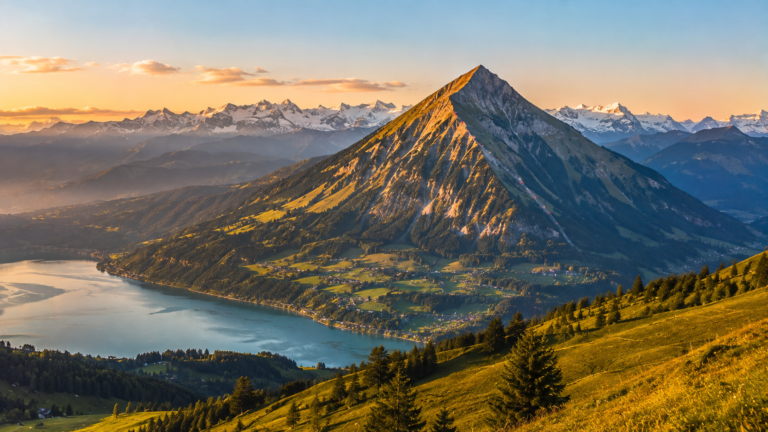
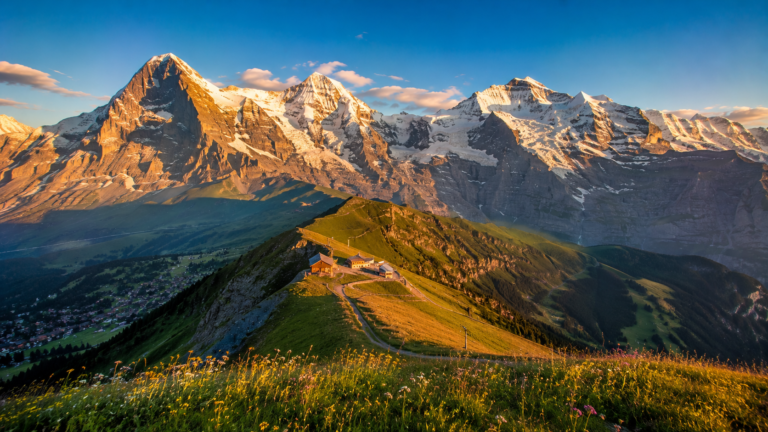
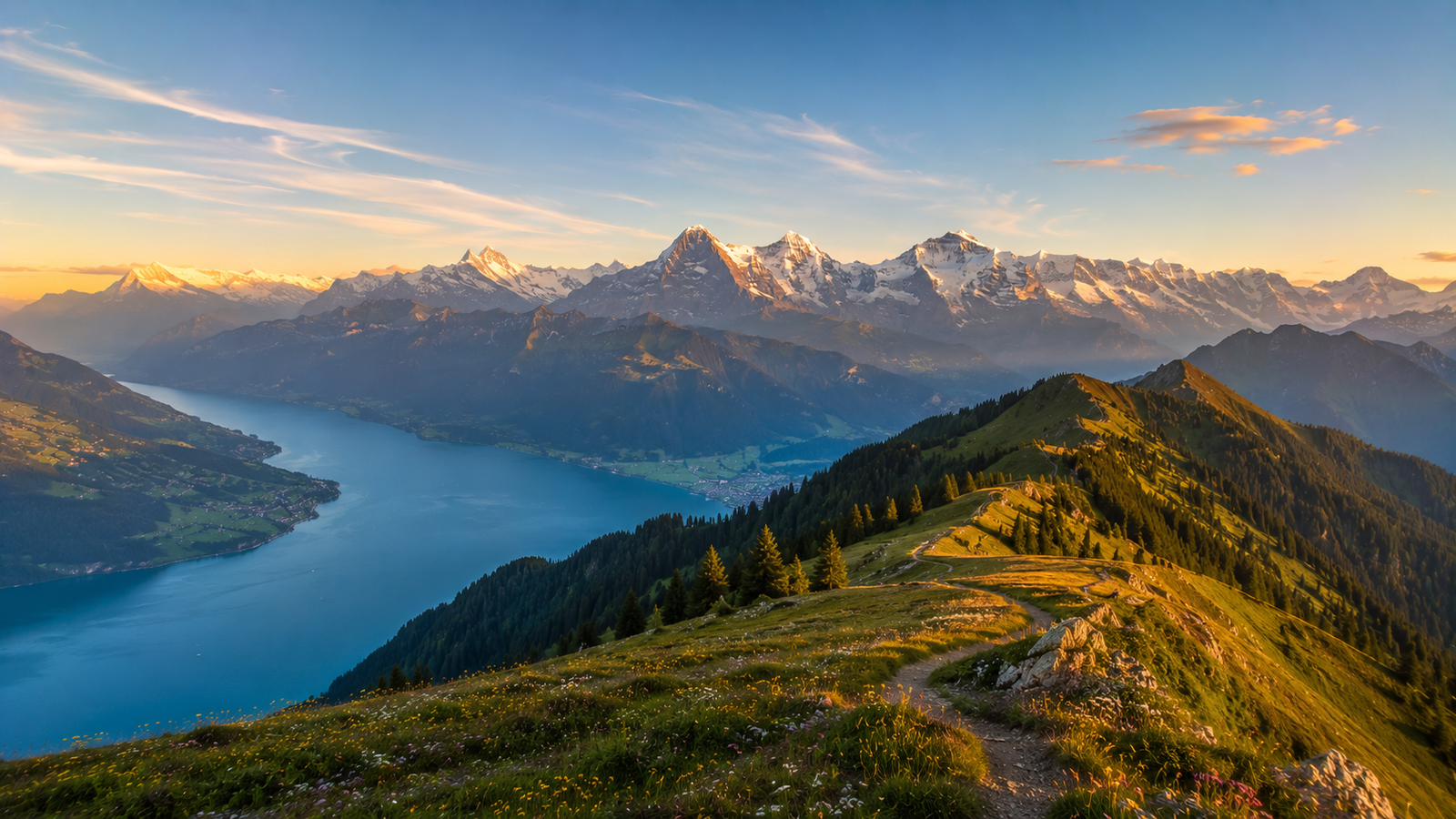
From the summit area, visitors can admire Lake Thun stretching below while the iconic peaks of Eiger, Mönch, and Jungfrau dominate the southern horizon. The contrast between deep blue water, green hillsides, and snow-covered mountains is among the most memorable landscapes in Switzerland.
Unlike many sharply rising Alpine peaks, Niederhorn features broad ridgelines and accessible terrain. This geography allows visitors to enjoy expansive scenery from numerous vantage points rather than from a single summit location.
The mountain serves as a gateway to a network of trails that traverse forests, meadows, and ridges while providing continuous views across the surrounding region.
A Mountain Connected to Local Traditions
The slopes surrounding Niederhorn have long been used for Alpine agriculture. Seasonal grazing remains an important part of the landscape, with mountain pastures contributing to the traditional character of the area.
Communities such as Beatenberg developed close connections to the mountain environment through farming, forestry, and mountain transport. Over time, the region became a destination for visitors seeking clean air, scenic views, and outdoor recreation.
The introduction of mountain transportation significantly improved access to Niederhorn while preserving much of its natural appeal. Today, visitors can reach the summit area comfortably while still experiencing an authentic Alpine setting shaped by generations of local stewardship.
Geography and Landscape
One of Niederhorn’s greatest attractions is the diversity of scenery visible from a single location.
To the south rise the towering Bernese Alps, including Eiger, Mönch, and Jungfrau. Their glaciers and snowfields create a dramatic backdrop that changes appearance with the seasons and weather conditions.
To the north and west, rolling hills and lower mountain ranges create a softer landscape that contrasts with the rugged Alpine skyline. Lake Thun occupies the center of the panorama, reflecting changing light throughout the day.
The mountain itself is characterized by open ridges, forests, and Alpine meadows. These varied environments support diverse plant and animal life while providing a range of recreational opportunities for visitors.
The Famous Panoramic Views
Few locations in the Bernese Oberland combine lake and mountain scenery as effectively as Niederhorn.
From the summit area, visitors enjoy uninterrupted views across one of Switzerland’s most celebrated landscapes. The elevated perspective allows travelers to appreciate the relationship between the lakes, valleys, villages, and mountains that define the region.
Photographers are particularly drawn to the mountain during early morning and late afternoon, when sunlight enhances the textures of the landscape and creates dramatic contrasts between illuminated peaks and shadowed valleys.
Changing weather conditions often add another dimension to the experience. Clouds drifting across the Alps, reflections on Lake Thun, and seasonal snow cover ensure that no two visits look exactly alike.
Wildlife Encounters in the Alps
Niederhorn is widely known as one of the Bernese Oberland’s most accessible wildlife observation areas.
The mountain’s natural habitats support species that are characteristic of the Alpine environment. Visitors hiking along quieter sections of the trails may encounter animals that inhabit the region’s meadows and rocky slopes.
The opportunity to combine mountain scenery with wildlife observation adds a unique dimension to the visitor experience. Many travelers appreciate the sense of immersion in nature that distinguishes Niederhorn from more heavily developed mountain destinations.
Responsible observation remains important, helping preserve the delicate ecosystems that contribute to the mountain’s appeal.
Hiking Through Alpine Landscapes
Hiking is among the most popular activities on Niederhorn.
The mountain offers routes suitable for a variety of experience levels, ranging from short scenic walks to longer excursions connecting neighboring peaks and valleys.
Many trails follow ridgelines that provide continuous views of Lake Thun and the Bernese Alps. Others pass through forests and meadows where visitors can experience the quieter side of the mountain landscape.
The changing terrain keeps hikes visually engaging while allowing visitors to appreciate different aspects of the region’s geography. During summer, Alpine flowers add color to the scenery, while autumn often brings exceptional visibility and vibrant seasonal tones.
Experiences Throughout the Seasons
Niederhorn remains attractive throughout the year because each season highlights different features of the landscape.
Summer is the primary hiking season, offering green meadows, comfortable temperatures, and extensive trail access. The combination of clear mountain air and panoramic views draws visitors from across Switzerland and beyond.
Autumn often provides some of the clearest conditions for sightseeing. The changing colors of forests and pastures create striking visual contrasts against the Alpine backdrop.
Winter transforms the mountain into a snowy recreation area. Winter hiking, sledding, and other seasonal activities allow visitors to enjoy the landscape from a different perspective while maintaining access to spectacular viewpoints.
Spring brings renewed life to the mountain environment as vegetation returns and wildlife becomes increasingly active.
Transportation and Access
One of Niederhorn’s greatest advantages is its accessibility.
Visitors typically begin their journey from Beatenberg, where mountain transport provides convenient access to higher elevations. The route itself offers impressive views and serves as part of the overall experience.
The surrounding region benefits from excellent transportation links. Travelers can easily reach Lake Thun, Interlaken, and Beatenberg through Switzerland’s extensive public transportation network.
Because access is relatively straightforward, Niederhorn is suitable for day trips while also serving as a starting point for longer explorations of the Bernese Oberland.
Cultural Importance and Regional Identity
Niederhorn occupies a prominent place within the identity of the Lake Thun region.
Its presence shapes the landscape and contributes to the area’s reputation as a destination where lakes and mountains coexist in remarkable harmony. The mountain also reflects long-standing traditions of Alpine farming, responsible land management, and outdoor recreation.
Nearby communities maintain strong cultural connections to the surrounding environment. Local traditions, architecture, and agricultural practices continue to influence daily life and contribute to the authentic character of the region.
Visitors often discover that the mountain experience extends beyond scenery, providing insight into the relationship between Swiss communities and their natural surroundings.
Practical Travel Tips
Weather conditions can change rapidly at higher elevations. Layered clothing is recommended regardless of season.
Comfortable walking shoes are useful even for visitors planning only short hikes, as many of the best viewpoints are reached via scenic trails.
Bringing binoculars can enhance wildlife observation opportunities and provide closer views of distant mountain peaks.
Early morning visits often offer quieter conditions and excellent visibility, while late afternoon light is particularly attractive for photography.
Why Niederhorn Continues to Attract Visitors
Switzerland offers countless mountain destinations, yet Niederhorn occupies a special place among them. Its appeal lies not in extreme altitude or dramatic engineering achievements but in its ability to present the Swiss landscape in its most balanced form.
Visitors can admire iconic Alpine peaks, look down upon one of the country’s most beautiful lakes, explore extensive hiking trails, and observe wildlife within a single excursion. The combination of accessibility, natural beauty, and authentic mountain character makes Niederhorn a destination that appeals to both first-time visitors and experienced travelers.
For anyone seeking a memorable encounter with the Bernese Oberland, Niederhorn offers one of the most complete and rewarding mountain experiences in Switzerland.