Aletsch Glacier, Fiesch, Switzerland
Aletsch Glacier: Exploring the Vast Ice River of the Swiss Alps
There are places in Switzerland that impress visitors with dramatic peaks, picturesque villages, or famous railways. Aletsch Glacier stands apart because it represents something even larger: a living landscape of ice that has shaped the Alps for thousands of years. Stretching through the heart of the Valais Alps, this immense glacier is the largest in the Alpine region and one of Europe’s most remarkable natural wonders.
For travelers arriving at one of the surrounding viewpoints, the first impression is often one of scale. The glacier appears less like a frozen river and more like a vast world of ice winding through mountain valleys beneath towering summits. Its immense presence has made it one of Switzerland’s most important natural landmarks and a centerpiece of the internationally recognized Jungfrau-Aletsch region.
A Landscape Sculpted by Ice
Aletsch Glacier lies within the canton of Valais in southern Switzerland and forms part of the Swiss Alps’ most celebrated mountain scenery. Fed by snowfields and glaciers near some of the highest peaks in the Bernese Alps, the glacier flows southward through a broad valley surrounded by rugged mountains.
The glacier occupies the heart of the UNESCO World Heritage-listed Swiss Alps Jungfrau-Aletsch region, recognized for its exceptional geological and environmental significance. This protected landscape showcases the powerful natural processes that continue to shape mountain environments.
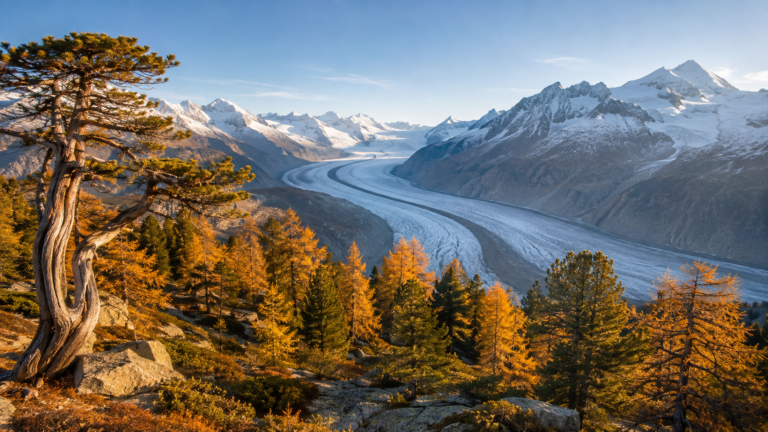
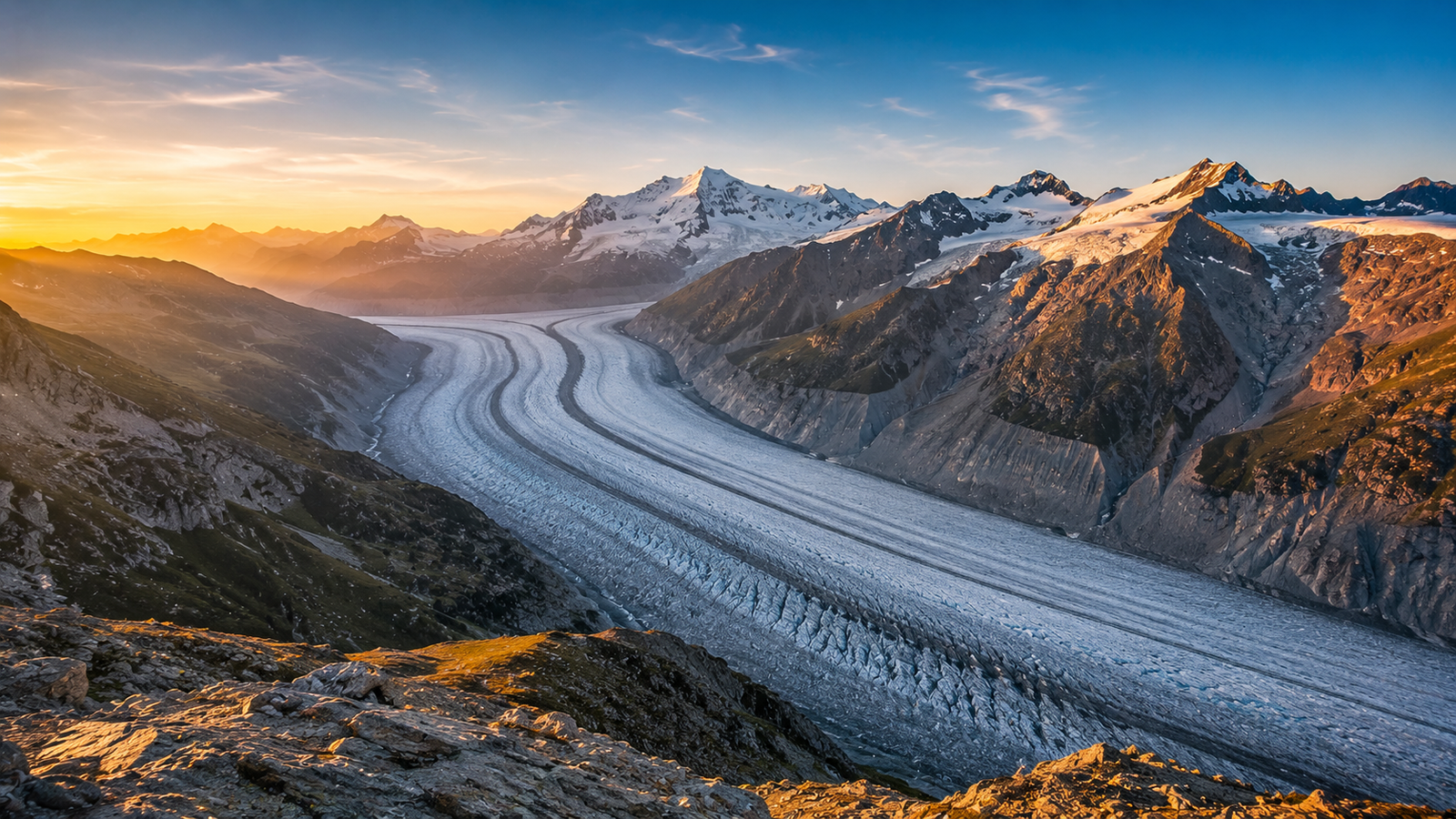
Viewed from above, the glacier resembles a frozen highway stretching across the mountains. Layers of compressed snow gradually transform into ice and move slowly through the valley, creating crevasses, ridges, and striking patterns across its surface.
Unlike many glaciers that are difficult to observe, Aletsch can be appreciated from numerous accessible viewpoints, allowing visitors to witness its scale without requiring technical mountaineering experience.
Understanding Its Historical Importance
For centuries, local communities living in Alpine valleys have observed the glacier’s seasonal and long-term changes. Long before modern scientific research, residents recognized the glacier as a powerful force influencing the surrounding landscape.
As exploration of the Alps expanded during the eighteenth and nineteenth centuries, scientists, geographers, and travelers became increasingly interested in glaciers. Aletsch emerged as an important location for studying geology, climate, and mountain environments.
Its role in scientific research continues today. The glacier provides valuable insight into natural processes that shape high mountain ecosystems and serves as one of Europe’s most significant examples of large-scale glacial formation.
Beyond science, the glacier helped establish Switzerland’s reputation as a destination where visitors could encounter extraordinary natural landscapes. Early travelers described the region with awe, helping introduce Alpine tourism to international audiences.
Where Ice Meets Mountain Giants
One reason Aletsch Glacier feels so dramatic is its setting.
The glacier is surrounded by some of Switzerland’s most impressive mountains. High ridges and peaks rise above the ice, creating a landscape of extraordinary contrast between dark rock, bright snowfields, and blue-white glacial surfaces.
Several famous viewpoints offer exceptional perspectives of the glacier. Locations such as Eggishorn, Bettmerhorn, and Moosfluh provide elevated panoramas where visitors can appreciate the glacier’s immense scale. From these vantage points, the glacier appears to flow endlessly through the mountains.
The surrounding region also contains alpine forests, meadows, and protected habitats that support a variety of mountain wildlife. This combination of geological and ecological diversity contributes to the area’s international importance.
Experiencing the Glacier from Above
The most memorable encounters with Aletsch Glacier often occur from the panoramic viewpoints overlooking the ice.
Eggishorn is widely regarded as one of the finest observation points because it offers a sweeping view across the glacier’s entire length. Standing on the summit, visitors can follow the glacier’s path through the mountains and appreciate its remarkable dimensions.
Bettmerhorn provides another spectacular perspective. The viewpoint allows travelers to observe the glacier’s intricate surface patterns while also enjoying broad mountain panoramas.
Moosfluh presents a closer look at the glacier and highlights the dynamic relationship between ice and surrounding rock formations. Together, these viewpoints reveal different aspects of the glacier’s character.
The experience changes throughout the day as shifting sunlight creates new colors and textures across the ice. Early morning and late afternoon often provide particularly striking photographic conditions.
Hiking Through a UNESCO Landscape
While panoramic viewpoints attract many visitors, hiking remains one of the best ways to explore the region.
Numerous trails connect mountain stations, ridgelines, forests, and observation points. These routes allow travelers to experience the glacier from different angles while moving through some of the Alps’ most scenic terrain.
Many trails are suitable for casual hikers, while others provide longer mountain adventures. Along the way, visitors encounter alpine flowers, grazing pastures, and dramatic views that constantly evolve as the landscape unfolds.
One of the most rewarding aspects of hiking near Aletsch Glacier is the opportunity to understand the scale of the environment. Distances that appear modest from a viewpoint often reveal the true immensity of the glacier when experienced on foot.
Seasonal Changes Across the Glacier
Aletsch Glacier offers a different atmosphere in every season.
Summer brings accessible hiking trails, green alpine meadows, and clear opportunities to explore the surrounding mountains. Warm temperatures at lower elevations make it one of the most popular times to visit.
Autumn introduces crisp air and vibrant colors in nearby forests. The quieter atmosphere appeals to travelers seeking a more peaceful experience.
Winter transforms the landscape into a snow-covered Alpine world. The surrounding mountain resorts attract skiers and winter hikers, while glacier viewpoints reveal a dramatically different visual character.
Spring marks a period of transition as snow gradually recedes from lower elevations and mountain ecosystems begin another seasonal cycle.
Each season highlights a different aspect of the glacier and its surrounding environment.
Transportation and Access
One of the remarkable aspects of Aletsch Glacier is how accessible it is despite its remote Alpine setting.
Visitors typically reach the region via Switzerland’s extensive rail network. Mountain transport systems connect villages such as Fiesch, Bettmeralp, and Riederalp to higher elevations where glacier viewpoints are located.
Cable cars and mountain lifts provide efficient access to observation areas that would otherwise require lengthy ascents. This combination of public transportation and mountain infrastructure allows travelers to experience one of Europe’s most significant glaciers with relative ease.
The journey itself often becomes part of the experience, as trains and cable cars pass through valleys, forests, and mountain landscapes before reaching panoramic viewpoints.
A Natural Treasure Beyond Tourism
While Aletsch Glacier is undoubtedly one of Switzerland’s leading attractions, its significance extends far beyond recreation.
The glacier represents a crucial component of the Alpine environment and serves as a visible reminder of the geological forces that have shaped the region over countless generations. Its inclusion within the Jungfrau-Aletsch UNESCO World Heritage Site reflects its global importance as a natural landmark.
The surrounding communities have developed a strong connection to the glacier, integrating it into local identity, culture, and tourism while supporting efforts to preserve the unique landscape.
For visitors, Aletsch Glacier offers more than spectacular scenery. It provides an opportunity to witness one of nature’s most powerful creations, a place where ice, mountains, and time combine to form a landscape unlike any other in Switzerland. Standing above the glacier, looking across its vast frozen expanse, it becomes clear why this extraordinary natural wonder remains one of the defining experiences of the Swiss Alps.