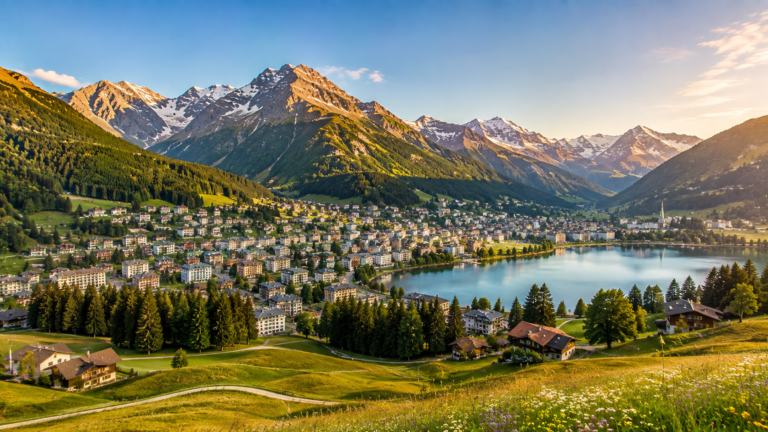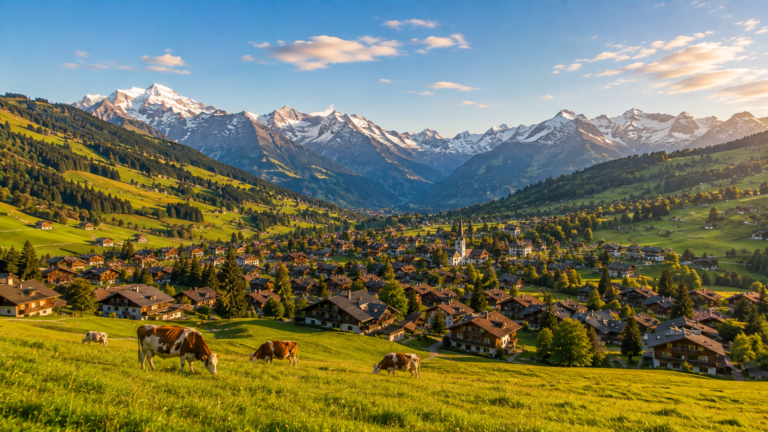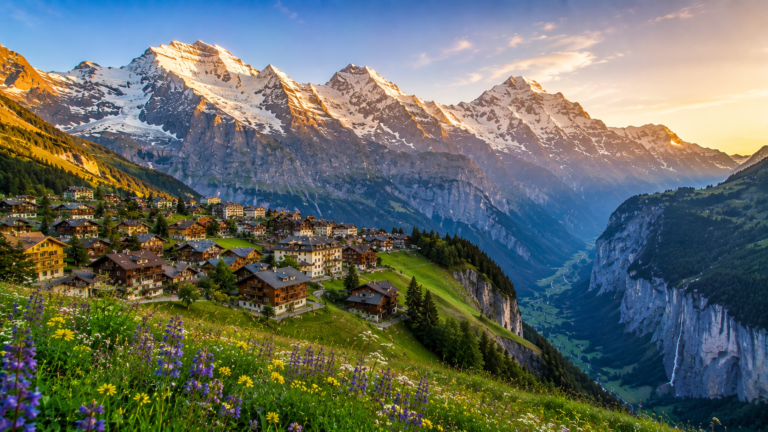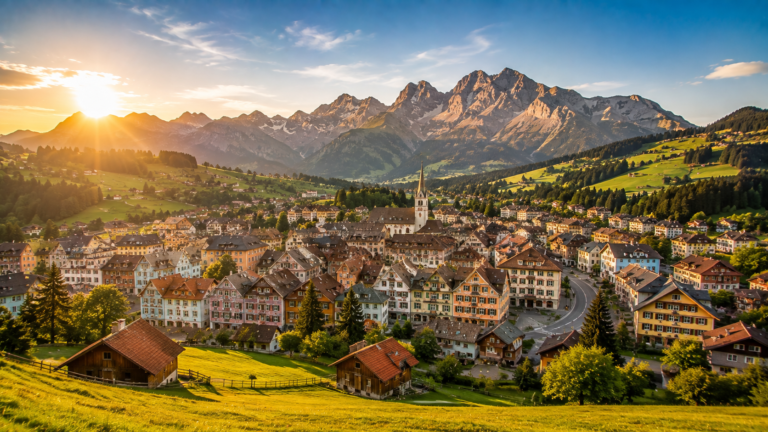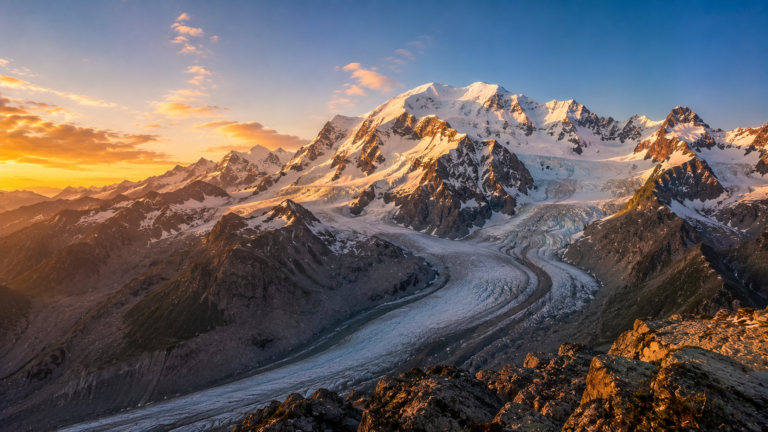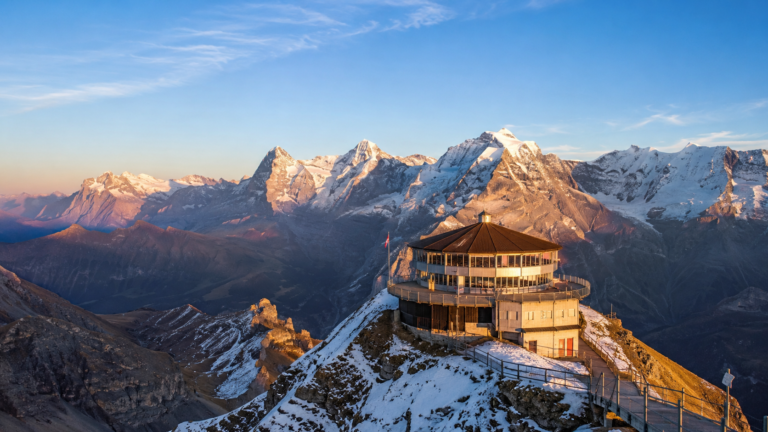

Finsteraarhorn, Fieschertal, Switzerland
Finsteraarhorn: Exploring Switzerland’s Highest Peak Beyond the Alps’ Crowds
Far from Switzerland’s busiest mountain resorts, Finsteraarhorn rises above a vast wilderness of glaciers, rocky ridges, and snow-covered summits. Standing at 4,274 meters, it is the highest mountain in the Bernese Alps and one of the most imposing peaks in the country. Unlike famous tourist landmarks that attract large crowds, Finsteraarhorn remains a mountain defined by isolation, grandeur, and a powerful sense of natural scale.
Positioned within the heart of the Swiss Alps, the mountain dominates one of Europe’s most remarkable high-altitude landscapes. Its summit overlooks immense glaciers, remote valleys, and rugged mountain chains that stretch across central Switzerland. For climbers, photographers, and nature enthusiasts, Finsteraarhorn represents one of the purest expressions of Alpine wilderness.
A Giant in the Bernese Alps
Finsteraarhorn is the highest summit in the Bernese Alps, a mountain range renowned for dramatic peaks, glaciers, and iconic landscapes. Although neighboring mountains such as Eiger, Mönch, and Jungfrau are often more familiar to international visitors, Finsteraarhorn surpasses them all in elevation.
The mountain’s commanding height allows it to dominate the surrounding skyline. From distant viewpoints across the Bernese Oberland and Upper Valais, its striking profile stands out among the surrounding ridges and glacier systems.
Its name reflects the mountain’s dramatic character. Surrounded by remote valleys and enormous ice fields, Finsteraarhorn has long been associated with the wild and untamed side of the Alps.
Geography at the Heart of a UNESCO Landscape
Finsteraarhorn occupies a central position within the Swiss Alps and lies near the core of the UNESCO-listed Jungfrau-Aletsch region.
This internationally recognized area contains some of the largest glacier systems in the Alps, including the Great Aletsch Glacier. The mountain rises above an extensive network of ice formations that have shaped the landscape for thousands of years.
Steep granite walls, snow-covered ridges, and glacier-fed valleys create a dramatic environment unlike any lowland region of Switzerland. The scale of the terrain becomes apparent when viewed from surrounding summits and observation points, where glaciers appear to flow endlessly through the mountain world below.
The mountain’s location within this protected region enhances both its environmental importance and its appeal to visitors seeking authentic Alpine scenery.
A Landmark in Alpine Exploration
The history of Finsteraarhorn is closely connected with the development of mountaineering in Switzerland.
During the nineteenth century, explorers, scientists, and climbers began venturing deeper into the Alps. The mountain quickly gained attention due to its prominence, challenging terrain, and commanding position above the surrounding glaciers.
Early expeditions required long approaches through remote valleys and across difficult ice fields. Reaching the summit demanded skill, endurance, and careful planning, characteristics that still define ascents today.
As Alpine exploration expanded, Finsteraarhorn became one of the most respected objectives in Switzerland. Its reputation continues among mountaineers who regard it as one of the country’s classic high-altitude climbs.
A World of Glaciers
One of the defining characteristics of Finsteraarhorn is its relationship with the glaciers surrounding it.
The mountain is encircled by vast ice fields that remain among the most spectacular in the Alps. These glaciers have carved valleys, sharpened ridges, and influenced the development of the surrounding landscape over countless centuries.
From elevated viewpoints, visitors can observe enormous rivers of ice winding through mountain basins far below. The contrast between bright glacier surfaces and dark rock formations creates some of Switzerland’s most dramatic mountain scenery.
The presence of these glaciers contributes significantly to the mountain’s visual identity and reinforces its reputation as a symbol of Alpine wilderness.
Scenic Viewpoints and Mountain Perspectives
Although the summit itself is primarily reached by experienced climbers, many travelers can enjoy impressive views of Finsteraarhorn without undertaking a technical ascent.
Observation points within the Jungfrau-Aletsch region provide opportunities to admire the mountain from a distance. Elevated viewpoints reveal its massive scale and its relationship to the surrounding glacier landscape.
Among the most rewarding aspects of viewing Finsteraarhorn is seeing how it rises above an otherwise unbroken expanse of peaks and ice. Unlike mountains located near major settlements, it appears deeply embedded within a remote mountain environment.
Photographers often seek out these perspectives because the mountain’s shape changes dramatically depending on angle, weather, and light conditions.
Hiking Through the High Alps
The region surrounding Finsteraarhorn offers numerous opportunities for hiking and mountain exploration.
Trails across the Jungfrau-Aletsch area lead visitors through landscapes shaped by glaciers, streams, and alpine meadows. As hikers gain elevation, expansive panoramas reveal the immense scale of the surrounding mountain world.
Many routes provide opportunities to observe glaciers, rocky ridges, and distant summits without requiring technical mountaineering experience. These trails allow visitors to appreciate the grandeur of Finsteraarhorn while remaining within accessible terrain.
The combination of natural beauty and relative remoteness creates a distinctive experience compared with more heavily visited Alpine destinations.
Seasonal Beauty Across the Year
Finsteraarhorn displays different characteristics throughout the seasons, each offering unique perspectives on the mountain.
During summer, lower slopes and valleys feature green meadows and alpine vegetation while snow and ice continue to dominate the upper elevations. Clear weather often provides excellent conditions for mountain photography and hiking.
Autumn brings crisp air and remarkable visibility. The contrast between seasonal colors in the valleys and permanent snowfields at higher elevations creates particularly striking landscapes.
Winter transforms the region into a world of ice and snow. The mountain blends seamlessly into the surrounding glacier environment, producing dramatic scenes that define the classic image of the Swiss Alps.
Spring introduces gradual change at lower elevations while the high mountain landscape remains largely frozen, preserving its Alpine character.
Wildlife and Natural Heritage
The remote environment surrounding Finsteraarhorn supports a variety of Alpine ecosystems.
Rocky slopes, glacier margins, and high-altitude meadows provide habitat for species adapted to mountain conditions. Visitors exploring the region may encounter wildlife typical of the Swiss Alps while enjoying the quiet atmosphere that characterizes this protected landscape.
The mountain’s location within a globally recognized natural area highlights its ecological importance as well as its scenic value.
Conservation efforts throughout the region help preserve the fragile balance between tourism, recreation, and environmental protection.
Access and Travel Planning
Reaching viewpoints and hiking areas associated with Finsteraarhorn typically involves travel through communities in the Bernese Oberland or Upper Valais.
Modern transportation networks make access to the broader Jungfrau-Aletsch region relatively straightforward, even though the mountain itself remains remote. Cable cars, mountain railways, and hiking routes provide opportunities to experience the surrounding landscape from multiple perspectives.
Weather conditions can change quickly in high mountain environments. Visitors should prepare for cooler temperatures and variable conditions, regardless of season.
Good visibility is particularly valuable when visiting the region, as clear skies reveal the full scale of the glaciers and peaks surrounding Finsteraarhorn.
Why Finsteraarhorn Continues to Inspire
Finsteraarhorn occupies a unique place among Switzerland’s mountains. It is not defined by famous railways, iconic hotels, or bustling resort villages. Instead, its appeal comes from its scale, isolation, and connection to one of Europe’s most remarkable glacier landscapes.
The mountain embodies the grandeur of the high Alps in its purest form. Surrounded by vast ice fields and towering ridges, it represents a landscape where nature remains the dominant force. Whether viewed from a distant summit, admired from a glacier overlook, or encountered during a mountain journey through the Jungfrau-Aletsch region, Finsteraarhorn leaves an unforgettable impression as one of Switzerland’s greatest natural landmarks.