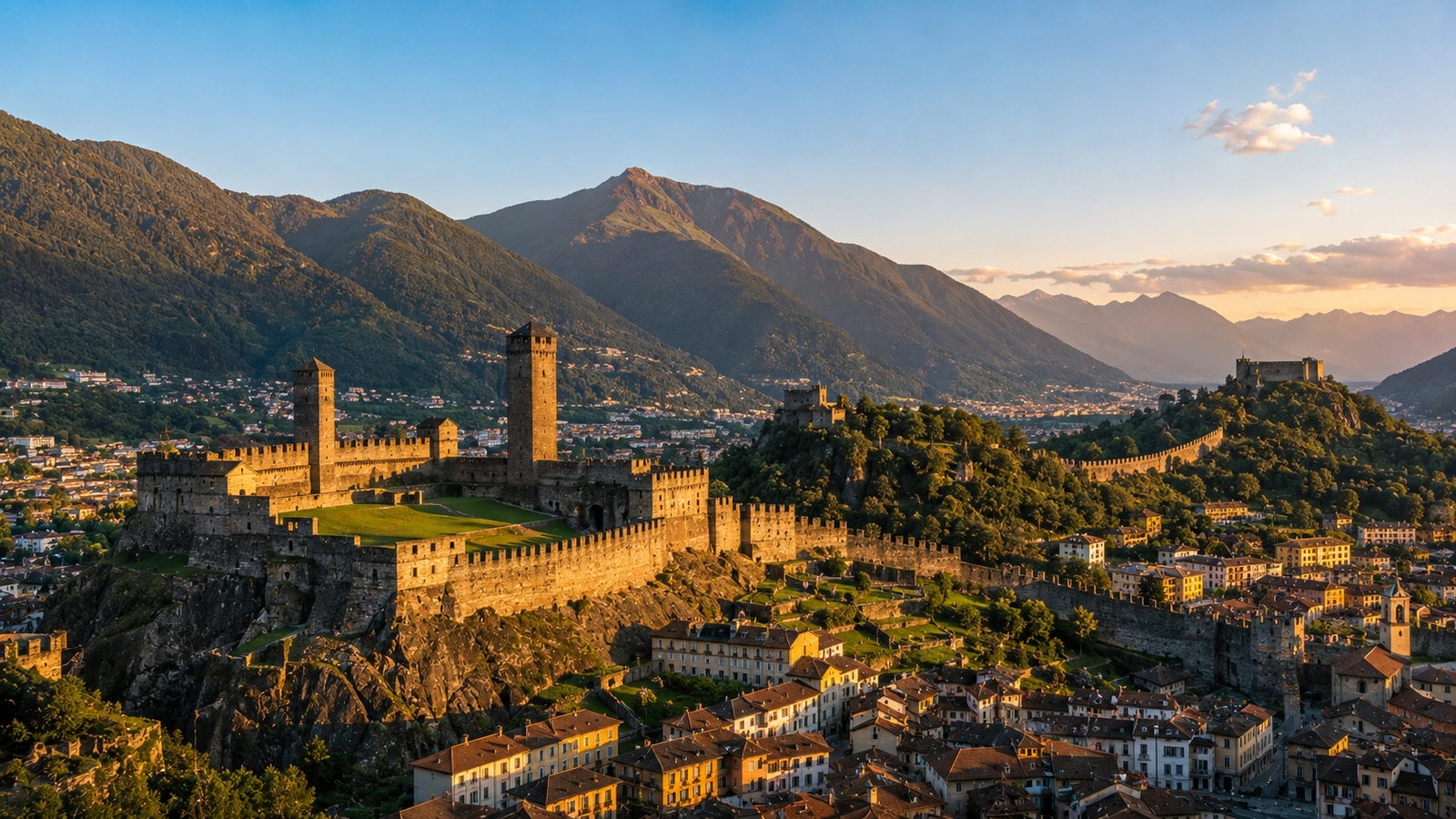
Bellinzona Castles, Bellinzona, Switzerland
Bellinzona Castles: The Three Fortress Guardians of Switzerland’s Southern Gateway
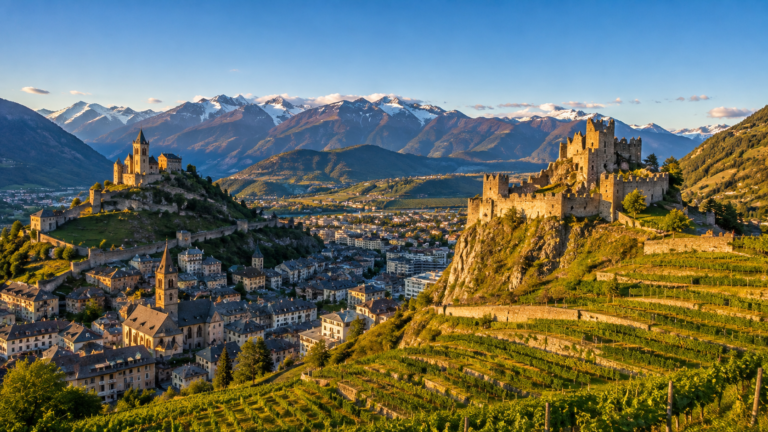
Few places in Europe demonstrate the relationship between geography and power as clearly as the Bellinzona Castles. Rising above the capital of Switzerland’s Italian-speaking canton of Ticino, three imposing fortresses and their interconnected defensive structures tell the story of centuries of military strategy, political rivalry, and control of vital Alpine routes.
Today, the castles are recognized collectively as a UNESCO World Heritage Site, celebrated as one of the most important examples of medieval defensive architecture in the Alps. Yet their significance extends far beyond impressive stone walls and scenic viewpoints. The Bellinzona Castles reveal how nations, rulers, and armies sought to control one of Europe’s most strategic crossroads.
For travelers exploring southern Switzerland, the site offers a rare opportunity to walk through a complete fortified landscape where mountains, valleys, and architecture combine to tell a remarkable historical story.
Why Bellinzona Became a Strategic Stronghold
The location of Bellinzona explains everything.
The town sits where several major Alpine routes converge before travelers continue north toward the central Swiss plateau or south into Italy. For centuries, this geographic position made Bellinzona one of the most important transportation corridors in the region.
Whoever controlled Bellinzona controlled access through key Alpine passages linking northern and southern Europe.
The narrow valley naturally restricted movement, making it an ideal location for defensive fortifications. Over time, rulers recognized the strategic advantages of the site and invested heavily in building structures capable of monitoring and protecting these routes.
The result was a sophisticated defensive network unlike any other in Switzerland.
Rather than relying on a single fortress, Bellinzona developed a coordinated system of castles and walls designed to work together as a unified line of defense.
A UNESCO World Heritage Site
In 2000, UNESCO inscribed the Castles, Defensive Wall, and Ramparts of the Market-Town of Bellinzona on the World Heritage List.
The designation recognizes the exceptional preservation of the fortifications and their importance in understanding medieval military architecture. Unlike isolated castles found elsewhere in Europe, Bellinzona presents an integrated defensive complex that illustrates how geography and fortification strategies evolved together.
The UNESCO recognition also highlights the site’s cultural value as evidence of political and military competition between powers seeking influence over the Alpine region.
Today, visitors can explore much of this historic landscape while gaining insight into centuries of European history.
Castelgrande: The Foundation of Bellinzona’s Defenses
The most prominent fortress in the complex is Castelgrande.
Positioned on a rocky hill rising above the old town, the castle occupies a site that has been used for defensive purposes since antiquity. Archaeological evidence suggests that fortifications existed here during Roman times, reflecting the location’s long-standing strategic importance.
The structure visible today incorporates medieval developments that transformed the hill into a formidable stronghold.
Visitors entering Castelgrande encounter expansive courtyards, massive walls, towers, and elevated viewpoints overlooking the surrounding valleys. The panoramic vistas reveal exactly why the site was so valuable to generations of military planners.
From its commanding position, defenders could monitor movement throughout the region and communicate with neighboring fortifications.
Today, Castelgrande serves as both a historical monument and one of Bellinzona’s most popular visitor attractions.
Montebello Castle: The Defensive Link
East of Castelgrande stands Montebello Castle, the second major fortress in the defensive system.
Built on a hillside overlooking the town, Montebello occupied a crucial position within the network of fortifications. Defensive walls once connected sections of the castle system, helping create barriers across the valley.
The castle’s design reflects the military requirements of the late medieval period. Thick walls, defensive towers, protected entrances, and strategic positioning allowed defenders to monitor approaches and coordinate responses to potential threats.
Montebello also offers visitors a different perspective on Bellinzona’s geography. From its elevated location, the relationship between the various fortifications becomes easier to understand.
The castle demonstrates that Bellinzona’s defenses were never intended to function independently. Each component contributed to a larger strategy designed to control movement through the Alps.
Sasso Corbaro: The Watchtower Above the Valley
The highest of the three castles is Sasso Corbaro.
Constructed in the late fifteenth century, it occupies a commanding position on a rocky hill overlooking both Bellinzona and the surrounding landscape. Unlike the other fortresses, which are closely integrated with the town’s defenses, Sasso Corbaro functions as an elevated observation and defensive position.
Its location provided clear views of the surrounding valleys and potential approaches.
The castle’s isolated setting also contributes to its visual appeal. Surrounded by mountain scenery and standing prominently above the urban landscape, it offers some of the most impressive panoramic views in the region.
Visitors often describe Sasso Corbaro as the most dramatic of the three castles because of its spectacular position and strong visual presence.
Together with Castelgrande and Montebello, it completed a defensive triangle that helped secure one of Europe’s critical transportation corridors.
Walls That Once Crossed the Valley
The Bellinzona fortifications extended beyond the castles themselves.
Defensive walls and ramparts once stretched across portions of the valley, creating obstacles that limited the movement of armies and travelers. These structures transformed the natural landscape into a carefully controlled defensive zone.
The combination of mountains, rivers, walls, and castles made Bellinzona exceptionally difficult to bypass.
This integrated approach distinguishes the site from many other medieval fortifications. Rather than relying solely on castle walls, the builders used geography as an active component of their defensive strategy.
Even today, surviving sections of these fortifications help visitors visualize the scale and sophistication of the original system.
A Blend of Swiss and Italian Influences
One of Bellinzona’s most distinctive characteristics is its cultural setting.
Located in Ticino, the region combines Swiss governance with strong Italian linguistic and cultural influences. This unique identity is reflected throughout the town and contributes to the atmosphere surrounding the castles.
The architecture, urban layout, cuisine, and cultural traditions reveal connections to both sides of the Alps.
For travelers, the experience of visiting Bellinzona differs noticeably from exploring medieval sites elsewhere in Switzerland. The southern climate, Italian-speaking environment, and Mediterranean influences create a distinctive sense of place.
The castles stand at the intersection of these cultural traditions, reinforcing Bellinzona’s historical role as a gateway between regions.
Exploring the Historic Town Below
While the castles are the main attraction, Bellinzona itself deserves attention.
The historic center contains attractive streets, public squares, churches, and civic buildings that complement the fortress complex. Walking through the town helps visitors understand how daily life developed under the protection of the surrounding fortifications.
Markets, commerce, and transportation have shaped Bellinzona for centuries. The relationship between the town and the castles remains evident throughout the urban landscape.
Exploring both the fortresses and the historic center provides a more complete understanding of the site’s significance.
A Legacy Carved Into the Alpine Landscape
The Bellinzona Castles are more than medieval monuments. They represent a carefully engineered response to geography, politics, and the challenges of controlling movement through the Alps.
Their towers, walls, and strategic positions tell the story of centuries of competition for one of Europe’s most valuable corridors. At the same time, they illustrate the remarkable ingenuity of military architects who transformed natural terrain into an integrated defensive system.
Standing atop the walls of Castelgrande, looking toward Montebello and Sasso Corbaro, visitors can see how the entire landscape functioned as a fortress. The mountains, valleys, and castles remain inseparable elements of the same story.
That enduring connection between architecture and geography is what makes the Bellinzona Castles one of Switzerland’s most extraordinary historical destinations and one of the most significant fortified landscapes in Europe.