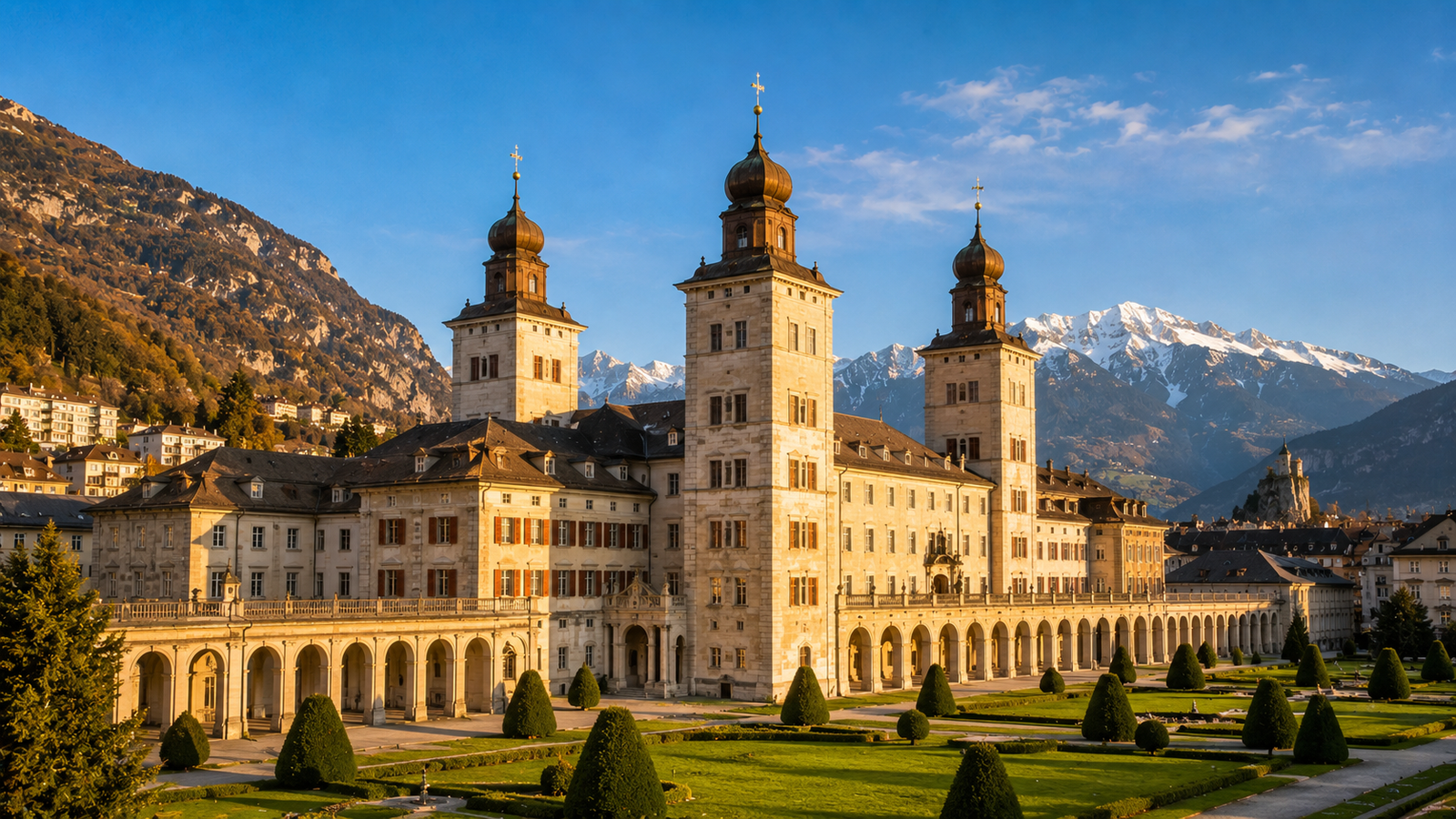
Stockalper Palace, Brig, Switzerland
Stockalper Palace: The Grand Alpine Residence Built by Switzerland’s Most Powerful Merchant
In a country renowned for medieval castles and mountain scenery, Stockalper Palace stands apart. It was not built by a king, duke, or noble dynasty. Instead, this extraordinary residence emerged from the ambition of a single businessman whose influence extended across the Alps during the seventeenth century.
Dominating the center of Brig in the canton of Valais, Stockalper Palace is the largest secular Baroque building in Switzerland. Its elegant arcades, expansive courtyards, distinctive towers, and formal gardens reflect the wealth and power accumulated by Kaspar Jodok von Stockalper, one of the most remarkable figures in Swiss history.
For visitors, the palace offers more than architectural grandeur. It provides a window into an era when Alpine trade routes connected northern and southern Europe, transforming Brig into a strategic gateway between cultures, economies, and nations.
The Man Behind the Palace
To understand Stockalper Palace, it is essential to understand the individual who created it.
Kaspar Jodok von Stockalper (1609–1691) rose from a prosperous local family to become one of the most influential merchants and political figures in the Valais. Through trade, transportation, mining interests, and commercial monopolies, he built a vast economic network centered on the Simplon Pass, one of the most important Alpine crossings between Switzerland and Italy.
At a time when crossing the Alps was both difficult and dangerous, Stockalper recognized the strategic importance of controlling trade routes. His commercial empire enabled the movement of goods, travelers, and resources between northern Europe and the Mediterranean world.
His wealth became legendary, earning him a reputation as one of the richest and most powerful individuals in Swiss history. The palace that bears his name remains the most visible expression of that success.
Building Switzerland’s Largest Baroque Palace
Construction of Stockalper Palace began in the middle of the seventeenth century and continued over several decades.
Unlike the defensive castles common throughout Switzerland, the palace was conceived as a residence and administrative center. Its architecture reflected contemporary Baroque influences while also serving practical commercial functions.
The resulting complex combined elegance and efficiency. Large courtyards facilitated trade-related activities, while grand reception spaces demonstrated the owner’s social and political status.
Even today, the scale of the palace surprises many visitors. Its dimensions, symmetry, and architectural sophistication contrast with the surrounding Alpine environment, creating a landmark that feels both unexpected and impressive.
The structure represents a rare example of monumental Baroque architecture in Switzerland, where such large-scale secular buildings are comparatively uncommon.
The Three Towers and Their Symbolism
Among the palace’s most recognizable features are its three distinctive towers.
Each tower was named after one of the Three Wise Men traditionally associated with the biblical Nativity story: Caspar, Melchior, and Balthasar. This naming choice reflected both religious symbolism and the personal ambitions of Stockalper himself.
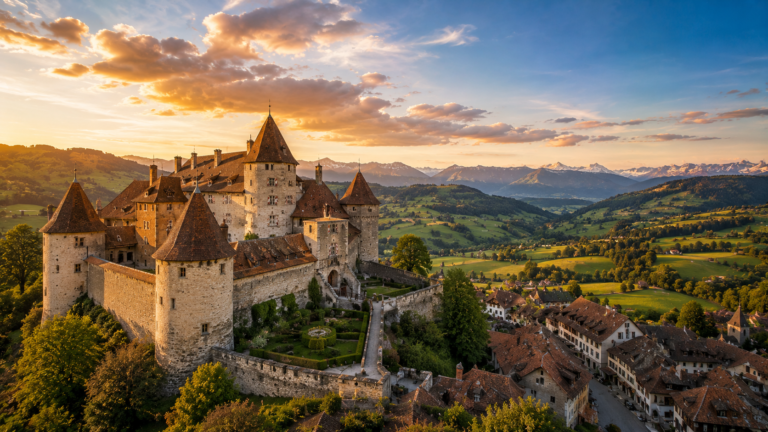
The towers dominate Brig’s skyline and can be seen from various points throughout the town. Their elegant forms help distinguish the palace from more conventional castles and civic buildings.
Viewed against the backdrop of the surrounding Alps, the towers create one of the most iconic architectural scenes in the Valais region.
They also serve as a reminder that the palace was designed not merely as a private residence but as a statement of influence and prestige visible to everyone arriving in Brig.
Arcades, Courtyards, and Italian Inspiration
One of the palace’s most distinctive characteristics is its extensive arcaded courtyard.
Visitors entering the complex encounter a series of graceful arches inspired by Italian Renaissance and Baroque architecture. These elements reflect the strong cultural connections that existed across the Simplon Pass during Stockalper’s lifetime.
The arcades create an atmosphere more commonly associated with northern Italy than with the high Alps. Their elegant proportions soften the scale of the building while adding visual rhythm to the palace complex.
Walking through the courtyards reveals how architecture was used to balance functionality and aesthetics. Commercial activity once flowed through these spaces, yet they were designed with enough refinement to impress visiting dignitaries and business partners.
Today, the courtyards remain among the most photographed parts of the palace.
The Simplon Connection
The story of Stockalper Palace cannot be separated from the Simplon Pass.
For centuries, this historic Alpine route connected the Rhône Valley with northern Italy. During the seventeenth century, Stockalper invested heavily in infrastructure and transportation systems that improved movement across the mountains.
His influence over trade along the route contributed significantly to his wealth and to Brig’s development as a regional commercial center.
Visitors exploring the palace gain insight into how geography shaped economic power in the Alps. Long before railways and highways transformed European transportation, merchants like Stockalper relied on mountain passes to facilitate trade between distant regions.
The palace serves as a physical reminder of the importance of these routes in shaping Swiss and European history.
Gardens Beneath the Alps
Behind the palace lies a formal garden that offers a striking contrast to the rugged mountain scenery beyond.
The gardens provide carefully organized green spaces framed by historic architecture and distant Alpine peaks. This combination of cultivated landscape and dramatic natural surroundings contributes to the palace’s unique atmosphere.
During warmer months, the gardens become one of Brig’s most pleasant public spaces. Visitors can stroll through the grounds while appreciating views of both the palace and the surrounding mountains.
The setting illustrates a recurring theme throughout the property: the blending of cultural ambition with the realities of Alpine geography.
Rather than competing with the landscape, the palace incorporates it into the overall experience.
A Cultural Landmark in Modern Brig
Although centuries have passed since Stockalper’s era, the palace continues to play an important role in community life.
The complex hosts cultural events, exhibitions, guided tours, and educational programs that connect visitors with the region’s history. Various sections of the building have been adapted for contemporary use while preserving the architectural integrity of the site.
This ongoing relevance helps distinguish Stockalper Palace from attractions that function solely as historic monuments. The building remains an active part of Brig’s cultural identity and public life.
For residents, it serves as a symbol of local heritage. For travelers, it offers an opportunity to explore one of Switzerland’s most unusual historical landmarks.
Discovering Brig Beyond the Palace
Many visitors arrive specifically to see Stockalper Palace and then discover a town rich in history and Alpine character.
Brig occupies a strategic location in the Upper Valais and serves as an important transportation hub connecting Switzerland with Italy via the Simplon corridor. The historic center contains charming streets, traditional buildings, and inviting public spaces that complement the palace experience.
The town also provides access to numerous mountain destinations throughout the region. Visitors often combine cultural exploration with excursions into the surrounding Alps, creating a travel experience that balances history and nature.
This combination has helped make Brig an appealing destination for travelers interested in both heritage and outdoor landscapes.
An Enduring Symbol of Ambition and Opportunity
Many historic landmarks commemorate political power or military achievement. Stockalper Palace tells a different story.
Its walls reflect the ambitions of a merchant who recognized opportunities hidden within the Alpine landscape and transformed them into influence, prosperity, and lasting legacy. The building demonstrates how commerce, geography, and vision could shape an entire region long before modern transportation networks existed.
Standing beneath the palace towers, visitors encounter more than a remarkable example of Baroque architecture. They encounter a monument to the era when Alpine trade routes connected Europe and when one individual’s determination left an enduring mark on Swiss history.
In a nation filled with castles, fortresses, and historic towns, Stockalper Palace remains unique—a grand residence built not by royalty, but by a man who understood the value of the mountains that surrounded him.