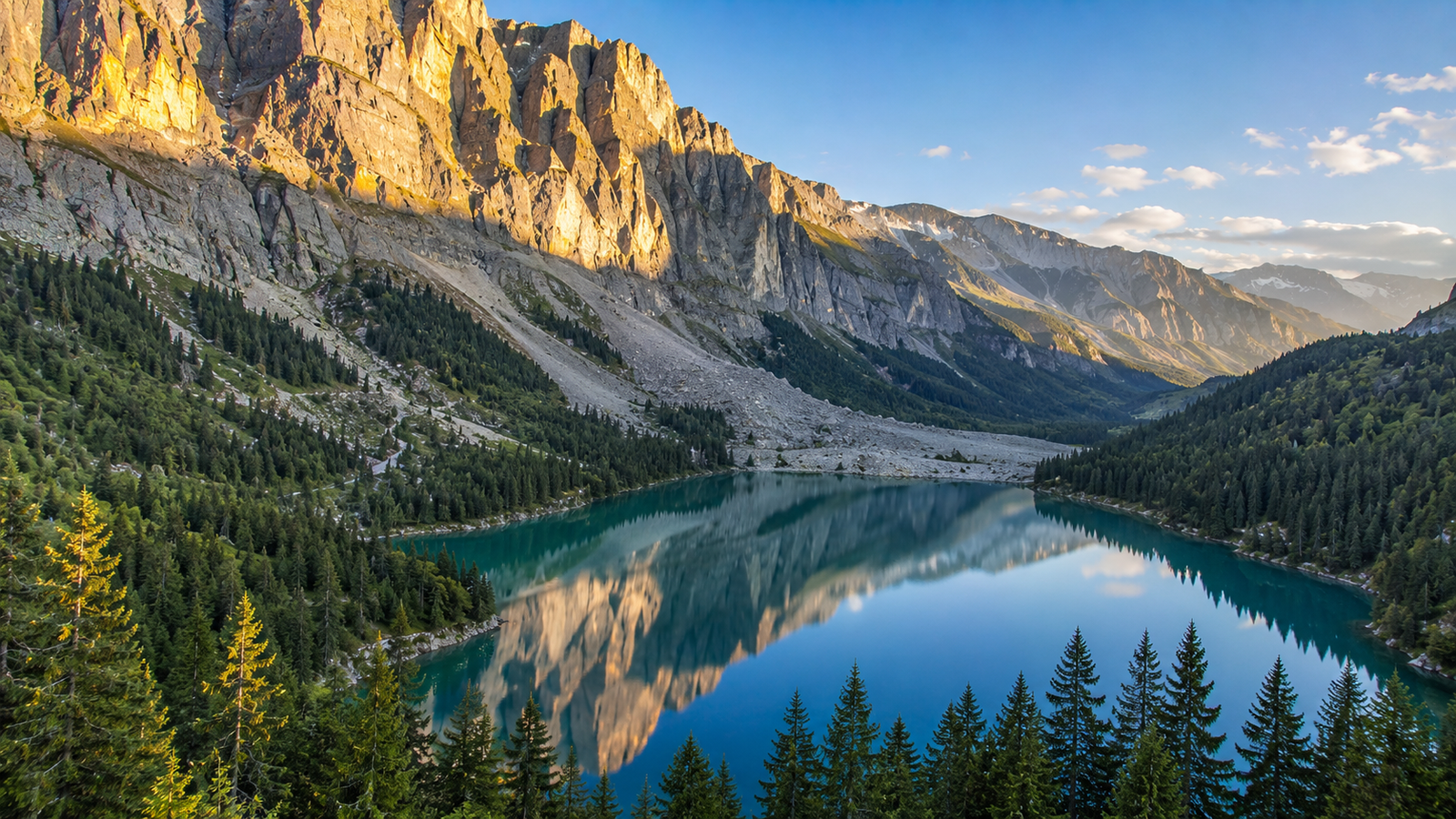
Lake Derborence, Conthey, Switzerland
Lake Derborence: Switzerland’s Youngest Natural Mountain Lake Born from Disaster
Most mountain lakes in Switzerland owe their existence to glaciers. Lake Derborence tells a very different story.
Hidden deep within an isolated valley in the canton of Valais, this striking body of water was not carved by ice over thousands of years. Instead, it emerged from one of the most dramatic geological events in Swiss history. Massive rockfalls from the Diablerets massif transformed an Alpine valley, blocked waterways, and ultimately created a lake that today sits at the heart of one of Switzerland’s most fascinating protected landscapes.
For visitors, Lake Derborence offers far more than scenery. It is a destination where geology, wildlife, literature, and conservation intersect, creating an experience unlike any other mountain lake in the country.
A Landscape Shaped by Catastrophe
To understand Lake Derborence, visitors must first understand the events that created it.
Two enormous rockslides descended from the Diablerets massif in 1714 and 1749. The falling rock buried parts of the valley floor and created a natural barrier across the watercourse. Over time, water accumulated behind this rocky dam, forming what is now Lake Derborence. The landslides were so significant that local communities associated them with supernatural forces, contributing to the enduring name “Les Diablerets,” or “The Devil’s Mountains.”
Today, the lake remains one of the most remarkable examples of a natural lake created by a historic landslide in the Alps. The surrounding terrain still bears visible traces of the geological upheaval that reshaped the valley more than two centuries ago.
Rather than erasing the scars of the disaster, nature transformed them into one of Switzerland’s most extraordinary natural environments.
Switzerland’s Wild Alpine Sanctuary
Lake Derborence lies within a nationally significant protected landscape renowned for its ecological value. The secluded valley sits at the western edge of the High Limestone Alps and has remained remarkably untouched by modern development.
Visitors arriving for the first time often notice the dramatic setting immediately. Towering cliffs rise above the lake, while forests blanket the valley floor beneath the imposing walls of the Diablerets massif. The isolation of the location creates a sense of wilderness that is increasingly rare in the Alps.
The lake’s calm surface reflects the surrounding peaks and forests, creating striking visual contrasts between water, rock, and sky. Early mornings and evenings often provide particularly memorable views as changing light transforms the landscape throughout the day.
The Ancient Forest That Grew from the Rockfall
One of Derborence’s most remarkable features is not the lake itself but the forest that emerged from the debris left behind by the landslides.
Following the rockfalls, vegetation slowly colonized the unstable terrain. Over centuries, an exceptional woodland developed across the landslide deposits. Known as the Derborence virgin forest, it is considered one of the most important natural forests in Switzerland and among the last examples of a self-regenerating mountain forest ecosystem in the Alps.
The forest contains impressive conifers, including specimens that have survived for centuries. Scientific monitoring has helped researchers understand how forests naturally regenerate following major geological disturbances. Some of the oldest trees within the reserve are several hundred years old, creating a living record of the valley’s ecological recovery.
For nature enthusiasts, the forest is every bit as compelling as the lake itself.
Wildlife in a Protected Mountain Ecosystem
Derborence has long been recognized as a biodiversity hotspot.
Strict conservation measures have preserved habitats for a wide range of Alpine species. Visitors may encounter ibex navigating rocky slopes, chamois grazing on mountain terrain, marmots calling from alpine meadows, and numerous bird species soaring above the cliffs. Bearded vultures and golden eagles are among the most celebrated residents of the broader region.
The combination of wetlands, forests, scree fields, and mountain pastures supports a remarkable variety of plant life as well. Botanists have long been drawn to the valley because of its unusual ecological diversity and relatively undisturbed habitats.
Because the area remains protected, visitors experience a landscape where wildlife continues to thrive in conditions that closely resemble its natural state.
Exploring the Lake on Foot
The most rewarding way to experience Lake Derborence is on foot.
A walking circuit around the lake introduces visitors to the area’s geological and ecological highlights. Wooden boardwalks cross sensitive wetland areas, allowing access while minimizing environmental impact. Along the route, changing perspectives reveal the lake, the surrounding cliffs, and the dense forest that occupies the landslide debris.
For those seeking a deeper understanding of the valley’s history, interpretive trails explore the story of the catastrophic rockslides and their lasting influence on the landscape. The Tour of the Diablerets Rockslide highlights visible traces of the disaster while explaining how local communities responded to the events.
More ambitious hikers can continue into neighboring valleys and mountain passes, where panoramic views reveal the broader geography of the Valais Alps.
A Place That Inspired Swiss Literature
Derborence occupies an important place in Swiss cultural history as well.
The valley inspired Swiss author Charles Ferdinand Ramuz, one of the country’s most influential French-language writers. His novel Derborence, published in 1934, drew upon the region’s dramatic history and the enduring memory of the landslides. The story remains one of the most famous literary works associated with the Swiss Alps.
The connection between landscape and storytelling remains evident today. The cliffs, forests, and isolated valley create a setting that naturally evokes reflection, imagination, and a sense of timelessness.
For many visitors, understanding this literary connection adds another dimension to the experience.
The Journey Is Part of the Adventure
Reaching Lake Derborence is an attraction in itself.
The valley is accessed via a narrow mountain road that winds through the Lizerne Gorge. Carved into steep terrain, the route passes through tunnels and dramatic cliffside sections before emerging into the open valley. The journey offers spectacular scenery and provides an immediate sense of entering a remote Alpine world.
Seasonal public transportation also serves the area during parts of the year, connecting Derborence with Sion and the surrounding region. Visitors who choose public transport often regard the mountain bus journey as one of the highlights of the trip.
The relative remoteness of the destination has helped preserve its character, ensuring that the landscape remains focused on nature rather than large-scale tourism infrastructure.
Standing beside Lake Derborence today, it is difficult to imagine the violence that created it. What began as one of the Alps’ most dramatic natural disasters evolved into a sanctuary of forests, wetlands, wildlife, and mountain scenery. The lake’s story is ultimately one of transformation—a reminder that even the most destructive forces in nature can, over time, create places of extraordinary beauty.