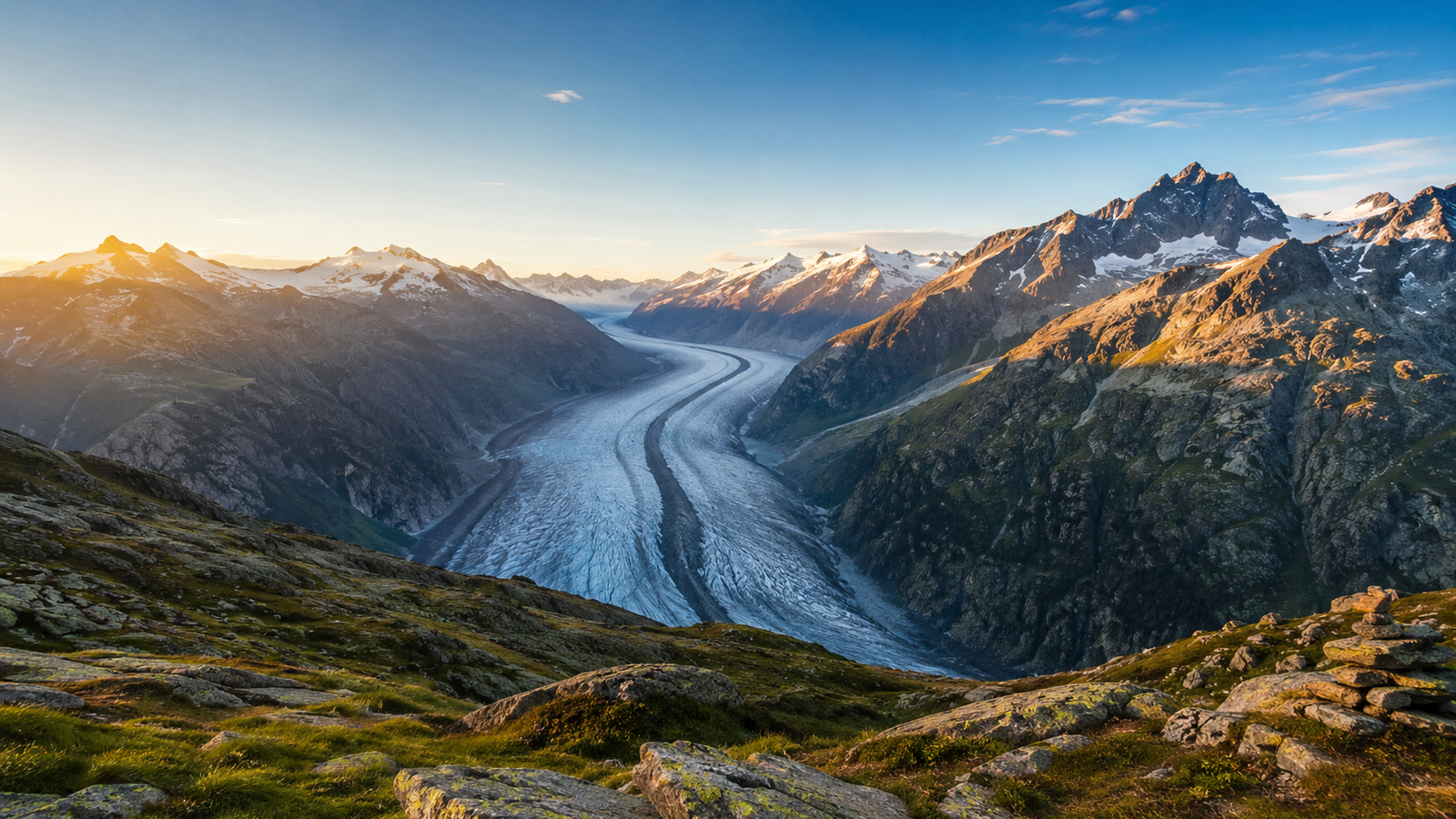
Moosfluh, Riederalp, Valais
Moosfluh: Discover One of Switzerland’s Most Spectacular Glacier Viewpoints
Perched high above the Great Aletsch Glacier, Moosfluh offers one of the most remarkable mountain panoramas in the Swiss Alps. Located in the heart of the Aletsch Arena in the canton of Valais, this celebrated viewpoint places visitors face-to-face with the largest glacier in the Alps. The combination of dramatic ice formations, rugged peaks, and accessible mountain infrastructure has made Moosfluh one of the region’s most sought-after destinations for hikers, photographers, and nature enthusiasts.
Unlike many Alpine viewpoints that require demanding climbs, Moosfluh can be reached relatively easily by mountain transport, making its extraordinary scenery accessible to a wide range of visitors. Standing at the viewpoint, travelers gain a rare perspective on the immense scale of the glacier and the surrounding landscape that forms part of a UNESCO World Heritage region.
Where the Alps Meet the Ice
Moosfluh lies above the mountain village of Riederalp within the Aletsch Arena, a car-free resort area overlooking the Upper Valais. The viewpoint occupies a strategic position along the northern side of the Great Aletsch Glacier, providing a sweeping outlook across the glacier’s vast ice flow and the mountain chain beyond.
The Great Aletsch Glacier stretches through the Bernese Alps and represents one of Europe’s most significant natural landmarks. From Moosfluh, visitors can observe how the glacier winds through the mountains, carving its way between towering ridges and creating a landscape shaped by thousands of years of geological processes.
The surrounding terrain consists of alpine meadows, rocky slopes, and protected natural environments that support a variety of mountain flora and fauna. On clear days, the visibility extends far beyond the glacier itself, revealing numerous prominent Alpine summits across the horizon.
A Landscape Recognized Worldwide
The region surrounding Moosfluh forms part of the Swiss Alps Jungfrau-Aletsch area, recognized by UNESCO for its outstanding natural value. This protected landscape showcases some of the most impressive glacial formations and mountain scenery in Europe.
The Great Aletsch Glacier has long attracted scientists, explorers, and travelers interested in understanding the power of glaciers and the evolution of mountain environments. The glacier’s immense scale demonstrates the forces that continue to shape the Alps, while the surrounding peaks create a dramatic setting that highlights the region’s geological significance.
For many visitors, Moosfluh serves as an introduction to this extraordinary natural heritage. Interpretive information found throughout the area helps explain the glacier’s formation, movement, and environmental importance, allowing travelers to appreciate the landscape beyond its visual beauty.
The Signature Viewpoint Experience
The defining attraction of Moosfluh is its direct overlook of the Great Aletsch Glacier. The viewing areas provide expansive perspectives that reveal the glacier’s distinctive curves, crevasses, and ice formations.
Unlike distant glacier viewpoints, Moosfluh offers a closer visual connection to the ice, allowing visitors to better understand its immense size and texture. Seasonal changes create different viewing experiences throughout the year. During summer, the contrast between green alpine slopes and the glacier’s pale surface creates striking scenery. In colder months, snow-covered mountains enhance the dramatic character of the landscape.
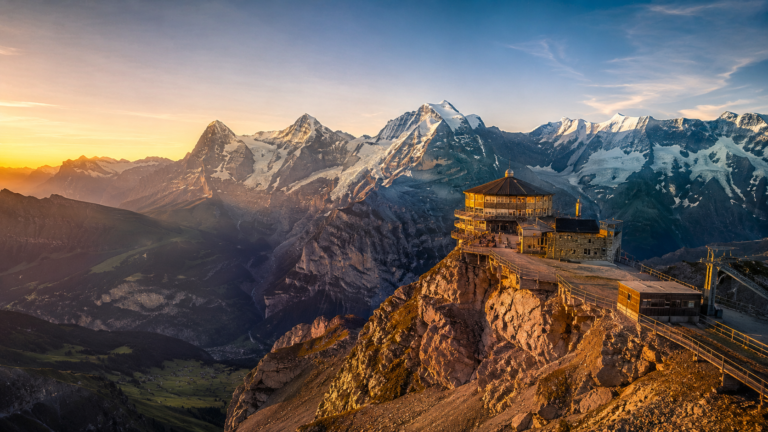
Photographers frequently regard Moosfluh as one of the best locations in Switzerland for capturing glacier panoramas. Sunrise and late-afternoon light can add depth and color to the surrounding mountains, producing memorable images of the region.
Hiking Through the Aletsch Arena
Moosfluh is an important gateway to a network of hiking trails that traverse the Aletsch Arena. Well-marked routes connect the viewpoint with neighboring mountain areas, alpine villages, and additional observation points overlooking the glacier.
Many visitors choose to combine a visit to Moosfluh with walks along the glacier panorama trails. These routes provide changing perspectives of the ice while passing through scenic mountain terrain rich in Alpine character.
The hiking network accommodates different experience levels, from relatively gentle walks suitable for casual visitors to longer routes that appeal to experienced hikers seeking a full-day adventure. Along the way, travelers encounter mountain landscapes that showcase the diversity of the region’s natural environment.
A Destination for Every Season
Although summer is often considered the most popular period for visiting Moosfluh, the destination offers year-round appeal.
During warmer months, hiking, sightseeing, and photography dominate visitor activities. Alpine flowers bloom across mountain meadows, and clear weather frequently provides excellent visibility across the glacier and surrounding peaks.
Autumn introduces vibrant colors and quieter trails, creating a more tranquil atmosphere. The changing light conditions often produce particularly attractive photography opportunities.
Winter transforms the area into a snowy mountain landscape. The Aletsch Arena becomes a hub for winter sports, with ski slopes and mountain facilities operating throughout the season. Even for non-skiers, the journey to Moosfluh can be rewarding thanks to the spectacular winter scenery.
Spring brings a gradual transition between seasons as snow retreats from lower elevations and mountain landscapes begin to awaken after winter.
Getting to Moosfluh
Access to Moosfluh begins in the Rhone Valley, where visitors travel to the mountain resorts of the Aletsch Arena. Since Riederalp is a car-free village, travelers typically continue their journey using mountain transport systems that connect the valley floor with the resort area.
From Riederalp, a cableway provides convenient access to Moosfluh. The transportation network is designed to make the viewpoint accessible while preserving the natural character of the surrounding environment.
Switzerland’s extensive rail system makes the region relatively easy to reach from major cities such as Zurich, Geneva, Bern, and Lausanne. Visitors can combine train travel with local transport connections to arrive comfortably at the destination.
Cultural Identity and Alpine Heritage
While Moosfluh is primarily known for its natural attractions, it also reflects the cultural traditions of the Valais region. Mountain communities in this part of Switzerland have maintained strong connections to Alpine life for generations.
Traditional architecture, local cuisine, and seasonal customs remain important elements of the visitor experience throughout the Aletsch Arena. The coexistence of tourism, conservation, and mountain culture contributes to the distinctive character of the region.
Visitors often find that exploring nearby villages enhances their understanding of how local communities have adapted to life in a high-mountain environment while preserving their cultural identity.
Practical Tips for Visitors
Weather conditions in the Alps can change quickly, even during summer. Layered clothing, sturdy footwear, and sun protection are recommended for any visit.
Checking mountain transport schedules before departure can help ensure a smooth journey. Visitors planning to hike should select routes appropriate to their fitness level and allow sufficient time for changing weather conditions.
Early morning and late afternoon are often excellent times for photography, particularly when sunlight illuminates the glacier and surrounding peaks from lower angles.
Why Moosfluh Continues to Captivate Travelers
Few places in Switzerland provide such an immediate connection to the power and scale of Alpine nature. Moosfluh combines easy accessibility with world-class scenery, offering visitors an unforgettable encounter with the Great Aletsch Glacier. Whether arriving for a short sightseeing stop, a panoramic hike, or a photography expedition, travelers experience a landscape that reveals both the beauty and significance of one of Europe’s most remarkable natural treasures.