Lavaux Vineyard Terraces, Lavaux, Switzerland
Lavaux Vineyard Terraces: Where Centuries of Winemaking Meet Lake Geneva’s Spectacular Shores
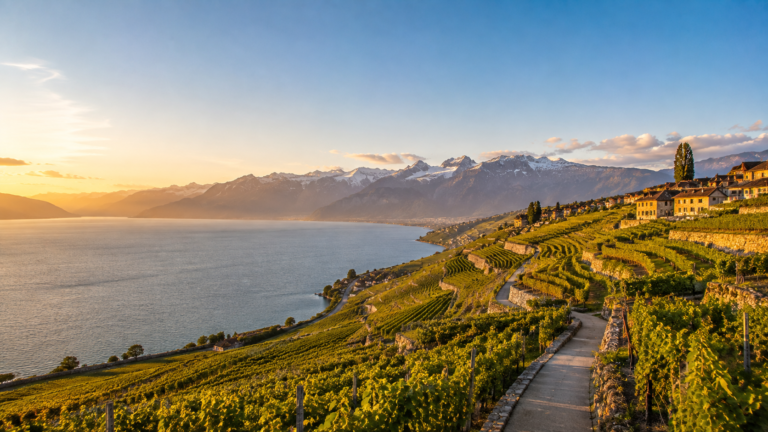
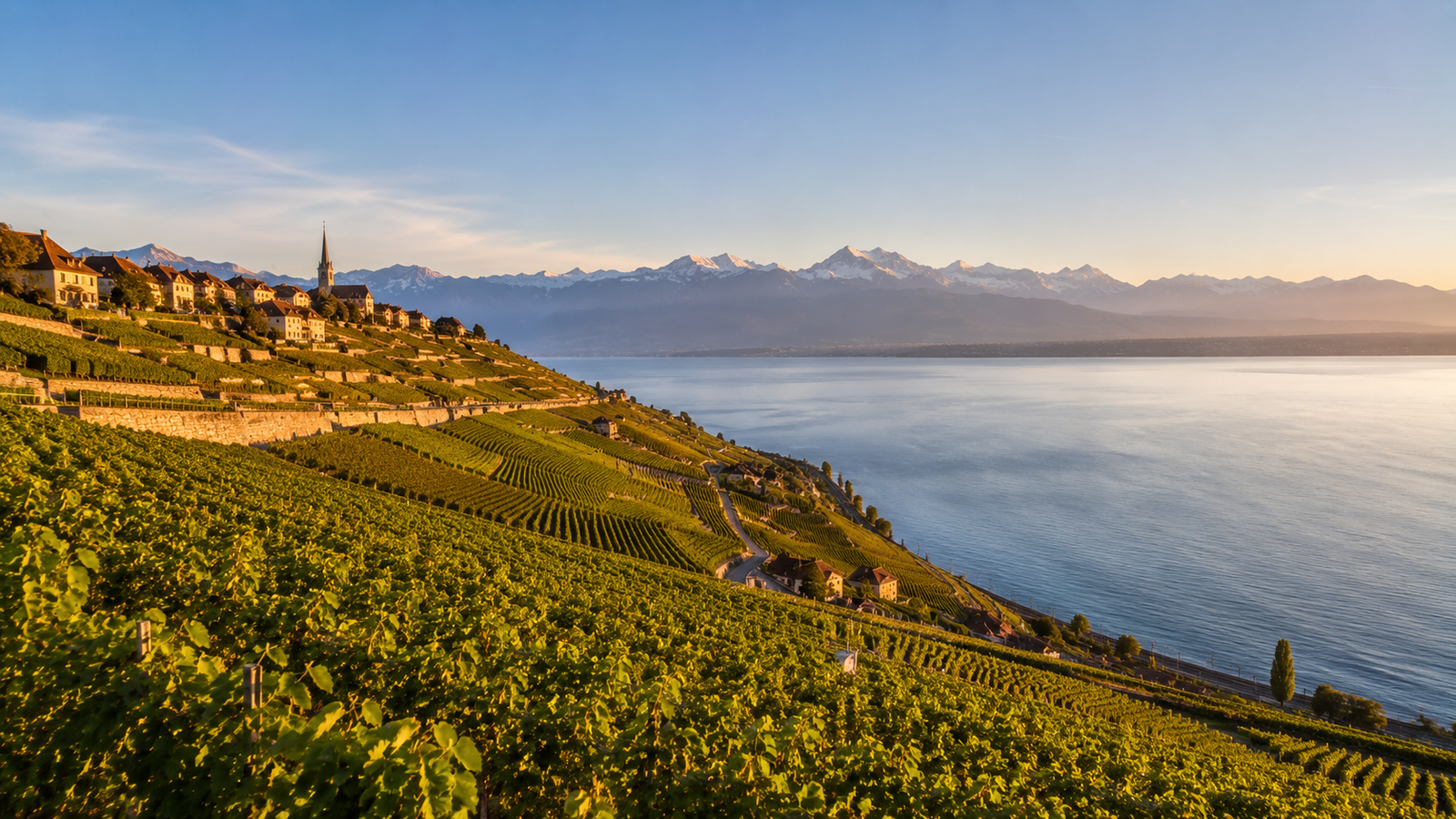
From a distance, the slopes above Lake Geneva appear almost sculpted by nature. A closer look reveals something even more remarkable. The geometric patterns climbing the hillsides are not natural formations but the result of centuries of human effort. Stone walls, narrow paths, and carefully cultivated vineyards stretch across the landscape in a breathtaking display of agricultural craftsmanship.
The Lavaux Vineyard Terraces, located between Lausanne and Vevey in the canton of Vaud, represent one of Switzerland’s most distinctive cultural landscapes. Overlooking Lake Geneva and framed by the distant Alps, this UNESCO World Heritage Site is celebrated not only for its beauty but also for the enduring relationship between people, land, and winemaking traditions.
For travelers exploring western Switzerland, Lavaux offers far more than scenic views. It tells a story of history, culture, agriculture, and sustainability that continues to shape the region today.
A Landscape Built Over Generations
Unlike many famous natural attractions, Lavaux is largely a human-created landscape.
The vineyard terraces visible today developed gradually over centuries as local communities transformed steep slopes into productive agricultural land. Extensive stone retaining walls were constructed to support vineyards and maximize exposure to sunlight.
Historical records show that viticulture has deep roots in the region, and medieval monastic communities played an important role in developing and managing vineyard cultivation. Over time, generations of winegrowers expanded and maintained the terraces, creating the distinctive appearance that defines Lavaux today.
The result is a cultural landscape where natural geography and human ingenuity are inseparable. Every terrace, pathway, and stone wall reflects centuries of adaptation to the challenges and opportunities presented by the lakeside terrain.
Why UNESCO Recognized Lavaux
In 2007, the Lavaux Vineyard Terraces were inscribed on the UNESCO World Heritage List.
The designation recognizes the site’s exceptional cultural significance and its remarkable preservation of a living vineyard landscape. Unlike historical sites that exist primarily as monuments, Lavaux remains an active agricultural region where wine production continues to play an essential role in local life.
UNESCO highlighted the way the terraces illustrate the long-standing interaction between people and their environment. The landscape demonstrates how communities successfully adapted steep terrain to create a sustainable agricultural system while maintaining its character across generations.
This recognition places Lavaux among Switzerland’s most important heritage destinations and reinforces its international significance.
The Three Suns of Lavaux
Local winegrowers often refer to the concept of the “three suns” of Lavaux.
The first sun shines directly from the sky. The second is reflected from the surface of Lake Geneva. The third comes from the stone walls that absorb heat during the day and release it gradually after sunset.
Together, these influences create favorable growing conditions for grape cultivation. The combination of sunlight, lake moderation, and heat retention contributes to the region’s distinctive viticultural environment.
Although modern science provides a more detailed explanation of local microclimates, the traditional expression remains an important part of Lavaux’s cultural identity and reflects generations of observation by vineyard workers.
Villages Among the Vineyards
One of Lavaux’s greatest attractions is the collection of picturesque villages scattered throughout the terraces.
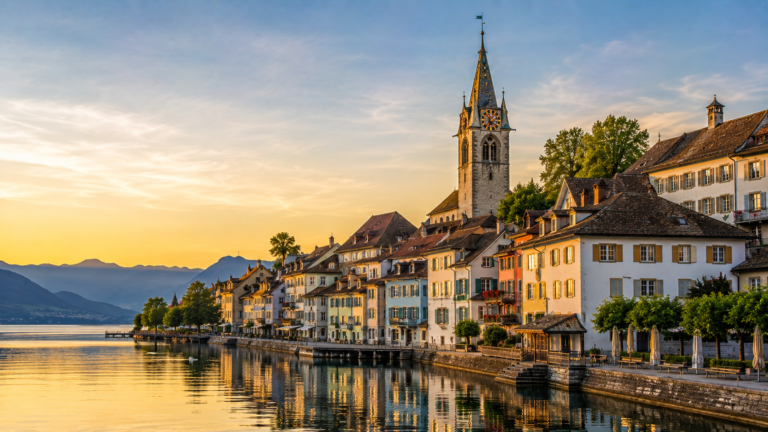
Communities such as Saint-Saphorin, Epesses, Rivaz, and Lutry blend seamlessly into the vineyard landscape. Their narrow streets, historic buildings, church towers, and lakeside settings create some of the most photogenic scenes in Switzerland.
Each village possesses its own character while sharing a common connection to viticulture. Walking through these settlements offers insight into how vineyard life has shaped local architecture, traditions, and community identity.
Rather than functioning solely as tourist destinations, these villages remain active communities where residents continue to live and work among the vineyards.
Walking Through the Vineyards
The most rewarding way to experience Lavaux is on foot.
A network of trails and vineyard paths allows visitors to move directly through the terraced landscape. Walking routes connect villages, viewpoints, and vineyard sections while providing constantly changing perspectives of Lake Geneva and the surrounding Alps.
The experience differs dramatically throughout the year. Spring introduces fresh growth in the vineyards, summer brings lush green slopes, autumn transforms the landscape with golden colors associated with the grape harvest, and winter reveals the underlying geometry of the terraces.
The relatively gentle elevation changes along many routes make exploration accessible to a broad range of visitors.
At nearly every turn, the combination of vineyards, lake views, and mountain scenery creates memorable photographic opportunities.
Wine and Regional Identity
Wine remains central to Lavaux’s identity.
The region is particularly known for vineyards planted with Chasselas grapes, a variety closely associated with the canton of Vaud. While wine appreciation attracts many visitors, Lavaux’s appeal extends beyond wine tourism alone.
The vineyards shape local culture, influence culinary traditions, and contribute significantly to the area’s visual character. Restaurants, wine cellars, and cultural events often celebrate this heritage, helping visitors understand the deep connection between agriculture and regional identity.
Even travelers with little interest in wine frequently find themselves captivated by the landscape itself.
The View That Never Stands Still
Part of Lavaux’s enduring appeal lies in its constantly changing scenery.
Morning light illuminates the eastern slopes. Afternoon sunshine reflects off Lake Geneva. Weather systems moving across the Alps create shifting patterns of shadow and color. Seasonal transitions continually reshape the appearance of the vineyards.
The surrounding setting enhances the experience. Across the lake, the French Alps rise dramatically on the horizon, while nearby towns and villages add cultural depth to the panorama.
Because the landscape changes throughout the day and year, many visitors find that a single visit never feels sufficient.
Reaching Lavaux
One reason for Lavaux’s popularity is its accessibility.
The vineyard terraces lie along one of Switzerland’s most important transportation corridors, making them easy to reach from Lausanne, Vevey, Montreux, and Geneva. Rail connections follow the shoreline of Lake Geneva, while local routes provide access to villages within the UNESCO area.
Many travelers combine a visit to Lavaux with other destinations around Lake Geneva, creating a broader exploration of the region’s cultural and natural attractions.
Despite its accessibility, however, much of Lavaux retains a peaceful atmosphere that encourages slow travel and careful observation.
A Living Landscape of Heritage and Beauty
Some UNESCO sites preserve the remains of vanished civilizations. Lavaux is different. It remains alive.
The terraces continue to produce grapes. Villages remain inhabited. Stone walls are maintained. Traditions are passed from one generation to the next. Visitors encounter not a museum but a working landscape shaped by centuries of human dedication.
Standing among the vineyards with Lake Geneva stretching below and the Alps rising beyond, it becomes clear why Lavaux is regarded as one of Switzerland’s most extraordinary destinations. The terraces are more than an agricultural achievement. They represent a rare harmony between nature, culture, and history—one that continues to define the region and inspire everyone who experiences it.