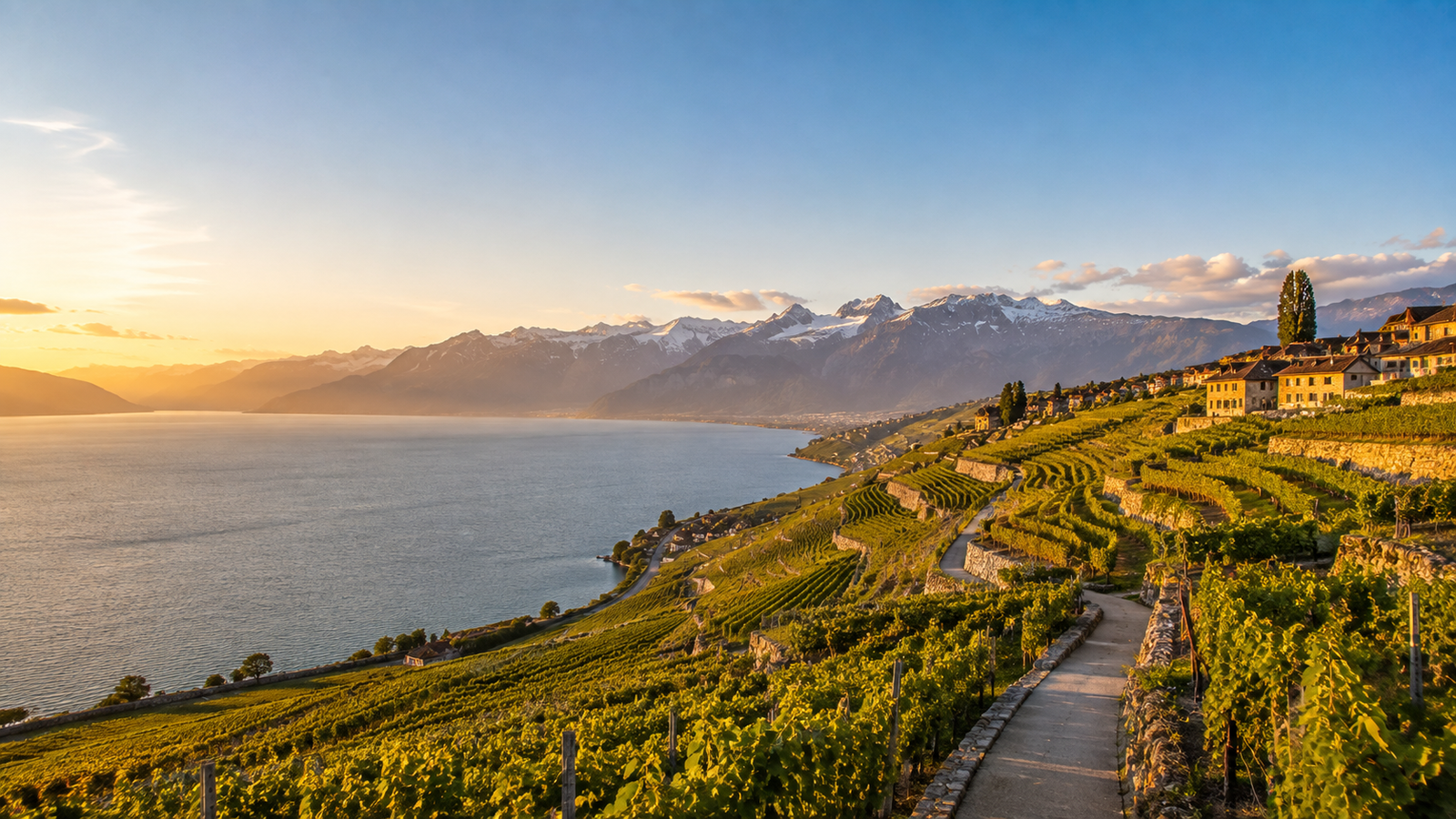
Lavaux Vineyards Trail, Lutry
Walking Through Switzerland’s Wine Country: Discover the Spectacular Lavaux Vineyards Trail
Few landscapes in Switzerland reveal such a close relationship between people and nature as the Lavaux Vineyards Trail. Stretching along the northern shores of Lake Geneva between Lausanne and Vevey, this remarkable network of walking paths winds through centuries-old vineyards, historic wine-growing villages, and some of the most celebrated scenery in the country.
The trail is more than a hiking route. It is a journey through a living cultural landscape where generations of winegrowers have shaped steep hillsides overlooking one of Europe’s most beautiful lakes. Recognized as a UNESCO World Heritage Site, Lavaux combines history, agriculture, architecture, and breathtaking scenery into an experience unlike anywhere else in Switzerland.
For travelers seeking an authentic encounter with Swiss heritage, the Lavaux Vineyards Trail offers a rare opportunity to explore a landscape that remains both economically active and culturally significant.
A UNESCO Landscape Built Over Centuries
The story of Lavaux is inseparable from wine.
The vineyard terraces visible today are the result of centuries of cultivation. Historical evidence shows that viticulture in the region expanded significantly during the Middle Ages, particularly through the efforts of monasteries and local landowners who developed the steep slopes above Lake Geneva.
Over time, thousands of stone terraces were constructed to create suitable growing conditions for grapevines. These walls transformed the landscape into a complex agricultural system that remains largely intact today.
UNESCO recognized Lavaux as a World Heritage Site in 2007, citing its outstanding cultural landscape and the enduring relationship between local communities and the environment. Unlike historic sites preserved as museums, Lavaux continues to function as an active wine-producing region, allowing visitors to experience a tradition that remains central to local life.
Walking through the vineyards reveals a landscape that has evolved gradually rather than being designed all at once. Every terrace, stone wall, and pathway reflects centuries of human effort.
The Trail Between Lausanne and Vevey
The Lavaux Vineyards Trail is not a single path but a collection of interconnected routes linking villages, vineyards, and viewpoints throughout the region.
Many visitors choose to walk sections between picturesque communities such as Lutry, Cully, Epesses, Rivaz, Saint-Saphorin, and Vevey. The routes vary in length and difficulty, making the area accessible to casual walkers as well as dedicated hikers.
The trails generally follow the contours of the vineyard terraces, providing continuous views across Lake Geneva toward the French Alps. Because the paths pass directly through working vineyards, travelers gain an unusually close perspective on the region’s agricultural heritage.
Unlike mountain hikes that focus primarily on reaching a summit, the Lavaux experience emphasizes immersion. The scenery unfolds gradually through vineyard lanes, village streets, and elevated viewpoints.
A Landscape Shaped by Three Suns
Local winegrowers often describe Lavaux as benefiting from “three suns.”
The first is the sun shining directly on the vineyards. The second comes from sunlight reflected by the surface of Lake Geneva. The third is the heat retained and radiated by the stone terrace walls.
This combination creates favorable conditions for grape cultivation and contributes to the distinctive character of Lavaux wines.
Visitors walking the trails can easily observe how geography influences agriculture. The steep slopes maximize sunlight exposure, while the lake helps moderate temperatures throughout the growing season.
These natural advantages have supported viticulture in the region for generations and continue to define Lavaux’s identity today.
Villages That Preserve the Character of Old Lavaux
One of the most rewarding aspects of the trail is the opportunity to explore the villages scattered throughout the vineyards.
Cully serves as one of the region’s central hubs and offers lakeside charm alongside wine-related attractions. Epesses, surrounded by vineyards, is known for its narrow streets and traditional architecture. Rivaz occupies a dramatic position between steep vineyard slopes and the lake, while Saint-Saphorin is often regarded as one of the most picturesque settlements along the route.
These communities remain closely connected to wine production and provide a glimpse into everyday life within the UNESCO landscape.
Stone houses, historic fountains, small chapels, and vineyard cellars contribute to an atmosphere that feels distinctly different from Switzerland’s larger urban centers.
Many visitors find that the villages are as memorable as the scenery itself.
The Role of Wine in the Lavaux Experience
Wine culture is present throughout the trail.
The Chasselas grape variety dominates the region and has become closely associated with Vaud’s wine traditions. Vineyards stretch across the hillsides in carefully maintained terraces, producing wines that reflect local soils and microclimates.
Wine tasting opportunities are available throughout the region, often in family-owned wineries and village cellars. These experiences allow visitors to connect the landscape they have explored on foot with the products created from it.
Even travelers who are not wine enthusiasts often develop a deeper appreciation for the region after learning how geography, climate, and tradition combine to shape local viticulture.
The vineyards are not simply scenic decorations; they remain the economic and cultural foundation of Lavaux.
Seasonal Beauty Along the Trail
Every season offers a different perspective on Lavaux.
Spring brings fresh green growth to the vines and clear views across the lake. The landscape feels vibrant and renewed as vineyards emerge from winter dormancy.
Summer provides long daylight hours and ideal walking conditions. Vineyards are lush, village terraces are lively, and Lake Geneva sparkles under bright skies.
Autumn is particularly popular because the vineyards display shades of gold, amber, and red during the harvest season. The visual transformation of the terraces creates one of Switzerland’s most photogenic landscapes.
Winter offers a quieter atmosphere. Although the vineyards appear more subdued, the reduced visitor numbers and crisp lake views provide a different kind of appeal.
Regardless of the season, the combination of vineyards, villages, mountains, and water remains striking.
Photography and Panoramic Viewpoints
The Lavaux Vineyards Trail is widely regarded as one of Switzerland’s premier photography destinations.
Elevated sections of the route reveal expansive views across Lake Geneva, while lower paths provide intimate perspectives of vineyard walls and historic villages.
Morning light often illuminates the lake and Alps, while late afternoon creates dramatic shadows across the terraces. Sunset can be especially memorable as warm light reflects from both the water and vineyard slopes.
Photographers frequently find themselves stopping every few minutes because the landscape continuously changes with elevation, angle, and weather conditions.
The visual diversity of Lavaux helps explain why it has become one of the most recognizable cultural landscapes in Switzerland.
Easy Access Without a Car
One of Lavaux’s greatest advantages is its accessibility.
The region is served by Switzerland’s efficient public transportation network, including rail connections between Lausanne, Vevey, and smaller communities throughout the vineyard area. Stations are located near many trail sections, allowing visitors to customize walks according to their interests and available time.
This flexibility makes Lavaux suitable for day trips, half-day excursions, or longer explorations.
Travelers can begin in one village, walk through the vineyards, and return by train from another location without needing a private vehicle.
For first-time visitors to Switzerland, this convenience enhances the overall appeal of the destination.
The Lavaux Vineyards Trail succeeds because it offers much more than beautiful scenery. It provides a rare opportunity to walk through a landscape where history, agriculture, culture, and nature remain deeply connected. Between the stone terraces, historic villages, and sweeping views of Lake Geneva, visitors encounter a region that continues to evolve while preserving traditions that have shaped it for centuries. It is a place best explored slowly, one vineyard path at a time.