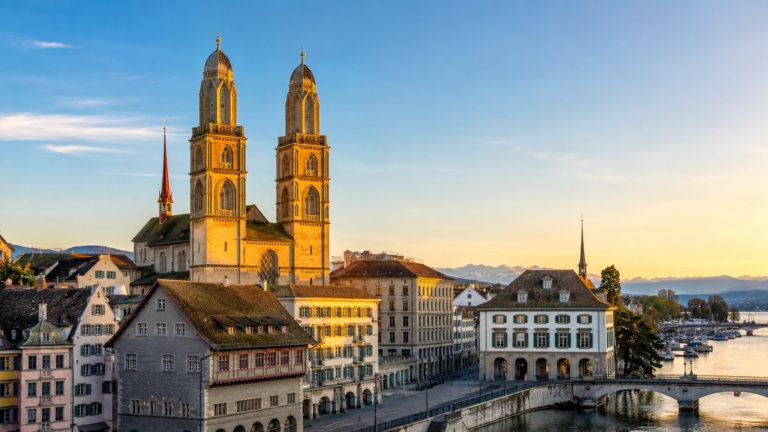
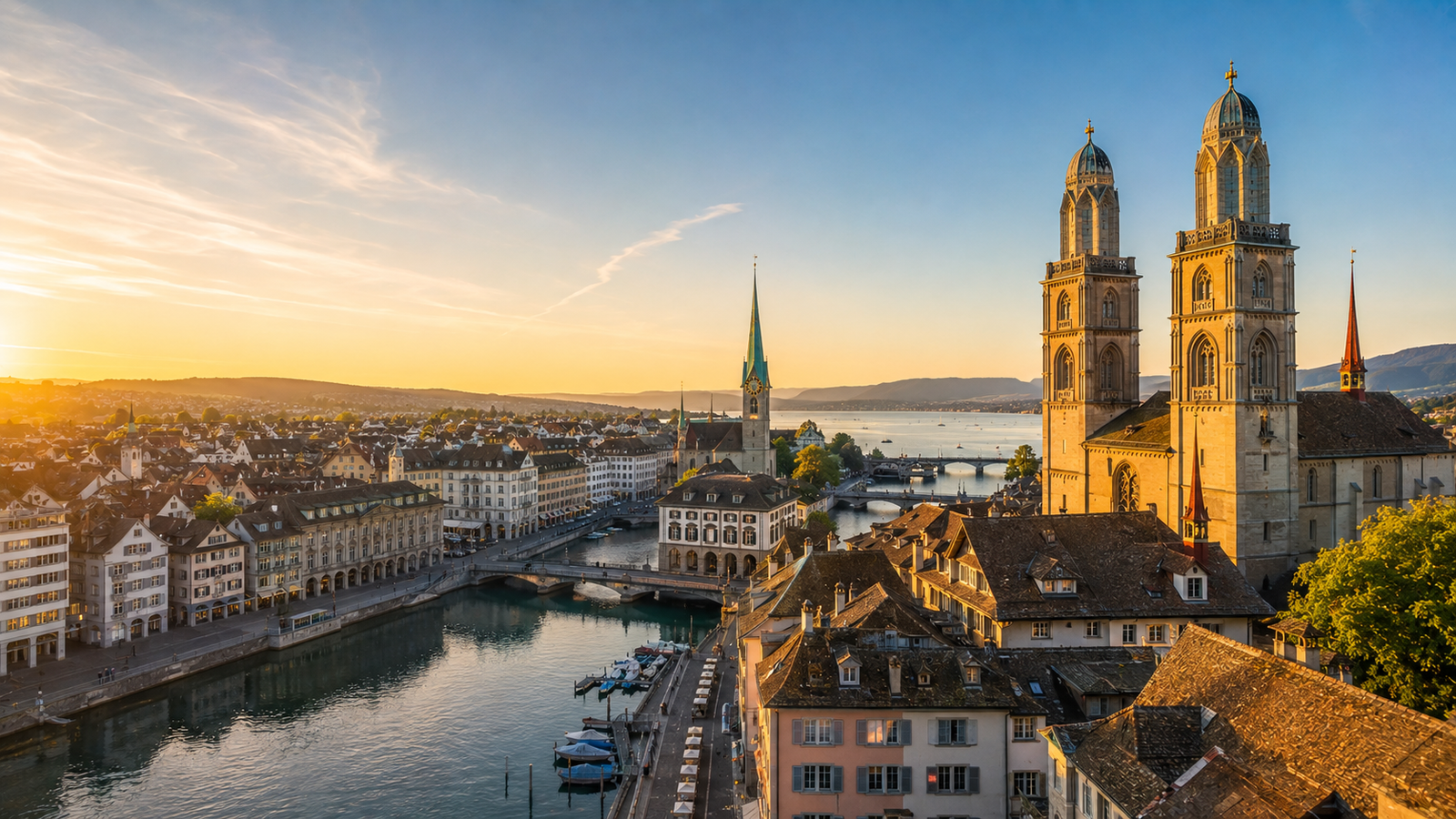
Zurich Old Town (Altstadt), Zurich, Switzerland
Zurich Old Town: Exploring the Historic Heart of Switzerland’s Largest City
Modern Zurich is often associated with finance, innovation, and one of the world’s highest standards of living. Yet behind the city’s contemporary reputation lies a remarkably preserved historic center where centuries of Swiss history remain visible in stone, wood, and winding streets. Zurich Old Town, known locally as Altstadt, occupies both sides of the Limmat River and serves as the cultural and historical core of Switzerland’s largest city.
For visitors, the district offers something increasingly rare in major urban centers: a place where medieval foundations, religious landmarks, riverside promenades, and lively public squares coexist within a compact, walkable landscape. Exploring Zurich Old Town is less about checking off attractions and more about understanding how the city evolved from a Roman settlement into a modern European powerhouse.
A Historic Center Shaped by More Than 2,000 Years
The story of Zurich Old Town reaches far beyond the medieval period visible today. Archaeological discoveries confirm that the area has been inhabited since Roman times. Around the first century AD, the Romans established a customs station and settlement known as Turicum, from which Zurich eventually derived its name.
As centuries passed, the settlement grew around strategic trade routes connecting northern and southern Europe. During the Middle Ages, Zurich emerged as an important commercial center and later became a member of the Old Swiss Confederacy in 1351.
Much of the historic character visible today reflects this long development. Narrow lanes follow routes established hundreds of years ago, while guild houses, churches, and public squares reveal the economic and political forces that shaped the city.
Unlike many European historic centers that suffered extensive wartime destruction, Zurich preserved much of its architectural heritage, allowing visitors to experience an urban landscape that still reflects its historical origins.
The Limmat River: The Old Town’s Lifeline
The geography of Zurich Old Town is inseparable from the Limmat River. Flowing northward from Lake Zurich, the river divides the historic district into two distinct sections connected by numerous bridges.
The eastern bank contains several of the city’s most significant religious landmarks, while the western side features historic neighborhoods, commercial streets, and cultural institutions. Together, these areas form a unified district where the river acts as both a dividing line and a central gathering place.
Walking along the waterfront reveals one of the Old Town’s defining qualities: the seamless integration of urban life and natural scenery. Church spires rise above historic rooftops, while riverside cafés, public terraces, and pedestrian walkways create inviting spaces throughout the year.
The views become particularly memorable during the evening when historic buildings illuminate the water and the city takes on a quieter atmosphere.
Grossmünster and the Story of the Reformation
Among Zurich’s most recognizable landmarks is Grossmünster, the twin-towered church that dominates the skyline above the river.
According to tradition, the church stands on the site associated with Zurich’s patron saints, Felix and Regula. Construction of the Romanesque structure began during the 12th century, and its distinctive towers have become one of the city’s defining visual symbols.
Beyond its architectural significance, Grossmünster occupies an important place in European history. During the early 16th century, reformer Huldrych Zwingli preached here, helping launch the Swiss-German Reformation. His ideas transformed religious life in Zurich and influenced broader Protestant movements across Europe.
Today, visitors are drawn not only by the church’s historical importance but also by its impressive architecture and views over the Old Town.
Fraumünster and the Legacy of Marc Chagall
A short walk across the river stands another of Zurich’s most celebrated landmarks: Fraumünster.
Founded in the 9th century as a women’s abbey, the church played a significant role in the city’s early development. Over time, it became one of Zurich’s most influential religious institutions.
While the church’s history attracts many visitors, its modern artistic treasures are equally famous. The stained-glass windows created by renowned artist Marc Chagall in the 1970s transform the interior with vivid color and light. These works have become among the most admired examples of modern religious art in Switzerland.
The contrast between medieval architecture and contemporary artistic expression reflects the broader character of Zurich itself—a city that respects its past while embracing innovation.
Discovering the Alleys, Squares, and Hidden Corners
The greatest appeal of Zurich Old Town often lies beyond its major landmarks.
A network of narrow streets, hidden courtyards, and historic squares invites exploration without a fixed itinerary. Decorative facades, ornate bay windows, and centuries-old buildings reveal details that many visitors miss when moving quickly between attractions.
Neighborhoods such as Niederdorf are especially popular for their lively atmosphere. During the day, visitors browse independent shops, bookstores, and cafés. In the evening, the area becomes one of Zurich’s most vibrant social districts, with restaurants and gathering places filling the historic streets.
Many former guild houses remain visible throughout the Old Town. These elegant buildings reflect the powerful merchant and craft organizations that once played central roles in Zurich’s political and economic life.
Lindenhof: The Hill That Watches Over Zurich
For a broader perspective on the city, many locals and visitors head to Lindenhof.
This elevated square occupies the site of a former Roman fortification and later medieval stronghold. Today, it serves as a peaceful public space shaded by trees and overlooking the Limmat River.
From Lindenhof, visitors gain one of the finest panoramic views of Zurich Old Town. Church towers, historic rooftops, river bridges, and the distant lake combine to create a scene that captures the city’s unique blend of history and modernity.
The location also provides a reminder of Zurich’s strategic importance through different historical eras, from Roman settlement to medieval trading center and contemporary global city.
A Walk Through Culture, Shopping, and Daily Life
One of the defining characteristics of Zurich Old Town is that it remains a living part of the city rather than a preserved historical showcase.
Residents live, work, shop, and socialize throughout the district. This active urban life gives the area an authenticity that distinguishes it from destinations focused solely on tourism.
Nearby Bahnhofstrasse, one of Europe’s most famous shopping streets, begins at the edge of the historic center. Museums, galleries, theaters, and cultural venues surround the Old Town, creating opportunities to combine historical exploration with contemporary experiences.
Seasonal markets, public festivals, and cultural events further reinforce the district’s role as the social heart of Zurich.
Visitors arriving by train can reach the Old Town easily from Zurich’s central railway station, making it one of Switzerland’s most accessible historic districts.
The most rewarding approach is often the simplest: walk slowly, cross the bridges repeatedly, pause in the squares, and allow the city to reveal itself. Zurich Old Town rewards curiosity. Every church tower, riverside path, hidden courtyard, and historic facade contributes to a story that spans more than two millennia—a story that continues to unfold at the center of modern Switzerland.