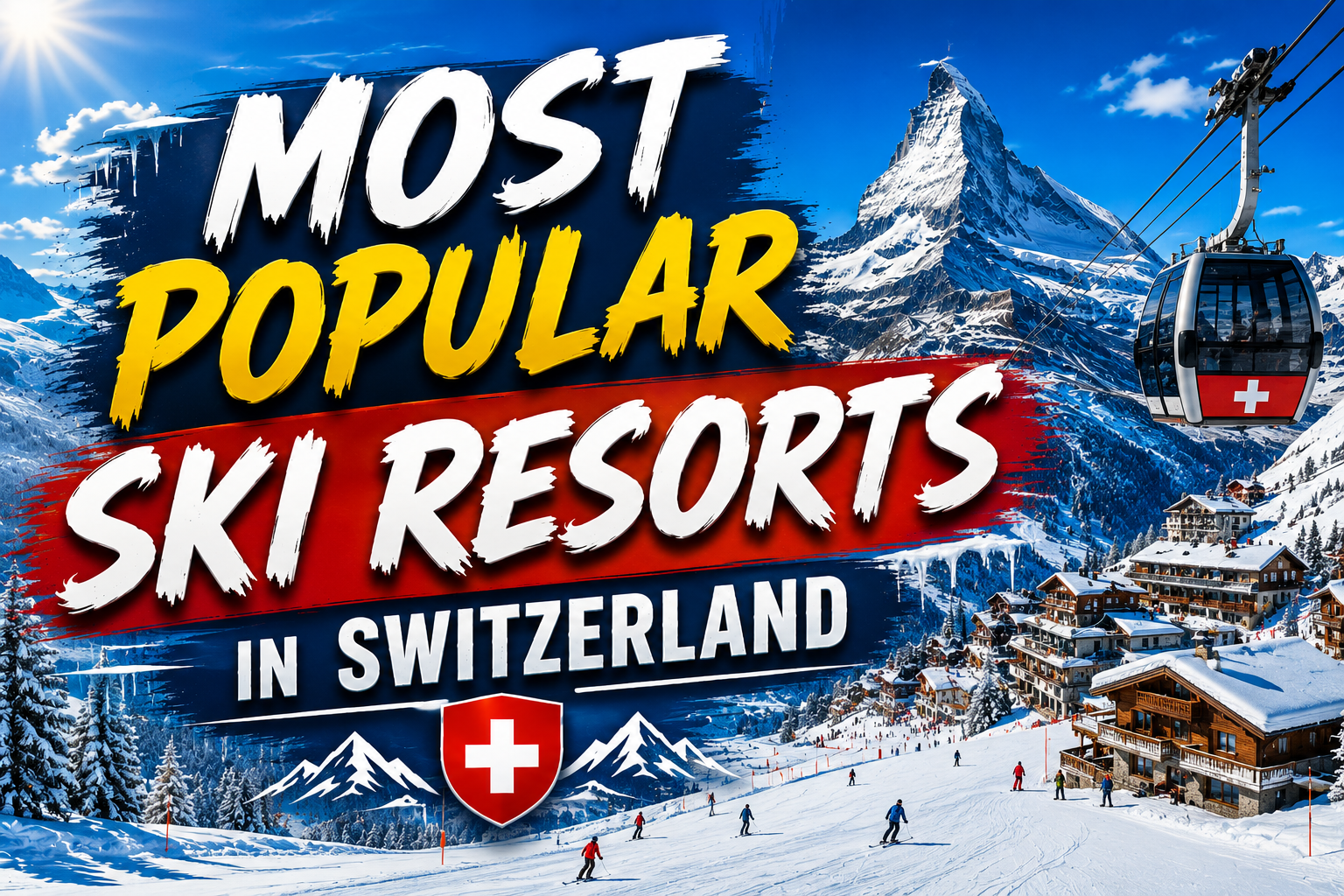
Most Popular Ski Resorts in Switzerland: Where the World Comes to Ski
Skiing is woven into Switzerland’s identity in a way few countries can match. The Alps dominate much of the landscape, shaping communities, transportation networks, architecture, and tourism traditions that have evolved over generations.
Yet popularity in Swiss skiing is not measured solely by the number of slopes. The country’s most celebrated resorts have earned international reputations because they offer something distinctive—whether it is legendary mountain scenery, historic prestige, extensive terrain, luxury hospitality, or year-round Alpine culture.
Together, these destinations form a collection of mountain communities that continue to define Switzerland’s place at the center of global winter tourism.
Zermatt: The Resort Beneath the Matterhorn
If one resort symbolizes Swiss skiing internationally, it is Zermatt.
Set beneath the iconic Matterhorn, the village combines dramatic scenery with one of Europe’s most extensive high-altitude ski areas. The resort’s elevation helps provide reliable snow conditions, while its international connections attract visitors from around the world.
What distinguishes Zermatt is the way the landscape dominates every experience. The Matterhorn appears almost constantly, creating one of the most recognizable skiing backdrops anywhere on Earth.
The car-free village, traditional wooden chalets, luxury hotels, and mountain railways contribute to an atmosphere that feels unmistakably Swiss.
For many travelers, skiing in Zermatt is as much about the mountain itself as it is about the slopes.
St. Moritz: The Birthplace of Alpine Winter Tourism
Long before skiing became a global industry, St. Moritz was already welcoming winter visitors.
Located in the Engadin Valley of Graubünden, the resort played a pivotal role in establishing winter tourism in the Alps during the nineteenth century. Its reputation for luxury, elegance, and international prestige remains intact today.
The resort has hosted multiple Winter Olympic Games and numerous international sporting events, reinforcing its place in skiing history.
Yet St. Moritz is more than a luxury destination. Frozen lakes, sunny weather, expansive mountain terrain, and distinctive Engadin culture make it one of Switzerland’s most complete winter experiences.
Verbier: The Capital of Big-Mountain Skiing
In southwestern Switzerland, Verbier attracts advanced skiers seeking challenging terrain and vast mountain landscapes.
As part of the extensive 4 Vallées ski region, the resort offers access to some of the largest interconnected skiing areas in the country.
Verbier’s reputation rests on steep descents, off-piste opportunities, and a vibrant mountain culture that blends sport with social life. The village has become particularly popular among international visitors drawn by its energetic atmosphere and spectacular Alpine setting.
While beginners and intermediate skiers can also enjoy the area, Verbier is especially admired for pushing the boundaries of Alpine adventure.
Davos-Klosters: Tradition Meets Modern Skiing
Davos is often associated with international conferences and economic forums, but it is also one of Switzerland’s premier winter sports destinations.
Together with neighboring Klosters, the region offers diverse skiing across multiple mountain sectors connected by efficient transportation systems.
Davos combines urban amenities with mountain access in a way few Alpine resorts can replicate. Museums, cultural venues, wellness facilities, and sporting traditions create a destination that extends beyond skiing alone.
Klosters, meanwhile, retains a quieter and more traditional character, providing visitors with a different perspective on Alpine life.
Together, they form one of Switzerland’s most versatile ski regions.
Grindelwald: Skiing in the Shadow of Giants
The Bernese Oberland contains some of Switzerland’s most famous landscapes, and Grindelwald sits at the center of them.
Surrounded by the Eiger, Mönch, and Jungfrau mountains, the village offers access to skiing terrain while delivering some of the most dramatic scenery in the Alps.
Unlike resorts built primarily around winter tourism, Grindelwald remains a living mountain community with deep cultural roots. Visitors experience traditional Alpine architecture, historic railways, and mountain traditions alongside modern tourism infrastructure.
For travelers seeking classic Swiss mountain scenery, few destinations rival Grindelwald.
Arosa Lenzerheide: A Modern Alpine Success Story
The connection of Arosa and Lenzerheide through modern lift infrastructure created one of Switzerland’s most attractive ski regions.
The linked resort combines extensive terrain with family-friendly facilities, reliable snow conditions, and impressive mountain landscapes.
Arosa retains much of its historic mountain-resort character, while Lenzerheide contributes broad ski areas and contemporary visitor amenities.
The result is a destination that appeals equally to families, recreational skiers, and experienced winter sports enthusiasts.
Wengen: A Village Connected to Skiing History
Perched above the Lauterbrunnen Valley, Wengen occupies a unique place in Swiss skiing culture.
The car-free village is best known internationally as the home of the Lauberhorn downhill race, one of the most famous events in Alpine ski racing.
Visitors arriving by mountain railway encounter a landscape that appears largely unchanged by modern traffic. Wooden chalets, mountain views, and traditional village life create an atmosphere rarely found in larger resorts.
Skiing here combines world-class terrain with a deep sense of Alpine heritage.
Saas-Fee: The Glacier Village
Often called the “Pearl of the Alps,” Saas-Fee is surrounded by numerous peaks exceeding 4,000 meters in elevation.
Its high-altitude location and glacier environment have made it one of Switzerland’s most dependable snow destinations.
Like Zermatt, Saas-Fee limits vehicle traffic, helping preserve a peaceful mountain atmosphere. The surrounding glaciers provide spectacular scenery while supporting skiing opportunities across an extended season.
For visitors prioritizing snow reliability and dramatic high-mountain environments, Saas-Fee remains one of Switzerland’s most respected resorts.
Andermatt: A Rising Star in the Central Alps
For much of its history, Andermatt was known primarily as a strategic Alpine crossroads. In recent years, however, it has emerged as one of Switzerland’s most notable ski destinations.
Located in central Switzerland, the resort benefits from substantial snowfall and access to extensive mountain terrain.
Investment in modern infrastructure has elevated Andermatt’s international profile while preserving the character of its historic Alpine setting.
The combination of authentic village atmosphere and expanding ski opportunities has made it increasingly popular among experienced skiers.
The Enduring Appeal of Swiss Skiing
The popularity of Switzerland’s leading ski resorts is rooted in more than snow conditions or mountain statistics. Each destination reflects a different aspect of Alpine life.
Zermatt represents iconic mountain scenery. St. Moritz embodies winter tourism history. Verbier showcases adventure. Davos-Klosters blends culture with sport. Grindelwald highlights the grandeur of the Bernese Alps. Wengen preserves tradition, while Saas-Fee and Andermatt demonstrate how mountain communities continue to evolve.
Together, these resorts explain why Switzerland remains one of the world’s most influential skiing destinations. They are not simply places to ski—they are places where Alpine landscapes, culture, history, and modern tourism meet in ways found nowhere else.