Nestlé Expands Mexico Commitment as Investment Plan Reaches $2 Billion
Swiss food and beverage group Nestlé plans to invest $2 billion in Mexico during President Claudia Sheinbaum’s six-year administration, doubling a previously announced investment commitment as the company looks to expand its operations and strengthen domestic agricultural supply chains.
Sheinbaum announced the expanded commitment after meeting Nestlé Chief Executive Officer Philipp Navratil at the National Palace in Mexico City. The plan includes a new distribution center in Zumpango, north of the capital, along with measures intended to support domestic coffee production and bring additional farmers into the company’s supply network. The agricultural initiatives are scheduled for 2028 through 2030.
The announcement raises the company’s planned investment from $1 billion, which it unveiled in January 2025, to $2 billion over the current administration’s term. It represents a larger commitment to a market where Nestlé has maintained operations for decades, although the announcement does not establish that the entire amount has already been spent.
The distinction matters: the figure describes a planned investment commitment, not completed expenditure. The pace of implementation, the allocation of funds among individual projects and the resulting economic benefits will depend on how the company executes its plans.
A larger commitment than the original expansion plan
Nestlé announced its initial $1 billion investment in Mexico in January 2025, describing the three-year program as a way to increase production capacity for various products manufactured in the country.
The announcement was made by the Mexican government as part of its Plan México economic initiative. At the time, the investment was presented as a commitment to strengthen domestic production and expand the company’s manufacturing activities.
The latest announcement increases the planned total to $2 billion during Sheinbaum’s administration. According to Mexican media reports published on October 8 and 9, 2026, the expanded commitment followed a meeting between the president and Navratil at the National Palace.
The additional investment is intended to support Nestlé’s expansion in Mexico. However, the publicly reported announcement does not provide a complete breakdown of the extra $1 billion by project, factory, product line or year.
That missing detail makes it difficult to determine how much of the increase will go toward new facilities, how much will support existing operations and how the spending will be distributed over the remainder of the administration.
Distribution infrastructure planned north of Mexico City
One of the identified projects is a new distribution center in Zumpango, located north of Mexico City. The facility is part of Nestlé’s broader expansion plans for the Mexican market.
Distribution infrastructure can help a manufacturer coordinate the movement of products between production facilities, storage locations, retailers and other customers. Its practical contribution depends on factors such as capacity, location, operating efficiency and connections to transport networks.
For Nestlé, the proposed center adds a logistics component to an investment plan that also includes production and agricultural sourcing. The announcement, however, does not specify the center’s construction timetable, investment cost, storage capacity or expected employment figures.
Those details will be important in assessing the project’s direct economic impact. A confirmed construction schedule and operating plan would also help establish when the facility could begin contributing to the company’s distribution network.
Nestlé’s overall commitment is broader than this one project, and the distribution center should not be treated as accounting for the entire $2 billion investment.
Coffee farming becomes part of the expansion strategy
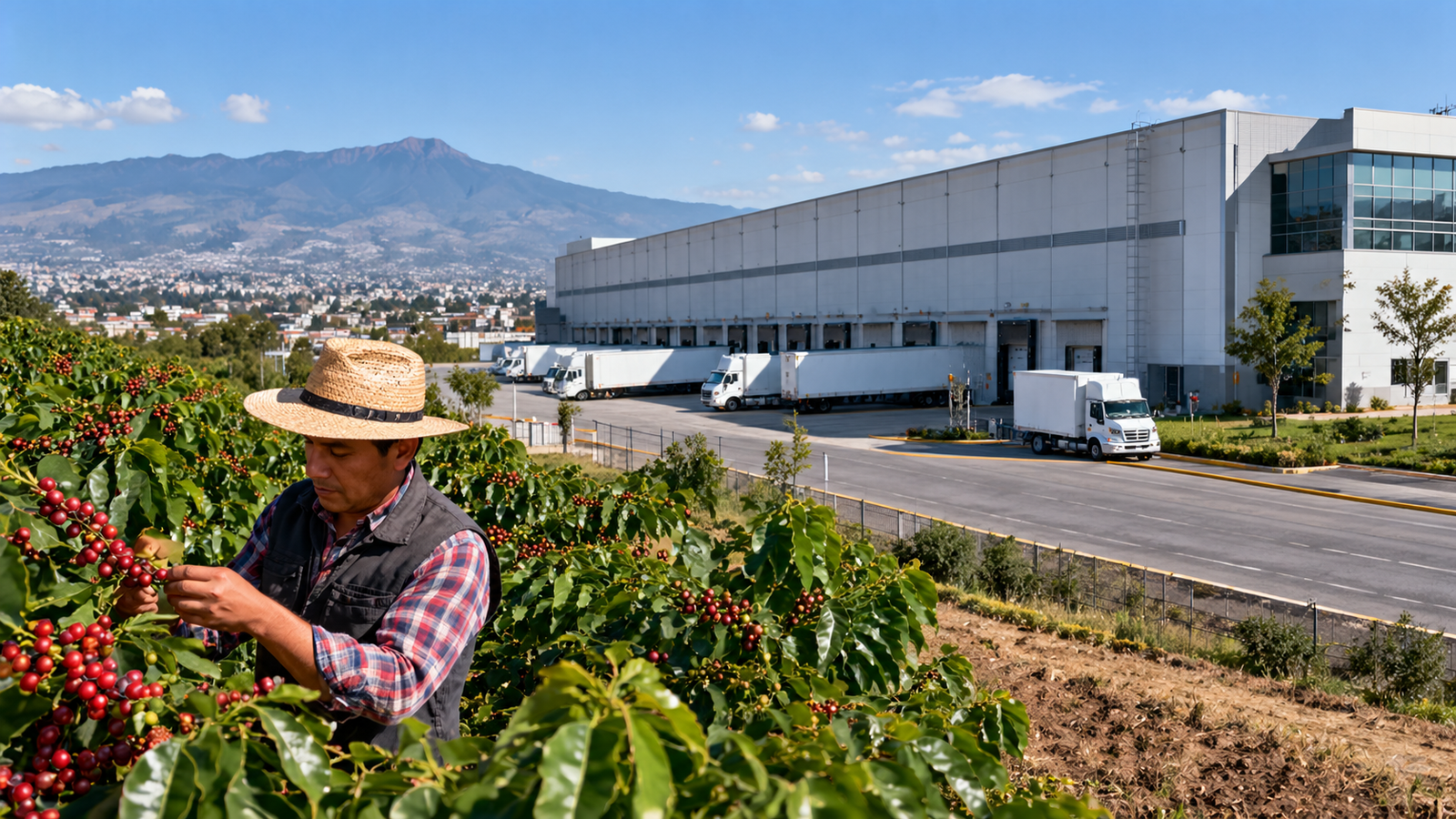
Agriculture is another central element of the plan. Between 2028 and 2030, Nestlé intends to distribute 70,000 coffee plants and support the participation of 2,000 coffee farmers in Veracruz, a Mexican state with an established coffee-growing sector.
The initiative is designed to strengthen domestic production and local sourcing. By working with coffee growers, the company can develop relationships with suppliers within Mexico rather than relying exclusively on sourcing arrangements outside the country.
For participating farmers, the practical value of the initiative will depend on how the program is implemented. Access to planting material is one element of agricultural development, but long-term results also depend on growing conditions, crop management, financing, productivity and access to buyers.
The announcement does not specify whether the 70,000 plants will be distributed equally among participating farmers, nor does it provide projected yields or a timetable for when the new plants would begin producing commercially viable harvests.
It also does not detail the precise form of support that the 2,000 farmers will receive. Further information about technical assistance, purchasing agreements and program eligibility would help clarify the potential benefits for local agricultural communities.
Nevertheless, the inclusion of coffee farming gives the investment plan a supply-chain dimension beyond manufacturing and distribution. It connects the company’s expansion to agricultural production and the businesses that supply raw materials.
Mexico’s effort to attract business investment
The expanded commitment comes as the Mexican government seeks to encourage private-sector investment and strengthen domestic production through Plan México.
The initiative provides a policy framework for promoting economic activity and investment in the country. Nestlé’s original $1 billion commitment in January 2025 was announced in that context, with the stated objective of increasing production capacity.
For governments, major corporate investment announcements can signal business confidence and create opportunities for additional economic activity. New facilities may generate construction work and operational jobs, while manufacturing expansion can create demand for suppliers, transport services and other supporting businesses.
However, the value of an announced investment cannot be measured solely by its headline amount. Actual outcomes depend on how much capital is deployed, whether projects are completed as planned, how many jobs are created and how much domestic economic activity results.
The Nestlé announcement does not yet provide sufficient figures to calculate those effects. It would therefore be premature to assign a specific employment or gross domestic product impact to the additional commitment.
A long-standing presence in the Mexican market
Nestlé has operated in Mexico for approximately 95 years, according to the company’s Mexican operations. Its local activities include products manufactured in the country and sold to Mexican consumers. In October 2025, Nestlé México highlighted more than 200 locally produced products participating in the government’s Hecho en México initiative, which promotes goods made domestically.
That established presence provides context for the new investment plan. The announcement concerns an expansion of existing operations rather than the company’s initial entry into the Mexican market.
It also illustrates how a multinational headquartered in Switzerland can connect its international business with local manufacturing, logistics and agricultural suppliers. For Mexico, the central question is how much of the planned spending translates into lasting domestic productive capacity.
For Nestlé, the combination of distribution infrastructure and coffee sourcing could strengthen several parts of its operating network. The extent of that improvement will become clearer as project details and implementation milestones emerge.
What happens next?
The investment program now faces the practical task of moving from an announced commitment to completed projects. The distribution center’s development schedule, the allocation of capital and the rollout of the coffee-growing initiative will be important indicators of progress.
The 2028–2030 agricultural timetable provides a defined period for the planned distribution of coffee plants and engagement with farmers. Further disclosures about production targets, supplier participation and implementation would allow observers to assess whether the program is meeting its objectives.
For now, the clearest development is the doubling of Nestlé’s announced investment commitment in Mexico from $1 billion to $2 billion during Sheinbaum’s administration. The plan combines business expansion with measures to strengthen local sourcing, but its eventual economic contribution will depend on the projects delivered and the results they produce.