
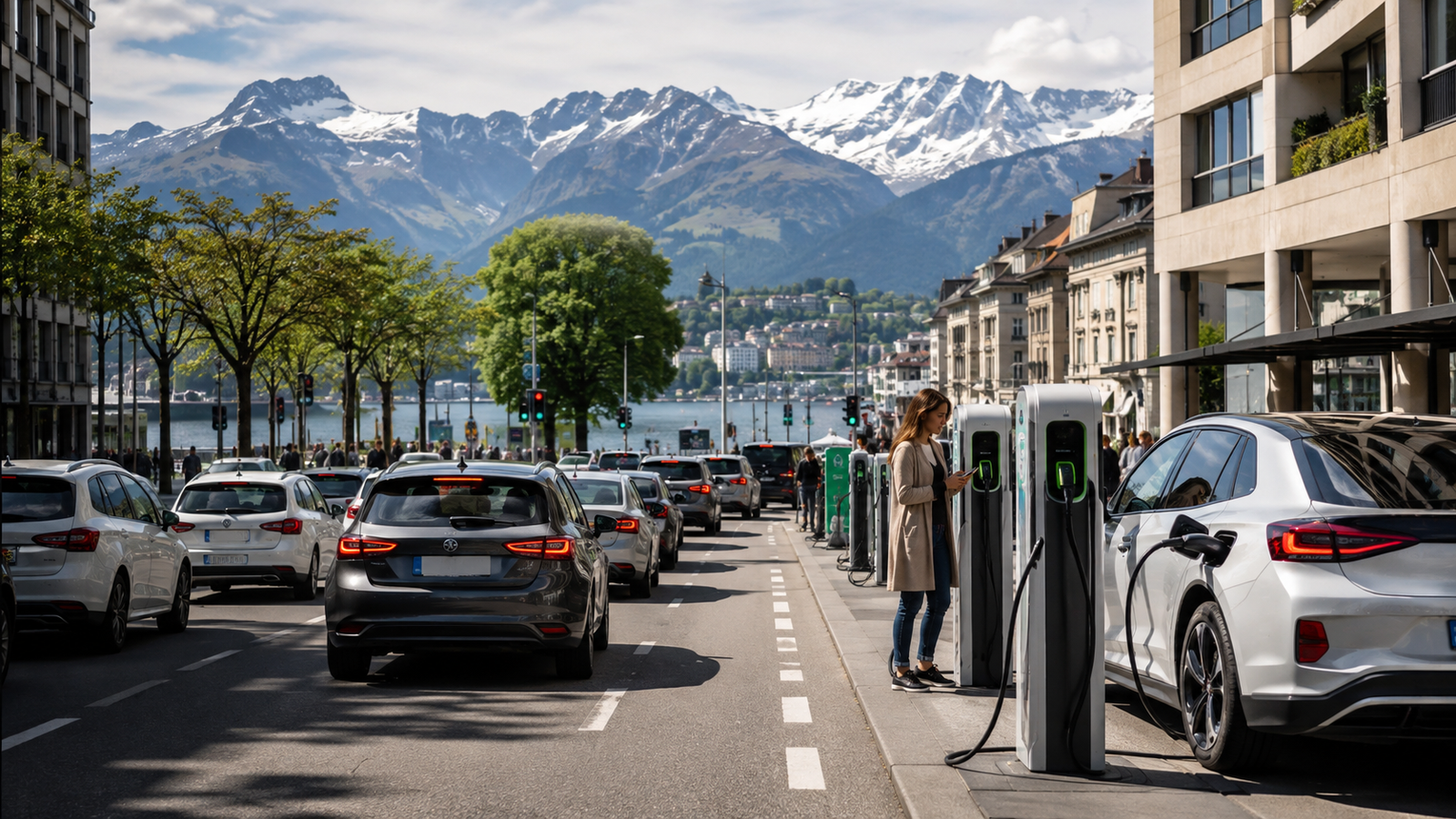
Swiss Electric Vehicle Fleet Still Below 6% as Adoption Gradually Expands
Fully electric vehicles now account for a relatively small but steadily growing share of Switzerland’s passenger car fleet, highlighting both the progress and the challenges facing the country’s transition toward cleaner transportation.
Newly compiled mobility data shows that battery-electric vehicles represent about 5.5% of all registered passenger cars in Switzerland. While the figure reflects continued growth in electric mobility, it also illustrates how traditional gasoline and diesel vehicles continue to dominate Swiss roads despite years of policy support, technological advances, and expanding charging infrastructure.
The latest figures arrive as governments, automakers, and environmental organizations across Europe intensify efforts to reduce greenhouse-gas emissions from transport. Road transportation remains a significant source of emissions, making vehicle electrification a central component of climate strategies in Switzerland and neighboring European countries.
Although fully electric vehicles still account for only a modest share of the total Swiss passenger car fleet, the situation looks different when examining new vehicle purchases. Recent registration data shows that electric models have gained a far larger presence among newly sold cars than within the overall vehicle stock. In 2025, battery-electric vehicles represented more than one-fifth of newly registered passenger cars in Switzerland, demonstrating that consumer adoption continues to move upward even as older combustion-engine vehicles remain in circulation.
The contrast between new sales and the overall fleet reflects a common challenge facing many countries. Cars typically remain on the road for years, meaning changes in purchasing habits can take considerable time to transform the national vehicle population. Even when electric vehicles capture a growing share of new registrations, the broader fleet changes gradually as older vehicles are retired.
Swiss authorities and industry groups have promoted electric mobility through a combination of infrastructure investments, policy initiatives, and public awareness campaigns. Expanding charging networks, improvements in battery technology, and a wider selection of vehicle models have helped make electric cars more practical for many households and businesses.
However, the pace of adoption has not always met expectations. Official statistics showed that the share of all-electric vehicles among new registrations dipped slightly during 2024 compared with the previous year before recovering in 2025. Analysts have pointed to factors such as economic uncertainty, vehicle costs, and changing consumer preferences as influences on purchasing decisions.
Industry observers note that Switzerland’s electric vehicle market occupies a unique position within Europe. The country benefits from a largely low-carbon electricity system, making electric vehicles particularly effective at reducing transportation emissions compared with regions that rely more heavily on fossil-fuel-generated electricity. At the same time, Switzerland’s mountainous geography, high vehicle ownership rates, and diverse regional transportation needs create specific challenges for rapid electrification.
The growth of electric mobility is also occurring within a broader shift toward alternative powertrains. Hybrid and plug-in hybrid vehicles have gained popularity alongside fully electric models, providing consumers with additional options as they move away from conventional engines. Research and market data indicate that electrified vehicles collectively represent a substantial share of new passenger car sales in Switzerland, suggesting that consumer attitudes toward vehicle technology are evolving even if the overall fleet remains largely conventional.
Across Europe, electric vehicle adoption continues to advance, though progress varies considerably by country. Markets such as Norway have achieved exceptionally high rates of electric vehicle sales, while other nations remain at earlier stages of the transition. European electric vehicle registrations rebounded strongly during 2025, supported by stricter emissions targets, expanding model availability, and ongoing investments in charging infrastructure.
Global trends point in the same direction. International energy analysts project continued growth in electric vehicle sales worldwide, with electric cars expected to represent an increasingly significant portion of annual vehicle purchases. Even so, converting national vehicle fleets remains a long-term process that will likely take many years.
For Switzerland, the latest figures underscore both achievement and unfinished work. The number of electric vehicles on Swiss roads has increased substantially over the past decade, and battery-powered models are becoming a more common sight in cities, suburbs, and rural communities alike. Yet with fully electric vehicles still representing only about one in every twenty passenger cars, the country remains in the early stages of transforming its overall vehicle fleet.
Whether adoption accelerates further will depend on several factors, including vehicle affordability, charging availability, consumer confidence, energy policy, and broader economic conditions. What appears increasingly clear is that electric mobility is continuing to gain ground in Switzerland, even if the transition is unfolding more gradually than some policymakers and environmental advocates had hoped.