Switzerland Earns High Marks in Global Renewable Energy Transition Rankings
Switzerland has secured a place among the world’s strongest-performing countries in renewable energy development, reinforcing its reputation as a leader in sustainable infrastructure while highlighting the growing role of clean electricity in the country’s long-term energy strategy.
The recognition comes as governments across Europe accelerate efforts to expand renewable power generation, strengthen energy security and reduce greenhouse-gas emissions. Switzerland’s performance reflects decades of investment in hydropower, combined with rapidly increasing deployment of solar energy and broader efforts to modernize the national energy system.
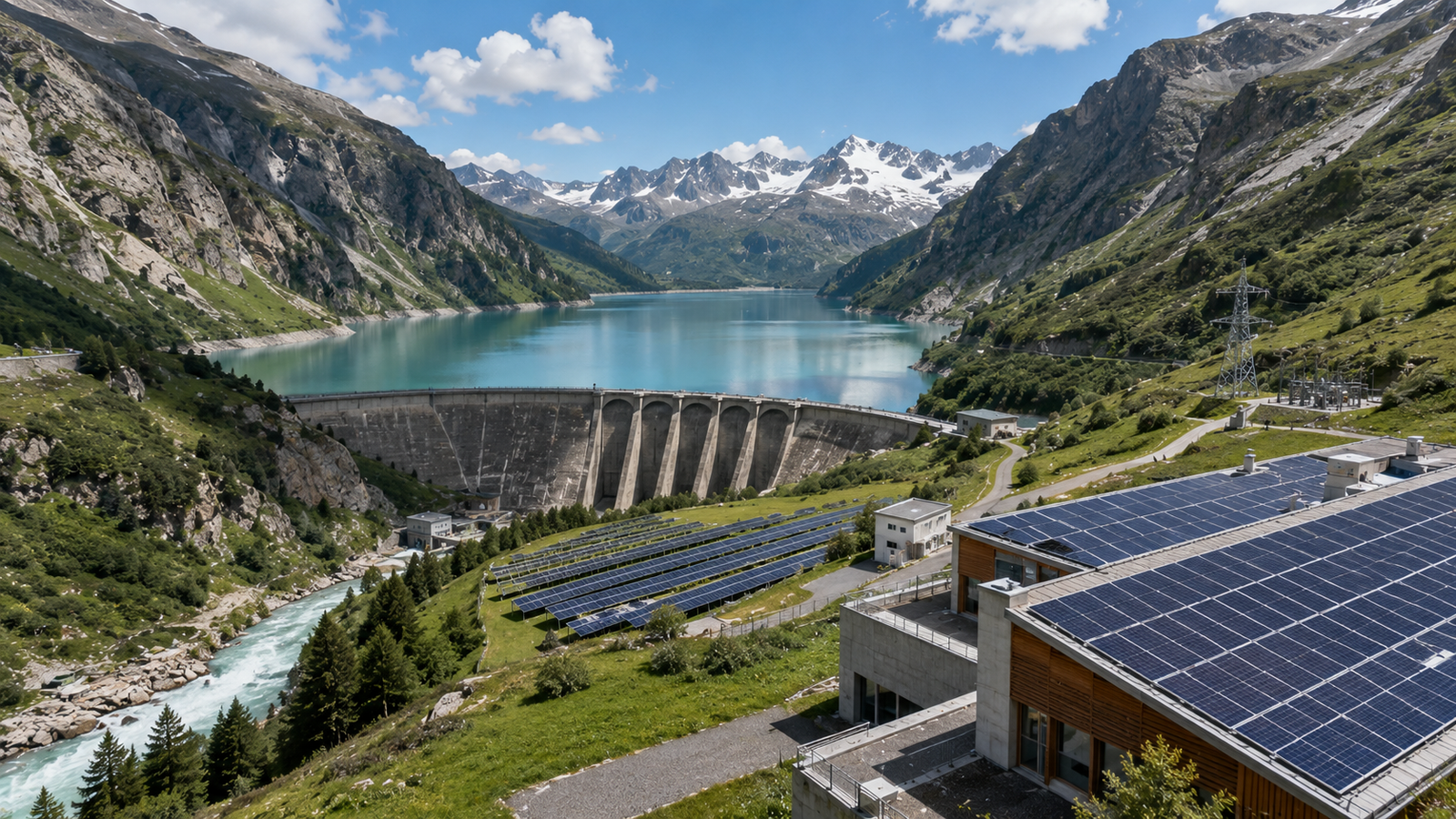
Energy experts note that Switzerland occupies a unique position within the global renewable-energy landscape. Unlike many countries that rely heavily on fossil fuels, Switzerland has long generated a substantial share of its electricity from renewable sources, particularly hydropower. Mountainous terrain, extensive river systems and large reservoirs have enabled the country to develop one of Europe’s most established hydroelectric networks.
Hydropower remains the backbone of Switzerland’s renewable electricity sector. According to energy statistics, hydroelectric facilities account for well over half of domestic electricity production, making them the single most important source of renewable power in the country. The infrastructure has provided Switzerland with a relatively low-carbon electricity system for decades while supporting grid stability and energy independence.
While hydropower continues to dominate, the most significant recent growth has occurred in solar energy. Over the past several years, Switzerland has experienced a sharp increase in photovoltaic installations across residential, commercial and industrial sectors. Industry data show that solar capacity has expanded dramatically since the early 2010s, with annual installations reaching record levels in recent years.
The rapid expansion of solar generation has become a key element of the country’s broader Energy Strategy 2050, a national framework designed to reduce dependence on fossil fuels while supporting the transition toward cleaner sources of power. Policymakers have introduced incentives, regulatory reforms and investment programs intended to accelerate renewable deployment and improve long-term energy security.
Switzerland’s strong ranking also reflects its broader environmental performance. International assessments have consistently placed the country among global leaders in environmental governance, emissions management and sustainable development. Analysts point to a combination of technological innovation, stable institutions and long-term planning as important factors behind the country’s success.
The achievement arrives during a period of significant change in global energy markets. Governments worldwide are investing heavily in renewable technologies as concerns over climate change, geopolitical tensions and energy affordability reshape policy priorities. Renewable energy sources accounted for the majority of newly installed electricity-generation capacity worldwide in recent years, highlighting the accelerating pace of the global energy transition.
For Switzerland, maintaining a leadership position presents both opportunities and challenges. While the country benefits from extensive renewable infrastructure, future electricity demand is expected to increase as transportation, heating and industry become increasingly electrified. Meeting that demand will require continued investment in generation capacity, storage technologies and transmission networks.
One area receiving particular attention is winter energy supply. Switzerland’s electricity consumption typically rises during colder months, while solar production declines seasonally. Policymakers and grid operators are therefore exploring ways to improve storage capacity, enhance cross-border electricity cooperation and strengthen domestic renewable generation to ensure reliable supply throughout the year.
The expansion of local renewable-energy communities and decentralized generation is also expected to play a growing role in the country’s future energy landscape. New regulatory frameworks are being introduced to encourage local electricity sharing, improve grid efficiency and increase the use of renewable power at the community level. Researchers believe such initiatives could help maximize the value of distributed solar generation while reducing pressure on national infrastructure.
Despite its achievements, Switzerland still faces areas for improvement. Experts note that hydropower provides most of the country’s renewable electricity, while wind power remains relatively limited compared with several neighboring European countries. Expanding the diversity of renewable sources may become increasingly important as energy demand grows and climate conditions evolve.
At the same time, renewable-energy projects often involve complex trade-offs. New solar installations, transmission infrastructure and energy-storage projects can generate debates over environmental impacts, land use and local acceptance. Balancing clean-energy goals with conservation priorities remains an important challenge for policymakers across Europe, including Switzerland.
Nevertheless, Switzerland’s position among the top-performing renewable-energy nations highlights the effectiveness of long-term investment and policy consistency. The country’s combination of mature hydropower resources, rapidly expanding solar capacity and ambitious climate objectives has created a strong foundation for future growth.
As governments around the world seek to accelerate the transition to cleaner energy systems, Switzerland’s experience demonstrates how sustained infrastructure development and strategic planning can support both environmental goals and energy security. With renewable technologies continuing to evolve and investment levels rising, the country appears well positioned to remain a significant player in the global clean-energy transition in the years ahead.