
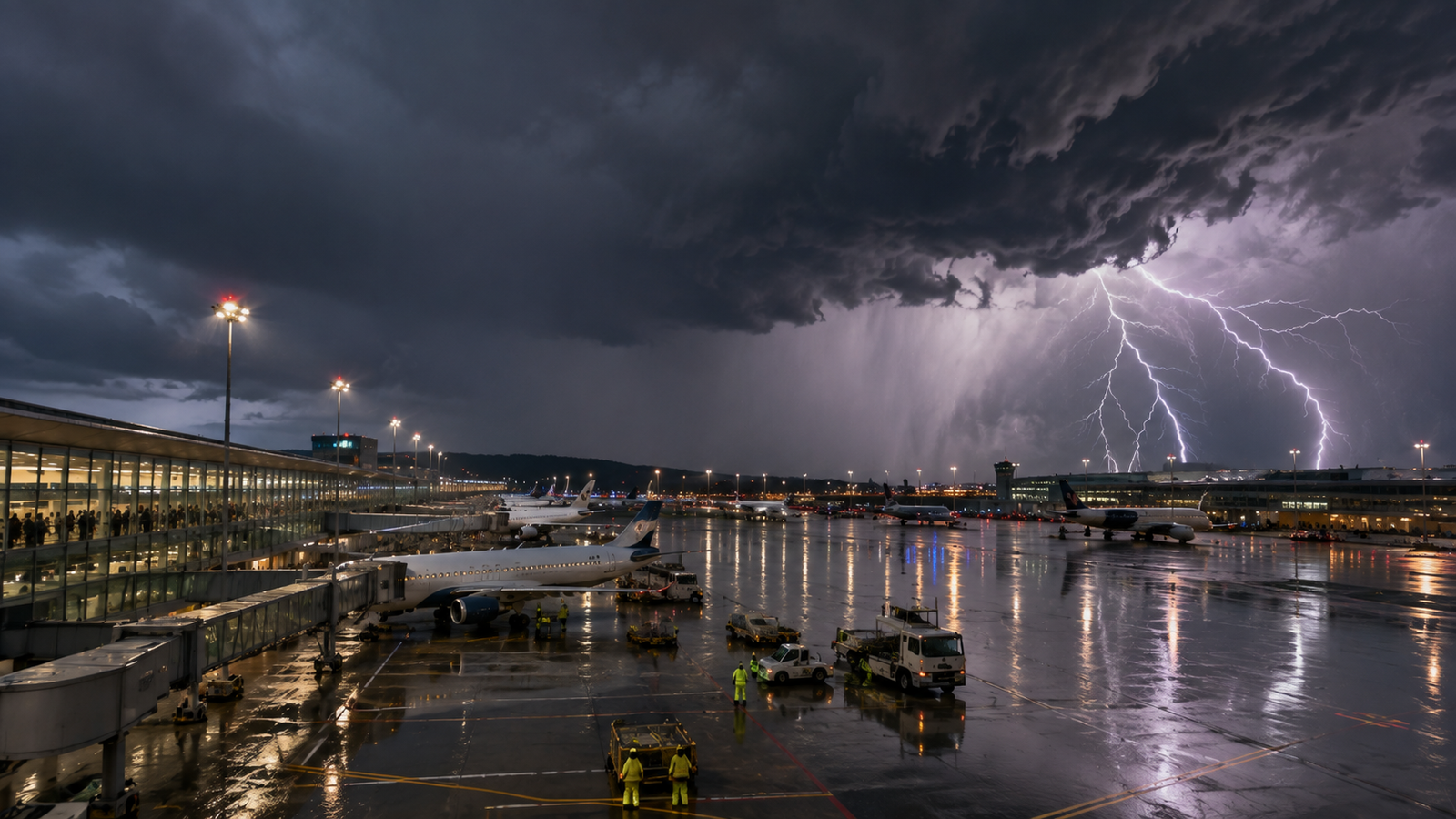
Severe Thunderstorms Disrupt Zurich Airport Operations, Triggering Dozens of Flight Cancellations
Air travelers passing through Switzerland’s busiest airport faced major disruptions after severe thunderstorms swept across the Zurich region, forcing airlines and airport authorities to cancel flights, divert incoming aircraft, and manage widespread delays.
The weather-related disruption affected operations at Zurich Airport, a critical European aviation hub that handles millions of passengers each year. Airport officials and airline representatives reported that storm activity created unsafe operating conditions, leading to significant interruptions across the flight network.
According to reports, approximately 70 flights were canceled during the disruption, while more than 30 aircraft scheduled to land in Zurich were redirected to alternative airports. Some incoming flights were sent to other Swiss and neighboring European airports as air traffic controllers and airline operators sought to maintain safety amid rapidly changing weather conditions.
The disruption began as powerful thunderstorms moved through the region, bringing intense rainfall, lightning activity, and unstable atmospheric conditions. Such weather can significantly affect airport operations by reducing visibility, increasing operational risks on runways, and restricting ground handling activities required to prepare aircraft for departure and arrival.
Passengers encountered a range of difficulties as the situation unfolded. Many travelers experienced lengthy delays, missed connections, and uncertainty regarding rebooking arrangements. Some were unable to continue their journeys as planned and had to remain at the airport while airlines adjusted schedules and reassigned aircraft.
Aviation experts note that thunderstorms present unique operational challenges because airport ground crews must often suspend outdoor activities when lightning is detected nearby. During these safety pauses, aircraft cannot be loaded, unloaded, refueled, or serviced, creating a chain reaction that can affect flights for many hours even after weather conditions improve. Recent reports indicated that lightning activity near Zurich Airport contributed to temporary interruptions in ground operations and extended delays for numerous flights.
The effects extended beyond Zurich itself. Because airlines operate tightly coordinated schedules, disruptions at a major hub can quickly spread across Europe and other regions. Aircraft diverted to alternative airports may not be available for subsequent departures, while flight crews can exceed regulatory duty limits, requiring further schedule adjustments. These ripple effects often continue long after the initial weather event has passed.
Airport authorities worked overnight to restore normal operations. In some instances, operational hours were extended to accommodate delayed arrivals and departures once weather conditions improved. Airlines also mobilized customer service teams to assist affected passengers with rebooking, accommodation, and travel information.
The latest disruption highlights the growing challenge that severe weather poses to aviation systems worldwide. Studies examining weather-related flight interruptions have shown that extreme weather events can generate significant delays and logistical complications, particularly at major airports with dense traffic volumes. As storms become more frequent and intense in many regions, aviation operators continue investing in forecasting technology and operational resilience measures.
Zurich Airport has experienced several notable operational disruptions in recent years stemming from weather events and technical incidents. Earlier cases involved snowstorms, freezing rain, air traffic control issues, and other operational challenges that affected passenger travel. These events underscore the complexity of managing one of Europe’s busiest transport hubs while maintaining strict safety standards.
Despite the disruption, authorities emphasized that safety remained the overriding priority throughout the storm event. Aviation regulations require airlines, airport operators, and air traffic controllers to take precautionary measures whenever severe weather threatens safe operations. While these actions can inconvenience travelers, industry officials stress that they are essential for protecting passengers, crews, and airport personnel.
By the following day, flight operations were gradually returning to normal, although some travelers continued to face residual delays as airlines repositioned aircraft and crews throughout their networks. Recovery efforts focused on clearing backlogs and restoring schedule reliability as quickly as possible.
For passengers, the incident served as a reminder of the vulnerability of modern air travel to sudden weather changes. For the aviation industry, it reinforced the importance of operational flexibility, accurate weather forecasting, and coordinated crisis management during severe weather events.
As Europe moves through another busy travel season, airports and airlines are expected to continue refining procedures designed to minimize disruption while ensuring that safety remains at the center of every operational decision.