A Nation Surrounded by War
The story of Switzerland during World War I and World War II is one of the most fascinating chapters in modern European history. Situated at the heart of the continent and bordered by some of the era’s major powers, Switzerland found itself surrounded by conflict while attempting to remain outside it.
The country’s policy of armed neutrality is often summarized in a single sentence, but the reality was far more complex. Switzerland mobilized its military, fortified its borders, faced economic hardships, accepted refugees, navigated diplomatic pressures, and constantly balanced survival against principle.
While bombs fell across Europe and entire nations were drawn into devastating wars, Switzerland experienced a different struggle: preserving independence in a continent consumed by conflict.
A Divided Europe Reaches Swiss Borders
When World War I erupted in 1914, Switzerland had been a neutral state for decades. Its neutrality had been formally recognized by European powers at the Congress of Vienna in 1815, and by the early twentieth century it was considered a central element of Swiss identity.
Yet neutrality did not shield the country from the war’s effects.
The Swiss population itself reflected Europe’s cultural divisions. Many German-speaking Swiss felt cultural ties to Germany, while French-speaking Swiss often sympathized with France. Maintaining national unity became a significant challenge as the conflict intensified.
To protect the country’s borders, the Swiss Army mobilized hundreds of thousands of soldiers. Although Switzerland never became a battlefield, military forces remained on alert throughout the war.
Economic difficulties soon followed. Trade routes were disrupted, imports became scarce, and food shortages affected many communities. Rising prices and social tensions contributed to political unrest that culminated in the Swiss General Strike of 1918, one of the most significant domestic crises in modern Swiss history.
When the war ended, Switzerland had avoided direct combat, but the experience revealed how vulnerable even a neutral nation could be during a major European conflict.
Geneva Takes on a Global Role
The aftermath of World War I brought an unexpected opportunity.
In 1920, Geneva became the headquarters of the newly established League of Nations. The decision elevated Switzerland’s international profile and reinforced its reputation as a center for diplomacy.
Geneva emerged as a gathering place for diplomats, negotiators, and international organizations seeking peaceful solutions to global disputes. This diplomatic tradition would later become one of Switzerland’s defining characteristics.
The interwar period also saw the growth of humanitarian institutions, including the influential International Committee of the Red Cross, which expanded its role in assisting victims of conflict around the world.
Although Europe appeared to be moving toward peace, the rise of authoritarian regimes during the 1930s created new concerns across the continent.
Preparing for an Uncertain Future
As tensions increased before World War II, Swiss leaders recognized that neutrality alone would not guarantee security.
Military planners began strengthening defenses and modernizing the armed forces. The possibility of invasion became a serious concern after Nazi Germany expanded across Europe.
When World War II began in September 1939, Switzerland once again mobilized its military. General Henri Guisan became one of the most influential figures of the era.
Guisan understood the country’s geographic advantages. Switzerland’s mountainous terrain offered natural defensive positions that could make invasion costly and difficult. His leadership helped shape a strategy that would become central to Switzerland’s wartime survival.
The Fortress in the Alps
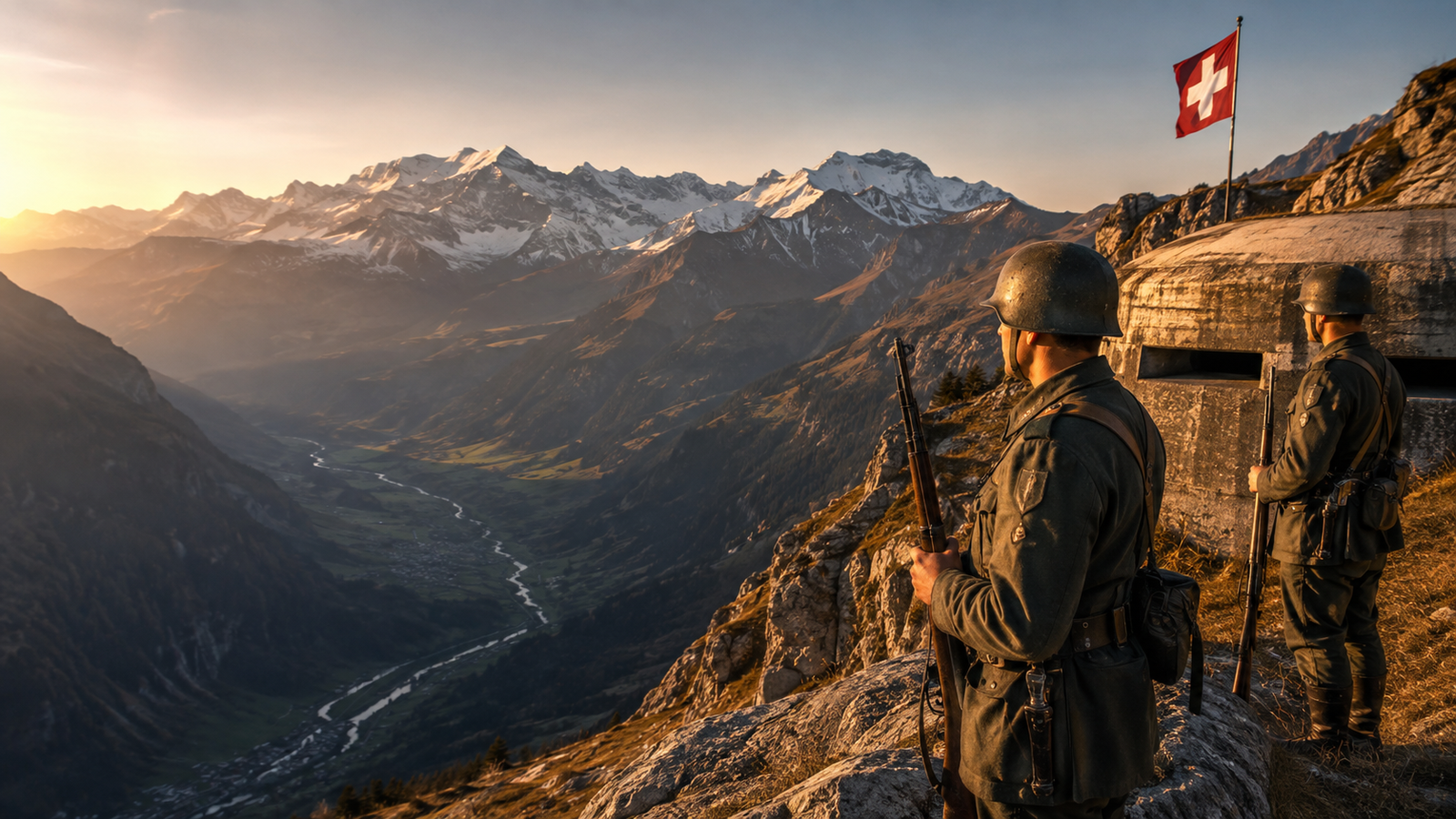
Perhaps the most famous military concept of wartime Switzerland was the National Redoubt.
The strategy called for defending key Alpine regions through a network of mountain fortresses, tunnels, artillery positions, and protected transportation routes. If enemy forces captured major cities or lowland areas, Swiss troops could retreat into the mountains and continue resisting.
Across the country, military infrastructure was expanded. Hidden bunkers were built into cliffsides, defensive positions were concealed within mountains, and bridges were prepared for demolition if necessary.
Many of these structures still exist today, offering visitors a glimpse into the extraordinary preparations made during one of Europe’s most dangerous periods.
The National Redoubt became both a military strategy and a psychological statement: Switzerland intended to defend its independence at any cost.
Life Inside a Neutral Country at War
Although Switzerland remained officially neutral, everyday life was profoundly shaped by the war.
Food rationing became a normal part of daily existence. Citizens were encouraged to grow vegetables in gardens, parks, and public spaces to improve food security. Agricultural production increased significantly as the country sought greater self-sufficiency.
Swiss industries adapted to wartime conditions, while transportation and trade were constantly affected by events beyond the country’s borders.
Airspace violations occasionally occurred, and several Swiss locations experienced accidental or unintended bombings during the war. The government maintained strict vigilance to protect sovereignty while avoiding direct involvement in the conflict.
For ordinary citizens, the war was a constant reminder that neutrality did not mean isolation from global events.
Refugees, Humanitarian Efforts, and Difficult Choices
One of the most debated aspects of Switzerland’s wartime history concerns refugees.
Throughout World War II, Switzerland provided refuge to hundreds of thousands of people, including military personnel, civilians, and individuals fleeing persecution. The country also served as an important center for humanitarian activity and diplomatic communication.
At the same time, historians have documented cases in which refugees, including some Jewish refugees fleeing Nazi persecution, were turned away at the border. These decisions remain subjects of historical examination and public discussion.
Modern scholarship presents a nuanced picture. Switzerland offered protection to many people and played a significant humanitarian role, yet it also made decisions that continue to raise ethical questions.
Acknowledging both aspects provides a fuller understanding of this complex period.
A Delicate Economic Balancing Act
Maintaining neutrality required navigating difficult economic relationships.
Switzerland continued trading with neighboring countries, including the Axis powers and Allied nations when possible. Because the country depended heavily on imported raw materials and fuel, economic survival often required pragmatic decisions.
After the war, questions emerged regarding Swiss banking practices, financial transactions, and wartime trade. Extensive historical investigations have since examined these issues, contributing to a broader understanding of the economic realities faced by neutral states during global conflict.
These debates remain an important part of the historical conversation surrounding Switzerland during World War II.
Traces of the Wars Across Modern Switzerland
Visitors exploring Switzerland today can still encounter reminders of both world wars.
Former military bunkers are scattered throughout the Alps. Museums preserve wartime artifacts, personal stories, and historical records. In Geneva, international institutions continue the diplomatic traditions that gained prominence after World War I.
Historic sites reveal how a small nation prepared for the possibility of invasion while maintaining a commitment to neutrality.
For travelers interested in history, these locations offer valuable insights into a period that shaped modern Switzerland.
The Legacy of Neutrality
The experiences of World War I and World War II profoundly influenced Switzerland’s national identity.
The country emerged from both conflicts with its independence intact, but the challenges it faced left lasting marks on politics, defense policy, diplomacy, and public memory. Armed neutrality became more than a foreign policy position; it evolved into a defining element of how Switzerland viewed its role in the world.
At the same time, historical research continues to explore difficult questions about wartime decisions, refugee policies, and economic relationships. Rather than diminishing Switzerland’s story, these discussions provide a deeper and more honest understanding of the era.
Today, Switzerland is widely recognized for diplomacy, humanitarian action, and international cooperation. Many of those modern strengths can be traced back to lessons learned during two world wars that transformed Europe.
The story of Switzerland during World War I and II is therefore not merely one of avoiding conflict. It is the story of a nation striving to preserve independence, protect its people, and navigate extraordinary pressures while standing at the crossroads of a continent at war.