
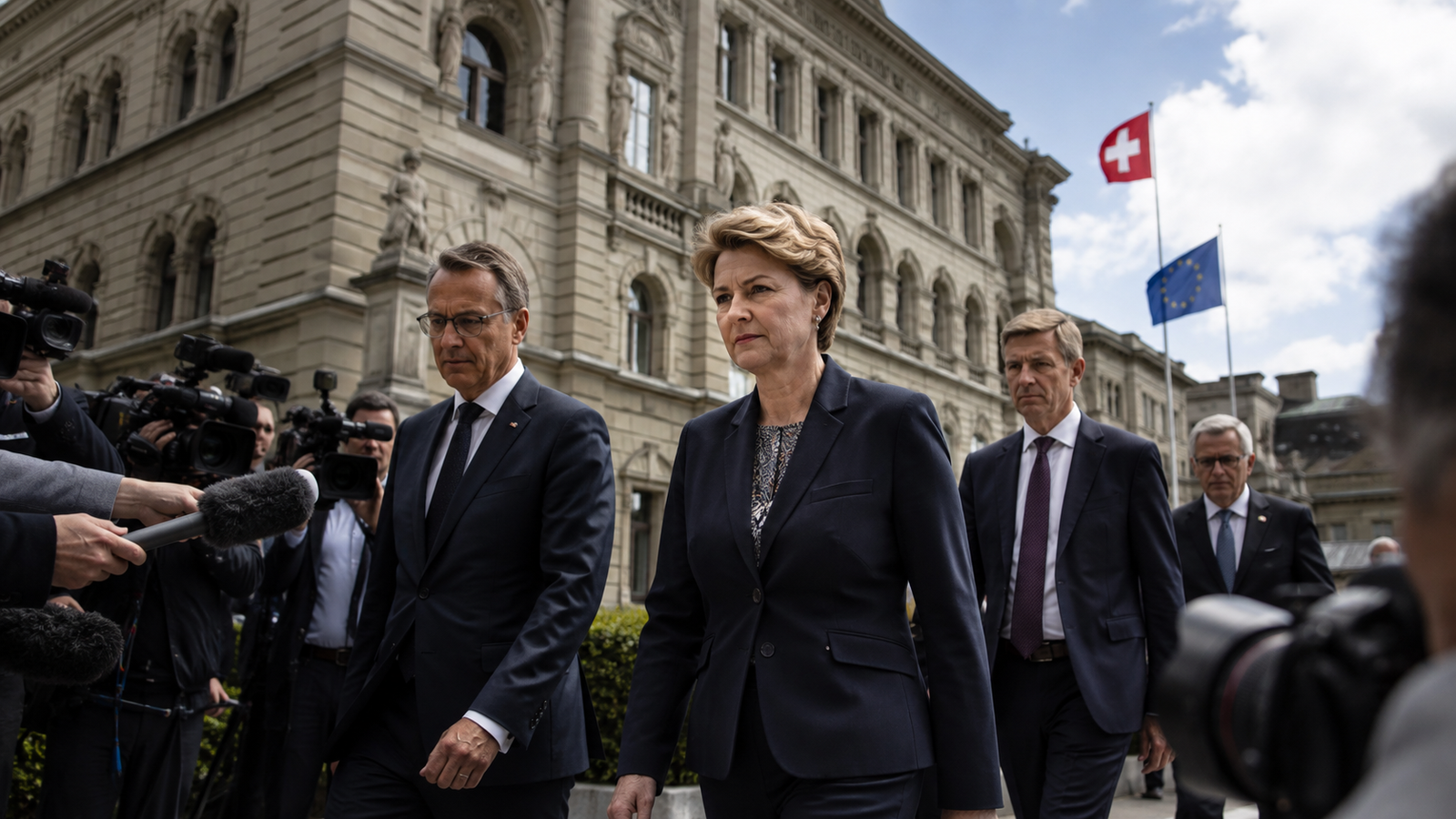
Switzerland Expands Russia Sanctions With New Energy, Trade and Crypto Restrictions
Switzerland has approved a new set of restrictive measures against Russia, strengthening its sanctions regime in coordination with actions previously adopted by the European Union as the war in Ukraine continues into its fifth year.
The Swiss Federal Council announced that additional measures linked to the European Union’s 20th sanctions package will take effect on August 20, adding new restrictions across the energy, trade and financial sectors. The move reflects Switzerland’s longstanding policy of closely aligning many of its Russia-related sanctions with those introduced by the EU while maintaining its status outside the bloc.
The latest decision broadens an already extensive sanctions framework. Swiss authorities said roughly 2,790 individuals, companies and organizations are currently subject to asset freezes and other restrictions in connection with Russia’s military campaign in Ukraine. Swiss officials had already added 115 additional individuals and entities to sanctions lists earlier this year.
A significant portion of the newly adopted measures focuses on Russia’s energy industry, a sector that Western governments continue to target in an effort to reduce revenue streams supporting Moscow’s war effort.
Under the new rules, Switzerland has introduced additional service prohibitions involving liquefied natural gas infrastructure, including restrictions related to LNG tankers, icebreakers and LNG terminals operating in Russia. Authorities have also banned the sale of tankers directly to Russia. In transactions involving tanker sales to third countries, contracts must now contain provisions preventing the vessels from being transferred onward to Russia.
Swiss officials also unveiled new trade controls designed to limit sanctions circumvention. For the first time, Switzerland is activating an anti-circumvention mechanism similar to one already used by the European Union. The tool is intended to prevent sensitive goods from reaching Russia through intermediary countries.
As part of that effort, exports of certain designated goods to Kyrgyzstan will now be prohibited. Authorities said the measure aims to reduce the risk that sanctioned products could be rerouted to Russia through third-country channels. Additional export restrictions have also been imposed on goods that could enhance Russia’s military, technological or industrial capabilities.
The Federal Council further expanded import restrictions on selected products considered economically important to Russia. Swiss officials argue that limiting access to revenue-generating exports can increase pressure on the Russian economy while reinforcing broader international sanctions efforts.
Financial measures form another key component of the package. Switzerland has prohibited the use of Russian platforms that facilitate the transfer or exchange of crypto-assets. Authorities said the restrictions are designed to reduce opportunities for sanctions evasion through alternative payment systems and digital financial networks.
The measures also prohibit support for the development of certain Russian digital currency initiatives, including projects linked to the digital ruble. Western governments have increasingly scrutinized cryptocurrency-related activity amid concerns that digital assets could be used to bypass traditional financial restrictions.
Beyond trade and finance, the Swiss government announced additional protections for domestic businesses operating in an increasingly complex sanctions environment. The measures include steps intended to safeguard intellectual property rights and shield Swiss companies from what authorities described as abusive legal actions originating from Russian courts. Existing restrictions on accepting grants from the Russian government have also been expanded to cover more organizations in the research, education and innovation sectors.
The latest action underscores Switzerland’s continuing effort to balance its traditional neutrality with growing international pressure to respond to Russia’s invasion of Ukraine. Since the outbreak of the conflict, Bern has repeatedly adopted sanctions that mirror many EU measures, arguing that coordinated action is necessary to uphold international law and prevent Switzerland from becoming a channel for sanctions avoidance.
The broader sanctions landscape continues to evolve rapidly across Europe. While Switzerland is implementing measures associated with the EU’s 20th package, the European Union itself moved ahead with a 21st sanctions package in July. European officials have signaled that additional restrictions may be considered later this year as policymakers seek to maintain pressure on Russia’s economy and military-industrial network.
For businesses operating internationally, the expanding sanctions framework presents growing compliance challenges. Financial institutions, exporters, shipping companies and technology firms face increasing scrutiny over supply chains, ownership structures and payment mechanisms. Legal experts note that sanctions enforcement has become more sophisticated, with authorities focusing not only on direct transactions with Russia but also on indirect routes that could facilitate circumvention.
As the conflict in Ukraine continues, Switzerland’s latest measures signal that Western governments remain committed to tightening economic restrictions and closing loopholes that could weaken the effectiveness of sanctions already in place. Whether these additional controls significantly alter Russia’s economic position remains a subject of ongoing debate, but policymakers in Bern and across Europe continue to view coordinated sanctions as a central component of their response to the war.