
Swiss Driver Caught at 312 km/h on French Motorway Faces Legal Action
A Swiss motorist has been stopped by French authorities after being recorded traveling at 312 kilometers per hour on a motorway in eastern France, a speed that investigators say ranks among the most serious traffic violations ever detected on the country’s highway network. Authorities have launched legal proceedings while also seizing the vehicle involved in the incident.
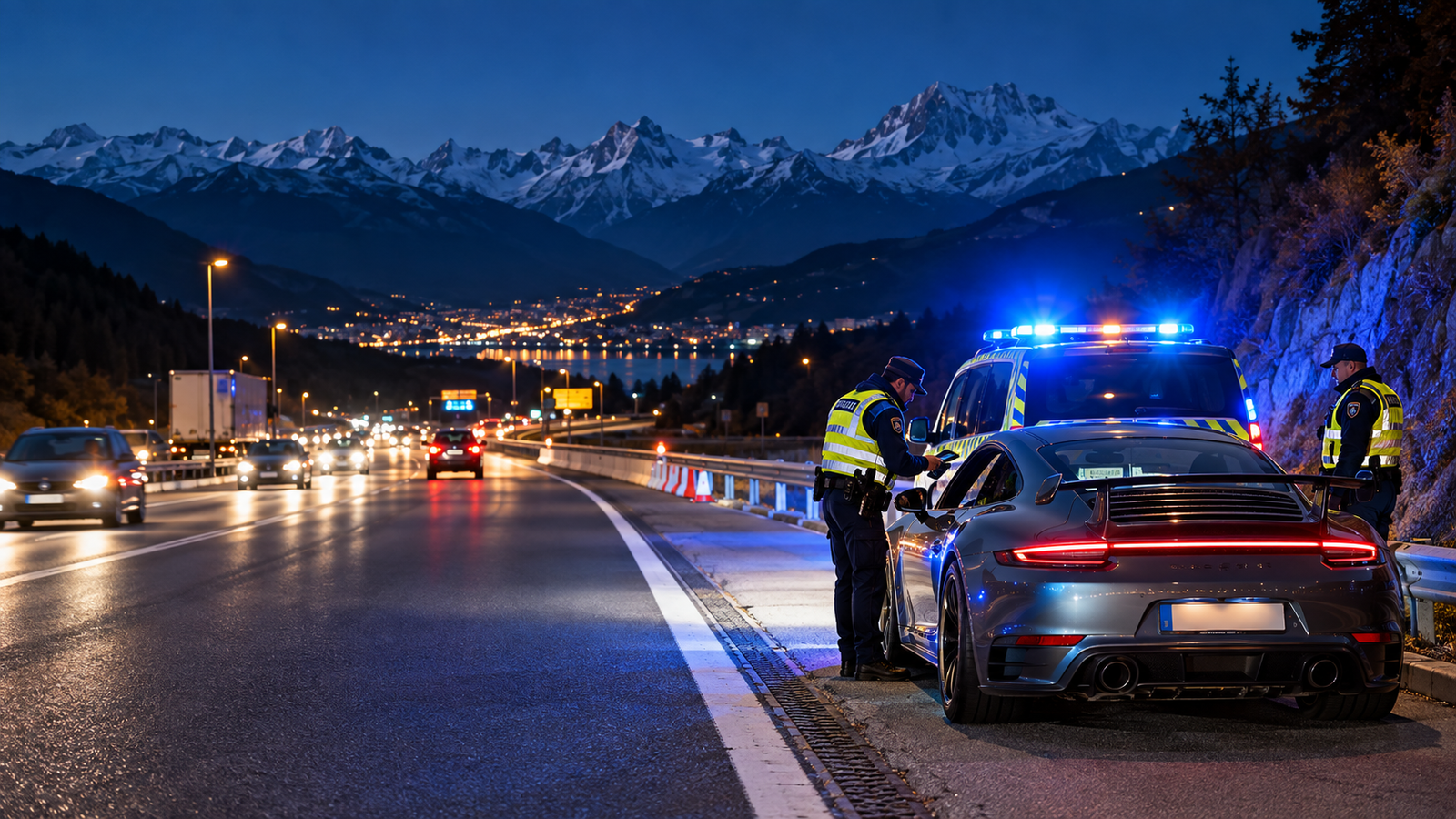
The case unfolded during an overnight traffic enforcement operation on the A40 motorway in Haute-Savoie, a department in southeastern France near the Swiss border. Police monitoring traffic along the route identified a vehicle moving at an exceptionally high speed on a section of road where the legal limit is 130 km/h. According to authorities, radar equipment measured the vehicle at 312 km/h before officers initiated enforcement procedures.
After applying the standard technical adjustment used in French speed enforcement cases, officials established an official recorded speed of 300 km/h. Even after the correction, the driver was traveling approximately 170 km/h above the legal limit, making the offense one of the most significant speeding violations documented on a French motorway.
Police said the vehicle was stopped and the driver was identified as a Swiss national. The driver’s license was immediately confiscated under French legal procedures governing extreme speeding offenses. Authorities also impounded the vehicle pending further judicial action.
The incident occurred on a motorway that serves as an important transport corridor connecting France, Switzerland and Italy. The A40 carries a mix of passenger vehicles and commercial traffic, making speed enforcement a priority for regional authorities. Officials noted that driving at such speeds dramatically reduces reaction time and increases the severity of potential collisions.
French road safety regulations impose particularly severe penalties for excessive speeding. Depending on the circumstances and the outcome of judicial proceedings, offenders can face substantial fines, driving bans and, in certain cases, custodial penalties. Authorities indicated that the driver in this case was required to provide a financial guarantee while the legal process moves forward.
Road safety experts have long warned that the risks associated with extreme speeding increase exponentially as velocity rises. While modern performance vehicles are capable of reaching speeds above 300 km/h under controlled conditions, public roads are not designed to accommodate such driving behavior. Factors such as traffic density, road conditions, weather changes and unexpected obstacles can turn a high-speed situation into a serious accident within seconds.
French law enforcement agencies regularly conduct radar operations on major highways, particularly in regions with heavy international traffic. Officials say these enforcement campaigns are intended not only to identify offenders but also to reduce accident rates and encourage compliance with speed regulations.
The case has attracted attention because of the extraordinary speed involved. Authorities described the offense as one of the most serious instances of motorway speeding ever recorded in France. At 312 km/h, the vehicle was covering nearly 87 meters every second before the official speed reduction was applied for legal purposes.
The incident also highlights ongoing cross-border cooperation in traffic enforcement across Europe. Drivers traveling between neighboring countries remain subject to local traffic laws and can face penalties regardless of their country of residence. In recent years, European authorities have strengthened information-sharing systems aimed at improving enforcement of serious traffic violations involving foreign motorists.
Road safety remains a major policy focus throughout Europe. Governments and transportation agencies continue to invest in enforcement technology, public awareness campaigns and infrastructure improvements aimed at reducing fatalities and serious injuries. Excessive speed is consistently identified as one of the leading factors contributing to severe road crashes.
French authorities have not reported any injuries or collisions related to the incident. However, officials stressed that the outcome could have been far more serious given the speed involved and the presence of other road users on the motorway. Law enforcement representatives used the case to reiterate a message frequently emphasized during road safety campaigns: public highways are designed for transportation, not high-speed driving.
The judicial process will now determine the final penalties facing the driver. Until then, the case serves as another reminder of the strict consequences that can follow major traffic violations and the continuing efforts by authorities to improve safety on Europe’s busiest roads.