Swiss Supreme Court Rejects Damages Claim in Unusual Family Hiking Injury Case
A hiking accident in the Swiss Alps that led to serious injuries and years of legal proceedings has ended with Switzerland’s highest court ruling that a man cannot be held financially responsible for injuries suffered by his cousin during a family outing.
The Federal Supreme Court has upheld earlier decisions by courts in the canton of Glarus, concluding that the incident was an unfortunate accident rather than the result of negligence. The case attracted attention because it combined a routine mountain walk with a complex legal dispute over personal responsibility and compensation.
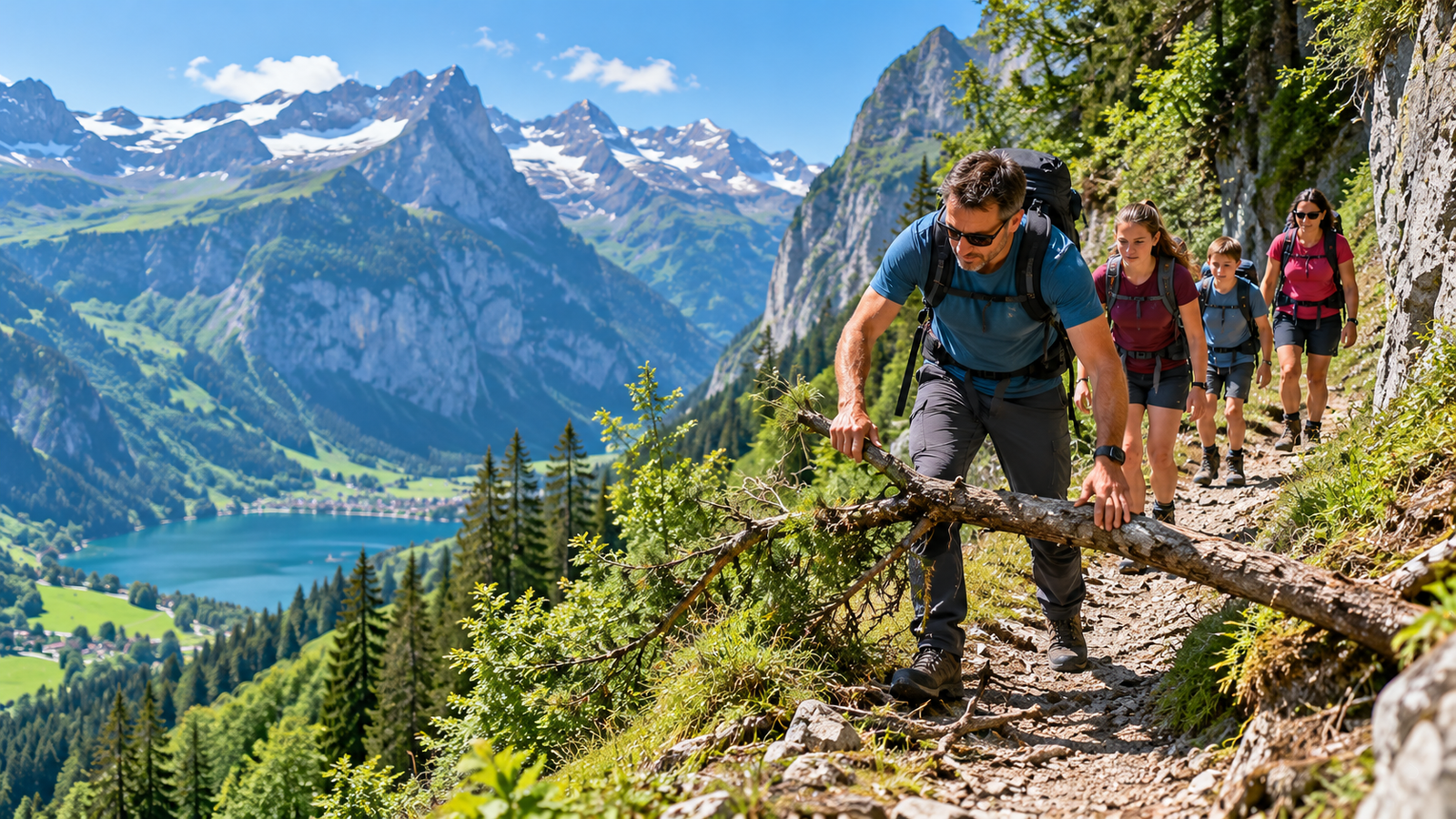
According to the court record, the incident occurred during a family hike in the mountains of eastern Switzerland. A group of relatives was walking along a trail when one member of the group moved a branch that was obstructing the path. Moments later, the branch swung back and struck a cousin who was following several meters behind, causing severe head injuries.
The injured woman later sought substantial compensation through the courts, arguing that her cousin should have recognized the danger and taken steps to prevent the accident. Her claim included more than CHF370,000 in damages as well as reimbursement for legal expenses.
The legal dispute moved through multiple levels of Switzerland’s judicial system. Lower courts in Glarus examined the circumstances surrounding the accident and ultimately concluded that the cousin had not acted negligently. The case then reached the Federal Supreme Court in Lausanne, which serves as the country’s highest judicial authority and reviews whether lower courts have correctly applied the law.
In its final assessment, the Federal Supreme Court agreed with the lower courts and dismissed the appeal. Judges found that the cousin could not reasonably have anticipated that the branch would rebound in a way that would strike someone standing several meters behind him. Because the risk was not foreseeable under the circumstances, the court determined that he could not be held legally liable for the injuries.
Court documents indicate that the dispute centered on the concept of negligence, a key principle in civil liability cases. To establish liability, a claimant generally must demonstrate that a person failed to exercise reasonable care and that the resulting harm was foreseeable. In this case, judges concluded that those conditions had not been met.
The published ruling also noted that the cousin involved did not possess any specialized expertise that would have enabled him to recognize a hidden danger associated with the branch. According to reporting based on the judgment, the courts found no evidence that an average person in the same situation would have expected the branch to behave in a way that could cause serious injury.
An additional factor considered by the courts was that other members of the hiking group, including the injured woman herself, apparently observed the situation without identifying any immediate danger. Judges viewed this as supporting the conclusion that the risk was not obvious at the time.
The case highlights the challenges courts face when distinguishing between accidents and legally actionable conduct. Switzerland’s Federal Supreme Court regularly reviews disputes involving questions of responsibility, fault, and compensation. Its judgments help establish consistent interpretations of federal law across the country and often serve as guidance for future cases involving similar legal principles.
While the dispute arose from a relatively ordinary outdoor activity, it underscores the broader legal importance of foreseeability in negligence claims. Courts frequently examine whether a person could reasonably have anticipated a harmful outcome before deciding whether compensation is warranted. In this instance, judges concluded that the injury resulted from an unexpected chain of events rather than careless behavior.
Mountain hiking remains one of Switzerland’s most popular recreational activities, drawing residents and visitors to thousands of kilometers of trails each year. Although accidents can occur in outdoor environments, courts generally assess each incident individually, weighing the specific actions of those involved and the surrounding circumstances. The ruling does not establish immunity from liability in hiking-related accidents but reinforces the principle that legal responsibility depends on demonstrable fault.
The judgment brings to a close a legal battle that stemmed from an incident dating back more than a decade. According to reports based on the court file, the accident occurred during a family hike in 2015, and the dispute progressed through multiple judicial stages before reaching a final resolution.
With the Federal Supreme Court affirming the earlier decisions, the injured woman’s claim for damages has been definitively rejected. The ruling leaves intact the conclusion reached by the Glarus courts: despite the seriousness of the injuries, the cousin’s actions did not amount to negligence under Swiss law.