Swiss Senate Backs Immigration Levy as Debate Over EU Ties Intensifies
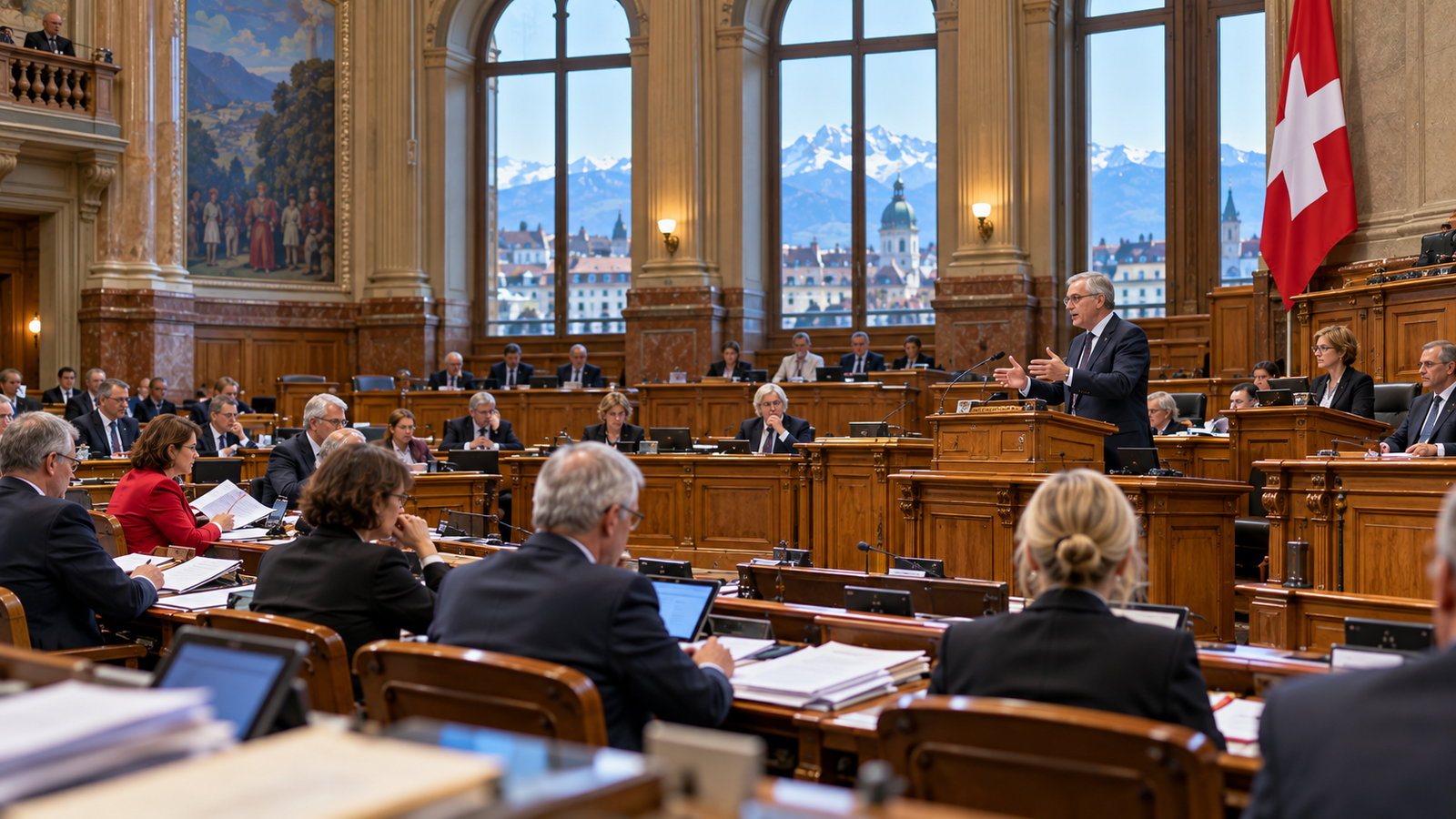
Switzerland’s upper chamber of parliament has endorsed a controversial proposal to introduce an immigration levy as part of a broader package of measures designed to address concerns about migration and labor market pressures linked to future relations with the European Union.
The Council of States approved the concept during its ongoing examination of legislation connected to the Switzerland–EU Bilateral Agreements III package. The proposal would supplement a safeguard mechanism intended to allow Swiss authorities to respond if immigration from the European Union is judged to be contributing to serious economic or social challenges.
The measure represents one of the most debated additions to the government’s implementation plans for the updated agreements with the EU. While the Federal Council had already proposed safeguard tools that could be activated under specific conditions, senators opted to go further by supporting a financial levy intended to influence hiring and migration patterns.
Under the proposal adopted by the chamber, EU citizens entering Switzerland for employment, self-employment or other forms of residence could face a levy of at least CHF4,000. Adult family members arriving through family reunification procedures would be subject to a lower charge of at least CHF2,000. Revenue generated by the measure would be redistributed to the population. Lawmakers also indicated that the mechanism could be extended to nationals from non-EU countries if the safeguard clause were formally activated.
The immigration levy did not emerge suddenly. The concept has been discussed within sections of the center-right political camp for several years and gained renewed attention during debates surrounding immigration levels and Switzerland’s long-term population growth. Supporters have described it as an alternative approach to more restrictive immigration initiatives that sought direct limits on population growth.
Backers of the proposal argue that financial incentives could encourage employers to make greater use of domestic labor resources before recruiting abroad. Some senators contended that the levy could help balance the economic benefits of international recruitment with concerns about housing, infrastructure and labor market pressures in rapidly growing regions of the country.
Committee rapporteurs supporting the measure said it should be viewed as an incentive mechanism rather than a prohibition on migration. Advocates maintain that Switzerland would continue to attract workers and skills from abroad while creating additional encouragement to develop local workforce potential.
Opposition emerged from multiple political directions during the debate. Left-leaning lawmakers questioned whether the measure would achieve its stated objectives and warned that it could create additional administrative burdens for employers and government agencies. Critics argued that the policy could increase bureaucracy without significantly altering labor market outcomes.
Justice Minister Beat Jans also expressed reservations about parts of the proposal. While acknowledging that the concept was not necessarily incompatible with the broader Switzerland–EU package, he warned that implementation could involve substantial legal and administrative complexities. Jans advocated exempting family members from the levy, citing constitutional protections relating to family life, but that position did not prevail during the Senate debate.
Some center-right lawmakers were similarly unconvinced. Critics within the chamber described the proposal as excessively bureaucratic and questioned whether an additional tax aligned with Switzerland’s traditionally liberal economic framework. Others warned that measures perceived as barriers to labor mobility could undermine the economic benefits expected from closer cooperation with European partners.
The debate forms part of a wider political discussion about immigration and Switzerland’s relationship with the European Union. The Bilateral Agreements III package is intended to update and stabilize key aspects of Swiss-EU cooperation, including rules governing the movement of people. While supporters argue that the agreements provide legal certainty and help secure access to European markets, critics have raised concerns about immigration levels and the impact of population growth on infrastructure and public services.
Alongside the levy proposal, senators also considered additional immigration-related measures. The chamber supported stricter documentation requirements for some newcomers and discussed broader safeguards linked to public security, labor market conditions and social welfare indicators. Several of these provisions remain subject to further legislative review before becoming final policy.
The immigration levy would not take effect immediately. The proposal must continue through Switzerland’s legislative process, including consideration by the National Council. Elements of the broader Switzerland–EU package are also expected to face extensive political scrutiny and, ultimately, could be submitted to voters through Switzerland’s system of direct democracy.
The Senate’s decision nevertheless marks a significant moment in one of the country’s most sensitive policy debates. Immigration has remained a recurring topic in Swiss politics for decades, touching on issues ranging from economic competitiveness and labor shortages to housing, transport infrastructure and social integration.
As lawmakers continue their examination of the EU treaty package, the immigration levy is likely to remain one of its most closely watched and controversial components. Whether it ultimately becomes law will depend on future parliamentary negotiations and, potentially, the judgment of Swiss voters. For now, the vote signals a willingness among many senators to pursue additional safeguards as Switzerland navigates the next phase of its relationship with the European Union.