Aargau Moves to Contain Growing Raccoon Population as Wildlife Concerns Mount
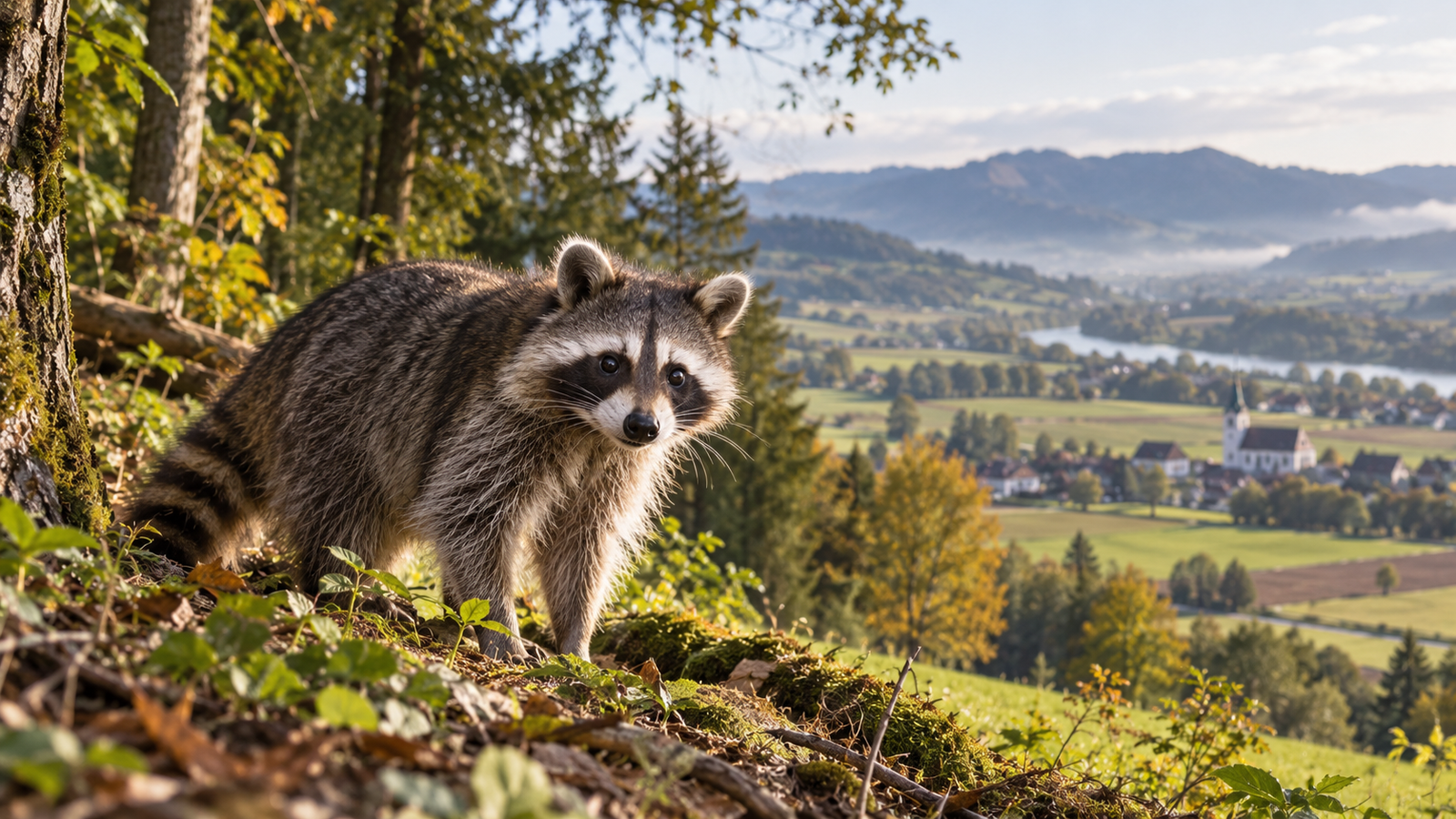
Authorities in the Swiss canton of Aargau are intensifying efforts to slow the spread of raccoons, a non-native species whose growing presence has raised concerns among wildlife managers, conservation experts, and local officials.
The move comes as sightings of raccoons continue to increase in parts of northern Switzerland, reflecting a broader trend seen across several European countries where the adaptable mammals have steadily expanded beyond their original introduced populations. Officials in Aargau say the goal is not only to limit population growth but also to reduce the potential impact on native wildlife and sensitive ecosystems.
Raccoons are not indigenous to Europe. Originally native to North America, they were introduced to parts of the continent decades ago and have since established breeding populations in several countries. Their ability to thrive in forests, agricultural areas, suburban neighborhoods, and urban environments has made them one of the continent’s most successful invasive mammals.
In Aargau, authorities are seeking to slow further expansion before populations become firmly established across larger areas of the canton. Wildlife specialists warn that once invasive animal populations reach a certain scale, management becomes significantly more difficult and costly.
Environmental concerns are central to the discussion. Raccoons are opportunistic omnivores capable of feeding on birds, eggs, amphibians, insects, fruits, and small mammals. Conservation groups and wildlife agencies in various European countries have raised concerns that expanding raccoon populations may place additional pressure on vulnerable native species, particularly ground-nesting birds and amphibians.
The issue is not unique to Switzerland. Germany, which hosts one of Europe’s largest raccoon populations, has spent years studying the ecological effects of the species. Research and wildlife monitoring programs across the region have documented continued population growth and increasing encounters between raccoons and human communities. Similar concerns have emerged in neighboring countries as the animals continue to spread into new habitats.
In Switzerland, reports of raccoon activity have gradually become more common during the past decade. While overall numbers remain far below those seen in parts of Germany, wildlife observers note that the trend points toward continued expansion unless populations are actively managed. Previous reporting has highlighted Aargau as one of the cantons where raccoon numbers have been rising and where authorities have expressed concern about potential environmental impacts.
Officials argue that early intervention offers the best chance of slowing establishment in new areas. Measures under consideration or already implemented focus on monitoring populations, tracking movement patterns, and reducing opportunities for animals to colonize additional territory. Wildlife management strategies may also involve regulated population control efforts where permitted under Swiss law.
The debate, however, is not without controversy. Animal welfare advocates have questioned whether hunting and population reduction programs are effective long-term solutions. Some organizations argue that eradication efforts have produced mixed results in regions where raccoon populations are already widespread. Campaigns calling for alternatives to broad hunting measures have gained support among some wildlife protection groups.
Supporters of population management counter that preventive action is easier and more effective when populations remain relatively small. They point to experiences elsewhere in Europe, where rapid expansion eventually made control efforts far more challenging.
The growing raccoon population also presents practical concerns for residents. In urban and suburban environments, raccoons are known for raiding garbage containers, entering attics, damaging property, and seeking food near homes. Although generally not considered dangerous to humans, repeated encounters can create nuisance issues that require municipal attention.
Swiss authorities have increasingly focused on invasive species management in recent years as environmental agencies confront a range of ecological challenges. Alongside raccoons, officials are monitoring other non-native plants, insects, and animals that have established footholds in parts of the country. Policymakers view early detection and rapid response as critical tools for protecting biodiversity and limiting future costs associated with invasive species management.
For Aargau, the raccoon issue has become a test case in balancing wildlife protection, environmental stewardship, and public expectations. Authorities emphasize that their objective is not simply to reduce animal numbers but to prevent long-term ecological consequences that could arise if populations continue to expand unchecked.
As monitoring efforts continue, wildlife officials will be assessing whether current measures can slow the spread of raccoons into additional regions. The outcome may help shape future Swiss policies toward invasive mammals and influence how other cantons respond to similar challenges.
While the long-term trajectory of Switzerland’s raccoon population remains uncertain, the actions being taken in Aargau highlight the growing importance of invasive species management in a country known for its commitment to environmental conservation and biodiversity protection.