Dutch Ambassador Meets Injured Travelers After Fatal Swiss Bus Disaster
Dutch diplomatic officials have met with survivors of a devastating bus crash in eastern Switzerland as authorities continue investigating one of the country’s most serious transportation accidents of the year.
The visit came days after a Dutch tour coach carrying travelers through the Swiss Alps overturned in the canton of Graubünden, leaving five people dead and dozens injured. The tragedy has prompted an extensive emergency response, international coordination between Swiss and Dutch authorities, and renewed attention to road safety in mountainous regions.
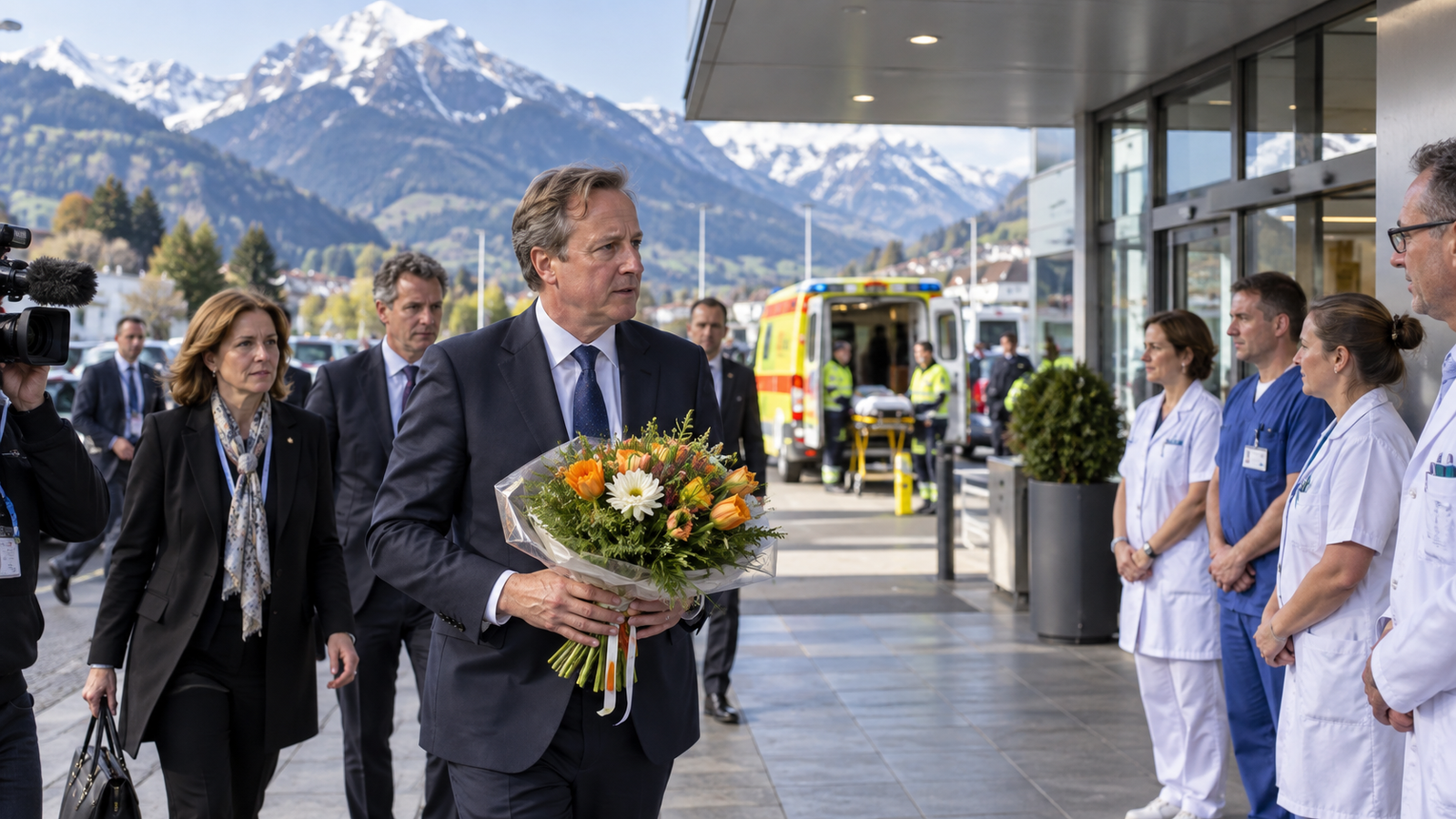
The Dutch ambassador traveled to Switzerland to meet injured passengers receiving medical treatment following the crash. The visit was intended to provide support to victims and their families while maintaining close contact with Swiss authorities overseeing the response and investigation.
The accident occurred near the village of Susch in southeastern Switzerland. According to police, the coach was transporting a group of Dutch adults when it overturned along a section of road affected by maintenance work. Investigators have not yet determined the precise cause of the crash, and officials have stated that no other vehicles are believed to have been involved.
Emergency crews launched a major rescue operation shortly after the incident. Helicopters, ambulances, firefighters, police officers, and medical personnel were deployed to the remote Alpine area to assist passengers and transport the injured to hospitals. The scale of the response reflected both the severity of the crash and the logistical challenges of operating in a mountainous region.
Swiss authorities reported that 45 people were on board the coach. Five passengers died at the scene or shortly afterward, while 40 others sustained injuries ranging from minor to critical. Several individuals remained hospitalized following the accident, with some requiring intensive medical care.
The tragedy has resonated deeply in the Netherlands because the passengers were participating in an organized tour. Dutch emergency support services and government officials have been working alongside Swiss counterparts to provide assistance, coordinate information, and help families affected by the crash.
As part of those efforts, diplomatic representatives have focused on ensuring that injured travelers receive support while arrangements are made for relatives, medical transfers, and eventual repatriation where necessary. The ambassador’s visit underscored the role diplomatic missions often play following major incidents involving citizens abroad.
Authorities have not publicly released all details concerning the victims, though Dutch media later reported that those who lost their lives were elderly travelers. Identification procedures and family notifications have been handled in cooperation with both countries.
Meanwhile, investigators continue examining the circumstances surrounding the crash. Police have indicated that road conditions, vehicle movements, infrastructure factors, and other technical evidence will form part of the inquiry. Officials have emphasized that it is too early to draw conclusions about what caused the coach to leave its intended path and overturn.
The accident occurred in a region known for its dramatic Alpine scenery and winding mountain roads. While Switzerland maintains a strong road safety record, transportation incidents in mountainous terrain can become particularly serious because of steep slopes, changing weather conditions, construction zones, and limited access for emergency responders.
Transportation experts note that investigations into major coach accidents often take months. Authorities typically analyze vehicle data, roadway conditions, witness testimony, driver records, and mechanical systems before publishing final findings. In this case, Swiss prosecutors and police are expected to play central roles in determining exactly what happened.
The emotional impact of the disaster has extended beyond the immediate victims. Dutch travel organizations, public officials, and community members have expressed condolences as news of the fatalities spread. Messages of sympathy also came from senior leaders, including members of the Dutch royal family and Swiss officials who pledged support for those affected.
For survivors, recovery is expected to continue long after the investigation concludes. Medical treatment, rehabilitation, and emotional support services will remain important for passengers and families coping with the consequences of the crash.
As authorities work to establish the facts, the ambassador’s visit served as a reminder that major transportation disasters often require more than emergency intervention alone. They also demand ongoing humanitarian support, international cooperation, and sustained attention to the needs of victims.
With the investigation still underway, officials in both Switzerland and the Netherlands have stressed that determining the cause of the crash remains the priority. The findings may ultimately contribute to future safety measures aimed at reducing the risk of similar tragedies on Europe’s road networks.