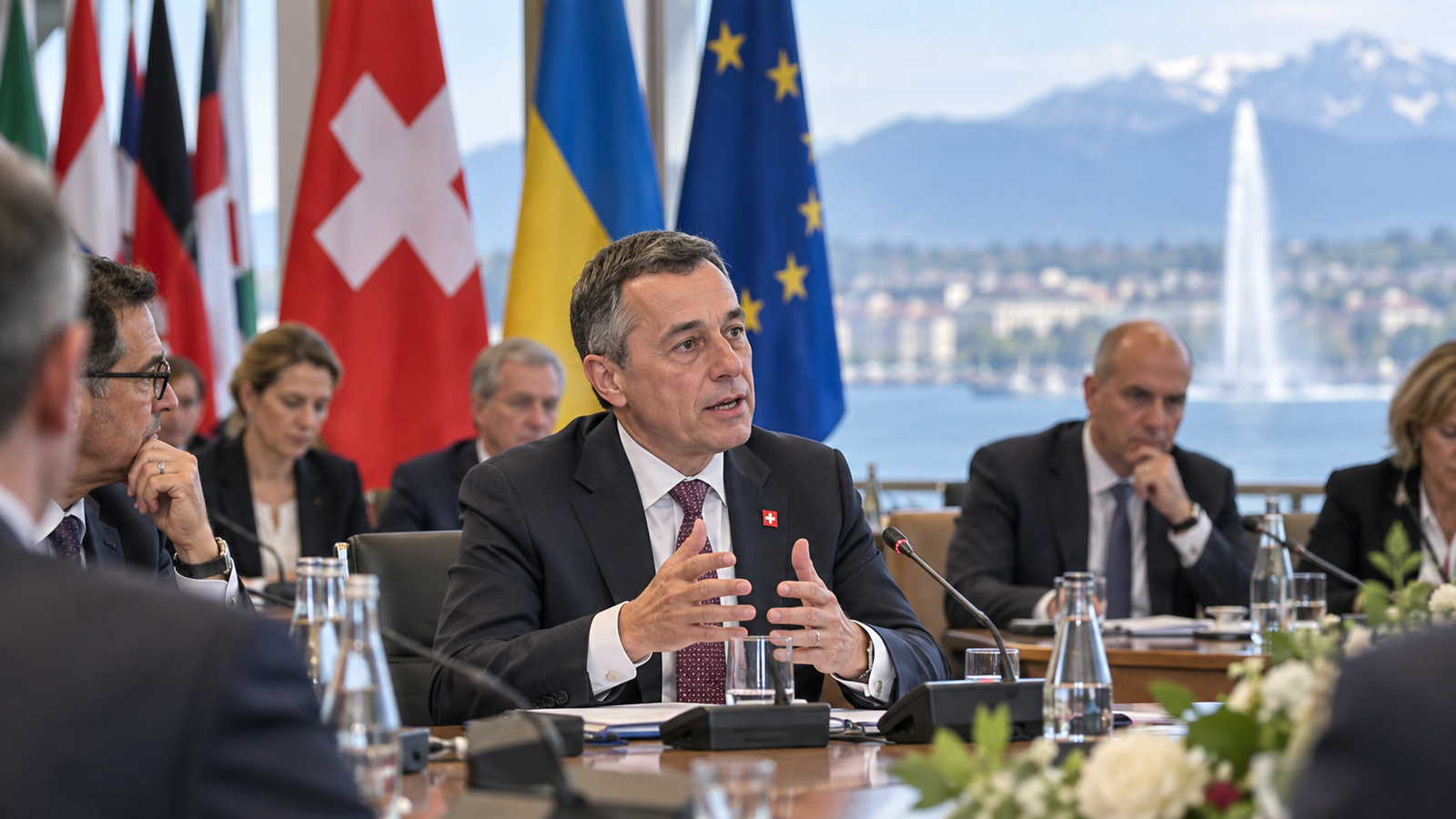
Switzerland Pushes for Renewed Momentum in Ukraine Peace Diplomacy
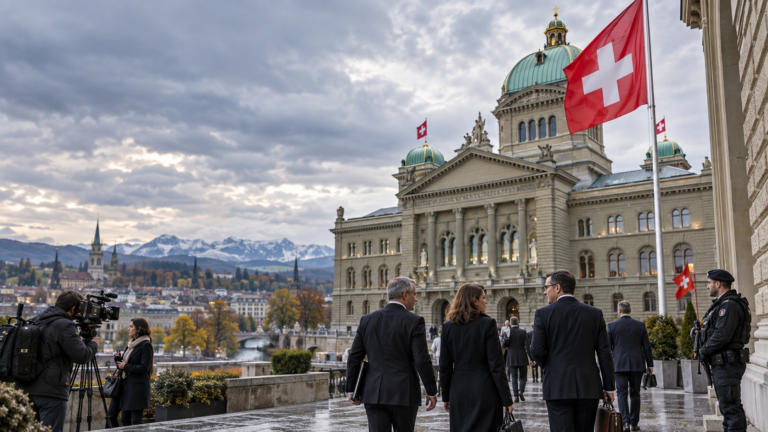
Switzerland is intensifying efforts to help restore momentum to international peace initiatives aimed at ending the war in Ukraine, with Foreign Minister Ignazio Cassis emphasizing the importance of rebuilding diplomatic channels at a time when military operations continue and prospects for a negotiated settlement remain uncertain.
Speaking amid renewed discussions about possible diplomatic engagement, Cassis highlighted Switzerland’s longstanding role as a facilitator of dialogue and stressed that sustained communication between parties remains essential if meaningful progress toward peace is to be achieved. The remarks come as several governments and international partners explore ways to restart negotiations that have struggled to gain traction in recent months.
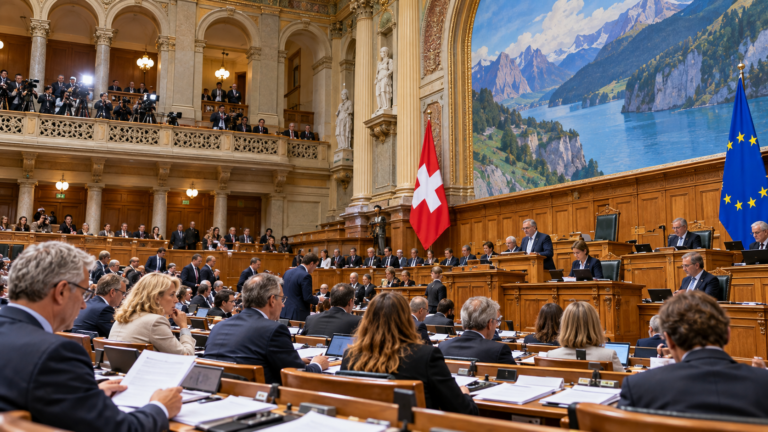
Switzerland has sought to position itself as a venue and mediator for international dialogue throughout the conflict, leveraging its tradition of diplomacy and its reputation for hosting negotiations involving competing geopolitical interests. Swiss officials argue that maintaining channels for communication is critical, even when immediate breakthroughs appear unlikely.
The renewed diplomatic focus arrives during a period of heightened international activity surrounding the war. Recent efforts by U.S. representatives to engage both Kyiv and Moscow have generated cautious hopes that talks could eventually resume after months of limited progress. While no major agreements have emerged, multiple diplomatic contacts have taken place involving senior officials from the United States, Ukraine, Russia, and European partners.
Ukrainian officials have recently indicated preparations for another round of discussions that could take place in the coming weeks. Potential host countries reportedly under consideration include Switzerland, alongside several other nations that have expressed interest in supporting diplomatic initiatives. Although details remain under discussion, the possibility of renewed negotiations has encouraged governments seeking a political path forward.
Despite those developments, major obstacles continue to stand in the way of a comprehensive settlement. Territorial disputes remain among the most contentious issues, with Kyiv and Moscow maintaining sharply different positions on occupied and contested regions. Previous rounds of negotiations have failed to resolve these disagreements, leaving diplomats searching for confidence-building measures that could help create conditions for broader talks.
Swiss officials have consistently argued that diplomacy should not be abandoned simply because progress is difficult. According to Bern, successful negotiations often require extended periods of preparation, incremental confidence-building, and sustained international engagement before substantive agreements become possible. Switzerland’s approach has focused on encouraging dialogue while supporting humanitarian efforts linked to the conflict.
The diplomatic push also reflects growing concerns about the wider consequences of the prolonged war. Continued fighting has placed pressure on regional security, economic stability, energy infrastructure, and humanitarian conditions across parts of Europe. As another winter approaches, Ukraine faces ongoing challenges related to infrastructure protection and civilian resilience, adding urgency to discussions about possible de-escalation measures.
International mediators increasingly recognize that even limited agreements could provide valuable stepping stones toward broader negotiations. Issues such as humanitarian access, prisoner exchanges, energy security, and civilian protection are often viewed as areas where practical cooperation may be more achievable than immediate resolution of larger political disputes. Past diplomatic contacts have demonstrated that narrowly focused agreements can sometimes be reached even when major strategic disagreements remain unresolved.
For Switzerland, the effort to revive diplomatic engagement is closely tied to its broader foreign policy vision. Swiss leaders have repeatedly argued that neutrality does not mean political passivity. Instead, they maintain that Switzerland can contribute by offering platforms for discussion, facilitating communication, and supporting international efforts aimed at reducing tensions and promoting stability.
Cassis has been among the most prominent advocates of maintaining Switzerland’s role in international mediation. Since the beginning of the conflict, Swiss diplomacy has sought to balance its support for international law with its ambition to remain a credible facilitator of dialogue. That balancing act has occasionally drawn scrutiny from different political perspectives, but Swiss officials continue to emphasize the value of engagement and negotiation.
Analysts note that expectations for any immediate breakthrough remain modest. The positions of the parties involved continue to differ significantly, and previous initiatives have produced only limited results. Nevertheless, diplomats involved in recent efforts argue that maintaining contact and preserving opportunities for future negotiations are important objectives in their own right.
As discussions continue behind the scenes, Switzerland hopes that renewed diplomatic momentum can eventually lead to more structured negotiations. Whether future talks result in concrete agreements remains uncertain, but Swiss officials insist that keeping peace efforts alive is essential. In a conflict that has reshaped European security and affected millions of people, they argue that every opportunity for dialogue deserves serious consideration.