Swiss Outdoor Pools See Unprecedented Crowds as Hot Summer Drives Surge in Visitors
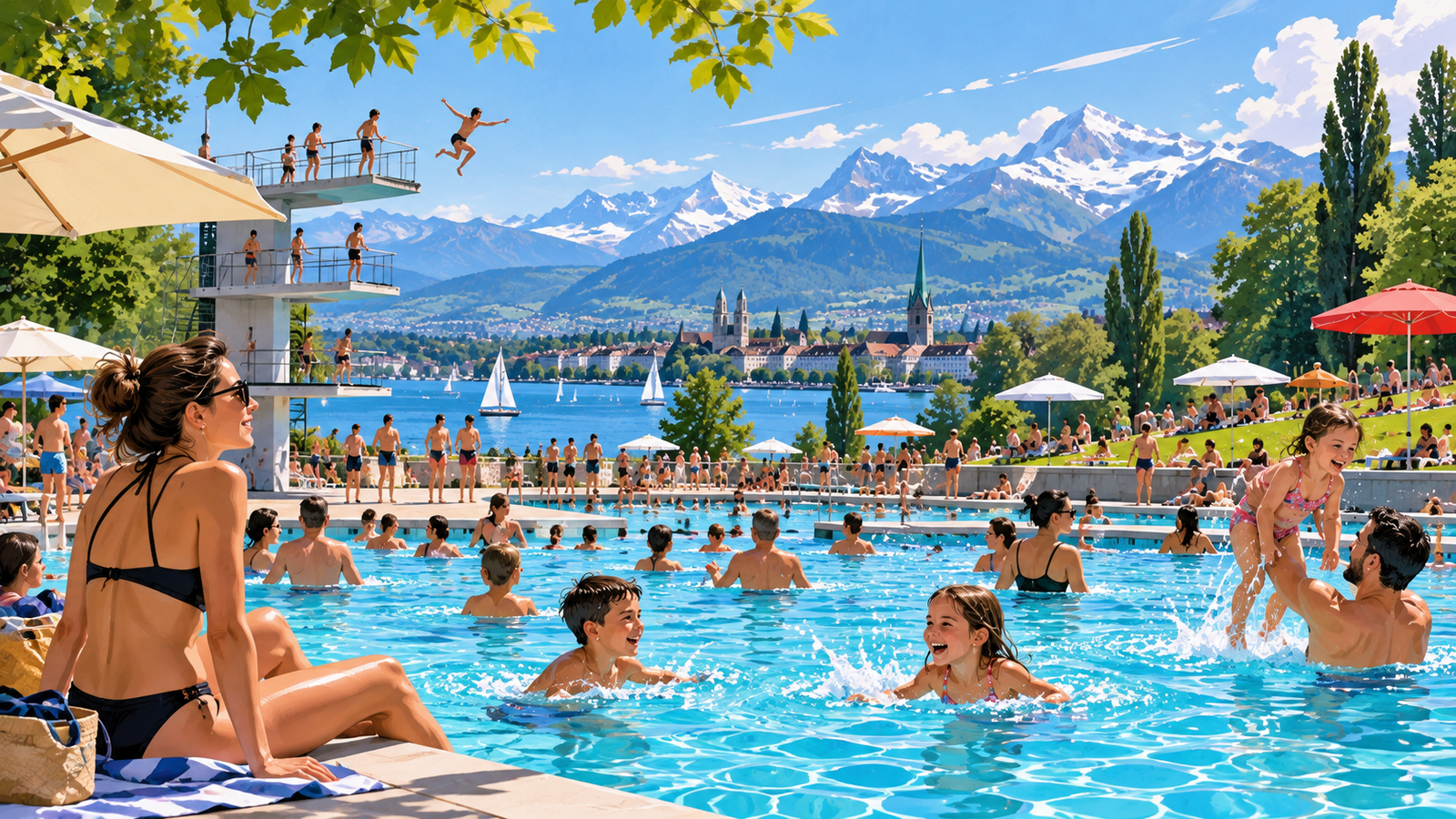
Switzerland’s exceptionally warm summer has delivered a major boost to outdoor swimming facilities, with municipalities across the country reporting some of the highest attendance figures in recent memory as residents sought relief from prolonged periods of hot weather.
From major urban centers to smaller regional communities, outdoor pools experienced a significant increase in visitors throughout the summer season. Operators said repeated stretches of high temperatures encouraged both regular swimmers and occasional visitors to spend more time at public bathing facilities, turning many locations into some of the busiest recreational spaces in the country.
The surge follows a summer marked by unusually high temperatures across much of Europe. Switzerland was among the countries affected by several periods of extreme heat, with weather records challenged or broken in multiple regions during the season. Earlier this year, temperatures in parts of Switzerland climbed above 37 degrees Celsius during June, setting new benchmarks for the month and highlighting the intensity of the heat affecting the country.
Pool operators reported that favorable weather conditions played a central role in attracting visitors. Unlike summers interrupted by extended rainfall or unstable weather, the 2026 season featured numerous warm and sunny days that encouraged outdoor recreation. As a result, many facilities recorded attendance levels that exceeded long-term averages and, in some cases, approached historic highs.
The popularity of outdoor swimming pools reflects a broader trend seen across Europe during periods of intense heat. Public swimming areas, lakes, rivers, and recreational water facilities often experience sharp increases in usage when temperatures remain elevated for extended periods. Authorities in several countries have also promoted access to cooling spaces as part of public health efforts designed to reduce heat-related risks.
In Switzerland, outdoor pools hold a unique place in summer culture. Known locally as “Badi,” many facilities serve not only as swimming venues but also as social gathering places where families, friends, and communities spend long summer afternoons. The combination of recreation, exercise, and relief from the heat makes them especially popular during unusually warm years.
Municipal officials and facility managers noted that the rise in attendance brought both opportunities and challenges. Increased visitor numbers generated higher revenue from admissions, food services, and seasonal activities. At the same time, operators faced greater demands on staffing, maintenance, safety supervision, and water management as pools accommodated larger crowds.
Some locations extended operational efforts to handle the influx. Additional lifeguards, maintenance crews, and customer-service staff were deployed in certain areas to ensure safe operations during peak periods. Popular facilities also experienced busy weekends and holiday periods when visitor numbers reached capacity.
The strong season comes as Swiss cities continue to adapt to warmer conditions associated with climate change. Scientists have repeatedly noted that Switzerland is warming faster than the global average, creating new challenges for urban planning, public health, and infrastructure. The country has increasingly invested in adaptation measures designed to help communities cope with higher temperatures and more frequent heat events.
Heat-related concerns have become a growing focus for public authorities. Research examining previous warm summers in Switzerland found that prolonged heat can have measurable impacts on public health, particularly among older populations. Studies have linked extreme temperatures to increased mortality risks and have encouraged expanded warning systems and targeted protective measures during heatwaves.
Public swimming facilities increasingly form part of those adaptation efforts. Alongside parks, shaded public spaces, lakeside areas, and cooling centers, outdoor pools provide residents with accessible ways to cope with extreme temperatures. Their role becomes especially important in densely populated urban areas where heat can accumulate more intensely than in surrounding rural regions.
The popularity of swimming facilities also reflects changing patterns of summer recreation. As temperatures rise, residents may spend more time near water and seek activities that provide both leisure and relief from the heat. Tourism experts and local authorities have observed growing interest in lakeside destinations and aquatic recreation during warmer periods, a trend that could continue if hot summers become more common.
Despite the benefits for pool operators, the season has also renewed discussions about long-term climate resilience. Experts warn that while swimming facilities help communities adapt to heat, they are only one part of a broader response required to address rising temperatures. Urban cooling strategies, energy-efficient infrastructure, water management, and public-health planning are expected to become increasingly important as climate conditions evolve.
For many Swiss residents, however, the immediate story of the summer was simpler. Faced with repeated hot days, large numbers headed to their nearest outdoor pool, transforming public bathing facilities into some of the season’s busiest destinations.
As autumn approaches and outdoor pools prepare to close for the year, operators are reviewing what many describe as an exceptionally successful season. Whether attendance records ultimately stand for years to come may depend on future weather patterns, but the summer of 2026 has already demonstrated how strongly recreational habits can be shaped by prolonged heat.