Counter-Protesters Interrupt Anti-Abortion Demonstration in Zurich Amid Heavy Police Presence
A demonstration organized by anti-abortion activists in Zurich became the focus of competing public protests as counter-demonstrators gathered to challenge the event, leading to police intervention and heightened security measures in Switzerland’s largest city.
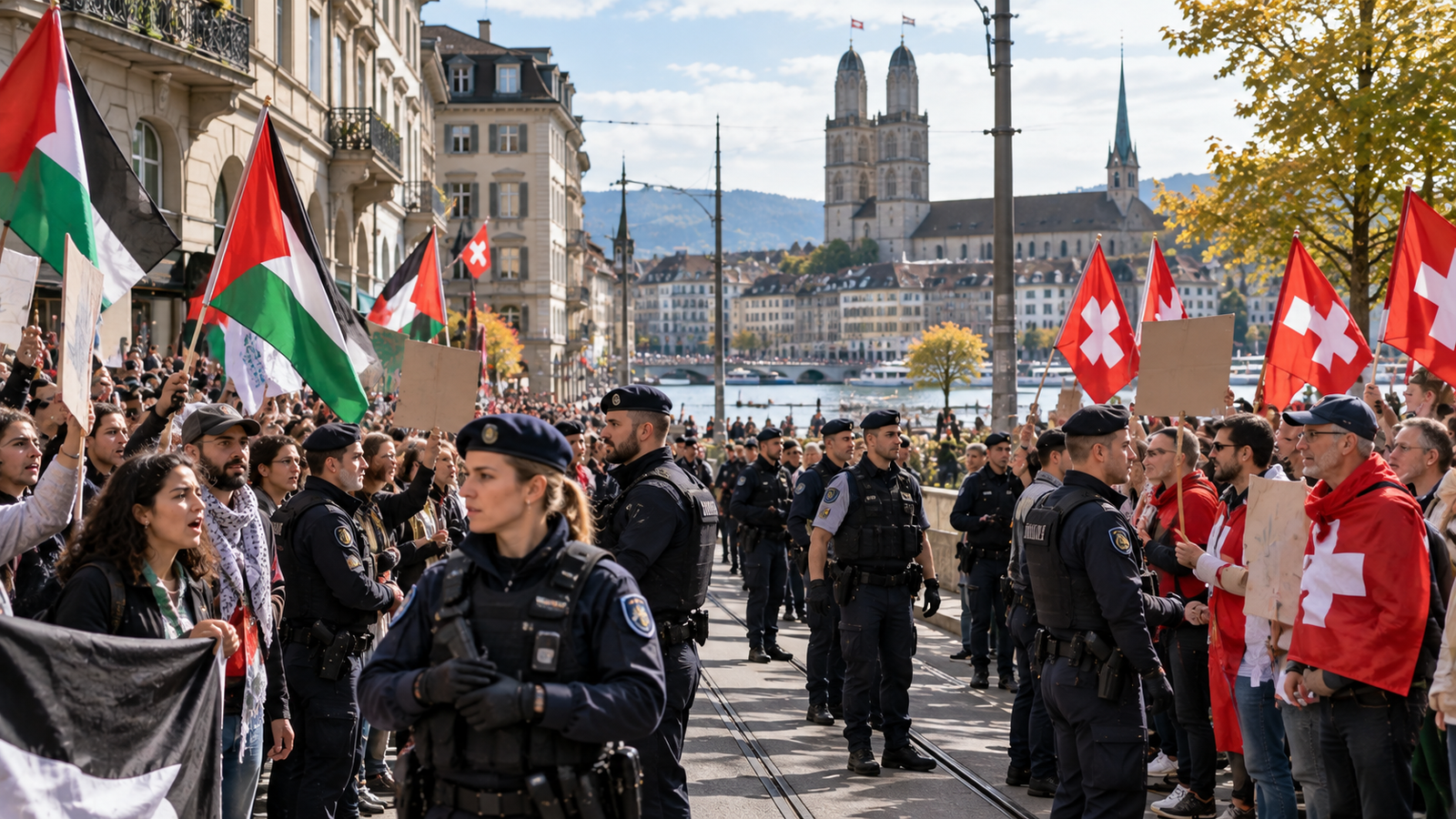
The march brought together participants advocating restrictions on abortion, while a separate group of protesters assembled nearby to defend abortion rights and oppose the demonstration. Authorities deployed a significant police presence to prevent direct confrontations and maintain public order as tensions developed between the opposing groups.
According to reports from Zurich, officers established security barriers and monitored movement around the demonstration route as rival groups exchanged chants and messages supporting sharply different positions on reproductive rights. The event highlighted the continued ability of abortion-related issues to generate strong public reactions even in countries where the legal framework has remained largely unchanged for years.
Switzerland legalized abortion under the so-called “time-limit” system following a nationwide vote in 2002. Under current law, abortion is permitted during the first 12 weeks of pregnancy for women who declare they are experiencing distress. Procedures can also be authorized later in pregnancy under specific medical circumstances. Since its adoption, the legal framework has remained broadly intact, and attempts to significantly restrict access have not gained sufficient public support.
The Zurich march was organized by activists who oppose abortion and seek greater public awareness of their position. Similar events have been held periodically in Switzerland and other European countries, often drawing both supporters and opponents. While organizers describe such marches as peaceful public demonstrations, critics argue that they challenge established reproductive rights protections.
Counter-protesters gathered with their own banners and messages, arguing that access to abortion is a matter of personal autonomy and healthcare. Demonstrators supporting abortion rights accused anti-abortion groups of attempting to roll back rights that Swiss voters endorsed through democratic processes. The opposing rallies reflected broader international debates over reproductive rights that continue to influence public discourse across Europe and North America.
Police worked to keep the groups separated throughout the event. Authorities regularly take such precautions during demonstrations involving strongly opposing viewpoints to reduce the risk of physical confrontations. Reports indicated that officers intervened on several occasions when counter-protesters attempted to move closer to the anti-abortion march route.
The events in Zurich unfolded against a backdrop of increasing public demonstrations on social issues across Switzerland. Although the country is often associated with political stability and consensus-driven decision-making, contentious issues can still mobilize large numbers of citizens. Public demonstrations remain an important part of civic participation, particularly in a nation known for its system of direct democracy.
Abortion remains a comparatively settled legal issue in Switzerland compared with some other countries. National voters approved the current legal framework more than two decades ago, and a later initiative seeking to remove abortion coverage from mandatory health insurance was rejected by voters. These results have generally been interpreted as evidence of continued public support for maintaining existing access to abortion services.
Even so, advocacy groups on both sides continue to campaign publicly. Anti-abortion organizations argue that unborn life deserves greater legal protection and seek to influence public opinion through educational campaigns, marches, and public events. Abortion-rights advocates, meanwhile, maintain that preserving access to reproductive healthcare remains important and that public opposition should be met through civic engagement and counter-demonstrations.
The Zurich demonstration illustrates how debates that have long been politically prominent elsewhere continue to resonate within Swiss society, even if they do not currently occupy a central place on the national legislative agenda. Public events such as marches and rallies provide opportunities for advocacy groups to communicate their messages and recruit supporters, while also attracting criticism from opponents.
Observers note that Switzerland’s political system offers multiple channels for citizens to express views on controversial topics, whether through demonstrations, political campaigns, referendums, or public consultations. This framework often allows disagreements to be aired publicly while remaining within established democratic processes.
By the end of the day, police had largely succeeded in preventing major clashes between the opposing groups. While the demonstrations underscored deep differences in opinion, they also reflected the continuing role of public assembly and protest in Swiss civic life.
The events in Zurich are unlikely to alter Switzerland’s abortion laws in the immediate future. However, they demonstrate that reproductive rights remain a subject capable of mobilizing activists on both sides of the debate. As social and ethical questions continue to evolve, public demonstrations are expected to remain an important platform for competing viewpoints in Switzerland’s democratic landscape.